Why Bespoke is Making a Comeback After the Fast Fashion Era
For decades, fast fashion dictated how the world dressed fast, cheap, and endlessly replaceable. It promised access and excitement, yet in its race for speed, something essential was lost: the bond between people and what they wear. Now, as the conversation around sustainability deepens, bespoke tailoring is quietly resurfacing. It is not a relic of nostalgia, but a sign of a cultural shift – one that values quality, individuality, and responsibility over disposability.
The Rise and Plateau of Fast Fashion
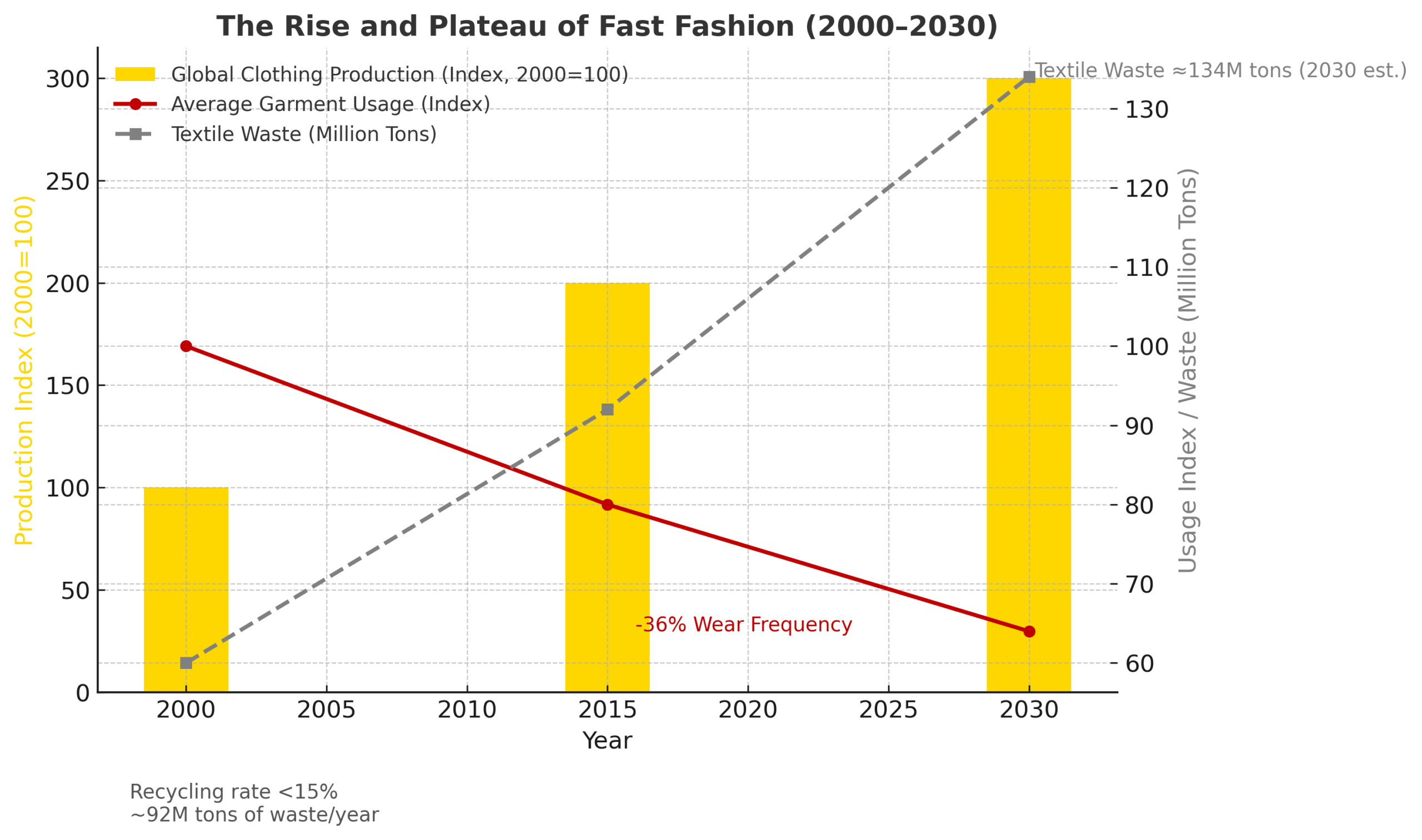
From 1990s to 2015, global clothing production doubled, driven by a culture obsessed with constant novelty. According to the Ellen MacArthur Foundation, consumers now wear each garment 36% fewer times than they did just fifteen years ago. The result is staggering: 92 million tons of textile waste produced every year, a reflection of our increasingly fragile relationship with what we own. Fast fashion revolutionized accessibility; it democratized style and gave people the power to chase trends instantly. But in making clothing endlessly replaceable, it also stripped fashion of its emotional value. When a garment can be discarded without thought, its story no longer matters.
Today, the consequences of that mindset are impossible to ignore – ecological, emotional, and cultural. What once promised freedom and variety has instead created fatigue, waste, and detachment. The industry that prided itself on innovation now faces a reckoning, as consumers begin to realize that infinite choice has come at the cost of meaning.
Changing Consumer Behavior
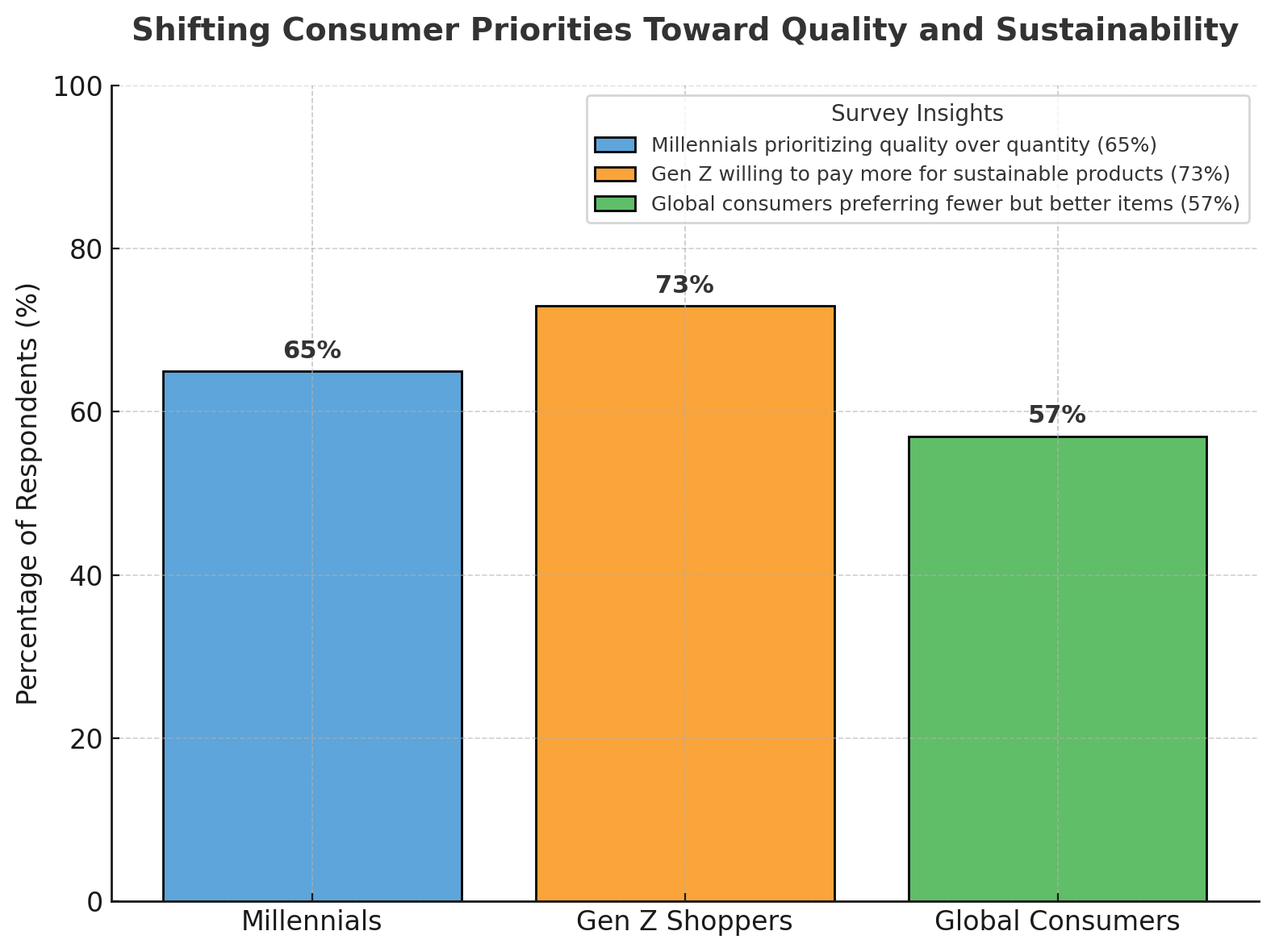
Now, the pendulum is swinging back toward consciousness. A new generation of consumers is asking not only what they wear, but why. Their choices are guided less by impulse and more by intention, a quiet rebellion against disposability. Surveys reflect this awakening: according to McKinsey (2023), 65% of millennials now prioritize quality over quantity; 73% of Gen Z shoppers are willing to pay more for sustainable products; and post-pandemic, a BCG survey found that 57% of global consumers prefer to buy fewer but better-made items.
These numbers tell a larger story – one of rediscovery. People are finding renewed joy in owning pieces made with care, garments that carry purpose as much as style. It’s not about rejecting fashion itself, but about redefining its rhythm: seeking balance between expression and ethics, beauty and responsibility, the fleeting and the lasting.
A Global Revival of Conscious Craftsmanship
Across the world, bespoke tailoring is quietly making its return not as a fleeting trend, but as a reflection of shifting values. In Europe, a younger clientele is rediscovering the ritual of traditional tailoring, drawn not by nostalgia but by a renewed respect for integrity, fit, and personal expression. In Asia, fashion-forward cities such as Seoul, Shanghai, and Ho Chi Minh City are nurturing a new bespoke culture, one that merges heritage craftsmanship with digital precision and a generation’s growing desire for individuality.
This revival signals more than a change in aesthetic; it marks a cultural realignment. The global luxury narrative is moving away from excess and logos, toward experiences rooted in connection and purpose. Bespoke’s true allure lies not in prestige, but in meaning – the dialogue between maker and wearer, process and intention, creation and identity.
Why Bespoke Fits the New Era
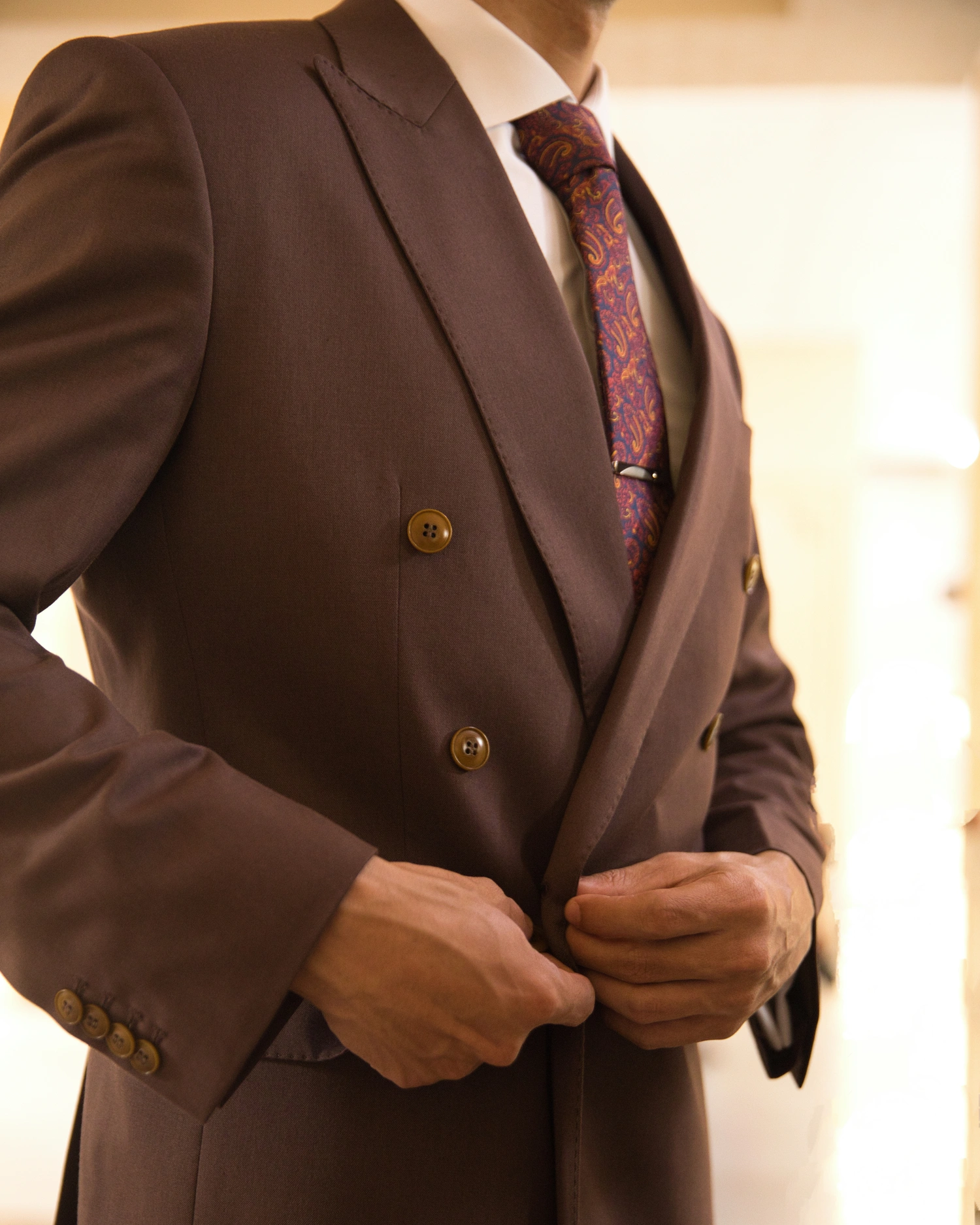
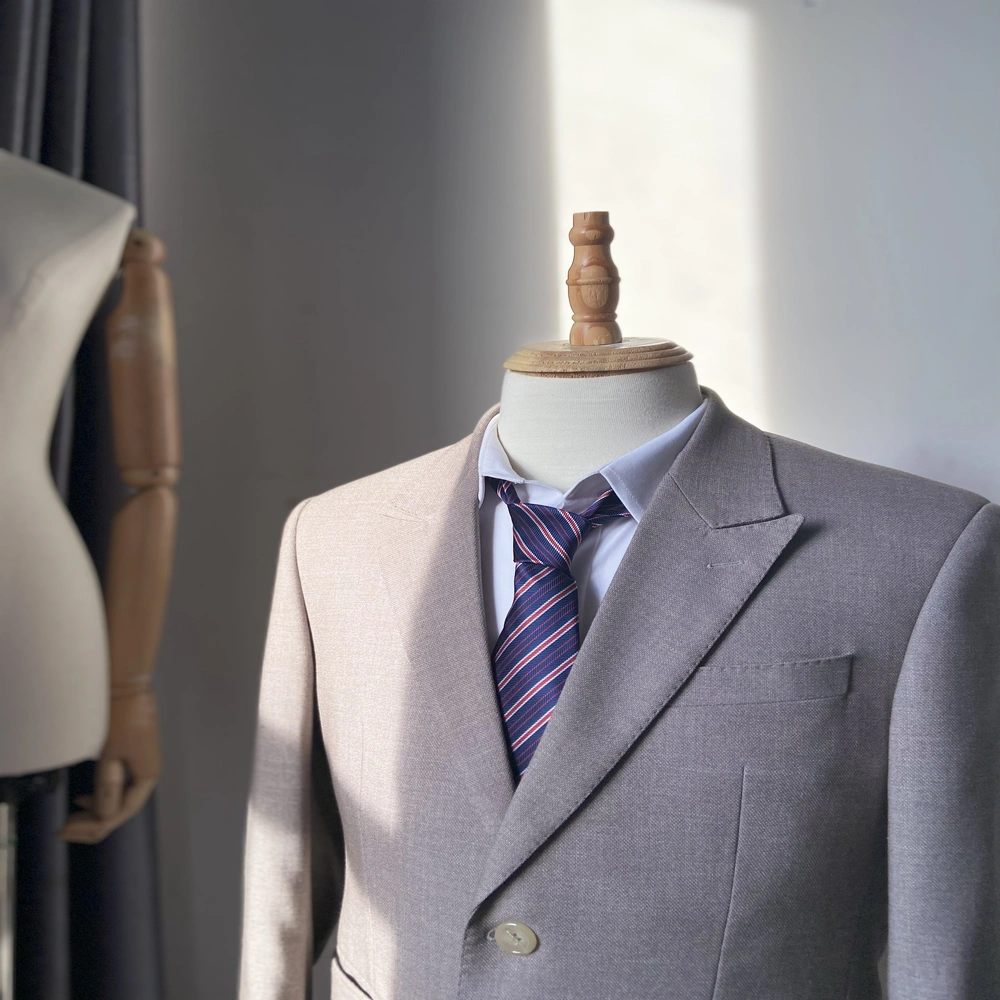
Bespoke tailoring answers today’s longing for authenticity a counterpoint to mass production and instant gratification. It offers what fast fashion never could: permanence, precision, and purpose. Each garment begins not with a pattern, but with a person. The tailor listens, measures, observes posture and lifestyle before even cutting a single piece of fabric. Every stitch becomes an act of understanding a dialogue between the maker and the wearer.
- Precision fit: Each contour and seam is shaped to the body’s unique form, creating comfort that feels almost invisible yet unmistakably personal.
- Longevity: Crafted from premium fabrics and constructed by hand, bespoke garments are made to age gracefully repaired, not replaced.
- Identity: Every commission tells a story. Through proportion, texture, and detail, the garment becomes a reflection of its owner’s character and values.
- Sustainability: With production made-to-order, there is no excess stock, no hurried cycles of waste, only deliberate creation and mindful consumption.
In this way, bespoke is more than a method of making clothes – it’s a philosophy of intention. In a world saturated with noise and excess, it stands as a quiet form of resistance: slow, personal, and deeply human. It reminds us that true luxury is not about having more, but about having meaning.

Modernizing the Bespoke Experience
For centuries, bespoke tailoring was admired as the pinnacle of craftsmanship – an art form reserved for those with time, patience, and access. The process demanded multiple fittings, meticulous communication, and an intimacy of craft that many considered out of reach. Yet in the modern age, innovation is rewriting that story. Technology is not replacing tradition; it is redefining how tradition is lived, experienced, and preserved.
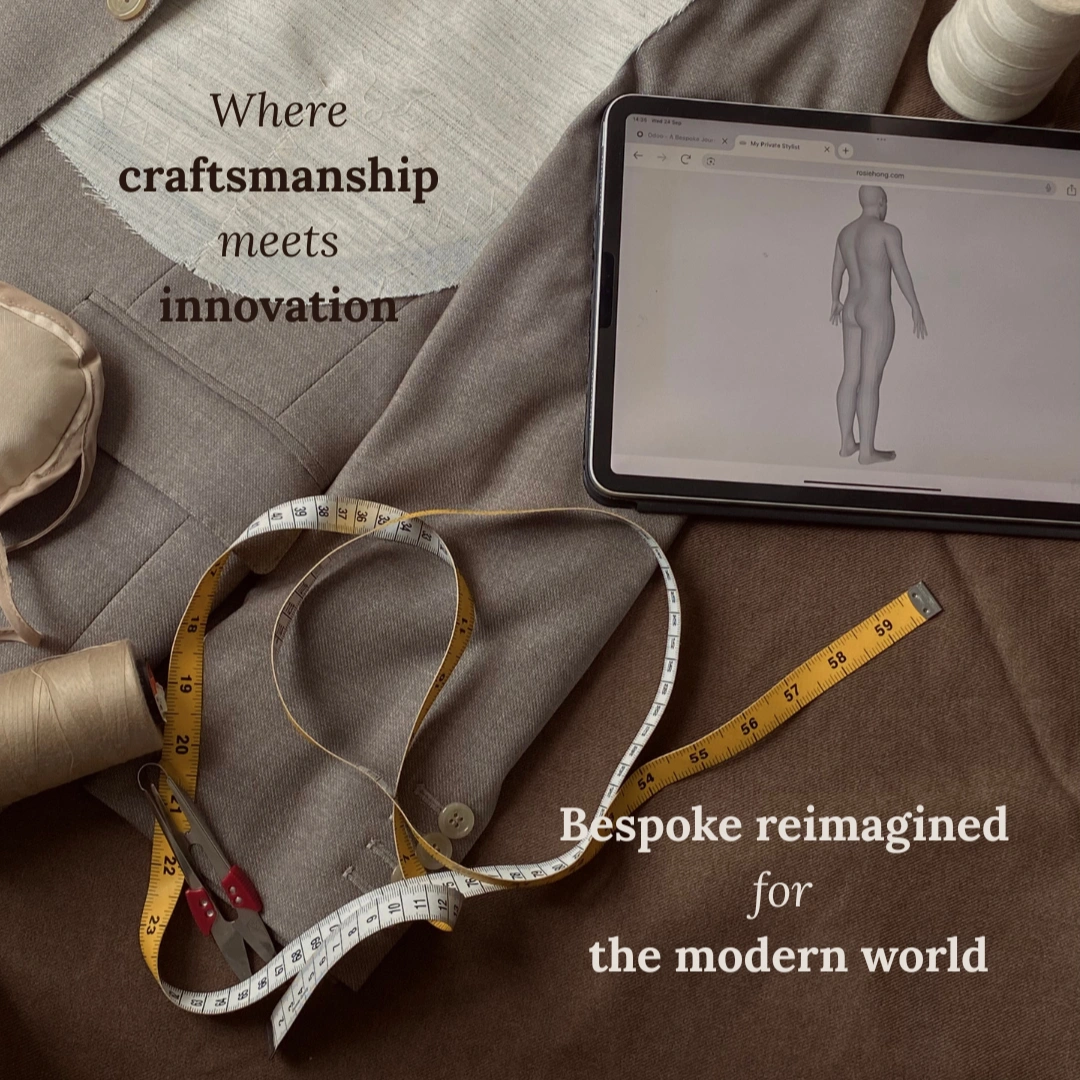
Digital tools such as 3D body scanning and AI-assisted fitting are transforming the bespoke process from within. Every contour of the body can now be mapped with precision, ensuring accuracy and privacy from the very first fitting. Secure data storage allows clients to reorder, refine, or adjust garments seamlessly over time eliminating the need to start from scratch. Virtual consultations bridge geographical boundaries, making the experience more inclusive and accessible than ever before. These advancements extend the reach of bespoke without diluting its essence bringing craftsmanship into a digital dialogue with convenience.
But perhaps the most profound change lies not in the technology itself, but in what it enables. By automating precision, digital systems free artisans to focus on the intangibles, the emotional intelligence of tailoring, the balance of proportion, the sensitivity to how a garment moves with its wearer. The result is a new kind of bespoke: one where heritage and innovation coexist, where the human touch is elevated, not replaced. It is the evolution of craft for a world that values both efficiency and soul bespoke, reimagined for the age of consciousness.
Conclusion: The Return to Meaning
Fast fashion once promised abundance, but it also stripped fashion of its soul – replacing craftsmanship with convenience and meaning with speed. Now, as awareness deepens, consumers are beginning to look beyond the surface, turning back to what feels real: garments made with care, intention, and human touch. Bespoke tailoring stands at the heart of this shift. It is not just a method of making clothes; it is a philosophy that values time, patience, and individuality. In an era defined by excess and acceleration, bespoke reminds us that true progress lies not in producing more, but in creating better pieces that endure, connect, and carry a story.
Bespoke is not a relic of the past; it is a quiet vision for the future – one where fashion rediscovers its meaning, and where every stitch reflects purpose.