Fluid Authority: The 2026 Manifesto for Women’s Bespoke Tailoring
For decades, women seeking authority in their professional wardrobes often felt compelled to borrow from the boys. We navigated through eras of rigid, heavily padded power suits and the ubiquitous, oversized “boyfriend blazers”, garments that masked the female form in order to project strength.
But as we navigate through 2026, the global bespoke landscape has experienced a beautiful and definitive awakening. The modern woman no longer dresses to blend into a masculine framework; she dresses to claim her own space. We have officially transitioned from the era of “Quiet Luxury” into the age of “Empowered Elegance”: a movement where custom tailoring celebrates the female silhouette with architectural precision, fluid lines, and unapologetic grace.
Here is an inside look at the defining shifts shaping the premium women’s bespoke wardrobe this year.
Movement I: The Versatile Ecosystem – Beyond the Two-Piece Suit
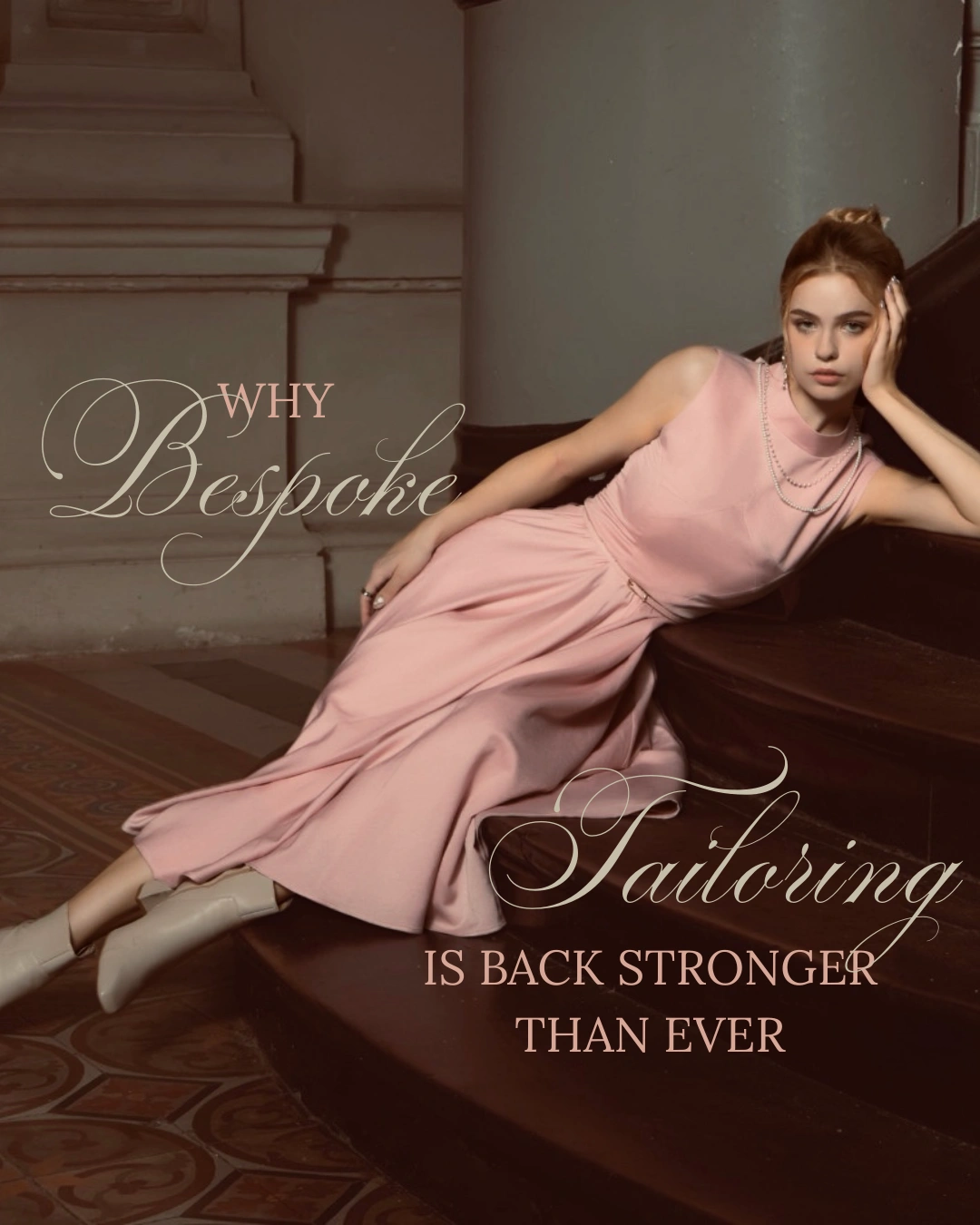
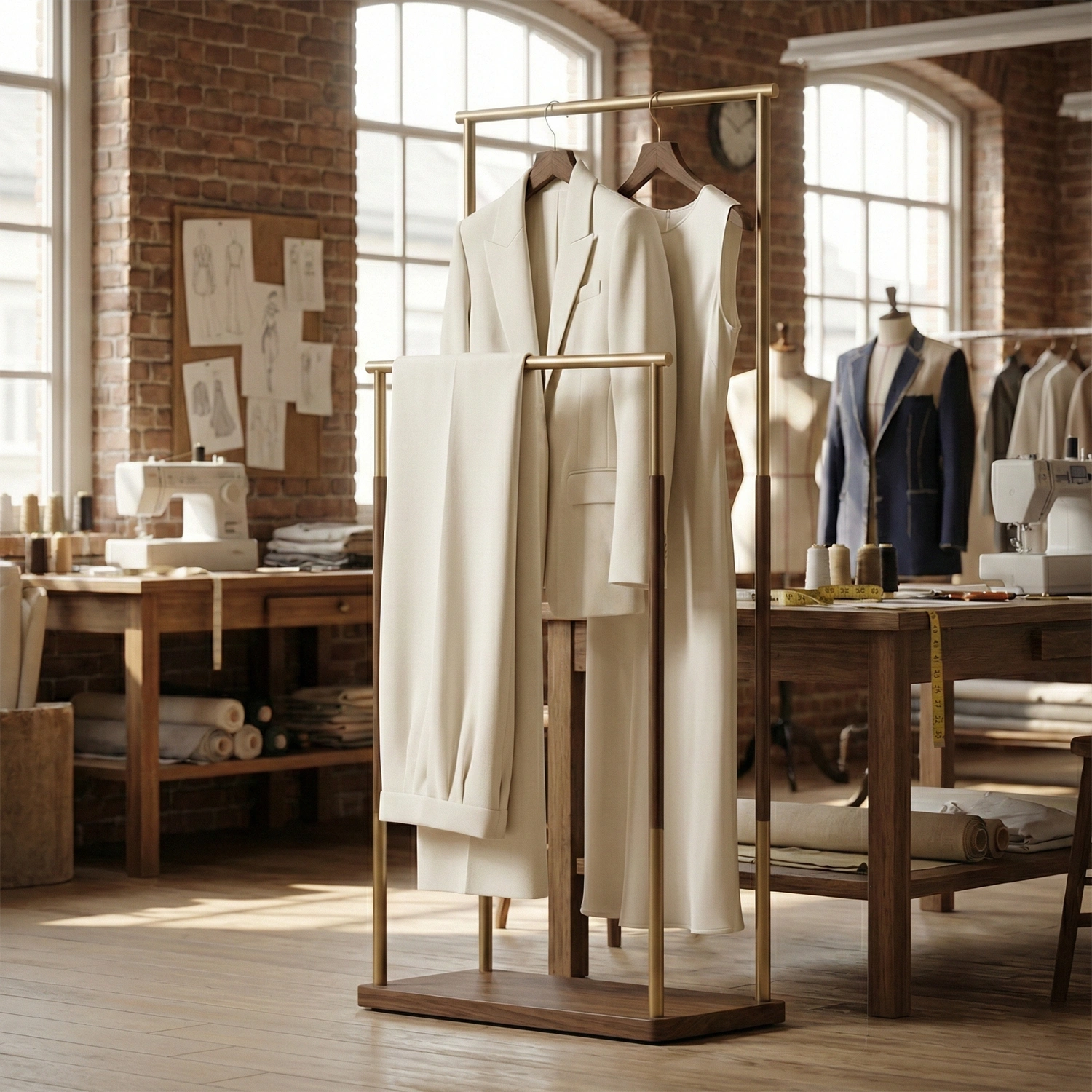
In 2026, bespoke tailoring for women is no longer defined solely by the suit. It has evolved into a modular ecosystem where every piece is designed to work in fluid harmony. The modern woman’s commission reflects this diversity, moving beyond the blazer to include architectural skirts, fluid trousers, and most significantly, the Bespoke Dress.
The dress remains the ultimate cornerstone of feminine elegance: a single, polished garment that carries a woman from high-stakes meetings to evening events with zero friction. However, within this category, the Bespoke Sheath Dress has emerged as the definitive “Holy Grail” of 2026 tailoring.
Historically, dresses are the most difficult garments to purchase in ready-to-wear because they require an impossible alignment across the bust, waist, and hip ratios. By opting for “Anatomical Dressmaking,” women are securing a silhouette that acts as a second skin, entirely free of the puckering or pulling common in mass-produced items. Whether acting as a flawless foundation under a sharp blazer or standing alone as a statement of minimalist power, the bespoke dress is engineered to respect the wearer’s unique geometry, offering a level of confidence that ready-to-wear simply cannot replicate.
Movement II: Sculptural Minimalism & The Art of Claiming Space
The defining silhouette of 2026 is a masterclass in balance. The aesthetic has moved away from anything overly slouchy or heavily restrictive, landing on what designers are calling Sculptural Minimalism.
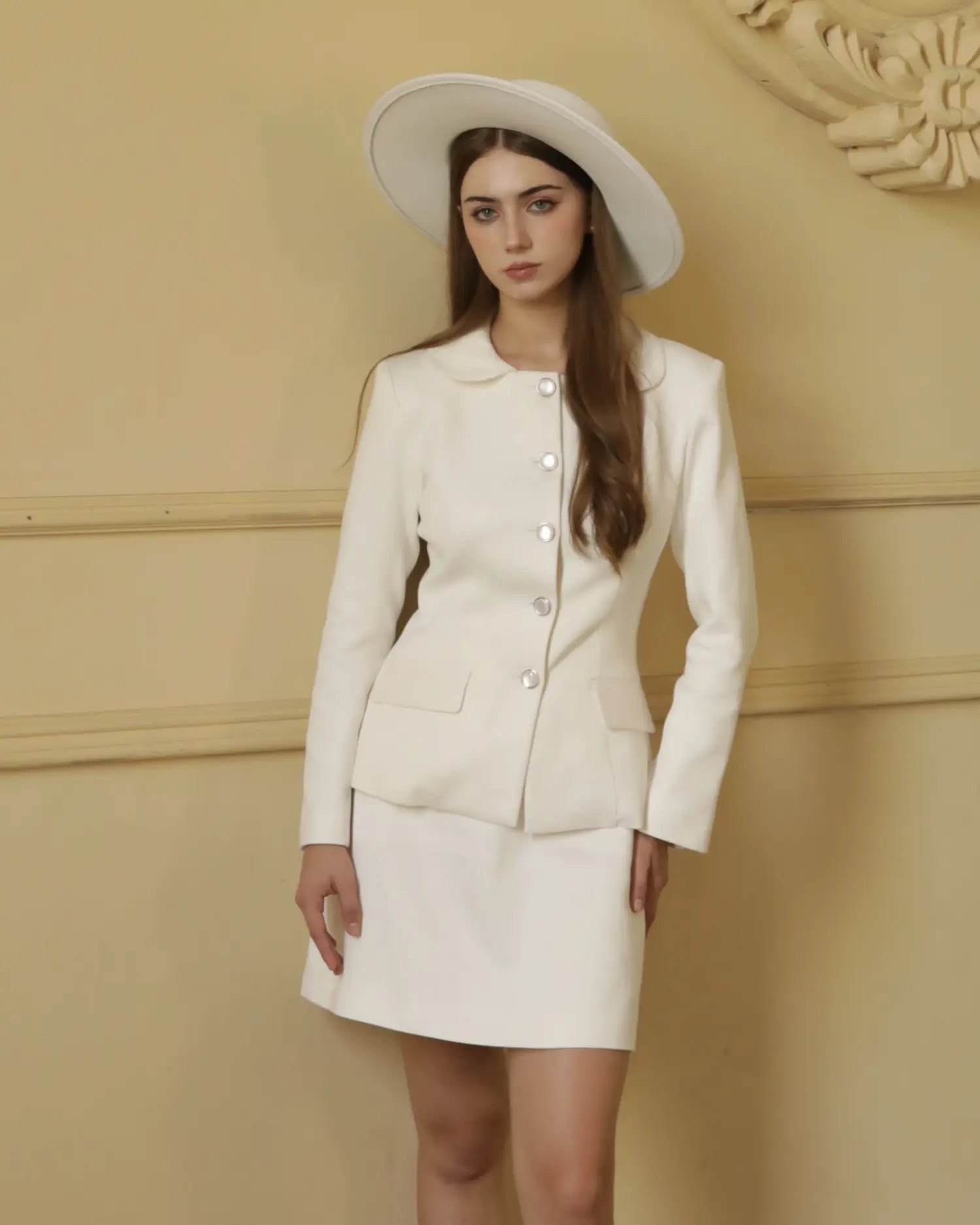
The contemporary bespoke blazer acts as a piece of wearable architecture. Shoulders feature a subtly extended shoulder line, sharp and decisive, yet clean, creating a modern architectural ratio that balances the frame without the exaggerated bulk of decades past.
The true mastery, however, lies in the waist suppression. While mass-produced garments often fail to balance the proportions between the bust and hips, resulting in either a boxy fit or restrictive tightness, bespoke tailoring utilizes strategic darting. This expert placement of seams creates a sculpted, hourglass contour that feels entirely natural. It is a definitive silhouette that projects power and grace, achieved without the suffocating constraints of historical corsetry.
This structured upper half is brilliantly contrasted by the lower body pairing. The 2026 woman pairs her strong blazer with fluid, wide-leg trousers that pool elegantly over the shoe, or a razor-sharp slit midi skirt. This juxtaposition of a structured top and a flowing bottom creates a dynamic sense of movement: a visual representation of a woman who is grounded yet unstoppable.
Movement III: The Monochromatic Column (The Canvas & The Cloth)
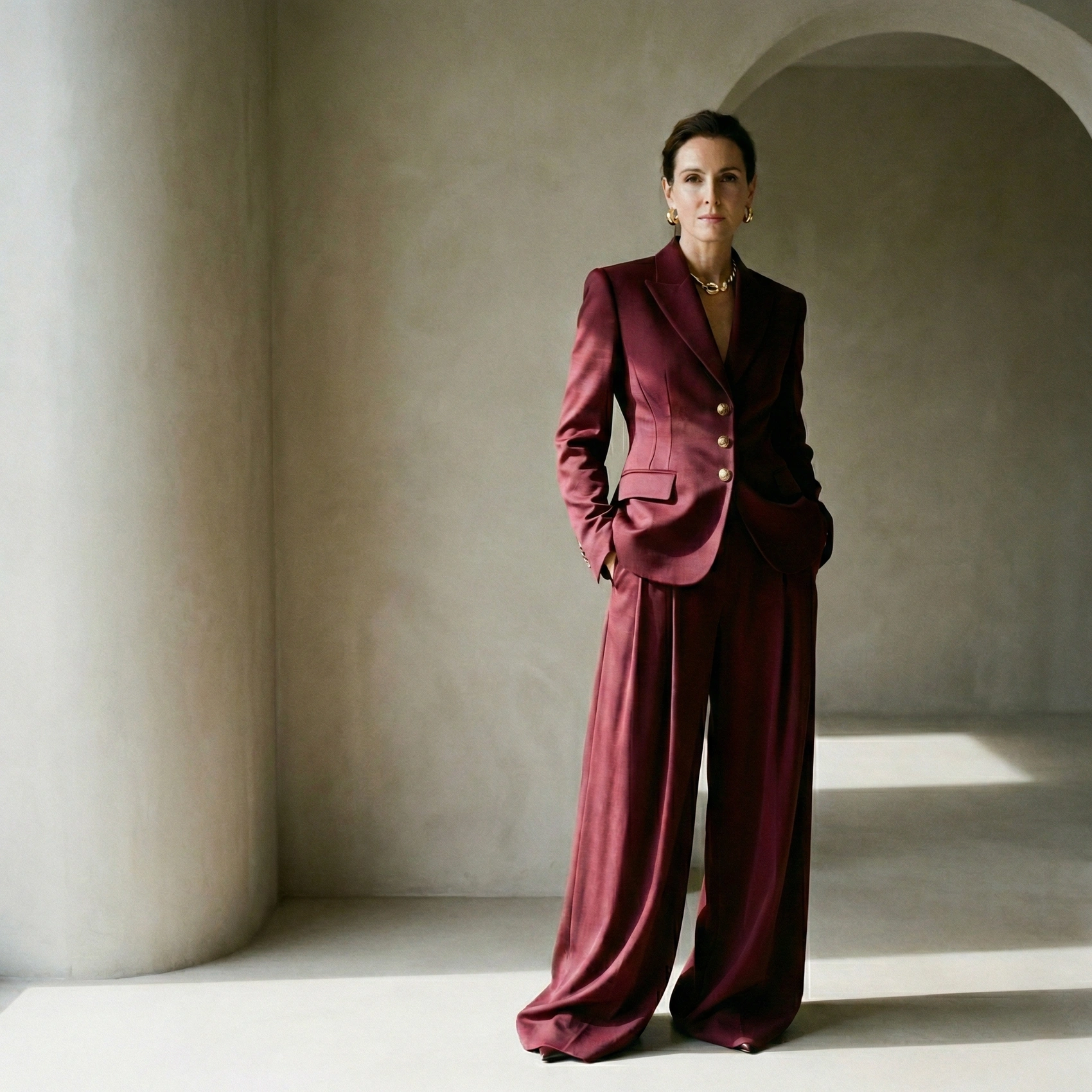
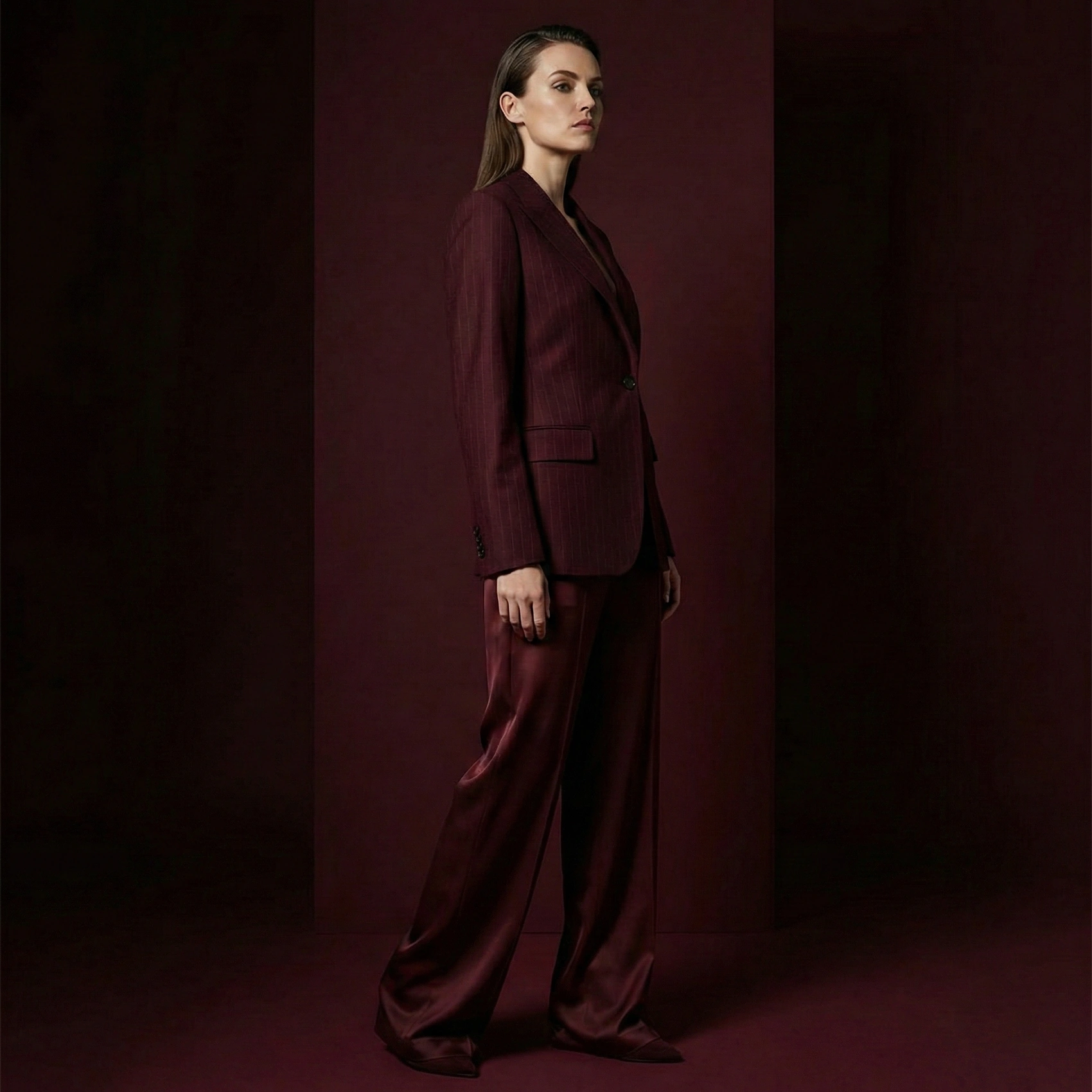
Wearing a single hue from head to toe, Monochromatic Confidence, remains the ultimate sartorial lifehack for 2026. It visually elongates the frame, creating an unbroken column of color that instantly projects elevated sophistication. However, the secret to preventing a monochromatic look from appearing “flat” or uninspired lies in the interplay of textures.
True luxury in 2026 is found in the subtle contrast of surfaces within the same color family. By pairing a crisp, matte wool blazer with the fluid, light-catching drape of silk trousers, the outfit gains a profound visual depth. This “Texture Play” ensures that the ensemble remains dynamic and multi-dimensional, making it look exponentially more curated and expensive.
The colors leading this charge move beyond standard corporate neutrals:
- Digital Lavender: A subtle, intelligent purple that merges tech-forward optimism with classic femininity.
- Rich Burgundy: A deep, emotive red that serves as the new power color, offering warmth and an undeniable presence.
- Architectural Ivory: A pristine off-white that commands attention in any environment.
To achieve this level of sophistication, the material choice is paramount. The industry is witnessing a significant shift, with a reported 75% surge in demand for premium Silk-Wool blends in women’s bespoke commissions. This specific blend offers the “tactile luxury” modern women crave: the structural integrity of wool to maintain a sharp, architectural lapel, married with the soft luster and graceful movement of silk that breathes life into a monochromatic silhouette.
Beyond textures, Patterns in 2026 play a strategic role in the bespoke feminine wardrobe. We are seeing a move toward ‘Linear Authority’: the use of vanishing shadow pinstripes and subtle micro-checks to enhance the monochromatic silhouette. These are not loud, distracting patterns; they are architectural tools used to visually elongate the frame and add a layer of intellectual depth. For the woman who finds solids too quiet, these micro-patterns offer a perfect bridge, providing visual interest while maintaining the integrity of a professional, streamlined look.
Movement IV: The Tech Revolution (Precision Over Proportions)
Perhaps the most fascinating news in women’s custom wear isn’t happening on the runway, but in the digital drafting room. Historically, bespoke tailoring for women has been a challenge of three-dimensional geometry. The female body presents a beautiful complexity of curves and asymmetrical realities (subtle differences in shoulder height or hip alignment) that traditional flat tape measures and standard sizing often ignore.
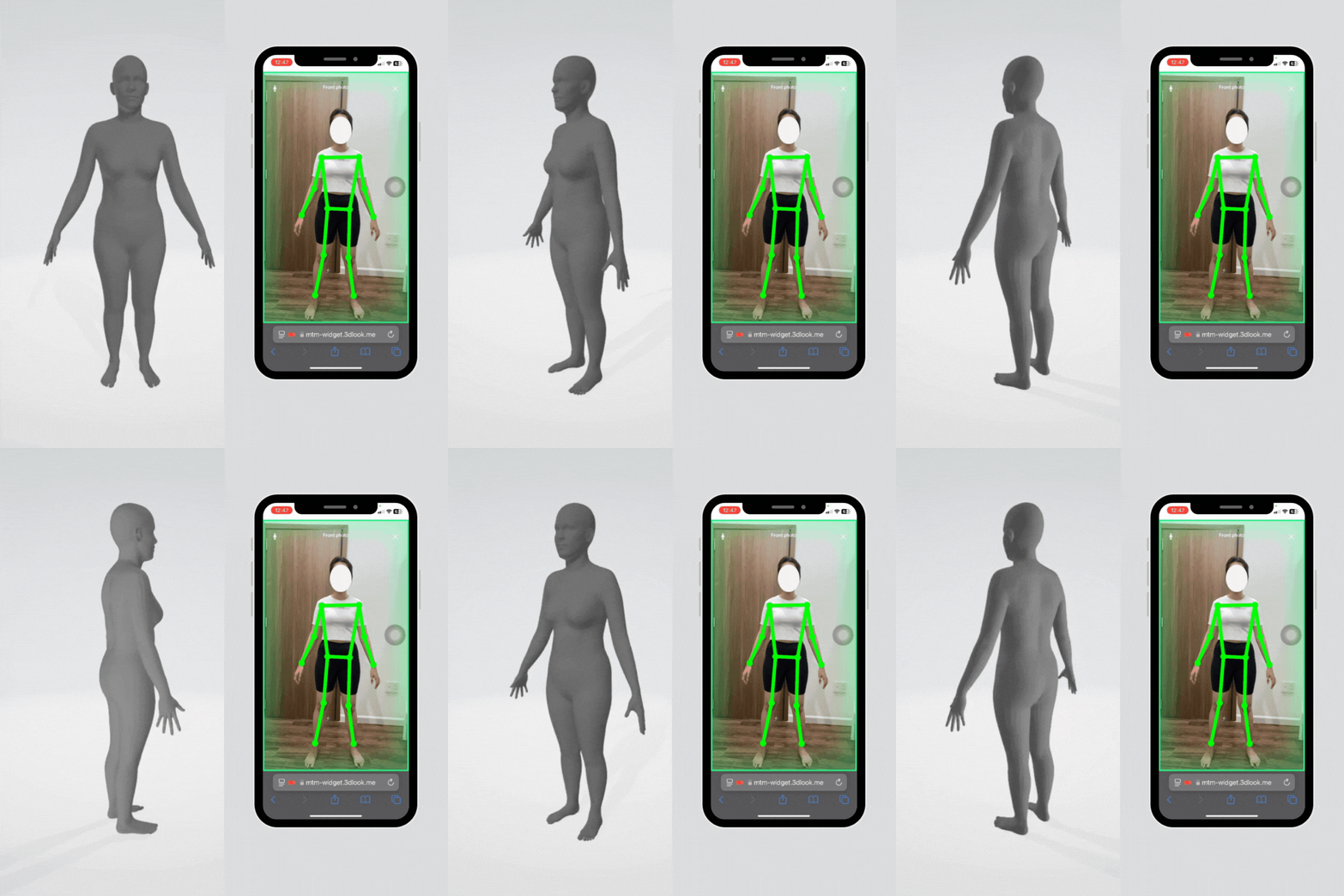
To solve this, the premium bespoke sector is undergoing a quiet technological revolution: The Symbiosis of Craft and Code. Leading houses are adopting multi-point 3D anatomical scanning to capture a mathematically precise topographical map of the body. Unlike mass-production, which assumes perfect symmetry, this technology detects every unique nuance, ensuring the garment is engineered for the wearer’s actual posture, not a mannequin’s ideal.
However, this shift to data-driven precision does not sideline the artisan; it empowers them. In the 2026 landscape, AI is the “God’s Eye” that provides the data, but the master tailor remains the soul of the garment. The algorithm delivers the perfect blueprint, but it is the artisan’s hand that translates those numbers into fabric, adjusting the tension of a seam or the roll of a lapel to ensure the suit has “life.”
This is the ultimate democratization of bespoke. It grants every woman, regardless of her location, proportions, or unique asymmetries, access to a level of fit that was once reserved for those with the time for endless physical fittings. It is precision with a human touch.
The Takeaway
The 2026 bespoke wardrobe for women is not about conforming; it is about taking up space beautifully. It relies on architectural cuts, emotive colors, and cutting-edge technology to create garments that don’t just fit the body, but elevate the woman within.
DISCOVER PHYIGITAL BESPOKE TAILORING