Mastering the V-Taper: Definitive Styling Tips for Muscular Silhouette

A powerful V-taper is the ultimate sign of discipline, a visual masterpiece of hard work and persistence. For those who belong to the athletic elite, attire must be more than just a covering; it should function as a natural extension of a high-performance lifestyle, honoring the journey of the individual who wears it.
True elegance for a powerful frame is found in the subtle mastery of styling tips for muscular silhouette, where every design choice serves to harmonize raw strength with a refined, fluid presence. It is about moving beyond the mere necessity of fit to embrace a sophisticated aesthetic that commands authority while maintaining absolute ease and world-class grace.
Mastering the Core Architecture: Silhouette and Configuration
A bespoke suit acts as a cohesive system where every detail is engineered through bespoke tailoring to support an athletic frame. For the athletic elite, it’s about balancing vertical elongation with sculptural structure: highlighting the V-taper with elegance, never exaggeration.
Configuration: Agility vs. Authority
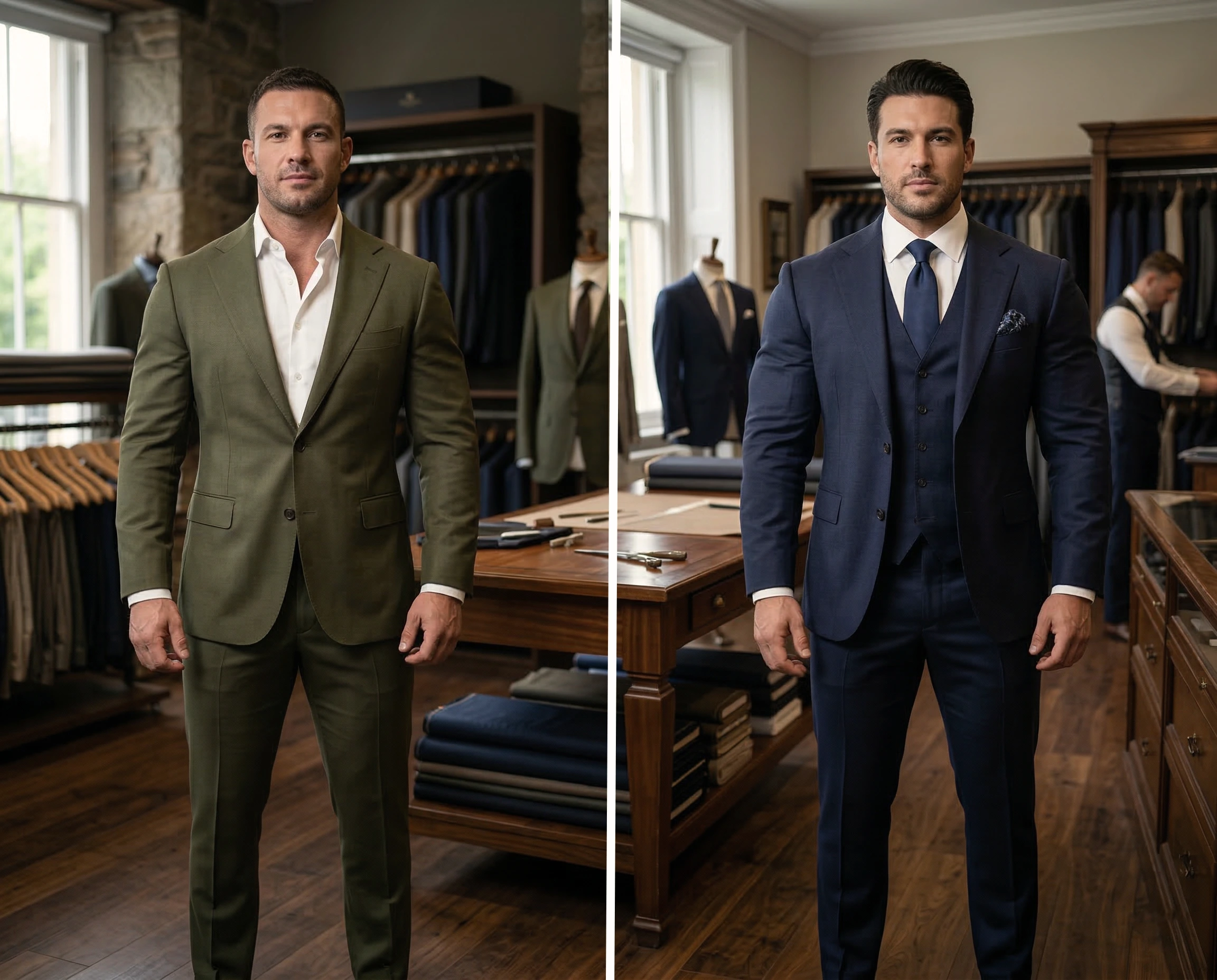
The choice between a two-piece and a three-piece configuration dictates the level of “structure” and “power” projected by the wearer.
- The 2-Piece Suit (Minimalist Agility): Ideal for the active professional, this setup offers maximum breathability and flexibility. It provides a cleaner, more youthful aesthetic that is well-suited for high-paced environments where mobility is the priority.
- The 3-Piece Suit (Sculptural Power): Adding a waistcoat (vest) serves a vital functional purpose for those with a significant chest-to-waist drop. It acts as a sculptural layer that hugs the midsection, smoothing the transition between the ribs and hips while keeping the shirt perfectly in place.
- The Thermal Consideration: Recognizing that a muscular frame generates significant metabolic heat, a 3-piece configuration should always be paired with ultra-breathable linings and open-weave fabrics to ensure comfort is not sacrificed for authority.
The Dynamics of the Button Stance
The button stance, the specific point where the jacket fastens, determines whether the silhouette looks vertically streamlined or horizontally compressed.
- The Strategic Low Stance: Positioning the closing button slightly lower on the waist creates a deeper “V” opening (the gorge). This visual lengthening effect draws the eye downward, effectively highlighting the slope of the latissimus dorsi (lats) while preventing the upper body from appearing “top-heavy.”
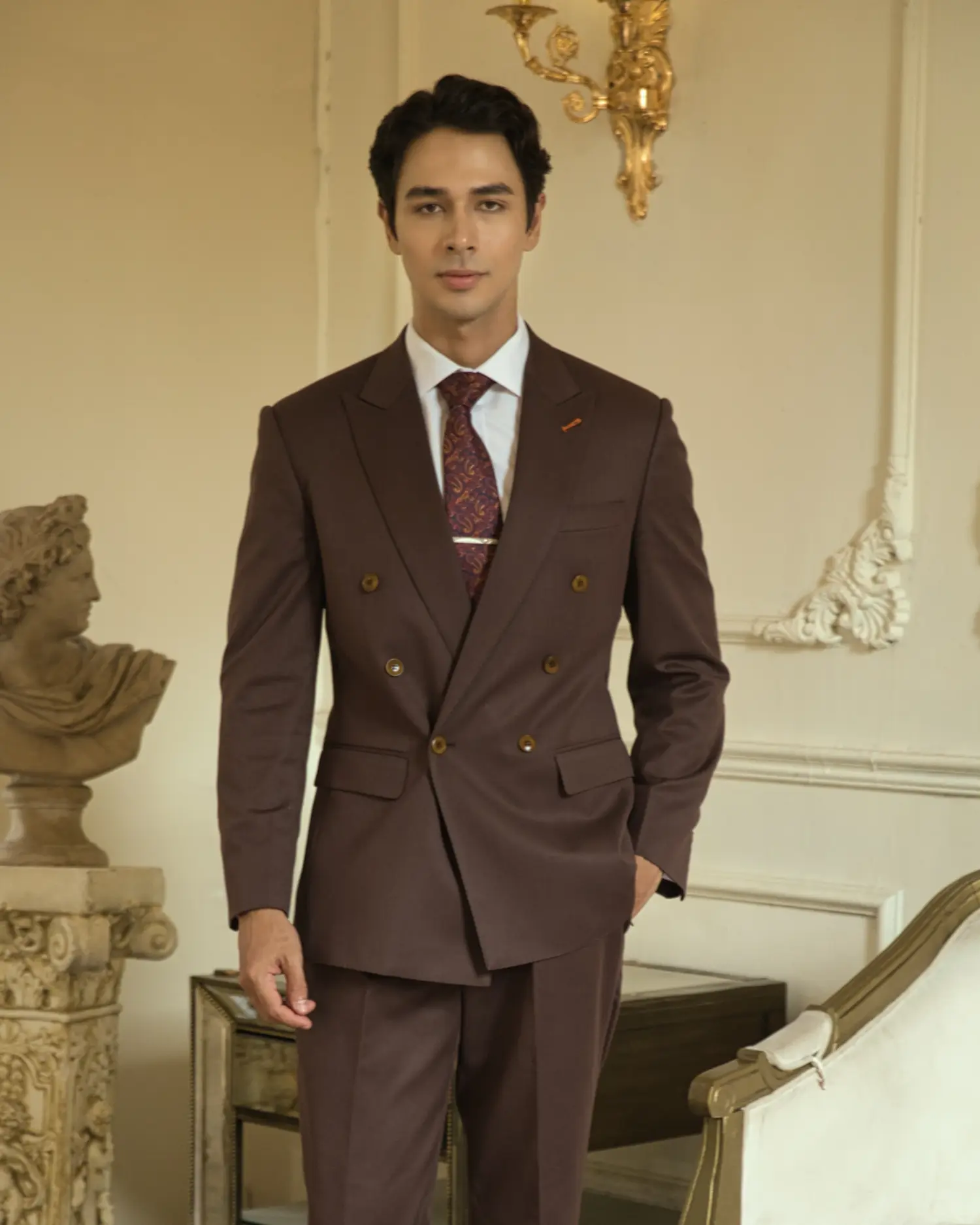
- Single-Breasted Dominance: While the Double-Breasted jacket is a symbol of peak authority, its overlapping fabric can add unnecessary bulk to a powerful chest. The Single-Breasted (2-button) jacket remains the gold standard for modern athleticism, offering a clean, uninterrupted vertical line that allows the natural physique to speak for itself.
The Sartorial Recommendation for Perfection
To achieve the ultimate equilibrium of height and power, the 2-button Single-Breasted jacket is the definitive selection. When paired with a waistcoat, it creates a deep “V” gorge that elongates the frame while providing the crisp, defined waistline that characterizes a masterfully tailored V-taper. However, the final choice between single-breasted and double-breasted styles, as well as a two-piece or three-piece configuration, should always align with personal preference and the specific requirements for thermal comfort in one’s environment.
Harmonizing the Upper Body: Aesthetics and Internal Engineering
The upper half of a bespoke suit is where the most significant visual and structural challenges of a V-taper physique reside. To master this area, one must balance external proportions with an internal framework that allows for both a razor-sharp silhouette and physical freedom.
External Proportions: The Lapel and Visual Flow
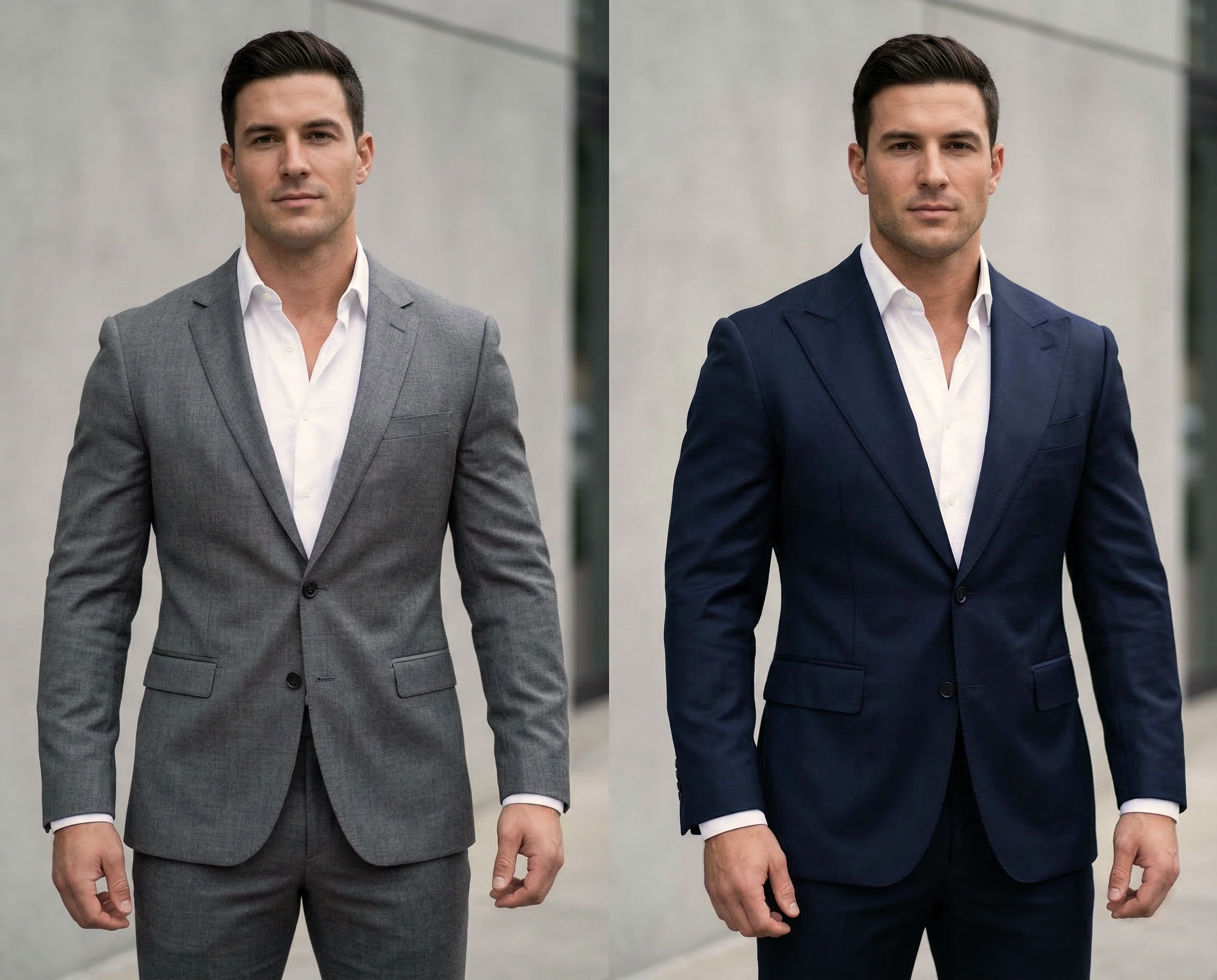
Within the realm of bespoke tailoring, the lapel is far more than a decorative fold; mastering its proportions is one of the most essential styling tips for muscular silhouette. As the ‘proportion bridge’ of the bespoke suit, the lapel connects the neck to the shoulders, serving as a visual anchor that harmonizes the vast ‘real estate’ of a developed chest.
- Embracing Breadth: Choosing narrow or “skinny” lapels is a common aesthetic error. Against a broad chest, thin lapels look diminished, making the head appear disproportionately large. Opting for wide Notch or Peak lapels provides a balanced counterweight to shoulder width, ensuring the jacket looks intentional and custom-built.
- The Visual Flow: Wider lapels create a stronger diagonal line that sweeps inward toward the midsection. This guides the observer’s eye downward, creating an “optical narrowing” effect that emphasizes the waist without requiring the fabric to be uncomfortably tight.
Shoulder Construction: Naturalism vs. Definition
The shoulder line is the most critical structural element for a muscular build. Since developed deltoids already provide natural “padding,” the goal of the shoulder construction is to frame the muscle without adding unnecessary bulk.
- Spalla Camicia (The Shirt Shoulder): This “unstructured” approach is often preferred for its natural drape. It eliminates excess weight and allows the fabric to follow the authentic curves of the shoulder.
- The Thin Pad Exception: While a natural shoulder is common, a thin or ultra-thin shoulder pad remains a superior strategic choice. Without this minimal support, the jacket’s form can easily collapse or distort over time. This subtle structure serves to “clean” the shoulder line by smoothing out the rugged peaks of the trapezius muscles (traps), creating a polished and professional finish without making the jacket feel like a heavy, restrictive piece of armor.
The Foundation: Canvas and Thermal Comfort
The “soul” of a bespoke suit lies beneath the fabric. For those who generate high metabolic heat and exert significant tension on their clothing, the internal materials must be both resilient and breathable.
- Full Canvas & Soft Horsehair: A Full Canvas construction using Soft Horsehair is the gold standard for a muscular chest. This supple internal layer possesses a “memory” that allows the jacket to mold specifically to the unique muscular peaks of the chest over time, ensuring the garment moves in harmony with the body.
- Thermal Management: Internal comfort is dictated by airflow and environmental demands. While a half-lining made from high-grade silk or Bemberg is the gold standard for managing high metabolic heat, a full-lining remains a strategic choice for global travelers or those in colder climates who require extra insulation and structural protection. By selecting the appropriate lining, the wearer remains cool, composed, and agile in any setting.
By aligning these external proportions with a flexible internal foundation, the jacket transforms into a masterclass in balance, projecting a presence that is undeniably powerful yet perfectly composed.
Bespoke Trousers: Handling the Power of the Lower Body
For the athletic elite, the lower body presents a unique engineering challenge: the extreme ratio between a narrow waist and powerful, developed quadriceps. Achieving the perfect trouser fit requires a departure from standard straight-cut patterns in favor of a more sculptural, anatomical approach.
The Quads Challenge
Standard off-the-rack trousers are typically drafted for a sedentary silhouette, leading to the “loose waist, tight thigh” dilemma. In bespoke tailoring, the pattern is drafted to accommodate the full circumference of the quads while maintaining a sharp, secure fit at the waist, eliminating the friction and tension that often lead to fabric wear.
The Pleats Debate (Function over Fashion)
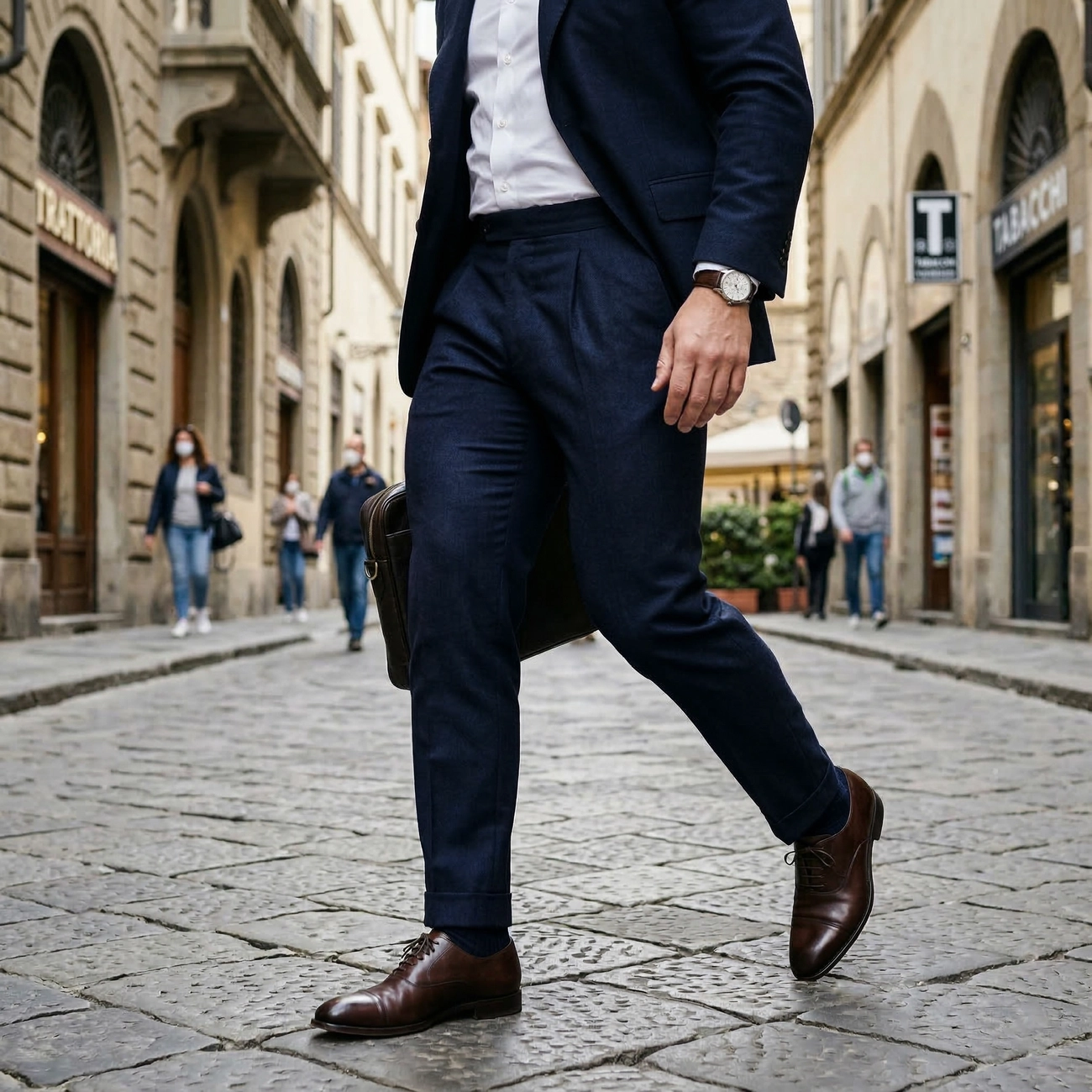
For those with significant leg mass, bespoke trousers with pleats are almost always the superior choice. Pleats act as an “expandable” reserve of fabric, lying flat when standing but opening to provide necessary volume when sitting or moving.
- Single Pleat: Offers a perfect equilibrium for the modern professional. It provides just enough additional room for the thighs to move freely while maintaining the clean, streamlined front typical of contemporary tailoring.
- Double Pleats: Provides maximum comfort and a more commanding, classical aesthetic. This configuration is ideal for those with exceptionally large quads who require absolute freedom of movement and a higher level of sartorial authority.
The Verdict on Pleats: While the choice between one or two pleats is a matter of personal preference and thigh volume, incorporating at least one pleat is the secret to maintaining a flat, crisp trouser front that does not “pull” across the hips.
The Tapered Leg
To prevent a powerful lower body from appearing like “pillars,” the leg must be strategically tapered. By keeping the thigh roomy but gradually narrowing the fabric toward the ankle, the cut of the bespoke trousers mirrors the natural anatomy of the leg. This preserves the overall V-taper flow of the entire bespoke suit.
Side Adjusters vs. Belt Loops
For the athletic silhouette, Side Adjusters are highly recommended over traditional belt loops. By removing the bulk of a belt, the waistline remains clean and uninterrupted. This emphasizes the “wasp waist” and ensures the focal point remains on the transition from the broad shoulders to the narrow midsection.
The Perfect Length (The Break)
To maintain a sharp, youthful energy, a No-break or Slight-break length is ideal. This ensures the trouser hem sits cleanly above the shoe without bunching, which can inadvertently add visual “weight” to the lower body and shorten the appearance of the legs.
Conclusion: The Efficient Gentleman’s Aesthetic
Elegance is the ultimate harmony between a garment and the individual’s unique proportions. For the athletic elite, true style is achieved when the strength of a V-taper is balanced by intentional design, where structural precision meets physical ease. When a suit is engineered to respect the sculptural reality of a muscular build, it becomes a powerful, fluid testament to one’s discipline and composure.
To understand the complete architectural framework and the technology that makes this level of precision possible, explore the foundational blueprint: “The Ultimate Guide to Phygital Tailoring for the Muscular Build: Mastering the V-Taper Suit“.
DISCOVER PHYIGITAL BESPOKE TAILORING