How does bespoke tailoring help reduce fabric waste?

Every year, the global fashion industry generates an estimated 92 million tons of textile waste, a staggering figure fueled by a culture of “disposable” consumption and relentless production cycles. In this landscape of excess, bespoke tailoring emerges as more than just a pinnacle of luxury; it represents a sophisticated technical solution to the systemic issue of fabric waste.
At its core, the environmental crisis in fashion is a failure of production logic. While the Fast Fashion industry operates on “Predictive Production” (manufacturing thousands of garments based on speculative forecasts) the bespoke tailor shop functions through “On-demand Craftsmanship.” This fundamental shift ensures that every bespoke suit is born from an actual need rather than a market prediction.
Pre-Consumer Waste: The Structural Flaws of Mass Production
Pre-consumer waste (the material discarded before a garment ever reaches a customer) is a silent but massive contributor to the fashion industry’s environmental footprint. While bespoke tailoring is often associated with aesthetic perfection, its primary environmental contribution lies in its ability to eliminate the systemic inefficiencies inherent in the Fast Fashion model.
The Endless Sampling Loop in Fast Fashion
One of the most overlooked sources of fabric waste in the Fast Fashion sector is the prototype phase. Because these brands lack personalized data and must cater to a vast range of standardized sizes, they are forced into an iterative cycle of physical sampling.
- The Problem: Multiple versions of a single design are manufactured to test fit and drape across different size categories.
- The Consequence: Since these samples are neither intended for sale nor tailored to a specific individual, they are almost immediately discarded. This creates a continuous stream of design-phase waste that is non-reusable.
Seasonal Inventory and the “Deadstock” Crisis
The Fast Fashion model operates on high-volume, seasonal cycles, producing goods in bulk based on fleeting trends.
- Predictive Overproduction: If a style or size does not sell within its designated season, it becomes “deadstock.”
- The “Textile Graveyard”: Millions of tons of pristine clothing are landfilled or incinerated because they cannot be sold in the new season. This represents a colossal waste of resources expended to create a product with no destination.
Bulk Cutting vs. Precision Cutting
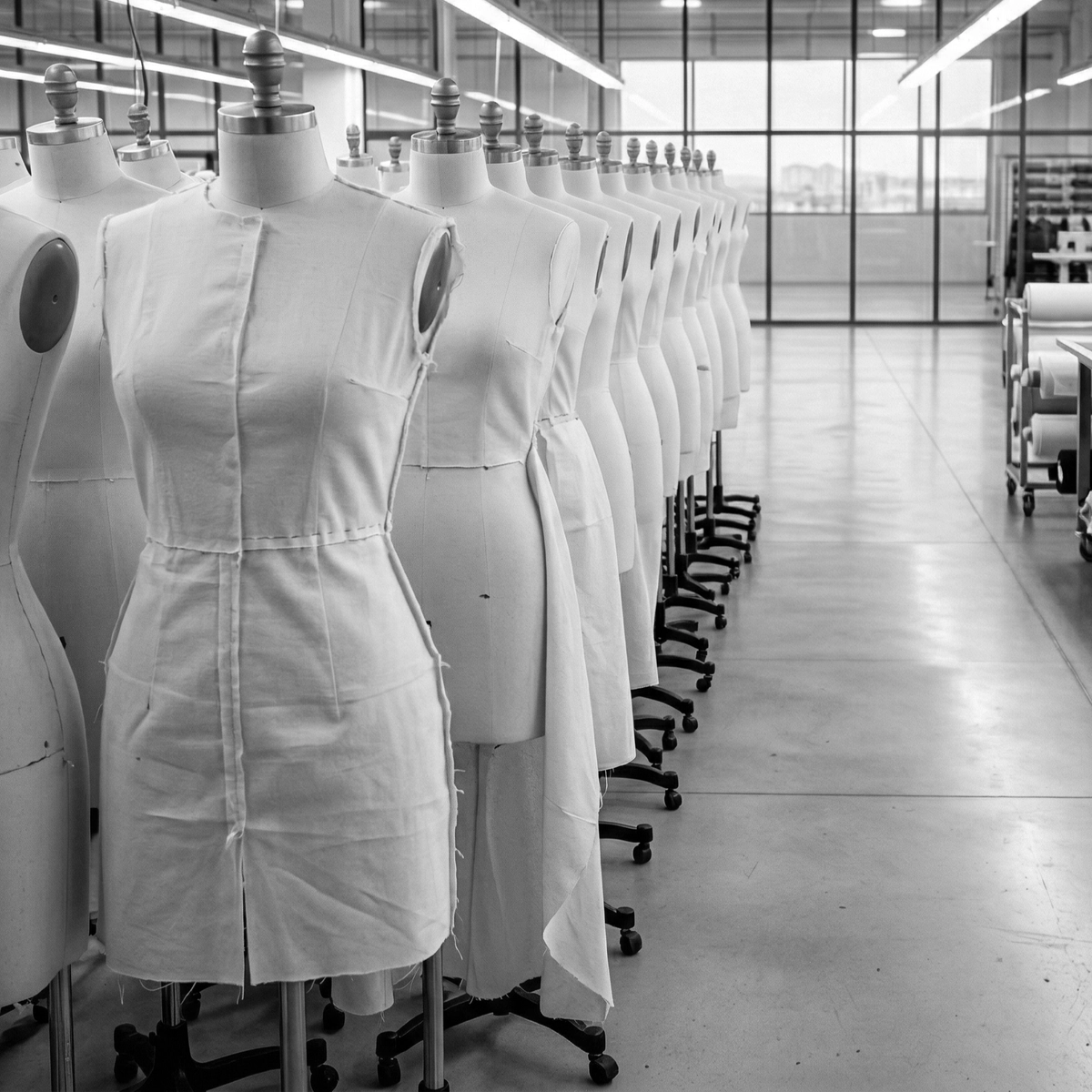
- Fast Fashion: This sector utilizes “bulk cutting,” where dozens of fabric layers are cut simultaneously. Because the patterns are standardized and not optimized for an individual’s proportions, the layout results in significant offcuts. In this model, fabric scrap rates typically soar between 15% and 20%.
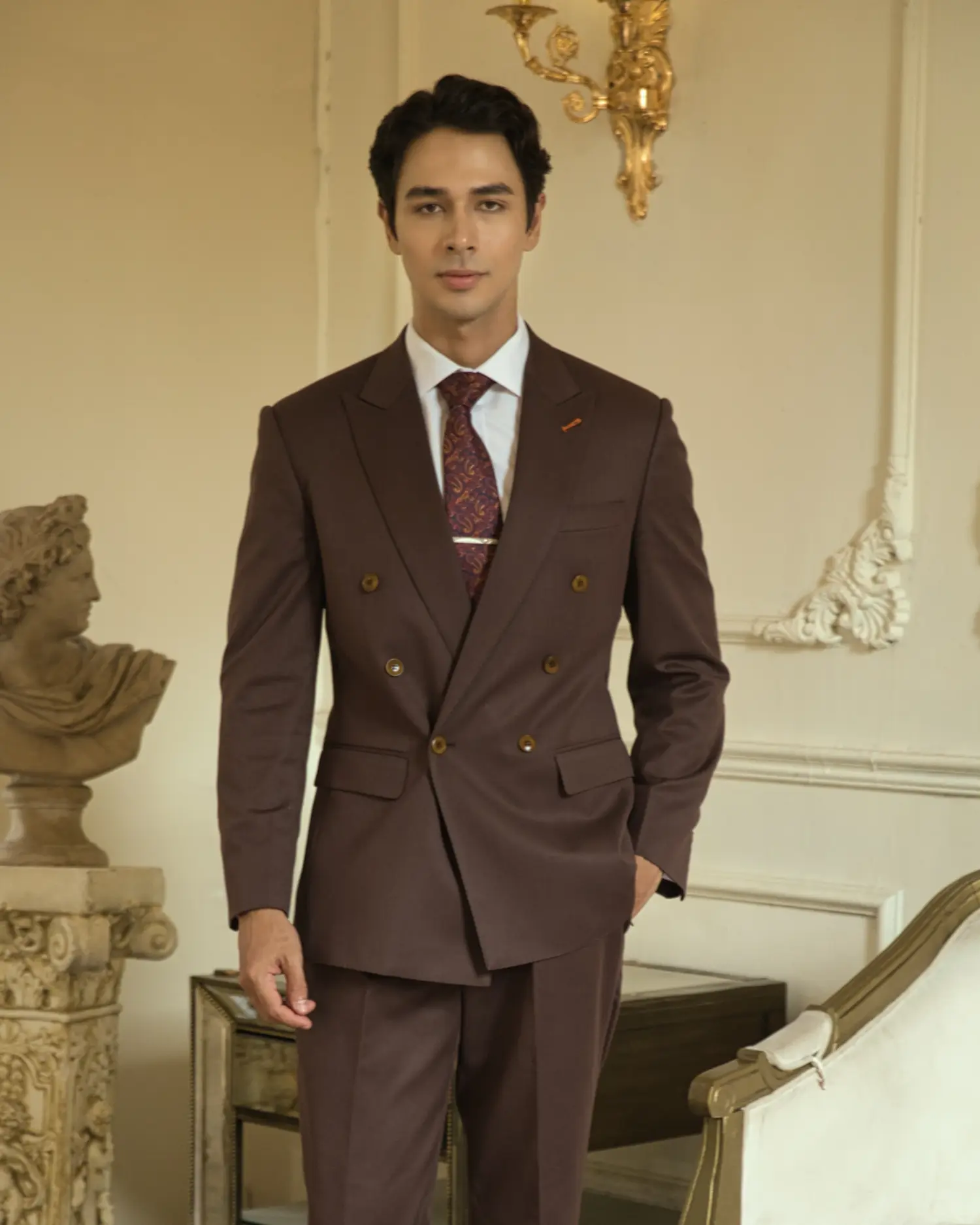
- The Bespoke Solution: A professional bespoke tailor shop only operates on an on-demand basis. Every bespoke suit involves “Precision Cutting” on a single layer of cloth. By accounting for the unique contours of one client, the tailor reduces fabric waste to less than 5%.
Discover the human impact behind the scenes in our article: “How bespoke tailoring supports ethical fashion and fair labor?”
The Fitting Paradox: Why Standardized Sizes Create Waste
Post-consumer fabric waste is often a direct result of “The Fitting Paradox”: the failure of standardized sizing to accommodate natural body changes. While bespoke tailoring is an investment in longevity, Fast Fashion is, by design, an investment in obsolescence.
Tight Seam Allowance vs. The Inlay Advantage
To minimize costs, Fast Fashion manufacturers use “tight seam allowances,” leaving almost no extra fabric inside the seams.
- The Problem: If a wearer’s size changes slightly, the garment cannot be “let out.” It becomes unwearable and is quickly discarded.
- The Bespoke Solution: A bespoke suit is engineered with “Inlays” (extra fabric). This technical foresight allows the garment to be adjusted over decades, extending its lifespan to 10–15 years.
The “Modified Waste” of Alterations
- Fast Fashion Alterations: When consumers buy items that are too large, they must be trimmed down. These tiny fabric offcuts from shortening or tapering are impossible to recycle and end up as trash.
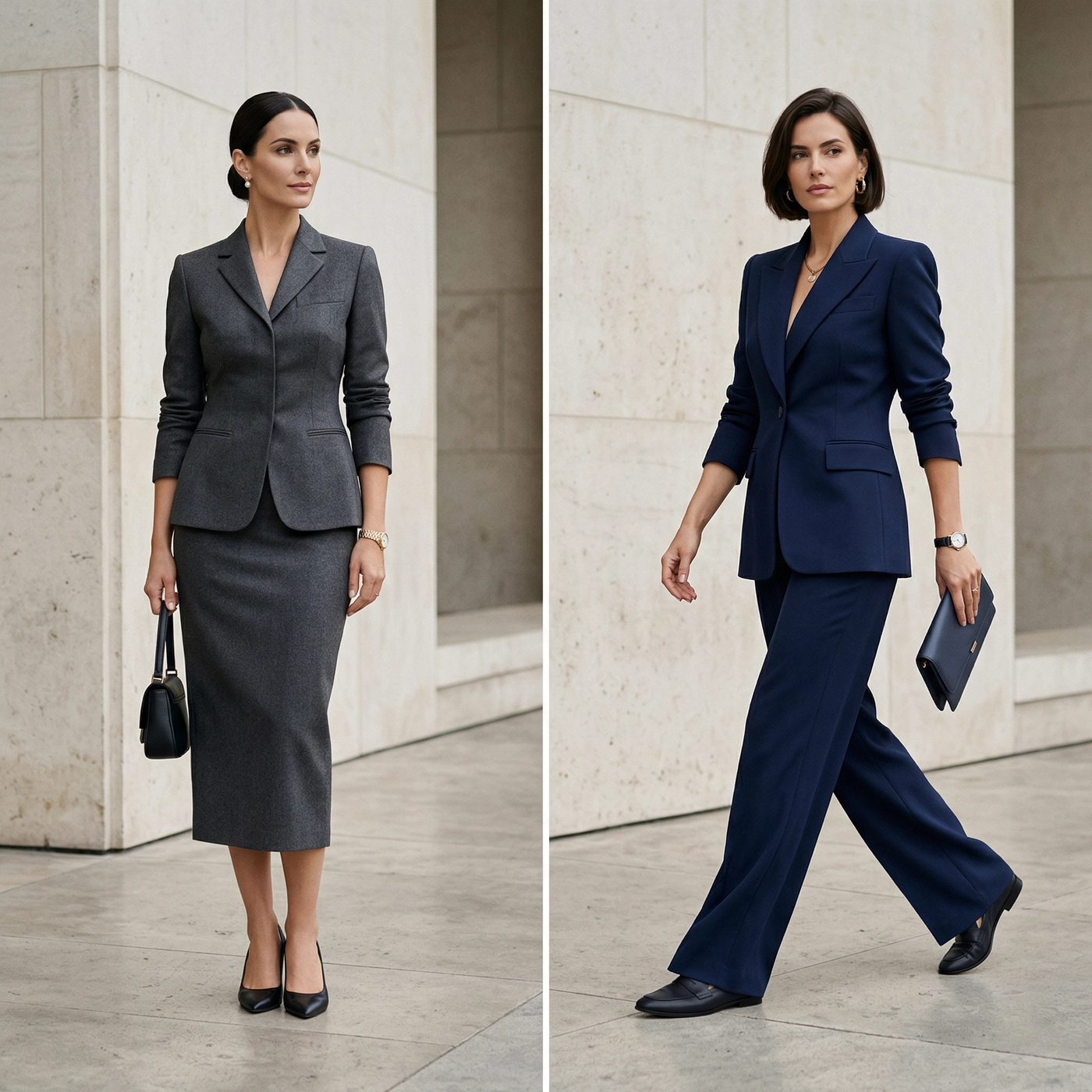
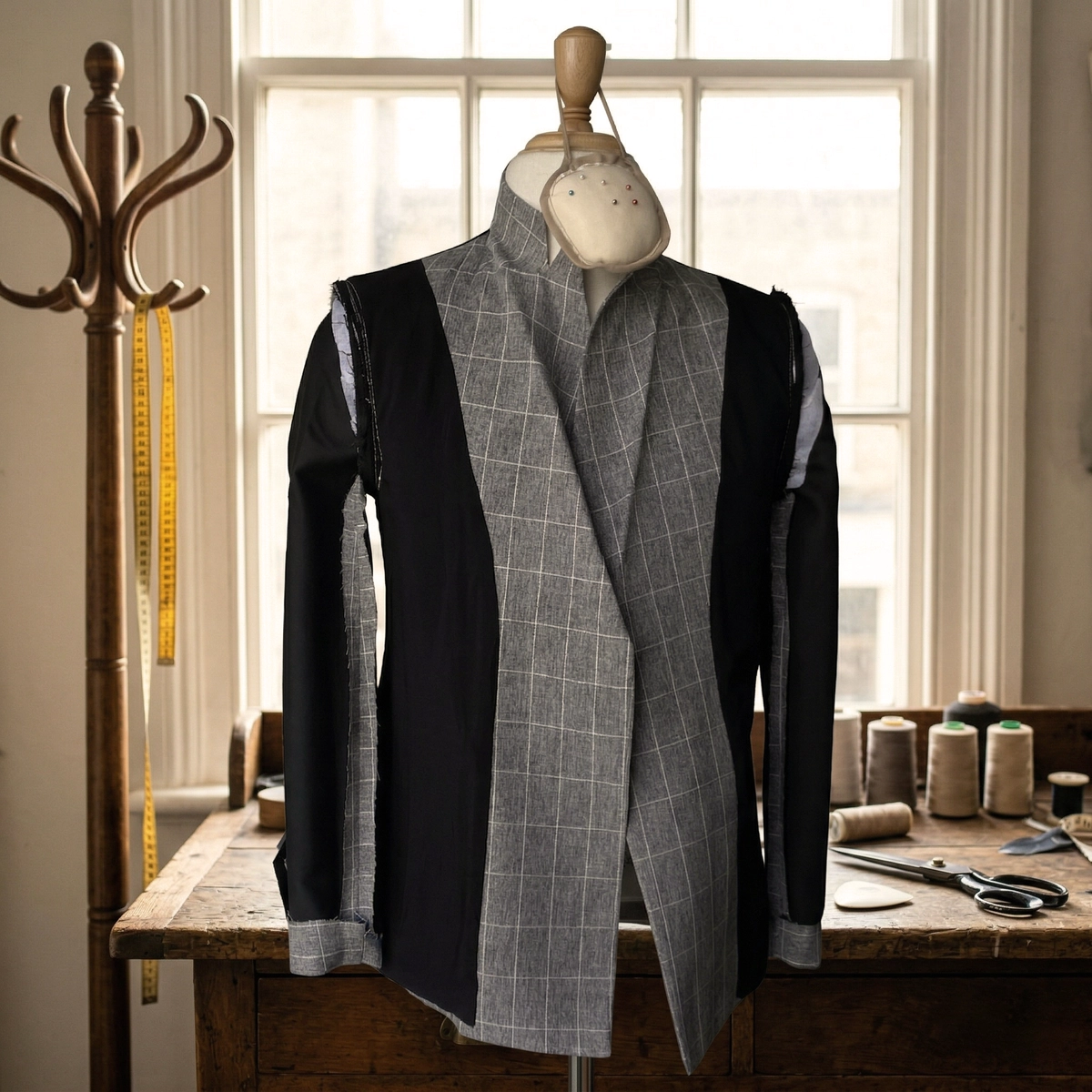
- Bespoke Perfection: Bespoke tailoring eliminates this waste. Because the garment is drafted to your exact anatomical map from the start, 100% of the eco-friendly fabrics remain part of the functional garment, ensuring zero waste from the first fitting.
Material Integrity: Beyond the “Natural” Label
In the discussion of fabric waste, the composition of the material is just as critical as the cutting process. Bespoke tailoring distinguishes itself by prioritizing high-integrity, eco-friendly fabrics that offer a superior alternative to the synthetic, short-lived materials prevalent in the Fast Fashion industry.
The Quality Gap: Durability as Sustainability
The Fast Fashion model relies on low-cost, low-quality textile blends (often a mix of cotton and polyester) to maximize profit margins. These blends are structurally fragile, prone to pilling and losing shape, which accelerates the garment’s journey to the landfill.
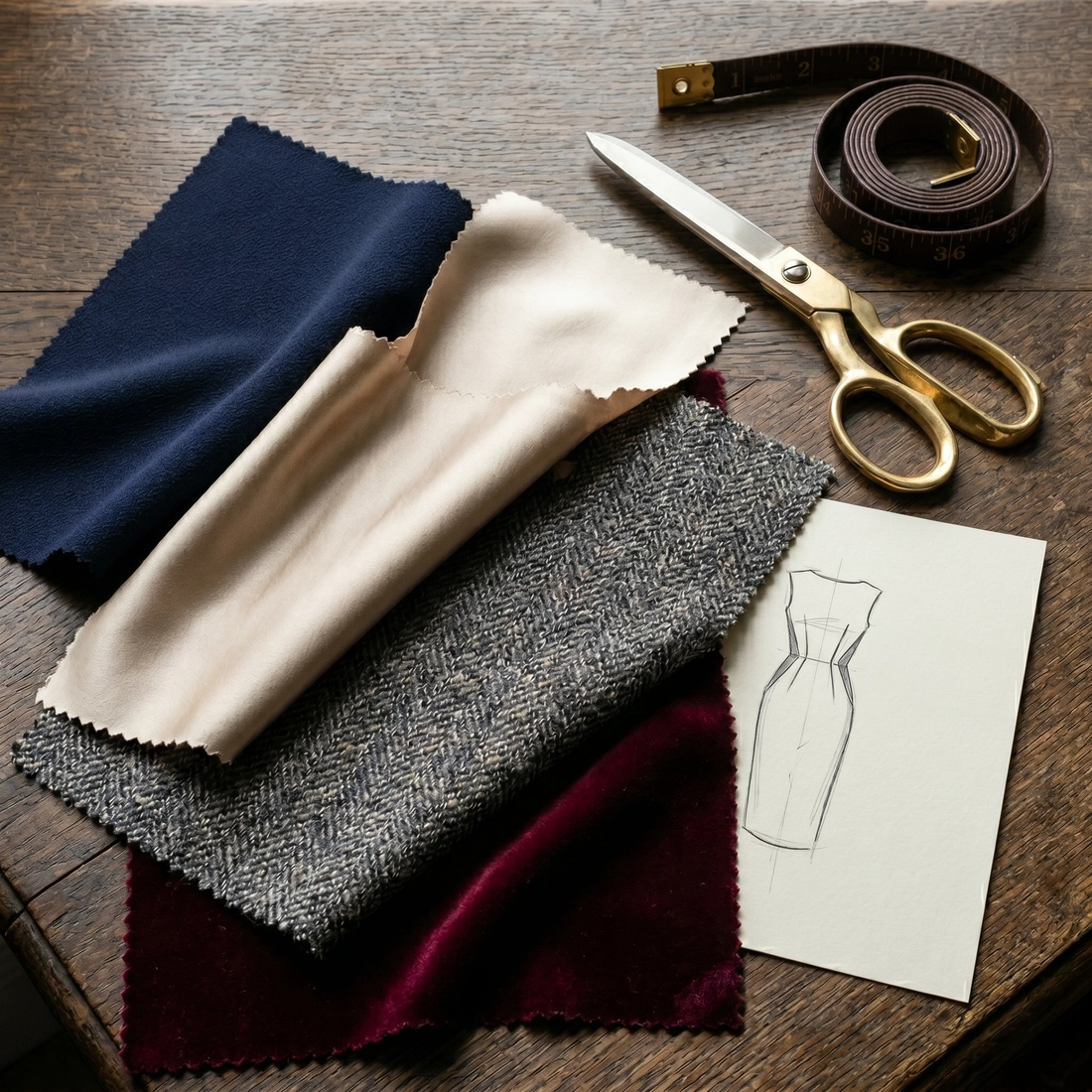
However, it is vital to understand that bespoke tailoring is not inherently sustainable unless paired with the right materials. A bespoke suit crafted from cheap polyester or low-grade synthetics still contributes to environmental degradation. True ethical tailoring insists on premium natural fibers such as high-twist wool, silk, and cashmere. These materials are not only more durable but also age gracefully, ensuring the garment remains functional and aesthetic for decades rather than months.
Traceability and Animal Welfare
For a professional bespoke tailor shop, “eco-friendly” extends beyond the type of plant or animal; it encompasses the entire supply chain.
- The Role of Prestigious Mills: Elite tailoring houses source their cloth from historic institutions like Holland & Sherry or Reda. These mills are global leaders in traceability, providing transparent data on the origin of their fibers. Reda, for instance, is renowned for its B-Corp certification and fully integrated sustainable production, while Holland & Sherry represents centuries of ethical British craftsmanship, ensuring every meter of cloth meets the highest environmental standards.
- Ethical Wool Production: A key component of eco-friendly fabrics in tailoring is the commitment to animal welfare. This includes sourcing “non-mulesed” wool, a practice that ensures sheep are treated humanely. By choosing these materials, bespoke tailoring supports a production cycle that respects biodiversity and prohibits animal cruelty.
The Microplastic Factor: Invisible Fabric Waste
One of the most insidious forms of fabric waste is the release of microplastics (tiny plastic particles shed by synthetic garments during washing and disposal).
- The Fast Fashion Impact: Because Fast Fashion depends heavily on petroleum-based fibers (polyester, nylon, acrylic), it is a primary contributor to microplastic pollution in our oceans.
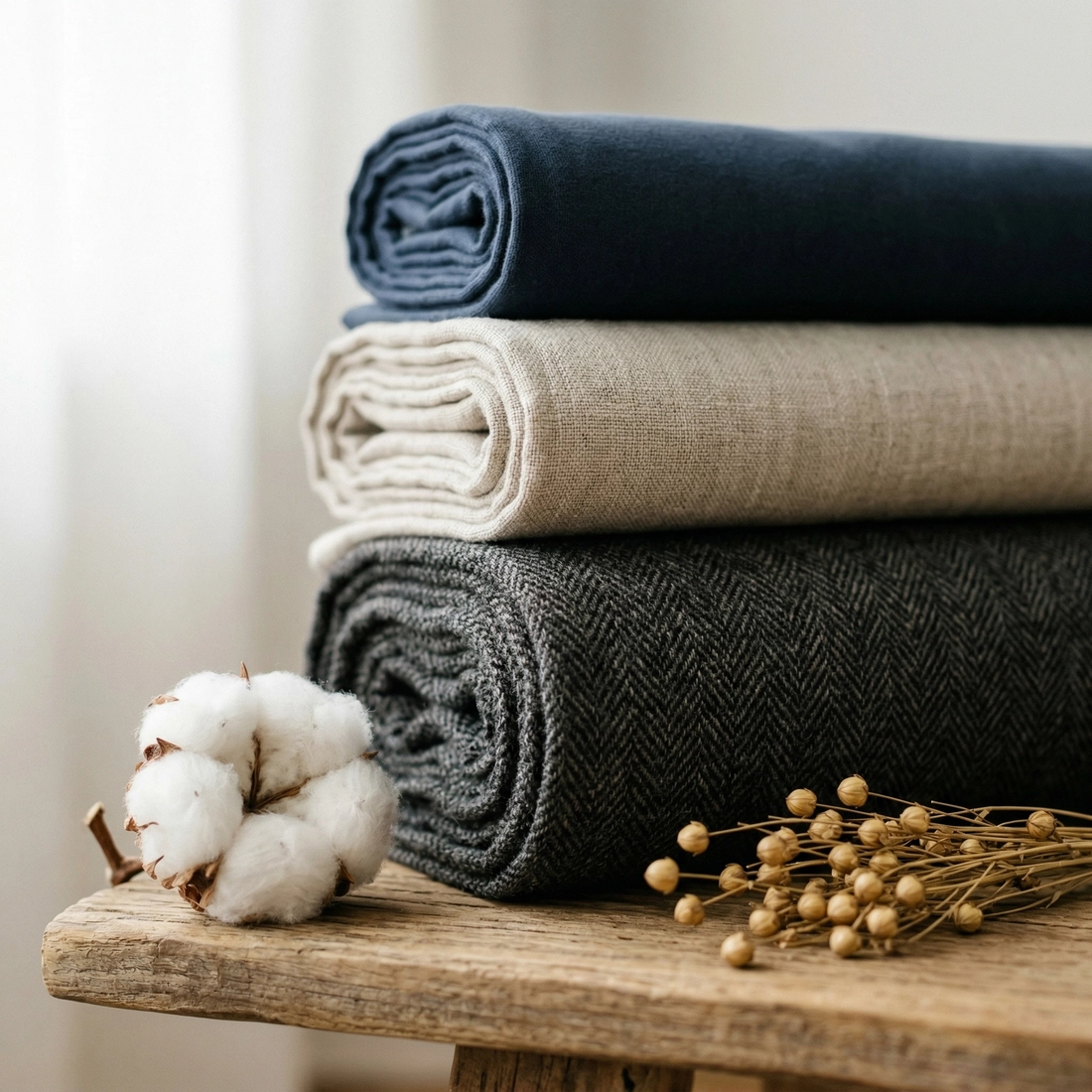
- The Bespoke Alternative: By utilizing 100% natural fibers, bespoke tailoring effectively eradicates this invisible waste stream. Natural materials are inherently biodegradable; when a bespoke garment eventually reaches the end of its long life, it can return to the earth without leaving behind a toxic legacy of plastic residue.
Conclusion: Tailoring a Greener Future
The sustainability of bespoke tailoring is defined by its decade-long lifespan, which effectively slows the consumption cycle and minimizes fabric waste. By utilizing 100% eco-friendly fabrics, a bespoke suit exists within a circular economy, biodegradable and respectful of the earth. This transition from disposable to intentional is the ultimate masterclass in “Economic Wisdom,” where quality far outweighs quantity.
When analyzed through cost-per-use, the investment in a professional bespoke tailor shop offers an “ethical fit” with the planet that Fast Fashion can never replicate. Through the hands of a skilled bespoke tailor, fashion evolves from a source of waste into a legacy of craftsmanship. It is a powerful reminder that protecting our ecosystem and honoring human artistry are, and always should be, inextricably linked.
We invite you to begin your journey toward a more conscious wardrobe and explore the world of personalized sartorialism at Rosie Hong Online Bespoke Tailoring.
DISCOVER PHYIGITAL BESPOKE TAILORING