How does bespoke tailoring support ethical fashion and fair labor?
In the modern era, sustainability has evolved beyond a mere trend; it has become a profound consciousness, a systemic way of thinking that re-evaluates our relationship with the objects we consume. At the forefront of this movement is bespoke tailoring, a craft that serves as the physical manifestation of ethical awareness.
Investing in a bespoke suit is an act of participating in this broader consciousness. It represents a deliberate departure from the culture of “disposable” fashion, favoring a philosophy that prioritizes human skill, precision, and longevity. By choosing a professional bespoke tailor, individuals are not just purchasing a garment; they are endorsing an ethical fashion framework that seeks to restore the balance between production, the environment, and fair labor practices.
Clarifying the Scope: A Nuanced View of Sustainability in Fashion
To truly understand this sustainability consciousness, we must distinguish between different production philosophies. It is vital to recognize that the garment industry is not a monolith, and the ethical challenges we face are largely concentrated in specific sectors.
The Conscious Paradigm of Luxury RTW
It is important to acknowledge that many high-end Ready-to-Wear (RTW) houses operate within a high-integrity framework. Brands like Stella McCartney, Chloé, and Gabriela Hearst have successfully integrated sustainability into their DNA, utilizing innovative eco-friendly materials and maintaining limited-run productions. These labels prove that even within the ready-to-wear model, a deep commitment to environmental and social ethics is possible. However, it is worth noting that such high-integrity Luxury RTW often carries a significant brand premium, sometimes placing it beyond the reach of many.
The Antithesis to Mass-Market & Fast Fashion
However, the “systemic consciousness” of bespoke tailoring stands in sharpest contrast to the Mass-market and Fast Fashion industry. This article specifically addresses the unethical practices prevalent in the low-cost, high-volume sector where speed and profit margins often supersede environmental health and human rights.
By analyzing the exploitative nature of mass production, we can better appreciate how the bespoke tailoring process provides a necessary, high-fidelity alternative for those who view sustainability as a non-negotiable principle of modern life.
The Invisible Crisis: The Impact of Fast Fashion and Mass-Market RTW
To evaluate the true cost of a garment, we must look beyond the price tag and analyze the “Environmental Blueprint” of its production. In the realm of ethical fashion, the contrast between mass production and bespoke tailoring is most evident in how natural resources are managed, or mismanaged.
Ecological Disruption: From Resource Depletion to Global Pollution
Resource Depletion: The Inefficiency of Raw Materials
One of the most significant weaknesses of industrial fashion is the staggering waste of resources at the raw material stage. Whether utilizing natural fibers like wool and silk or synthetic alternatives, mass production demands a colossal allocation of land, water, and energy. According to the Ellen MacArthur Foundation, the fashion industry consumes approximately 93 billion cubic meters of water annually, enough to meet the needs of five million people. When mass-market inventory is destroyed due to being “out of fashion,” the entirety of these invested resources is squandered, representing a total loss for the planet’s ecosystem.
Mineral and Fuel Consumption
Heavy machinery in mega-factories rapidly depletes minerals and non-renewable energy. Powered by fossil fuels, this mechanical cycle contributes significantly to the global carbon footprint, a process fueled solely by high-volume output that often remains unworn.
Environmental Contamination and Public Health
The manufacturing phase of mass-market RTW introduces severe pollutants into the biosphere:
- Air Quality: Industrial chimneys release a constant stream of greenhouse gases and particulate matter, deteriorating air quality.
- Toxic Discharge: A critical point of concern is the textile dyeing process. In many industrial hubs where waste treatment is bypassed, toxic effluent is discharged directly into local rivers. According to UNEP, the textile dyeing industry is responsible for 20% of global industrial water pollution. This does not only destroy aquatic ecosystems; it directly compromises the health of local communities who rely on these water sources for their daily lives.
The Crisis of End-of-Life Waste
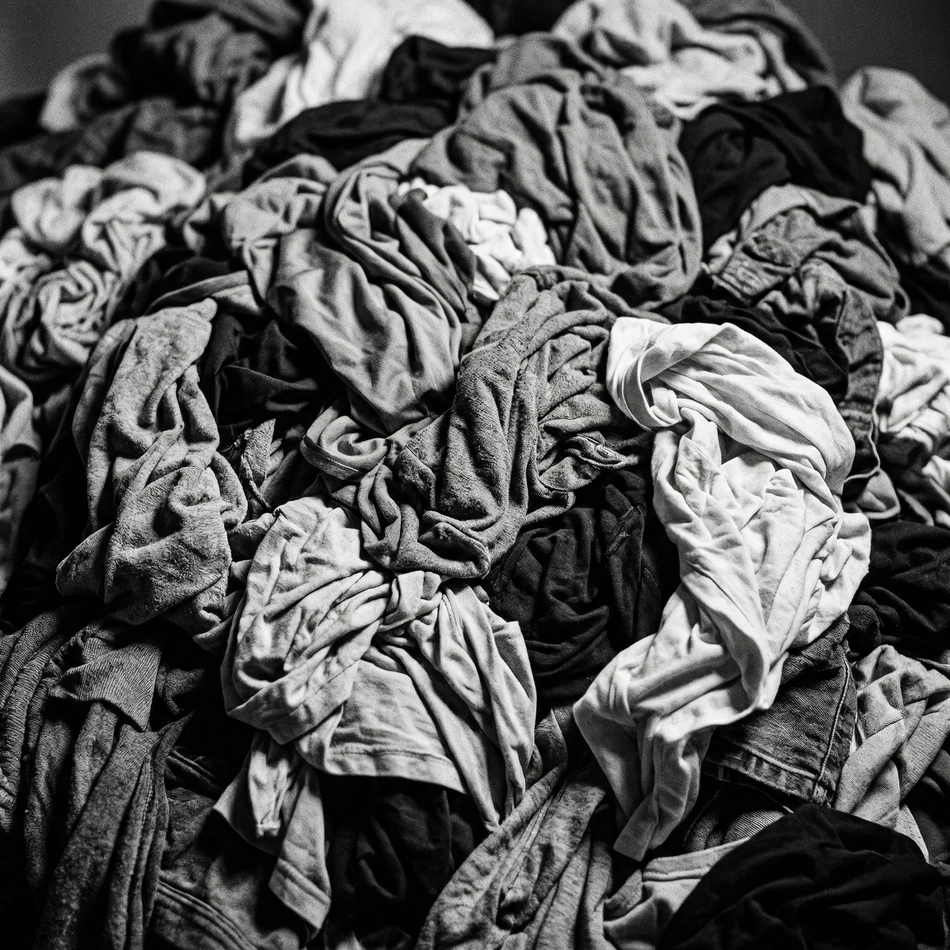
The “take-make-waste” model is inherently unsustainable. Driven by fleeting trends, “deadstock” inventory creates massive textile graveyards. Each year, 92 million tons of waste are generated, which is the equivalent of one garbage truck landfilled or burned every second. This mountain of waste is the inevitable byproduct of prioritizing volume over value.
To understand how the “made-to-order” philosophy triumphed over the “take-make-waste” model, read our analysis on “How does bespoke tailoring help reduce fabric waste?“.
The Human Toll: Dignity and Health in the Garment Industry
Beyond the environmental impact, the most critical pillar of ethical fashion is the protection of human dignity. In the mass-market and fast fashion sectors, the labor model is often built on exploitation rather than craftsmanship, leading to a profound “human cost” that is rarely reflected in the retail price.
The Assembly Line Pressure: Dehumanization of Labor
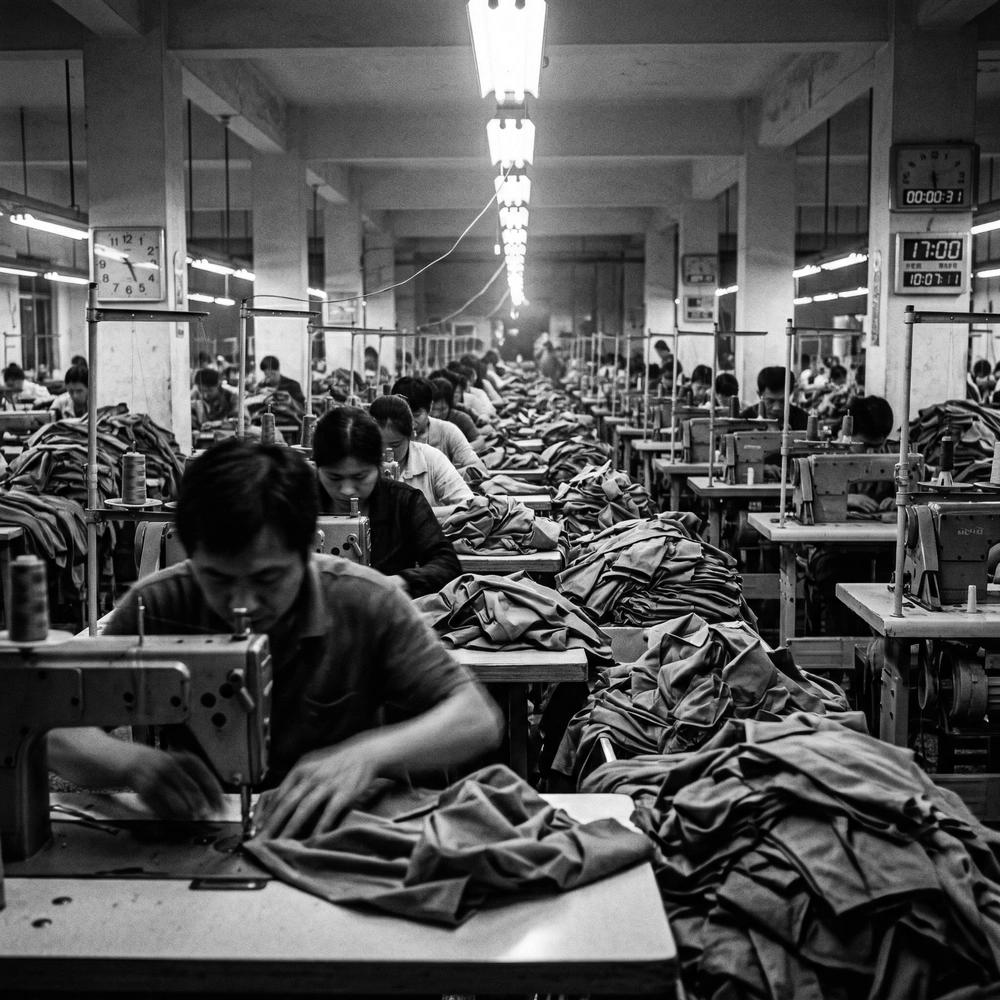
In secondary manufacturing hubs, workers are often reduced to mere extensions of machinery. Under the “assembly line” model, a laborer is tasked with only a single, repetitive segment of the garment, sewing the same seam or attaching the same button thousands of times a day. This system demands extreme efficiency to meet high-volume quotas.
The relentless pace of the conveyor belt, combined with the lack of task variety, leads to chronic fatigue and repetitive strain injuries. According to the Clean Clothes Campaign, despite the grueling pace, less than 2% of garment workers globally earn a living wage, forcing them to work excessive overtime (often 12 to 14 hours a day) just to meet basic survival needs.
Hostile Working Environments: The “Sweatshop” Reality
In many developing nations where mass-market production is outsourced, the physical working conditions are often substandard. Unlike the climate-controlled environments of high-end ateliers, these factories frequently lack air conditioning. Workers must endure stifling heat, often relying on inadequate industrial fans in overcrowded spaces. This persistent thermal stress not only reduces productivity but also poses long-term risks to respiratory and cardiovascular health.
The Invisible Toll: Inadequate Lighting and Visual Impairment
An overlooked detail is the impact of workspace on sensory health. Proper illumination is a requirement for fair labor, yet the reality in hubs like Bangladesh and Vietnam is staggering. Due to poor lighting and focal strain, up to 40% of workers develop long-term visual impairment and chronic eye strain within just a few years (WHO). These figures from export processing zones prove that low prices are essentially subsidized by the health of the workforce.
Bespoke Tailoring: A Comprehensive Solution for Ethics and Labor
While mass production thrives on volume, bespoke tailoring stands as a sophisticated alternative where environmental stewardship and human dignity are prioritized. This model provides a holistic solution by redefining how garments are conceived, crafted, and valued.
Resource Efficiency and The “Living Garment” Philosophy
The ethical strength of bespoke tailoring lies in its integration of on-demand production and technical longevity. Unlike the mass-market system, a bespoke suit is only created when a specific need arises, effectively eliminating the concept of “deadstock” and unsold inventory.
- Transparent Supply Chains and Traceability: A hallmark of a professional bespoke tailor is the ability to provide full traceability of materials. High-integrity tailoring houses source their fabrics from world-renowned mills, such as Vitale Barberis Canonico (VBC) or Loro Piana, which hold rigorous ethical certifications. These mills often utilize renewable energy and adhere to strict animal welfare standards, such as sourcing “non-mulesed” wool, ensuring that the ethical journey of the garment begins long before the first cut.
- Natural Fiber Excellence: Eradicating Microplastics: While mass-market RTW relies heavily on synthetic fibers like polyester and nylon, which are major contributors to global microplastic pollution, bespoke tailoring is rooted in the use of 100% natural fibers. By utilizing wool, silk, and linen, bespoke garments do not shed harmful microplastics during their lifecycle or disposal, preserving the health of our oceans and soil.
- Precision and Waste Reduction: Through meticulous pattern-making based on individual measurements, a bespoke tailor optimizes fabric usage, reducing waste to less than 5% (compared to 15-20% in industrial cutting).
- The Inlay Advantage: A hallmark of this craft is the Inlay (Hem allowance): extra fabric left within the seams. This allows the garment to be adjusted as the wearer’s body changes, preventing the item from being discarded.
- Economic Wisdom (Cost-per-Use): Although the initial investment is higher, a bespoke piece is engineered to last 10 to 15 years. When calculating the cost-per-use, bespoke tailoring often proves more economical than cheap RTW that requires frequent replacement, embodying a true circular economy.
Restoring Artisan Dignity: Ethics in Labor
Beyond the material, bespoke tailoring restores the human element to fashion, shifting away from the dehumanizing assembly lines of mass-market factories.
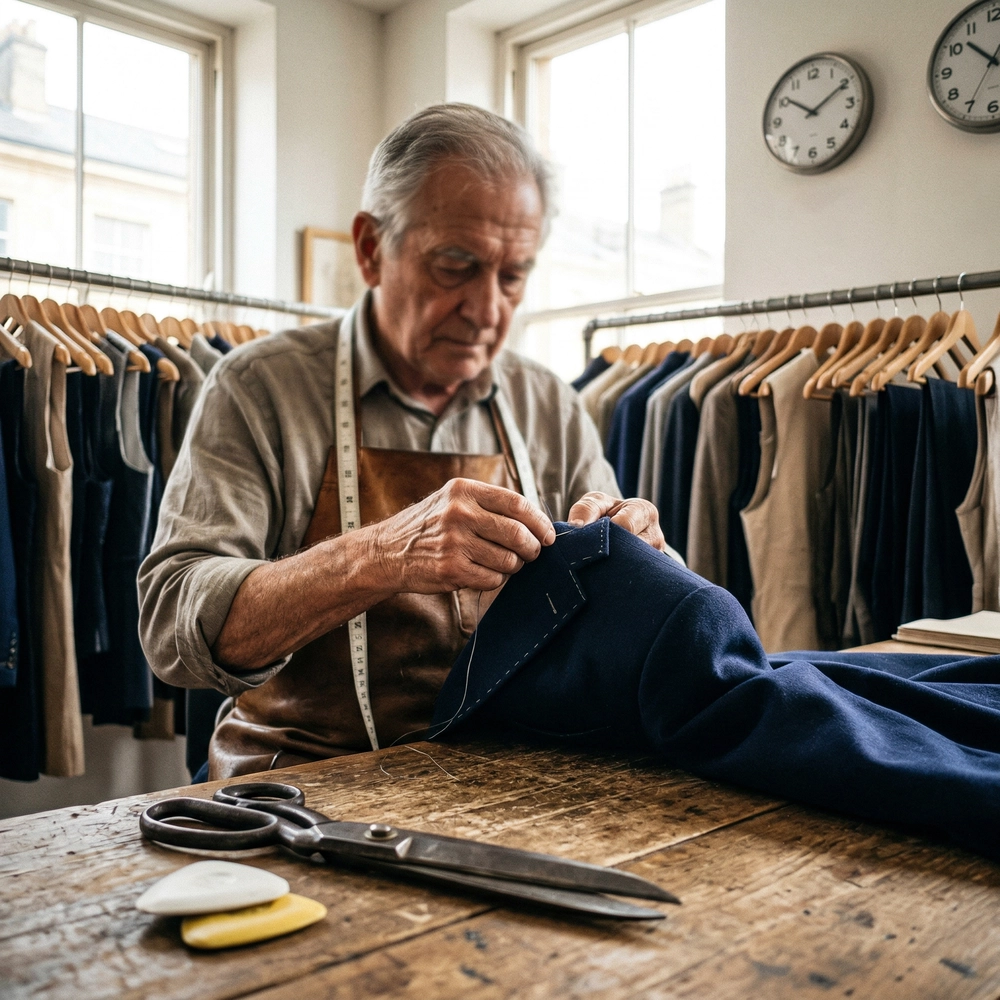
- Expertise over Efficiency: Crafting a bespoke garment requires a lifetime of skill. These Artisans are compensated with wages that reflect their mastery, rather than being subjected to the low-wage, high-pressure quotas of fast fashion.
- Human-Centric Environment: Bespoke masters work in well-lit, climate-controlled ateliers or private studios. They possess full autonomy over their time and space, free from the physical and mental strain of the industrial conveyor belt. This environment not only protects their health, specifically their vision, but also ensures that the final product is a result of pride, not exploitation.
Conclusion: A Legacy of Conscientious Elegance
Bespoke tailoring represents more than just high-quality clothing; it is a direct challenge to the exploitative structures of the modern garment industry. By prioritizing a “made-to-order” philosophy, this craft addresses the root causes of resource depletion and human rights violations found in mass-market RTW. Every bespoke suit acts as a physical rejection of “disposable” culture, favoring an ethical fashion framework where every stitch is accounted for and every resource is respected.
The true value of engaging with a professional bespoke tailor lies in the long-term reconciliation of personal style with global responsibility. Beyond the immediate aesthetic precision, the bespoke tailoring model offers a sustainable blueprint for fair labor through artisan autonomy and a circular economy through the technical durability of the “Inlay” system. While the initial investment is significant, the reduced environmental footprint and superior cost-per-use transform a garment into a legacy of conscientious elegance.
We invite you to align your personal legacy with the planet’s future by experiencing the conscious craftsmanship of Rosie Hong Online Bespoke Tailoring, where every stitch is a commitment to a more ethical world.
DISCOVER PHYIGITAL BESPOKE TAILORING