The Ultimate Guide to Destination Wedding Attire: Styling Your Entire Party Without the Stress
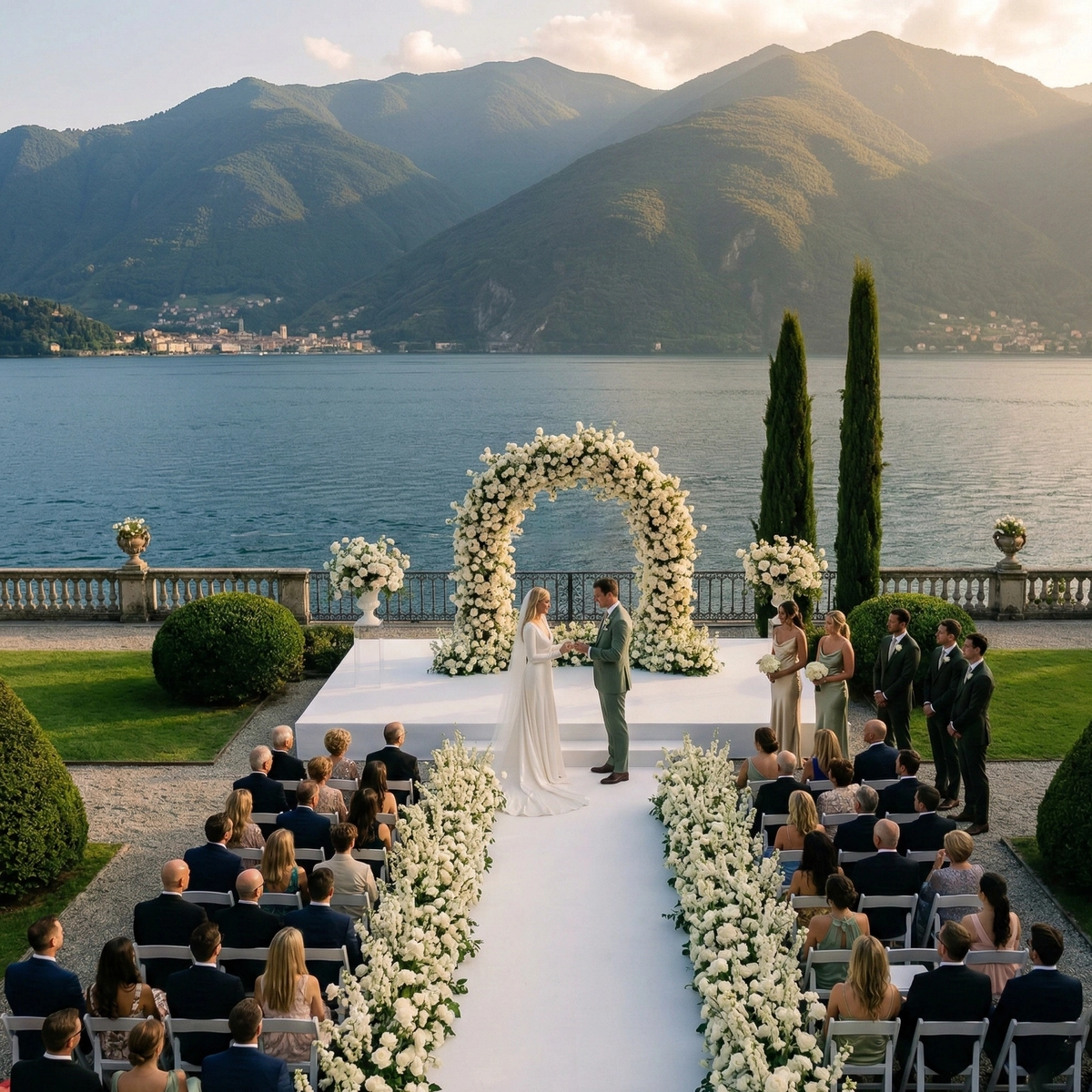
A destination wedding is a curated narrative, not just an event. Whether you are exchanging vows in a Tuscan vineyard or on a tropical coast, the setting demands a wardrobe as extraordinary as the view.
But styling a global party brings a unique challenge: How do you coordinate wedding suits and the perfect bespoke wedding dress for a guest list scattered across continents? Achieving a cohesive visual legacy, where every guest looks impeccable in photos, shouldn’t be a source of stress.
The secret lies in the precision of bespoke tailoring and a well-defined “Style Map.” This guide is your definitive resource for navigating everything from black tie etiquette to the logistics of travel, ensuring your entire party looks effortless from the first toast to the final dance.
Deciphering the Dress Code: The Language of Sophistication
In the world of bespoke tailoring, a dress code is more than a requirement: it is a shared aesthetic language. For a destination wedding, achieving seamless execution across an entire party requires a deep understanding of how tradition meets the environment.
The Insider’s Golden Rules
For formal ceremonies, the difference between a standard appearance and a standout presence lies in the mastery of subtle details.
- Black Tie: While black is the traditional choice, Midnight Blue is often the superior selection for evening elegance. Under the warm glow of artificial event lighting, Midnight Blue retains a rich, visual depth that translates far more vibrantly in photography, whereas pure black can often appear flat or slightly charcoal.
- Morning Dress: For traditional European estate weddings, the focus should remain on the waistcoat’s silhouette. A double-breasted buff waistcoat provides a structured, regal contrast that anchors the morning coat, ensuring a sharp, commanding profile during daylight hours.
Context is King: Architecture & Climate
The venue determines not only the style of wedding suits but the very soul of the garment: the fabric.
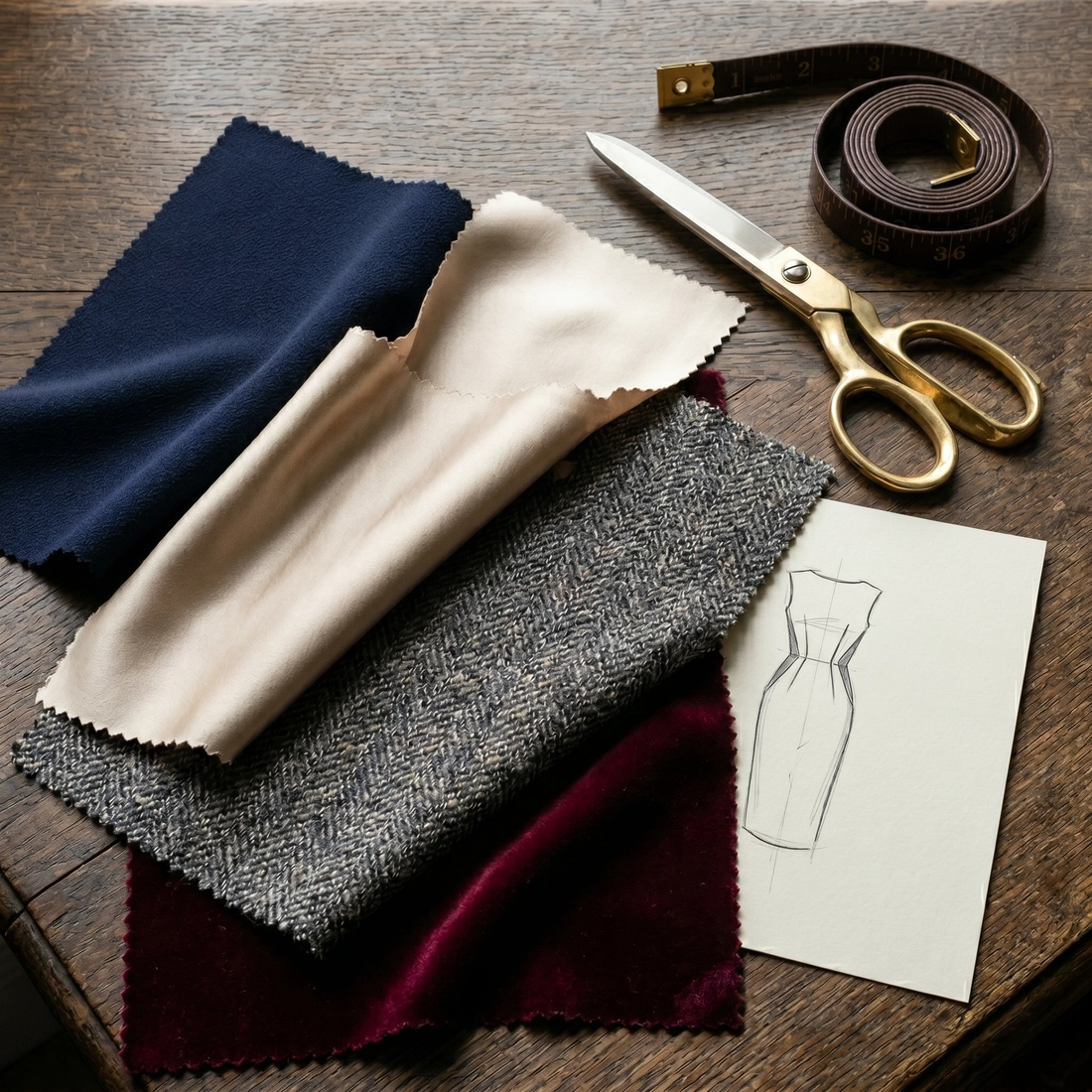
- Historic Estates & Chateaus: Grand settings call for structured silhouettes. To ensure a wedding dress or suit survives the journey, High-twist wool is the ideal “traveler’s fabric.” It is naturally wrinkle-resistant and retains its drape perfectly from the luggage to the aisle, offering a crisp, full-canvas look regardless of travel time.
- Coastal & Tropical Destinations: The challenge lies in balancing heat with elegance. The ultimate expert choice is a Linen-Silk-Wool blend. This sophisticated mix provides the breathability of linen, the luxurious shimmer of silk, and the wrinkle-resistance of wool, allowing the wearer to remain cool without the characteristic “messy” creasing associated with pure linen.
For an in-depth look at selecting the right fabrics for specific destinations, explore our “The Groom’s Guide to Climatic Bespoke: From Lake Como Velvet to Bali Linen”
The Flexibility: Effortless Coordination
Etiquette provides the framework, but modern luxury allows for effortless coordination that reflects personal style and the specific needs of the couple.
- The “Black Tie Creative”: This variation permits subtle textures, such as a velvet dinner jacket for cooler mountain destinations or a deep emerald wool-silk blend that mirrors lush, natural surroundings.
- The “Spezzato” Approach: For intimate garden or villa weddings, pairing a tailored blazer with contrasting trousers (the “broken suit”) offers a relaxed yet undeniably polished aesthetic.
Ultimately, the goal is intentionality. Whether following tradition to the letter or opting for a contemporary pivot, the attire should feel appropriate for the setting and perfectly adapted to the climate.
The Complete Trousseau: A Seamless Transition
A modern destination wedding is a multi-chapter narrative, often spanning from a formal exchange of vows to an energetic evening of celebration. For the discerning couple, the “Complete Trousseau” is not merely a set of clothes, but a strategic collection (a Style Map) designed to evolve with the day’s tempo.
The Ceremony: Formal Integrity
The ceremony is the anchor of the wedding’s visual identity, requiring garments with architectural integrity that command respect and remain timeless.
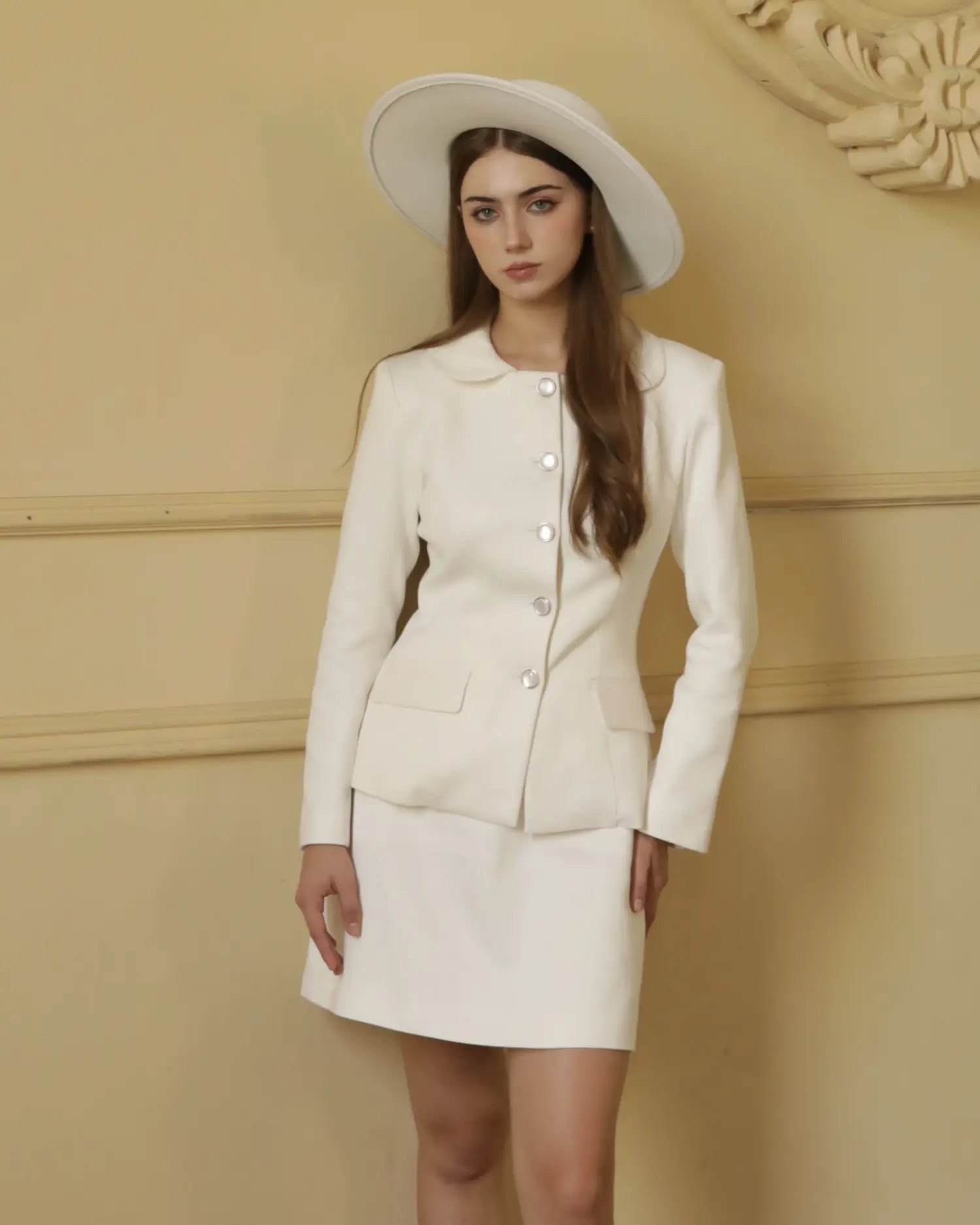
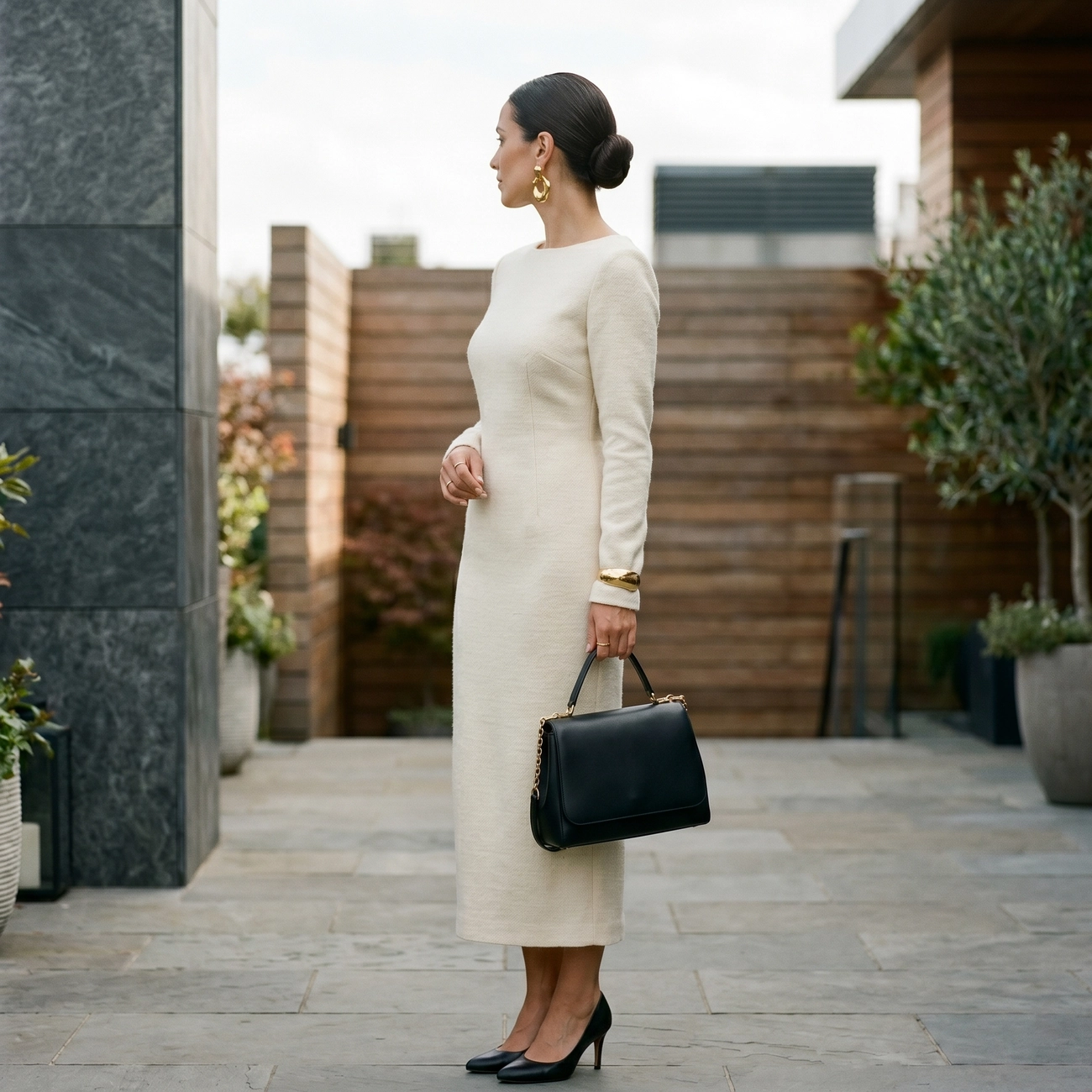
- The Bride: A bespoke wedding dress for the ceremony serves as the primary statement. Whether it is a structured gown for a historic cathedral or a minimalist silhouette for a clifftop overlook, the focus remains on impeccable fit and the purity of the lines.
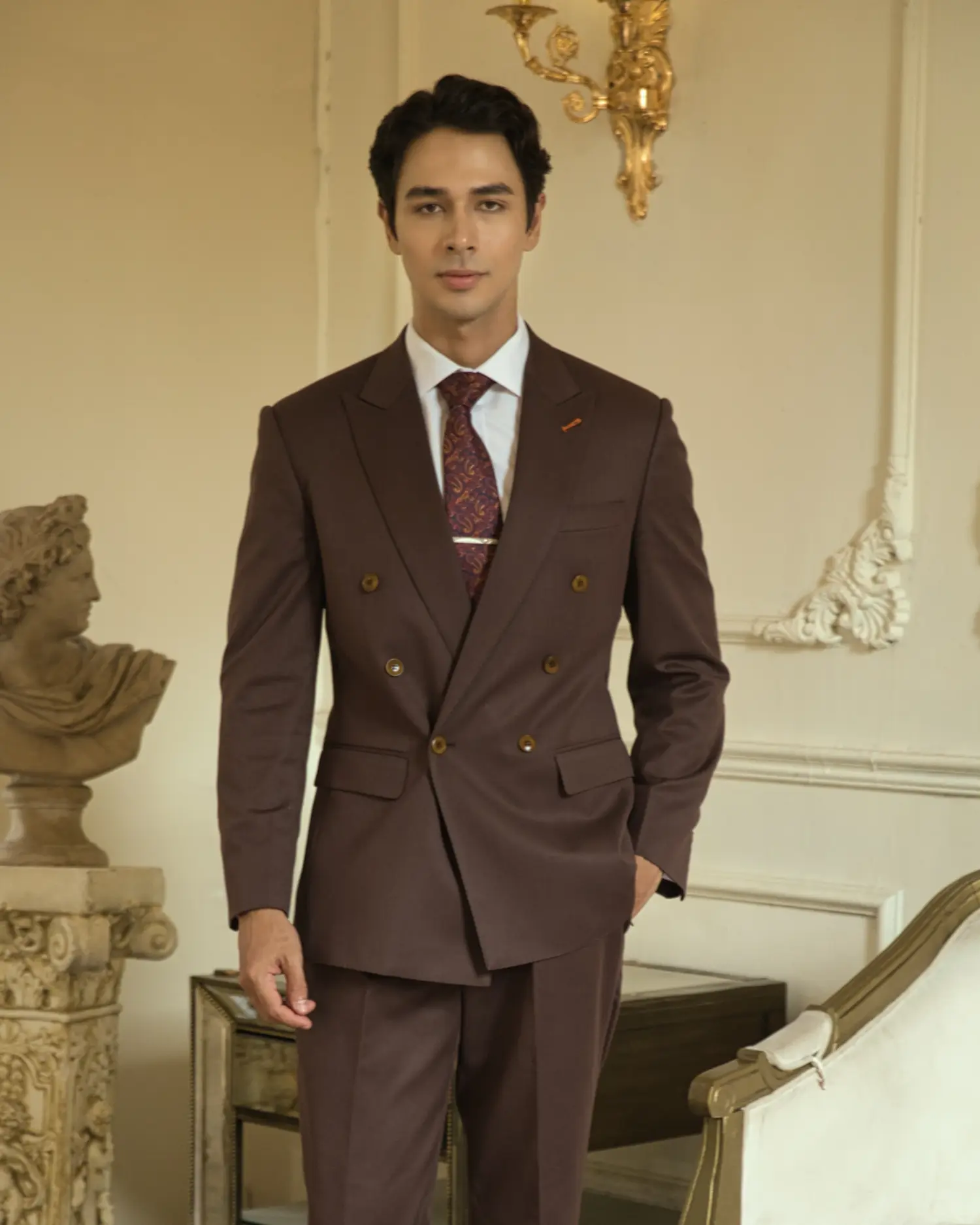
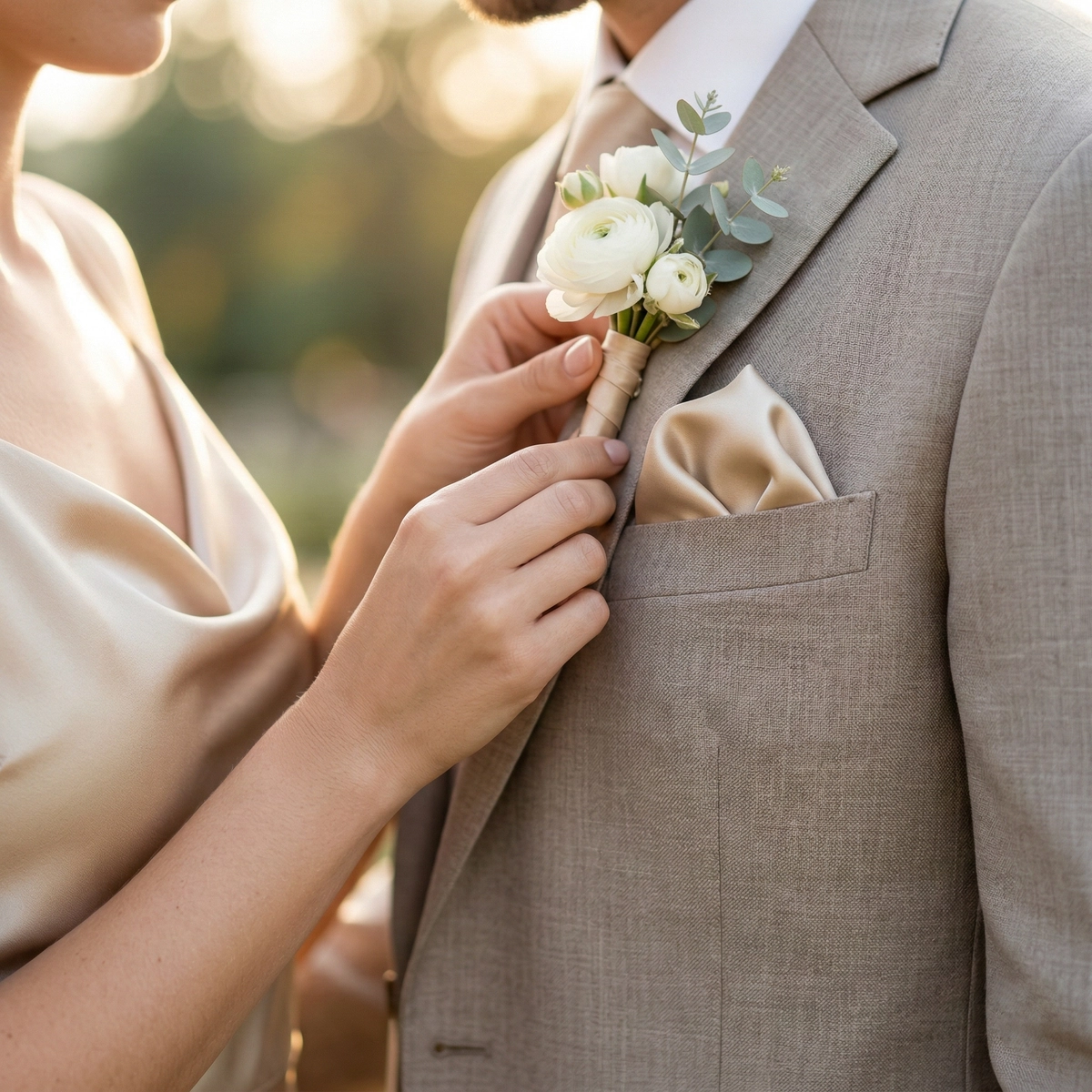
- The Groom: The ceremony calls for the highest level of bespoke tailoring. A classic tuxedo for a black tie affair or a structured three-piece suit provides the necessary gravitas. The aesthetic connection between the couple is often achieved through subtle “anchor details”, such as the groom’s pocket square mirroring the weight and texture of the bridal gown’s fabric.
The Reception: An Essential Evolution
As the event transitions from the sanctity of the ceremony to the movement of the reception, the wardrobe must undergo an essential evolution to allow for fluidity without sacrificing sophistication.
- The Bride: Moving into a silk slip dress or a tailored jumpsuit provides a sense of liberation. The choice of high-grade natural fibers ensures the garment remains breathable and retains a luxurious shimmer under the reception lights, allowing for graceful movement and dancing.
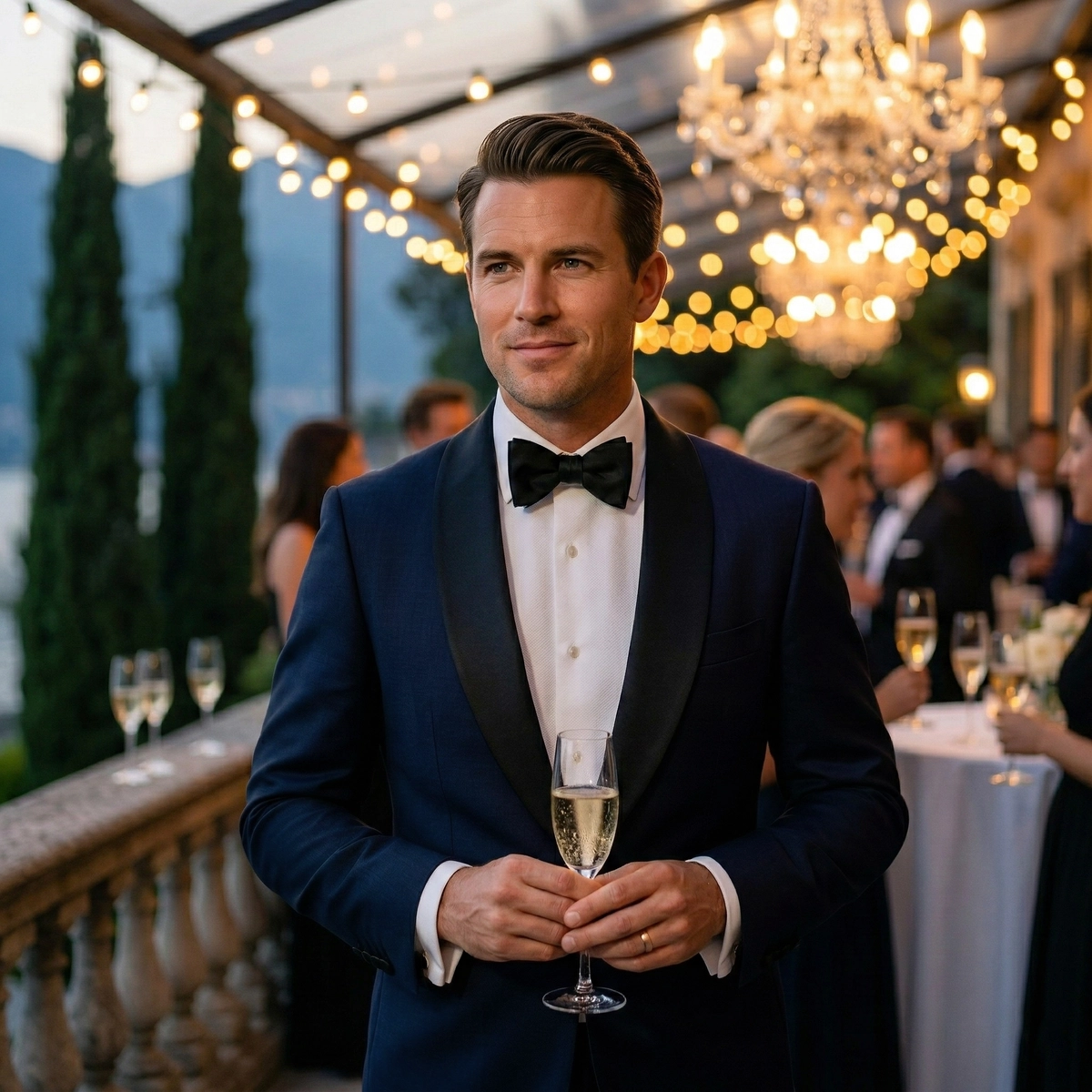
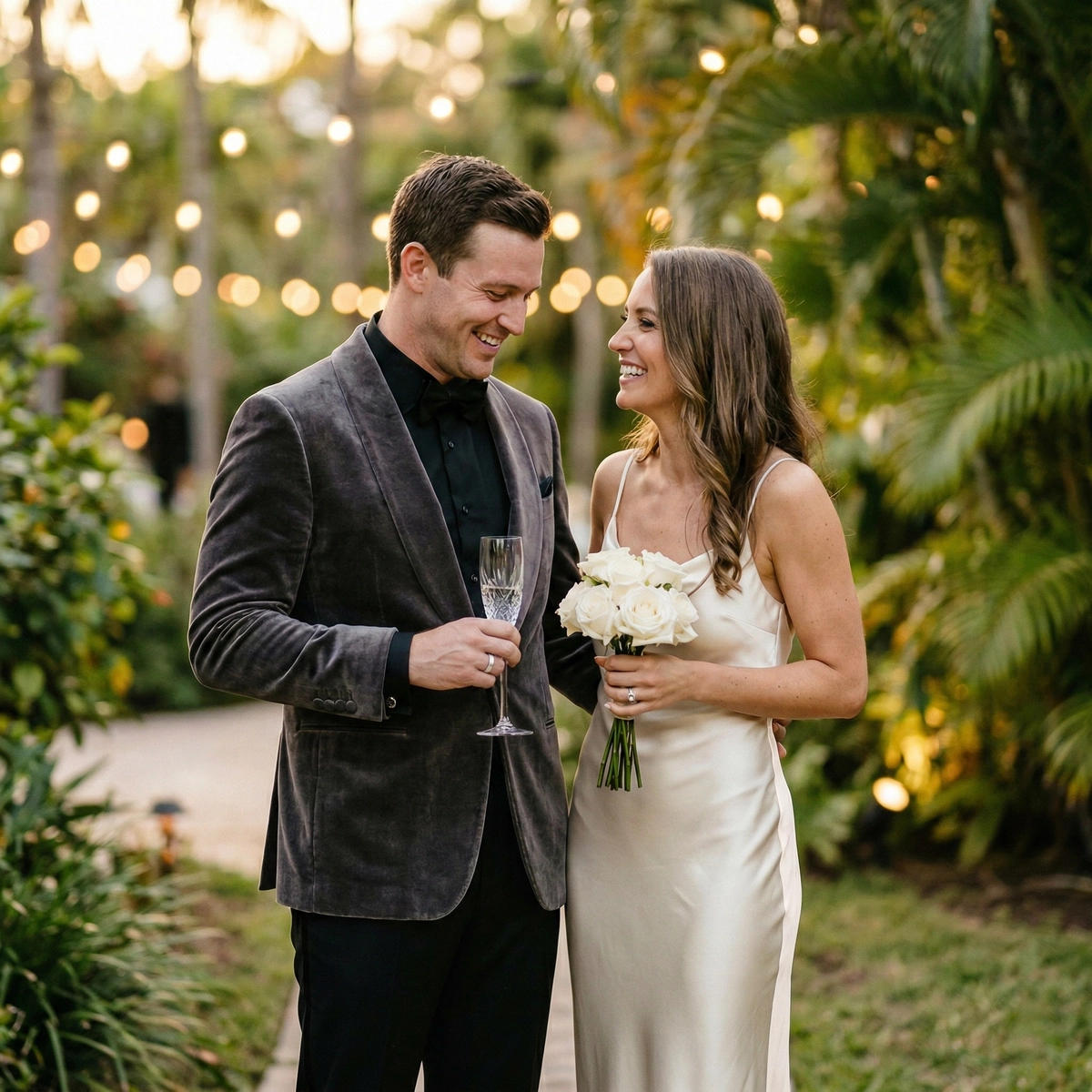
- The Groom: Transitioning for the evening is about deconstructing the formal layers. While many opt to simply reveal a meticulously tailored waistcoat, a more sophisticated pivot involves the Smoking Jacket. Crafted from lightweight silk or a summer-weight velvet, the Smoking Jacket offers a hedonistic yet polished alternative to the ceremonial suit: perfectly suited for a night of champagne and celebration.
The Shift to Fluidity: Designed for Celebration
In a destination setting, the reception is not just a dinner; it is a transition into a celebratory state of mind. This is why the wardrobe evolution is essential:
- For the Bride and Bridesmaids: The shift to Silk is a response to the environment. High-grade silk moves with the body, catching the sea breeze or the evening air, and provides a “freedom of movement” that is vital for dancing and socializing in warmer climates.
- For the Groom: The deconstruction of formal layers, moving into a Smoking Jacket or an unstructured silk-blend blazer, acknowledges that the formal duty is complete. It allows the groom to transition from the “Undisputed Centerpiece” of the ceremony to the “Ultimate Host” of the party, prioritizing hedonistic comfort without losing his sartorial edge.
Visual Cohesion: The Shared Quality
The mastery of a successful Style Map lies in the continuity of the “Vibe” and “Quality” rather than forced uniformity. True visual cohesion is achieved when the entire party reflects a shared standard of craftsmanship.
Even as the couple and their guests transition into more relaxed evening attire, the consistency of the color palette and the excellence of the materials ensure that the visual story remains unified. This approach allows for individual personality to shine through while maintaining the effortless coordination that defines a world-class destination event.
For the discerning bride, this strategic collection is built upon three essential pillars: the ceremonial dress, the bridal suit, and the fluid second look. To explore how to curate this personal wardrobe remotely, read our deep dive into “The Bespoke Trousseau: Designing Your Dress, Suit, and “Second Look” From Anywhere“.
Harmonizing the Party: Achieving Aesthetic Continuity
For a world-class destination wedding, the goal of styling the wedding party is to achieve aesthetic continuity. It is not about creating identical clones, but rather about curating a group that looks like they belong to the same sophisticated story.
The Bridesmaids: Fluidity and Individual Expression
The traditional approach of having every bridesmaid wear the exact same silhouette is often replaced in premium circles by a “mismatched yet unified” strategy.
- The Curated Palette: Instead of a single flat color, a tonal spectrum is often more effective. Utilizing 3-4 varying shades within a color family, such as champagne, sand, and pale gold, creates a rich, multidimensional look that adapts beautifully to shifting natural light.
- Silhouette Diversity: Providing a consistent fabric, ideally a high-grade natural silk, while allowing each bridesmaid to choose a bespoke silhouette that complements her body type ensures that everyone feels confident and elegant. This approach respects individual personality while maintaining the group’s high-end appeal.
Learn more about why bespoke silk is the superior choice for your bridal party in our guide: “Elevated Bridesmaids: Why Custom Silk Fits Better Than Off-the-Rack Polyester”
The Groomsmen: The Frame for the Centerpiece
The groomsmen’s attire should serve as a sophisticated frame for the groom, ensuring the groom remains the undisputed centerpiece of the event. Their look should be distinct enough to allow the groom to stand out, yet aligned in terms of quality and formality.
- Subtle Differentiation: If the groom is in a tuxedo or a structured three-piece bespoke tailoring suit, the groomsmen might opt for sharp two-piece wedding suits in a slightly lighter or contrasting shade.
- The Power of Texture: For a more relaxed destination, such as a coastal villa, groomsmen can wear jackets in a matte texture (like a wool-linen blend) to contrast with the groom’s more polished or lustrous fabric choice.
The Refined “Anchor Detail”: Subtle Synchronization
True coordination is found in the details that the casual observer might miss, but the discerning eye appreciates. Since certain fabrics for gowns may not translate well into structured neckwear, the “Anchor Detail” can be achieved through more technical, high-end methods:
- The Pocket Square & Boutonnière Wrap: While a tie requires a specific weight, the pocket square is the perfect canvas for the bridesmaid’s gown fabric. Using the exact same silk and dye lot for the pocket squares (and perhaps even the ribbon binding the floral boutonnières) creates an undeniable visual link.
- Tonal Neckwear: Instead of an exact fabric match for ties, selecting a premium silk tie in a “solid-complementary” shade from the same color house ensures harmony. A grenadine or satin silk tie that lives in the same color family as the bridesmaids’ dresses provides the necessary structure while respecting the overall palette.
The Philosophy of Environmental Harmony
True luxury is never a loud display of labels or logos. It is the art of absolute harmony with the surroundings. When the wedding party’s attire reflects the colors of the local landscape, the ochre of a Tuscan sunset or the azure of the Mediterranean, the result is an unstudied elegance. By focusing on a shared “Vibe” and consistent “Quality,” the party achieves a look that feels both intentional and effortless, ensuring that the visual legacy of the destination wedding is one of timeless sophistication.
Material Selection: The Science of Comfort
In high-end bespoke tailoring, the true measure of a garment is not found in its silhouette alone, but in its ability to perform across different environments. For a destination wedding, where climates can shift from the humidity of a tropical coast to the crisp air of a mountain estate, material selection is the most critical technical decision.
The Destination Distinction: Why Wool, Linen, and Silk?
While urban winter weddings might call for the heavy warmth of Cashmere or the crisp structure of Cotton, the destination environment (often characterized by tropical microclimates, coastal humidity, and extended sun exposure) demands a different technical approach.
- Beyond Cashmere: While prestigious, Cashmere is a thermal insulator designed for cold climates. In a destination setting, even a light cashmere blend can become stifling.
- Beyond Cotton: Although breathable, Cotton lacks the “recovery” and the “shimmer” required for a high-stakes event. It tends to absorb moisture and hold wrinkles, which can appear lackluster in the intense natural light of a beach or vineyard.
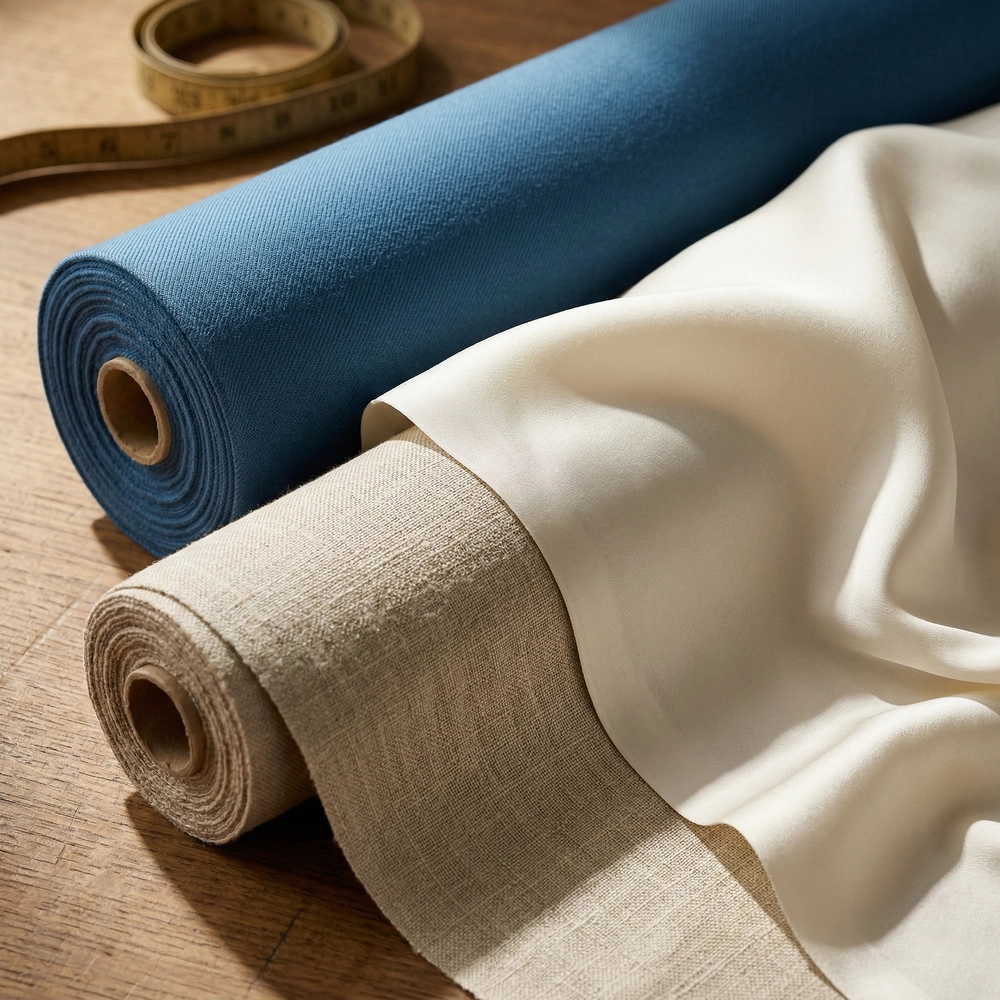
- The Power Trio: The choice of Wool, Linen, and Silk is a deliberate strategy for thermodynamic performance. Wool provides the memory and structure; Linen offers unrivaled heat dissipation; and Silk adds a weightless luminosity. This combination ensures the attire remains sharp during a long outdoor ceremony and fluid enough for a night of celebration.
The Superiority of Natural Fibers
Luxury is felt before it is seen. In the context of travel and celebration, natural fibers, specifically wool, linen, and silk, remain the undisputed gold standard. Unlike synthetic alternatives, natural fibers possess inherent “breathability” and moisture-wicking properties, ensuring that even under the pressure of a ceremony or the heat of a reception, the wearer remains composed.
- Wool (The Travel Specialist): For a destination wedding, the focus is often on “High-twist” or “Cool Wool.” These fabrics are engineered to resist wrinkling, making them the ideal choice for wedding suits that must survive international travel and still appear pristine at the altar.
- Linen (The Casual Luxe): Linen is prized for its unrivaled cooling properties. However, in premium circles, it is often utilized in blends (such as Wool-Silk-Linen) to provide the effortless look of the Mediterranean while maintaining enough structure to prevent excessive creasing.
The Art and Science of Silk
Among all natural materials, silk holds a unique position. Beyond its undeniable luminosity, silk is a high-performance fiber with exceptional thermoregulating properties: it stays cool in the heat and retains warmth in a breeze.
In the realm of artisanal tailoring, specialized varieties like Vietnam Silk are increasingly recognized as a pinnacle choice for summer-weight garments and reception attire. Hand-loomed with centuries of heritage, this specific silk offers a “living shimmer”: a subtle, multidimensional luster that artificial fabrics cannot replicate. Its organic texture provides a soft drape that is particularly well-suited for bridesmaids’ gowns and “Second Look” ensembles, offering a level of tactile comfort that is essential for long wedding days.
Thermal Regulation: A Technical Requirement
The “Science of Comfort” lies in the fiber’s hygroscopic nature: its ability to absorb moisture without feeling damp. For the wedding party, this translates to a constant sense of freshness. Whether it is a structured tuxedo for a black tie evening or a flowing dress for a beachfront sunset, the choice of high-grade natural materials ensures that the attire is an asset to the experience, not a burden.
Technical Performance: Weight and Recovery
While thermal regulation addresses personal comfort, the garment’s visual longevity depends on its physical architecture: specifically its weight and recovery. Beyond the fiber type, the technical performance of a garment in a destination setting is determined by two factors: weight and recovery.
- The Precision of Weight: In tailoring, the weight of the fabric, typically measured in GSM (grams per square meter), is the blueprint for its drape and breathability. For tropical or summer destinations, a fabric weight between 210g and 250g is the “sweet spot.” It is light enough to allow airflow yet possesses enough substance to maintain a sharp, architectural silhouette.
- The Power of Recovery: “Recovery” refers to a fabric’s ability to spring back to its original state after being creased, a vital trait for any garment traveling across time zones. High-quality natural fibers, particularly high-twist wools and premium silk, possess a natural molecular “memory.” This allows the garment to shed wrinkles simply by being hung in a humid environment (such as a bathroom during a warm shower), ensuring the wedding party looks pristine without the constant need for professional pressing.
Ultimately, the selection of materials should reflect the environmental context of the wedding. By prioritizing fibers that harmonize with the climate, the couple ensures that their visual legacy is defined by an air of effortless, unbothered elegance.
The Phygital Tailoring Revolution: Seamless Global Coordination
Achieving a unified aesthetic for a global wedding party requires a sophisticated bridge between modern logistics and traditional craftsmanship.
- The Logistical Fragmentation: Coordinating a party across different continents often leads to “aesthetic drifting.” When guests source attire independently, the event risks fit discrepancies and clashing color tones. This fragmentation can inadvertently compromise the visual harmony of the ceremony and potentially detract from the couple’s central presence.
- The Phygital Solution: Traditional bespoke tailoring, requiring multiple in-person fittings over several months, is no longer a viable framework for a “Global Party.” The “Phygital” approach, the marriage of physical artistry and digital precision, offers a remote solution that maintains the integrity of a custom fit without geographical constraints.
- Pioneering Precision with Rosie Hong: Leading this evolution, Rosie Hong utilizes smartphone-based 3D Scanning to capture precise anatomical data from anywhere in the world. This data is then interpreted by master tailors, combining digital accuracy with decades of artisanal expertise. By utilizing a centralized production model (where every garment is crafted in the same workshop from a single fabric lot) Rosie Hong guarantees 100% synchronization in both silhouette and shade, ensuring the entire party arrives in absolute harmony.
Conclusion: The Art of Environmental Harmony
The true success of a destination wedding wardrobe is measured by the silence of its logistics and the resonance of its aesthetic. When every choice, from the specific weight of a high-twist wool to the subtle shimmer of a hand-loomed fabric, is aligned with the destination’s spirit, the attire becomes an integral part of the memory itself.
By embracing a structured Style Map and the precision of modern bespoke tailoring, the complexities of international coordination are transformed into a state of unburdened elegance. This ensures that the visual legacy of the day is not defined by the effort put into it, but by the seamless, timeless harmony that remains long after the final celebration. In every captured frame, the unified presence of the wedding party stands as a testament to a journey where style was navigated with intentionality and lived with absolute confidence.
DISCOVER PHYIGITAL BESPOKE TAILORING