

The Physics of Longevity: Structural Integrity as The Primary Determinant of Sustainability in Circular Textile Economies
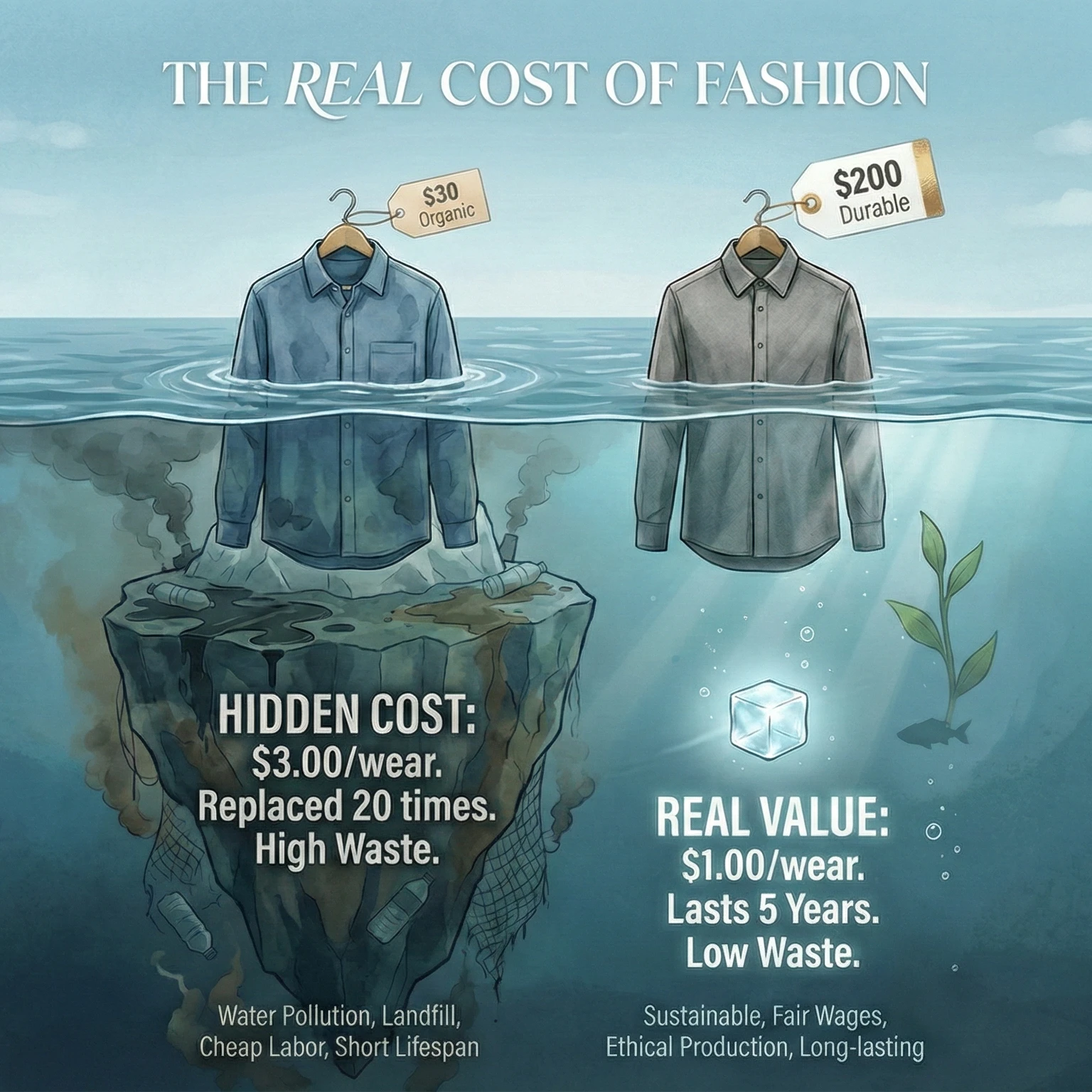
Abstract: Beyond the Marketing Narrative
The global textile sector is currently facing an “Identity Crisis”. While the industry often hides behind a “vocabulary of virtue” – using terms like “Recycled” and “Organic” as primary marketing pillars – the physical reality of garment durability is frequently ignored. This paper argues that structural integrity, driven primarily by Mean Staple Length (MSL), is the fundamental driver of true sustainability. By shifting the focus from labels to engineering metrics, we can create a roadmap for an “Engineering First” approach to textile longevity.
Key Insights from the Research
1. The Mechanics of the “Recycling” Trap
Mechanical recycling involves “garneting,” a high-speed shredding process that effectively chops fibers. While this diverts waste from landfills, it is a traumatic event for the fiber. Mechanically recycled cotton typically yields fibers shorter than 12-15mm, whereas virgin Pima cotton exceeds 34mm. This results in what I term “Frankenstein Fabric” – a hybrid that looks eco-friendly but performs poorly, exhibiting excessive pilling and shrinkage.
2. The Organic Paradox
“Organic” is an agricultural certification, not a structural quality standard. Mass-market brands often source short-staple organic cotton to maintain low prices. However, short fibers lack the surface area to “grip” one another, relying on weak friction. The failure becomes evident after just 3-5 washes when “Spirality” occurs, causing side seams to twist. A garment discarded after five wears is an environmental failure, regardless of its organic label.
3. Economic Framework: Cost Per Use (CPU)
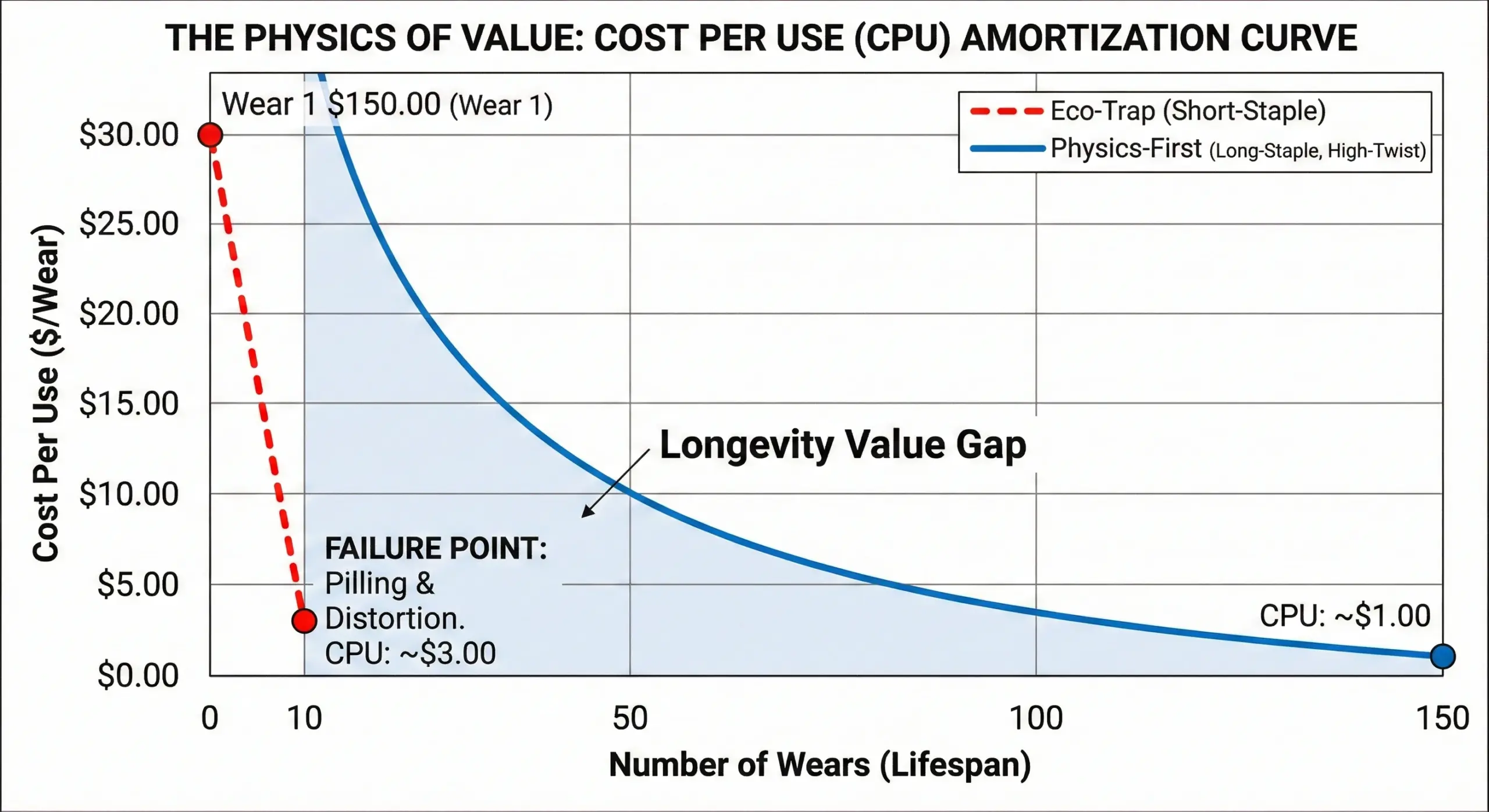
To move toward true sustainability, we must adopt a Cost Per Use (CPU) metric. This framework quantifies value based on longevity rather than initial transaction price:
CPU = (Initial Investment + Maintenance Cost)\Number of Quality Wears
Our analysis shows that products engineered for longevity – using long-staple fibers (>30mm) – achieve an estimated CPU of ~$1.00, compared to ~$3.00 for short-staple “Eco-Trap” alternatives. A product that lasts 10 times longer is effectively 10 times more sustainable.
Read the Full Technical Paper
For a deep dive into the engineering metrics, the CPU Amortization Curve, and strategic recommendations for the upcoming Digital Product Passport (DPP) regulations in the EU, you can access the full paper on Academia.edu or Download PDF file.
Conclusion
Sustainability is a measurable physical property, not a marketing sentiment. Quality is the ultimate form of sustainability. We must engineer products that refuse to die; a garment that stays in the closet stays out of the landfill.
At Rosie Hong Phygital Tailoring, we actualize these technical standards in every bespoke product to optimize value for our clients through technical longevity.