Solving the “Button Gaping” Problem: Why Custom Fit Matters More Than Brand Names

Imagine stepping into a high-stakes negotiation in a prestigious $3,000 designer suit, only to spend the session subtly pulling at your lapels to hide “button gaping” or tugging at a loose waistband when seated. In the legal profession, where authority is established in milliseconds, your attire must function as flawless armor. For women in tailored suits, true prestige is never defined by a famous logo stitched inside the lining; it is defined by an uncompromising fit that entirely eliminates these physical distractions.
For decades, the ready-to-wear women clothing industry has forced female professionals into a frustrating compromise, manufacturing standard-sized garments that fail to respect the complex topography of the female form. This guide dissects exactly why off-the-rack sizing continuously falls short, and how revolutionary at-home measurement technology is redefining the privacy, precision, and ultimate power of a modern bespoke suit.
The Twin Agonies of Legal Wardrobes
For female litigators, the courtroom is unpredictable enough without having to fight their own clothing. Yet, the standard women clothing market routinely subjects professionals to two distinct structural betrayals that undermine both comfort and confidence.
The “Button Gaping” Dilemma
In the mirror at 7:00 AM, your jacket or tailored blouse might appear to fit perfectly. However, the moment you reach across a conference table or lean forward to cross-examine a witness, the fabric pulls taut, resulting in the dreaded button gaping: an unprofessional opening between the buttonholes. Standard ready-to-wear brands often blame this entirely on bust size, but the structural reality is far more complex. Master tailors understand that this gaping is frequently caused by an incorrect shoulder slope or a poorly positioned armhole that severely restricts movement and drags the front panels out of alignment. To combat this technical failure, women are forced into absurd daily compromises: relying on hidden safety pins or instinctively crossing their arms, severely restricting the expansive body language required to project absolute authority.

The “Waist Gap” Vulnerability
The second structural failure occurs at the waistline. Because standard sizing operates on a fixed ratio, finding trousers that properly accommodate the hips and thighs almost always guarantees a waistband that is several inches too large. While this discrepancy might go unnoticed when standing, the true vulnerability is exposed during the “Sit Test.” The moment you take your seat at the counsel table, the stiff waistband pulls down at the back, creating a massive, untidy gap that causes blouses to constantly untuck.
For a litigator, physical confidence constitutes 50% of an authoritative courtroom presence. This is not merely a wardrobe malfunction; it is a nagging physical insecurity. When your mental bandwidth is drained by the constant need to discreetly adjust your trousers or hide a gaping lapel, you lose the razor-sharp focus required to deliver a flawless argument.

The Myth of “Standard Sizing”: Why Ready-to-Wear Always Fails Women
The foundation of the ready-to-wear industry is built on a mathematical convenience known as proportional grading. This means that as a garment increases in size, it scales uniformly across all dimensions. If you require a larger size to accommodate a fuller bust, the factory pattern automatically assumes you also possess broader shoulders, a thicker neck, and a wider waist.
However, the female body is not a linear equation. For women in tailored suits, this industrial standard is a constant source of frustration. A litigator might have a full bust but remarkably narrow, sloping shoulders. She might possess powerful, athletic thighs and wide hips, yet retain a sharply defined waist. Standard sizing refuses to acknowledge these complex, independent variables, treating the female topography as a basic, flat template.
Because of this rigid grading system, female professionals are forced into a bitter, daily compromise. You are left with two unacceptable options:
- The Sizing-Down Trap: You buy the jacket that fits your shoulders perfectly to maintain a sharp, authoritative frame. The inevitable result is severe tension across the chest, restricted armholes, and the dreaded button gaping the moment you move.
- The Sizing-Up Sacrifice: You buy the larger size so the jacket finally closes over your chest, or the trousers finally fit your hips. The catastrophic result is drooping shoulders, excess fabric pooling around your midsection, and the complete destruction of your power silhouette.
Ready-to-wear clothing inherently demands that your body changes to fit the garment. It is a system built for the masses, not for the individual. At the highest levels of the legal profession, compromising your physical presence to accommodate a factory’s lazy mathematics is simply no longer acceptable.
The Hidden Barrier to Bespoke: The Intimacy of the Measuring Tape
If ready-to-wear clothing is so structurally flawed for the female body, a logical question arises: why don’t more female professionals simply transition to bespoke tailoring? The answer rarely involves cost; rather, it is rooted in the deeply uncomfortable reality of the traditional measuring process itself.
- The Reality of Traditional Tailoring: To engineer a truly custom garment that definitively eliminates button gaping and the waist gap, a tailor requires exact, localized data. This is not a matter of taking a simple chest or waist circumference. A master tailor must physically measure highly specific topographies: the exact bust apex, the underbust, the gradients between the high and low hip, and the precise inseam.
- The Psychological Hurdle: For many women, the traditional bespoke experience is profoundly awkward. The tailoring industry has historically been male-dominated, and the prospect of standing in a fitting room before a stranger while they pull a measuring tape closely around your chest, waist, and hips can feel invasive. It transforms what should be a luxurious, empowering experience into an uncomfortable intrusion of personal space.
- The Unspoken Consequence: Patchwork on a Flawed Foundation: This intimate vulnerability creates a massive, silent barrier to entry. Rather than enduring the physical discomfort of a traditional fitting, countless senior attorneys choose the path of least resistance. They resign themselves to spending thousands of dollars on designer labels, followed by endless trips to local alteration shops.
Yet, attempting to alter a ready-to-wear garment is merely applying superficial patchwork to a fundamentally flawed foundation. You cannot tailor away a poorly positioned armhole or an incorrect shoulder slope; adjusting the waist will never fix the underlying geometry of the hip. By choosing this route to protect their privacy, women inadvertently accept a permanent state of physical compromise, trapped in a cycle of expensive suits that never truly fit.
Phygital Tailoring: The Privacy of At-Home 3D Body Scanning
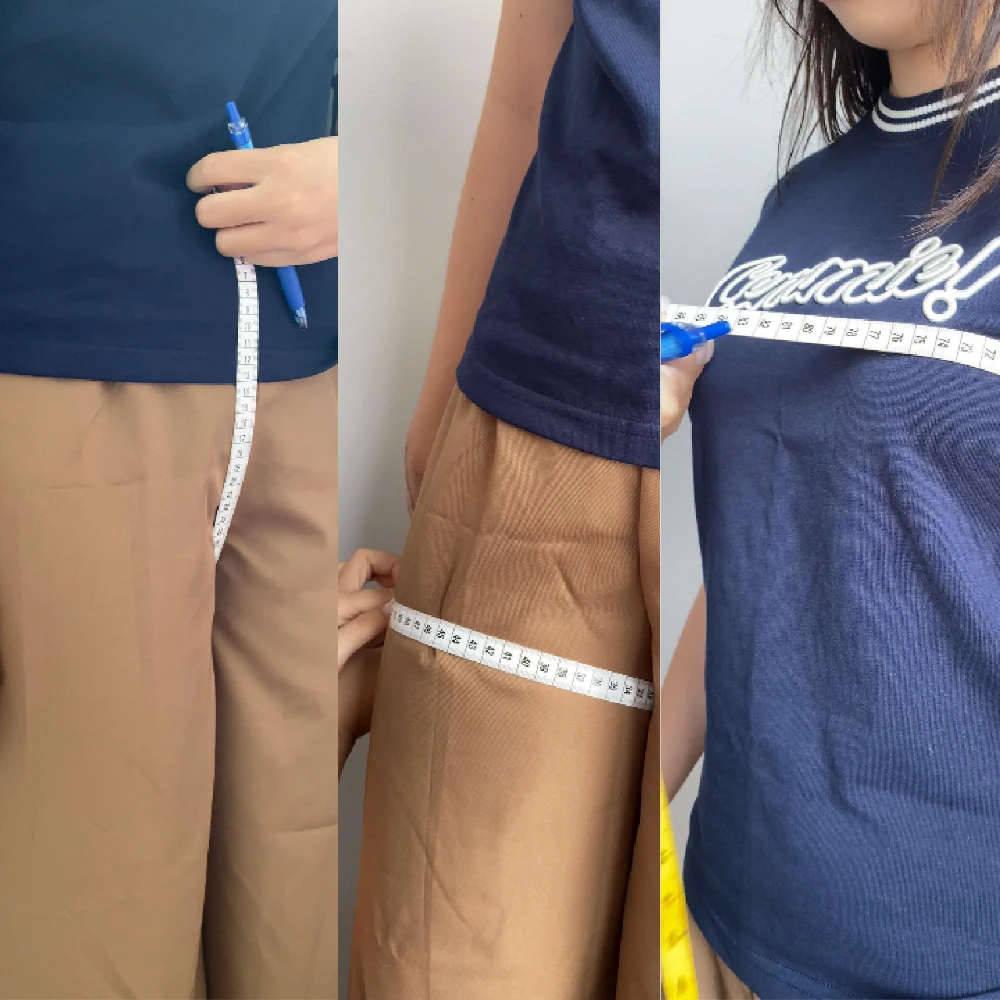
As technology bridges the gap between traditional craftsmanship and digital convenience, a concept known as phygital tailoring, the psychological barriers of custom clothing are finally dissolving. This modern approach replaces the invasive measuring tape with high-precision data:
- Empowerment Through Privacy: Rather than standing in a fitting room before a stranger, professionals can now capture a precise topographical map of their bodies using just a smartphone at home. This eliminates the need for any physical contact in sensitive areas like the chest or inseam.
- Eradicating “Button Gaping”: The scan captures the true volume and projection of the bust, allowing master pattern makers to engineer front panels with exact mathematical precision. This ensures the jacket closes flawlessly without any tension across the buttons.
- Eliminating the “Waist Gap”: By mapping the unique curvature of the lower back and pelvic structure, the technology crafts a waistband that sits entirely flush against the skin, guaranteeing the trousers stay in place whether you are seated or standing.
- A Pioneering Leader: Rosie Hong is at the forefront of this revolution as an online bespoke brand. By creating a permanent “digital avatar” from your private scan, they allow female litigators to commission flawlessly fitted armor effortlessly from anywhere in the world.
Conclusion: True Authority is Unconscious Competence
In the legal arena, true authority is silent. It exists when your presence is so seamless that your clothing becomes a second skin, allowing your intellect to take center stage. This “unconscious competence” is only achievable when you move past the structural limitations of ready-to-wear and embrace the mathematical precision of a bespoke suit.
By solving the mechanical failures of button gaping and waist gaps through private, at-home technology, you reclaim your mental bandwidth. You no longer dress to fit an industrial standard; you dress to win. Ultimately, the greatest luxury for women in tailored suits is the freedom to forget about the suit entirely and focus 100% on the pursuit of victory.
Elevate Your Legal Presence: Now that you’ve discovered the secret to a flawless fit, learn how to curate a wardrobe that projects absolute authority. Read our definitive pillar page: [Beyond the “Pantsuit”: The Modern Female Attorney’s Guide to Power Dressing].
DISCOVER PHYIGITAL BESPOKE TAILORING