Beyond the “Pantsuit”: The Modern Female Attorney’s Guide to Power Dressing
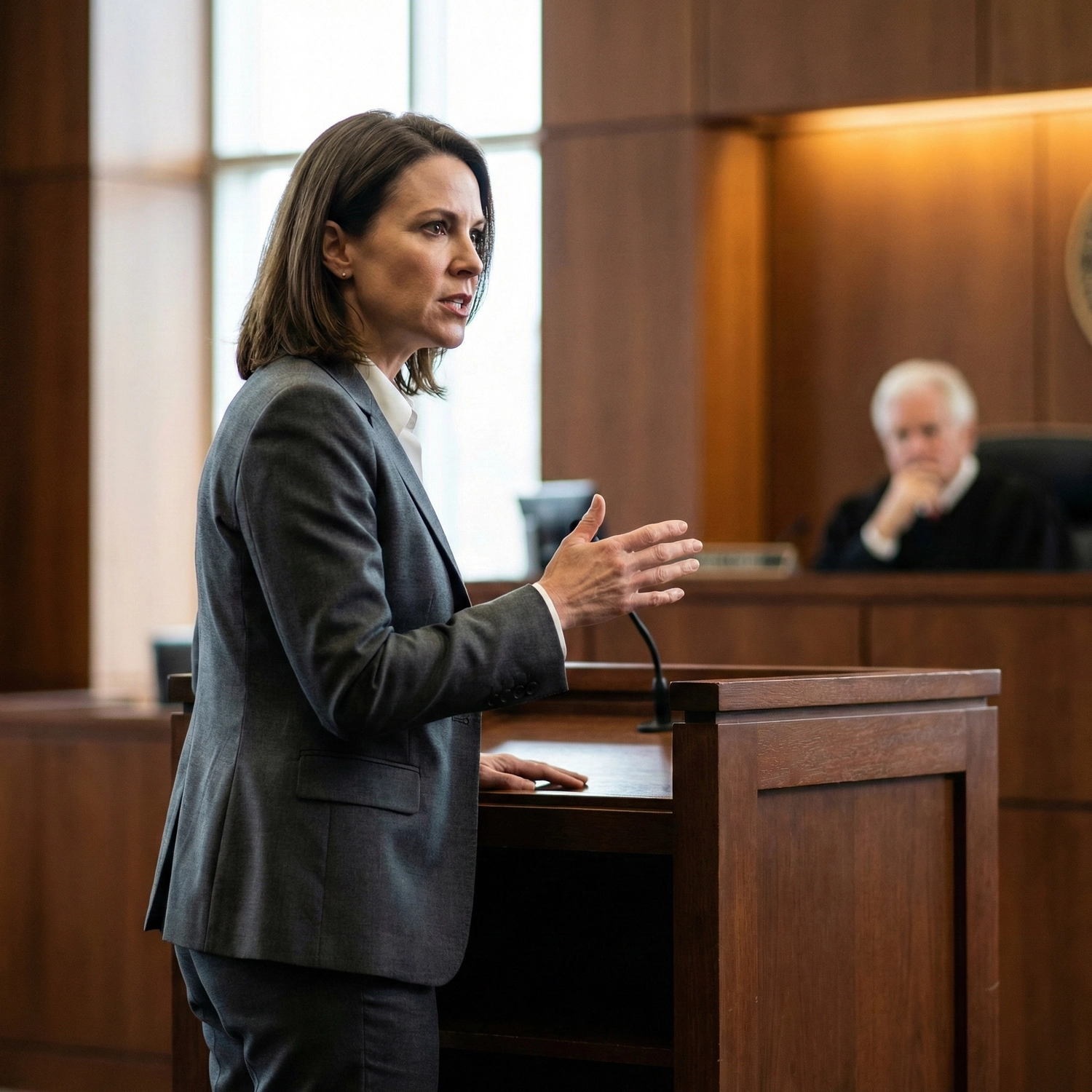
Historically, women lawyers navigated the courtroom using sartorial camouflage: boxy, oversized pantsuits designed to mimic the male silhouette. The unspoken rule was simple: to be taken seriously, one had to diminish their identity.
In 2026, that defensive approach is increasingly obsolete. Modern power dressing is no longer about hiding; it is about the strategic amplification of professional competence through architectural precision and a profound respect for the female form. This respect is not about accentuating curves, but about structure and proportions, ensuring a garment that provides both authority and ease of movement. Your attire is a silent, high-stakes argument presented to the bench before you even open your briefcase. Moving beyond the constraints of generic female lawyer suits, this guide explores the evolution of bespoke for women, where the rigor of a legal brief meets the precision of a perfectly tailored, commanding silhouette.
Redefining Power Dressing (2026): Identity as Authority
In the modern legal landscape, the definition of power dressing has shifted from an act of imitation to an act of intentionality. For decades, the “uniform” for women lawyers was governed by the fear of being seen as less capable, leading to a reliance on “Man-lite” silhouettes, characterized by overly stiff shoulders and boxy jackets that masked the wearer. In 2026, authority is no longer projected by borrowing masculine traits; it is projected through self-assurance and the architectural precision of one’s own image.
Beyond the “Man-lite” Mold
True authority does not require a caricature of masculinity. The goal of modern bespoke for women is to create a “Power Silhouette” that feels authentic and commanding. When a suit is designed with the right balance of structure and fluidity, it signals that you are not merely filling a role; you are defining it. A jacket with a clean, natural shoulder and a defined (but never restrictive) waist communicates a level of self-mastery that off-the-rack female lawyer suits simply cannot replicate.
Structure vs. Proportions: The Logic of Fit
In the legal profession, there is a razor-thin line between a suit that is “fitted” and one that is “tight.”
- The Structural Approach: Precision in tailoring is about proportions, not accentuating curves. It is the art of using fabric to create a commanding presence while maintaining an appropriate professional distance.
- Dignity in Movement: A well-structured garment allows you to move, reach for files, and command a room without the fabric pulling or bunching. This ease of movement is the ultimate signal of “Soft Power”: the ability to be comfortable in your authority.
Visual Authority: The Psychology of Choice
The materials and colors you choose are the first “evidence” you present in any negotiation. To maintain seniority, the palette must remain deep and muted.
- Color as Strategy: While navy and charcoal remain the bedrock of legal attire, the modern partner knows how to use “Alternative Neutrals.” Shades like Forest Green or Dark Olive signal a sophisticated, worldly experience while remaining firmly within the bounds of courtroom decorum.
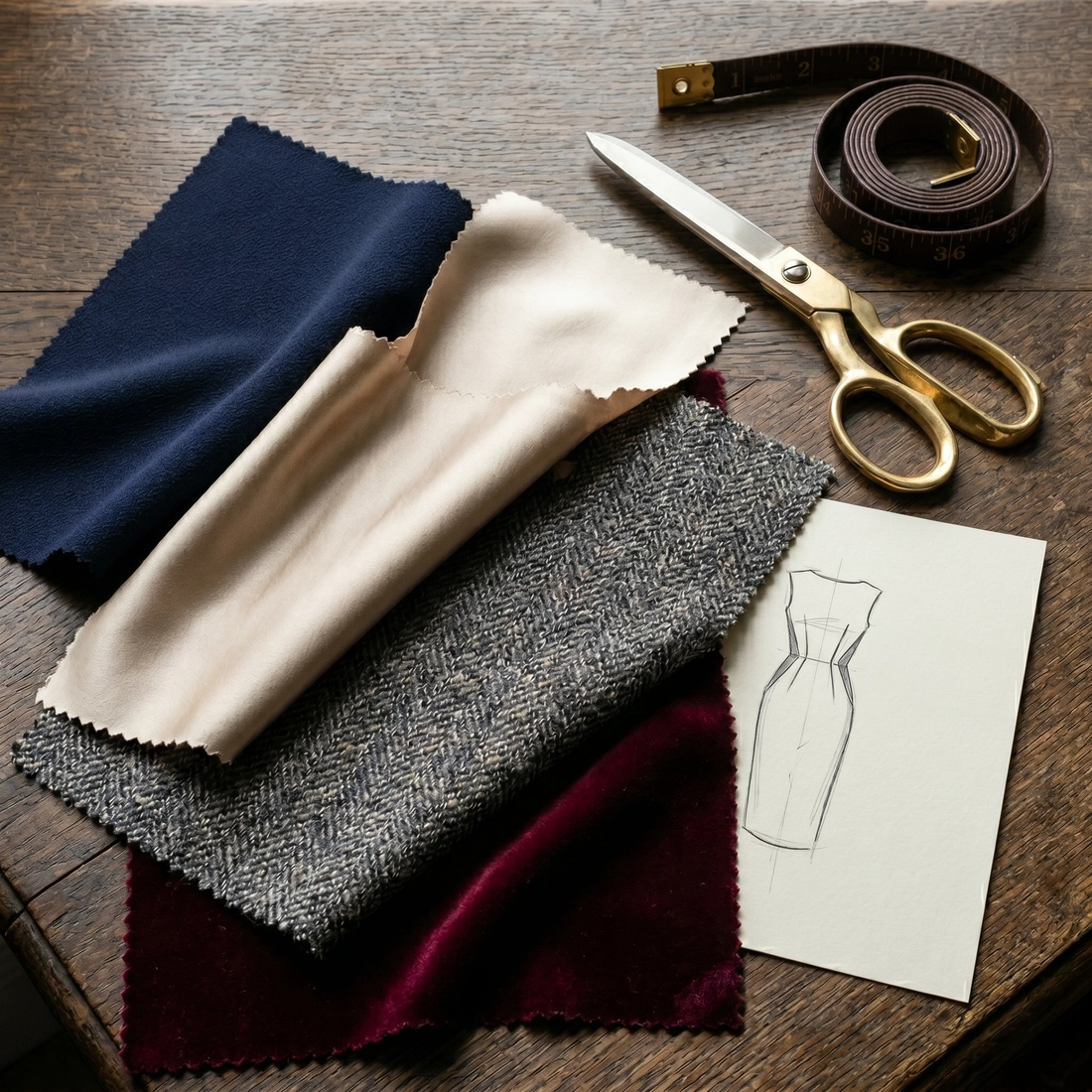
- The Depth of Tones: When opting for richer colors like Oxblood or Eggplant, the key is depth. Aim for a deep, almost black, Burgundy, a tone that reveals its richness only under direct light. This prevents the “uniform look” often associated with service industries and instead projects the gravitas of a seasoned practitioner.
- Fabric and Texture: A matte finish is essential. High-twist wools and subtle textures like Sharkskin provide a depth that suggests a complex, multi-layered expertise without the unprofessional shimmer of lower-grade fabrics.

Courtroom Etiquette: The Rules of Precision
Navigation of the courtroom requires a mastery of power dressing that balances tradition with modern authority. For women lawyers, this means adhering to standards that favor structural integrity and professional distance over fleeting trends.
Hemlines and Skirts: The “Sit Test” Certainty
The choice between a skirt and trousers is a matter of personal strategy, but when opting for a skirt, precision is paramount.
- The Golden Mean: To ensure absolute safety, the hemline should graze the bottom of the knee while standing.
- The Logic: A common oversight in off-the-rack female lawyer suits is failing to account for the “Sit Test.” A skirt that hits the top of the knee while standing will inevitably rise 5–7 cm when seated. By tailoring the length to the bottom of the knee, you ensure full coverage and dignity while seated at the counsel table or in the witness box.
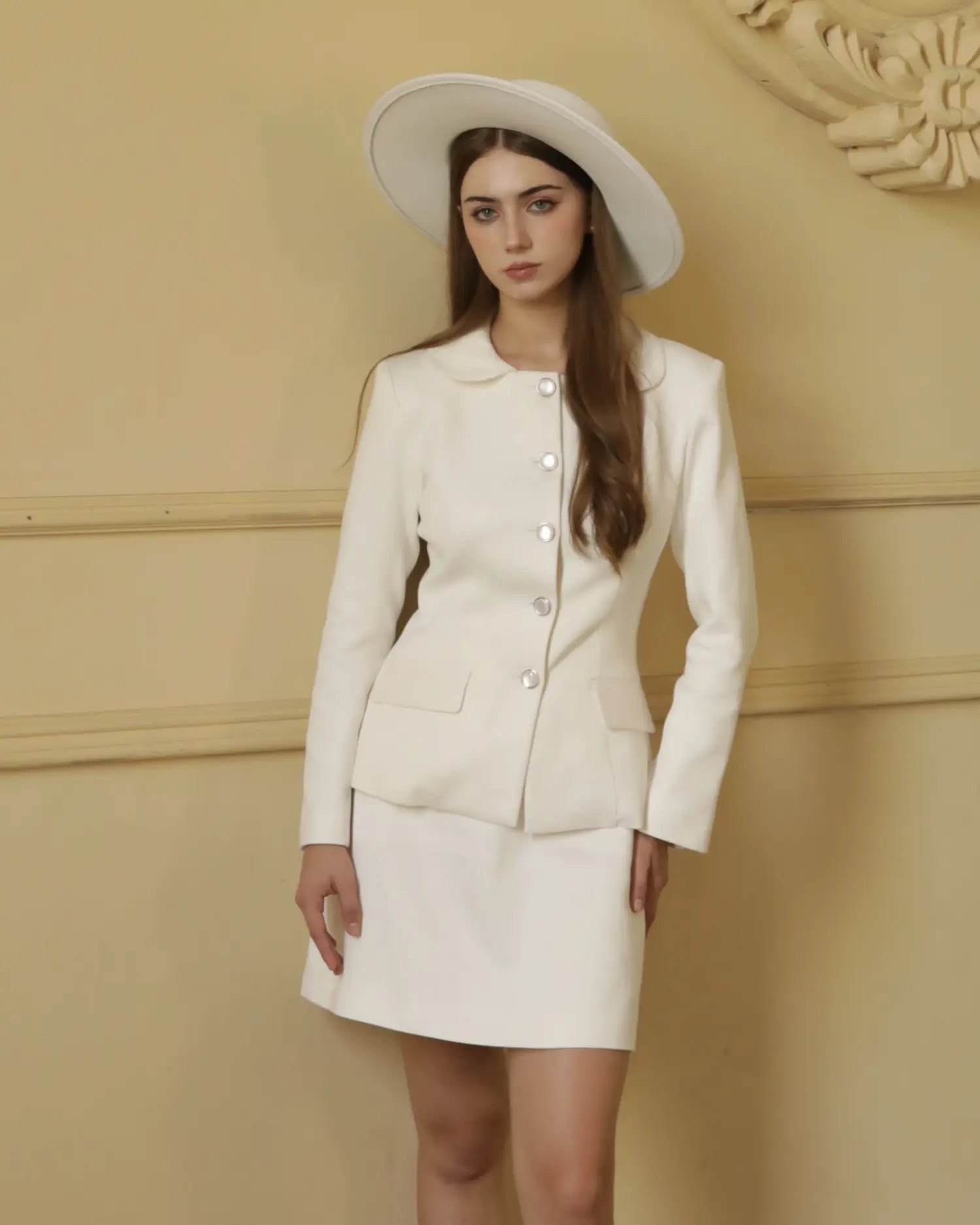
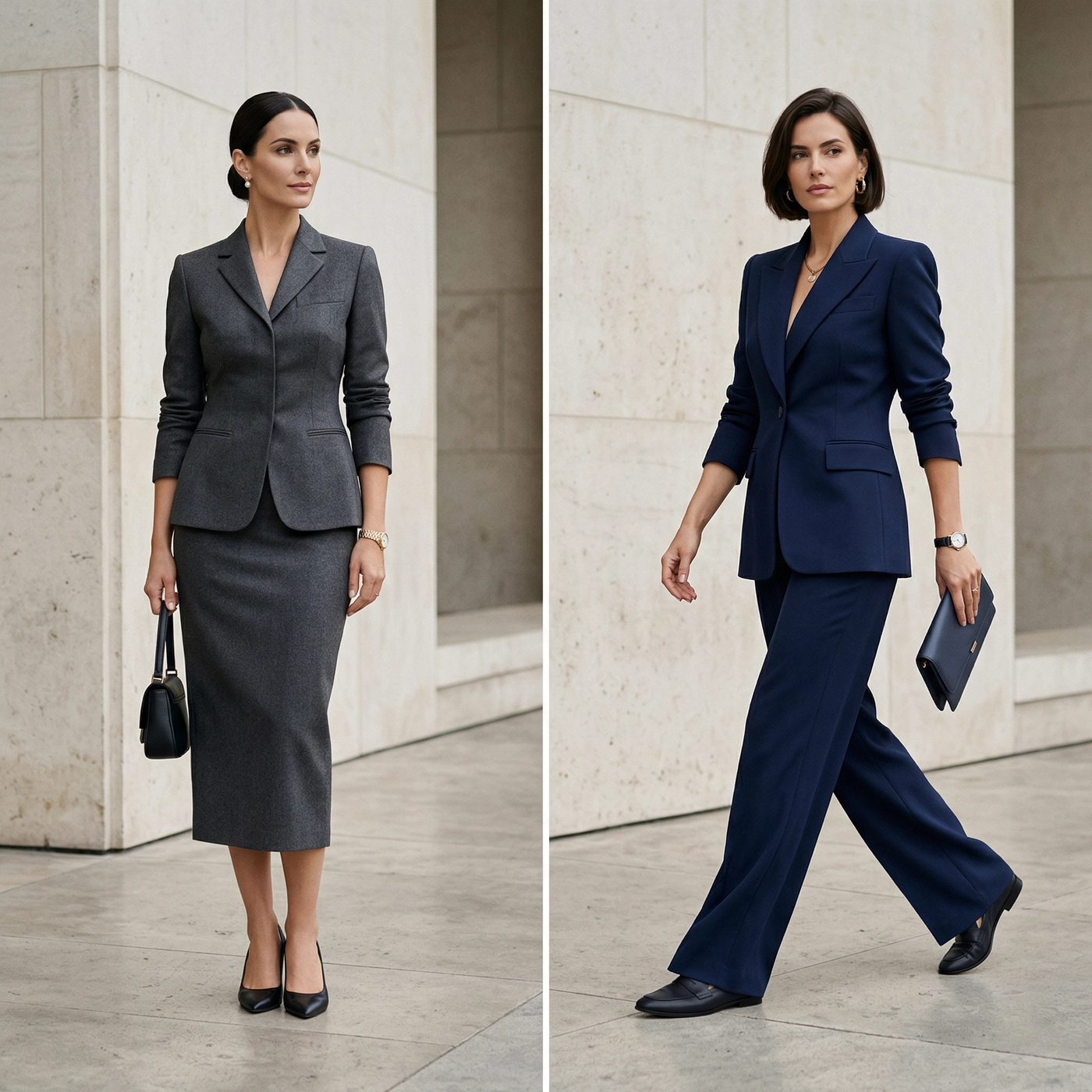
- The Silhouette: A bespoke pencil skirt is cut with enough “ease” to prevent horizontal tension lines, while a structured A-line offers movement without appearing overly youthful.
To master the art of selecting the right silhouette for specific venues and juries, explore our tactical analysis on [Skirt Suit vs Pant Suit: Navigating the Unspoken Rules of the Courtroom].
Necklines and Collars: Framing Authority
Your collar serves as the “frame” for your face, focusing the court’s attention on your arguments. However, it must also function as a shield.
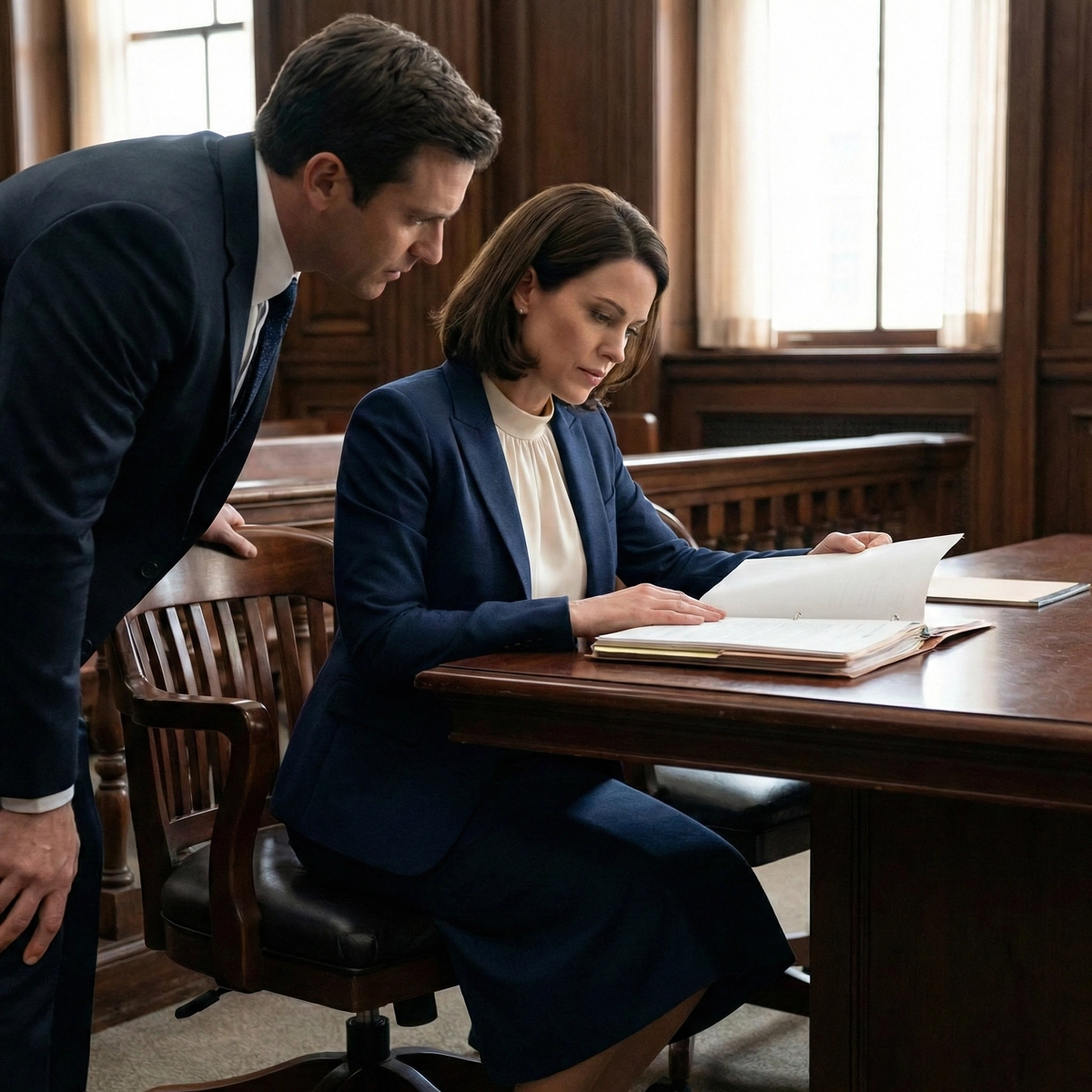
- Visual Security: A primary concern for women lawyers is the “gaping” that occurs when leaning forward to examine evidence or confer with clients.
- The Secure Choice: While a shallow V-neck is a classic, the Boat Neck or Jewel Neck offers the highest level of visual security. These high-cut, structured necklines provide a clean, distraction-free canvas that remains perfectly composed, regardless of your physical posture.
- The Blouse Balance: Opt for silk or high-quality cotton with enough substance to remain opaque and structured throughout a grueling day of litigation.
The Sleeve Rule: Professionalism and Thermal Control
In the courtroom, gestures are a vital part of communication. However, sleeves also serve a vital practical purpose.
- Thermal Control: Courts are notoriously over-air-conditioned to maintain a sharp, alert atmosphere. Full-length or three-quarter sleeves are not just about professional decorum; they provide essential “thermal control.”
- Maintaining Focus: A sleeveless top under a blazer may feel efficient, but it offers no protection if you need to remove your jacket in a workspace, nor does it protect you from the chill of a four-hour session. Sustaining your mental edge requires physical comfort.
The Cuff and Wrist: A Matter of Style
In bespoke for women, the treatment of the cuff depends entirely on the choice of undergarment.
- The Man-Tailored Look: If wearing a structured, crisp cotton shirt, a quarter-inch “peek” of the cuff beyond the jacket sleeve adds a sharp, masculine-inspired touch of precision.
- The Soft Blouse Exception: For soft silk or chiffon blouses, this rule is not mandatory. These fabrics are chosen for their drape, not their stiffness. In these cases, the jacket sleeve should end precisely at the wrist bone, allowing the softer fabric to remain concealed for a cleaner, more streamlined silhouette.
The Final Audit: Dignity in Movement
Courtroom etiquette is about how your “armor” performs under pressure. A bespoke suit ensures that when you stand to object, the shoulders remain seated and the buttons do not pull. This structural integrity allows you to focus entirely on the law, secure in the knowledge that your presence is flawless.
The Strategic Capsule Wardrobe for the Traveling Attorney
A legal capsule wardrobe is not about having fewer clothes; it is about having a coordinated system of Female lawyer suits and separates that eliminates decision fatigue. When you invest in bespoke for women, each piece is designed to solve a specific problem, allowing you to focus entirely on the case.
The Anchor Pieces: Functional Sophistication
The foundation of a travel capsule rests on pieces that bridge the gap between the airport lounge and the witness box.
- The “Two-Length” Pant Strategy: A major logistical pitfall is the discrepancy between travel shoes and courtroom heels. To avoid the “dragging hem” at the airport, include a cropped ankle pant for transit (perfectly compatible with professional flats or loafers) and reserve your full-length trousers exclusively for the courtroom (tailored for 7–9cm heels).
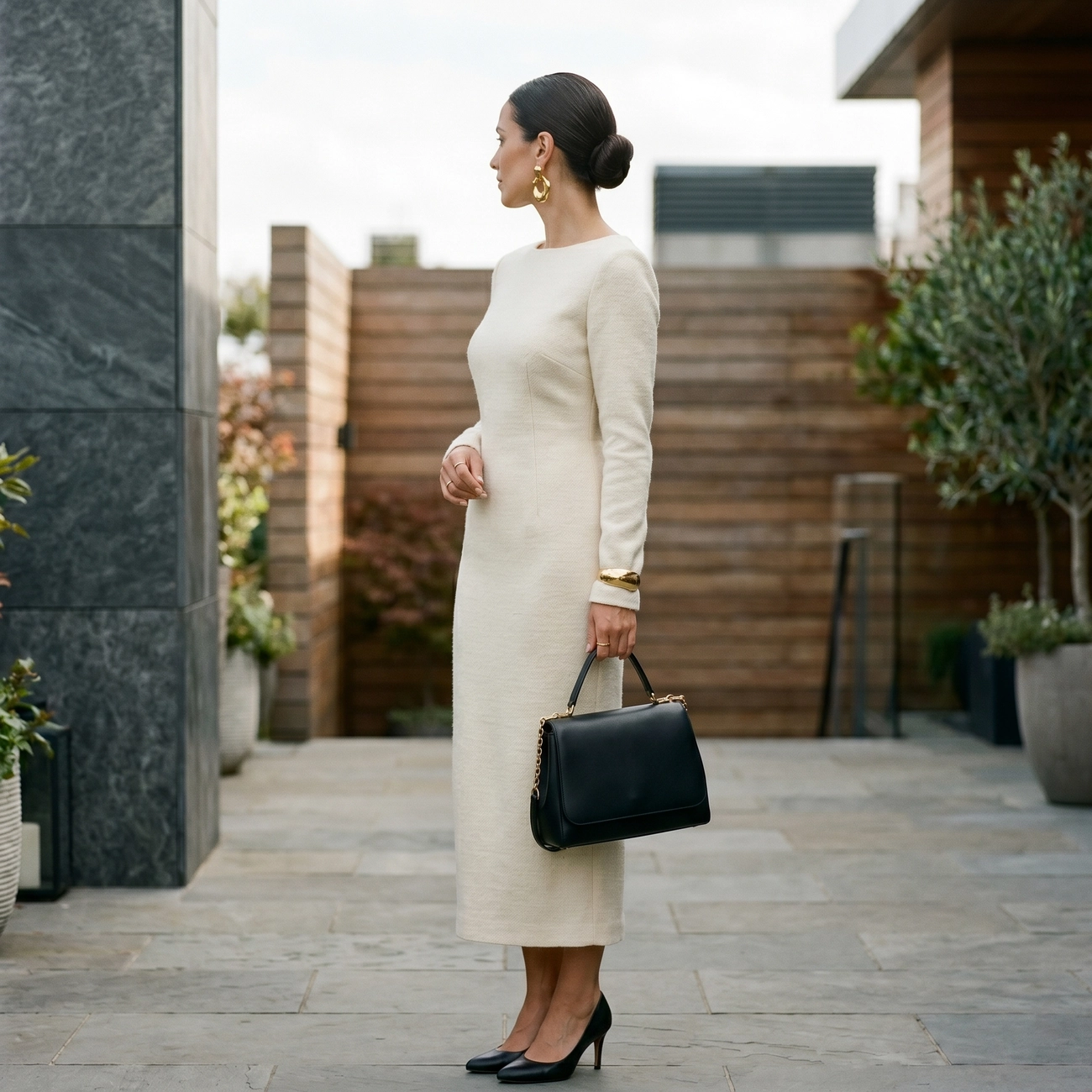
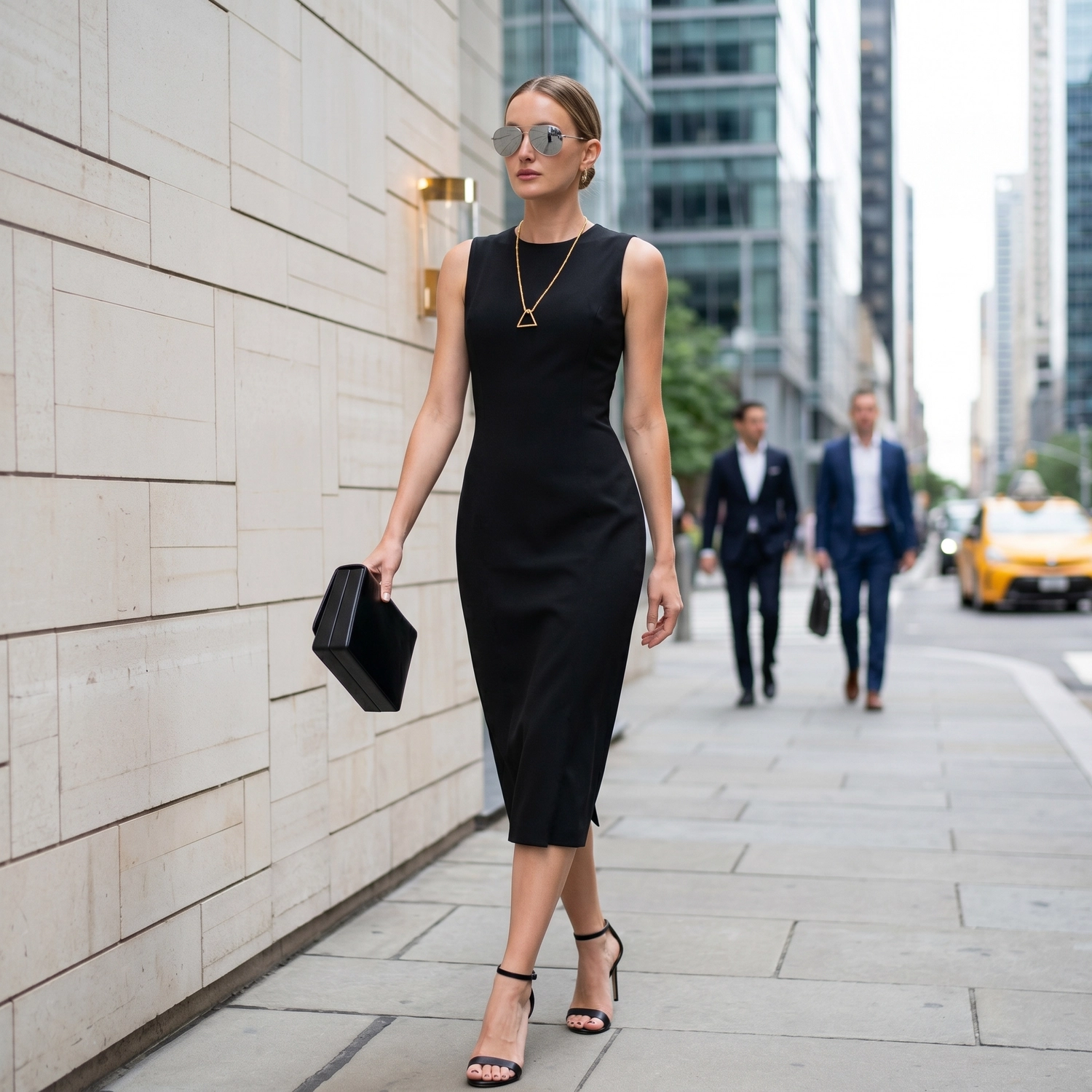
- The Sheath Dress (The Secret Weapon): This is perhaps the most strategic item in a legal wardrobe. Because it is a single piece, it entirely solves the “waist gap” issue that often plagues trousers when seated.
Etiquette Note: If the dress is sleeveless for a cleaner fit under a blazer, the jacket is your “armor”: it must never be removed in court. If you prefer the option to remove your jacket in a workspace, ensure the dress has a structured sleeve that does not bunch under the blazer.
- The Traditional Skirt: A matching skirt for your blazer allows you to switch to the traditional gravitas of a skirt suit in seconds, depending on the conservative nature of the jurisdiction.
The Layering Strategy: Defeating the “Ironing Trap”
In a travel context, time is your most valuable asset. No Senior Partner wants to be standing over a hotel ironing board at 6:00 AM.
- Beyond Basic Cotton: Avoid traditional high-maintenance cotton shirts that wrinkle in a suitcase. Instead, opt for Wrinkle-resistant Cotton or Silk Knit layers.
- The Silk Shell: A high-quality silk shell or a “Jewel Neck” blouse is often superior to a button-down for travel. These pieces drape beautifully, take up minimal space, and resist creasing, ensuring you look pristine the moment you step out of your garment bag.
Performance Fabrics: The Professional’s Edge
The greatest enemy of a traveling attorney is a wrinkled suit. This is where the choice of fabric in bespoke for women becomes a strategic advantage.
- High-Twist Wool (Fresco): These fabrics are woven with highly twisted yarns, making them naturally resilient to wrinkles. You can step off a long-haul flight, head straight to a deposition, and your suit will look as if it just came off the hanger.
- Natural Stretch: By choosing wools with a “natural stretch” (achieved through the weave, not synthetic chemicals), you gain the flexibility needed for long hours of sitting without the fabric sagging or losing its “Power Silhouette” at the knees or seat.
To understand the textile engineering behind this movement, read our deep-dive on [Why “Natural Stretch” Fabrics are a Game Changer for Women].
The Logic of Minimalism: Effortless Authority
By coordinating your hemlines with your footwear and choosing fabrics that refuse to wrinkle, you ensure that every combination is “safe.” This mental clarity allows you to arrive at your destination with your authority intact, ready to present your best argument without the distraction of a compromised image.

The New Standard: Data-Driven Tailoring
Standard manufacturing processes are designed for “averages,” but the legal elite rarely fits an average mold. The female form presents unique topographical challenges, including variations in shoulder slope, back curvature, and the ratio between bust, waist, and hips, that off-the-rack female lawyer suits often fail to respect.
Solving the Structural “Fit Pains”
For the busy practitioner, the struggle with ready-to-wear is defined by two major distractions:
- The “Button Gaping” Solution: A jacket that fits the shoulders often pulls at the chest, creating unprofessional gaps when moving or gesturing. 3D scanning maps the exact volume of the torso, ensuring buttons lie flat and secure.
- Eliminating the “Waist Gap”: Trousers that accommodate the hips often leave a significant gap at the back of the waistband. By mapping the specific curvature of the lower back, bespoke construction ensures the waistband follows the body’s contour perfectly, providing security while seated.
For a technical deep-dive into why these errors occur and how to eliminate them forever, read our guide on [Solving the ‘Button Gaping’ Problem: Why Custom Fit Matters More Than Brand Names].
Efficiency Through Data: The Digital Avatar
In a profession where “Time is Money,” the ability to maintain consistency is a strategic advantage. 3D Body Scanning technology captures over 1,000 precise data points in seconds, creating a permanent Digital Avatar. Once this profile is established, future garments can be commissioned with mathematical certainty, eliminating the need for repetitive, time-consuming fitting sessions.
The Pioneer Perspective
Pioneering tailors, such as Rosie Hong, are now adopting this data-driven approach to eliminate the “human error” inherent in manual measurements. In this model, technology serves as the foundation, allowing the artisan to focus on the aesthetics of the “Power Silhouette.” It transforms the fitting process from a series of approximations into a precise science of confidence.
The Finishing Argument: Accessories and Professional Polish
In the legal world, accessories are not decorations; they are the “exclamation points” of your professional identity. They must be subtle, intentional, and strictly functional.
- The “No Noise” Rule: In a quiet courtroom, silence is a sign of authority. Jewelry must be silent. Avoid stacked bangles or charms that clink against each other or the desk. Your arguments should be the only thing heard; your accessories should never provide a soundtrack to your presence.
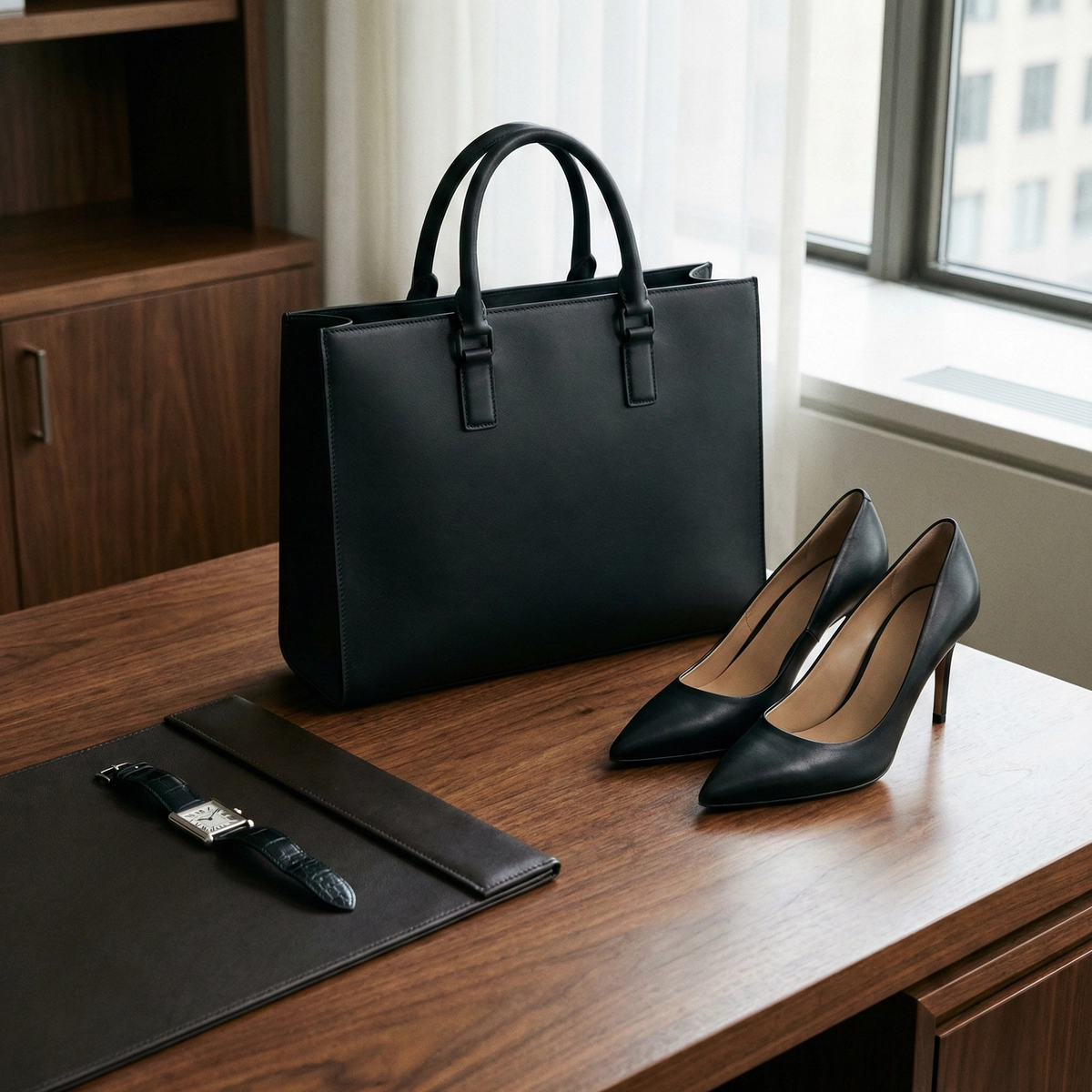
- The Bag of Authority: Your briefcase or tote should be structured and made of premium, matte leather. A sagging or overly branded bag can undermine the sharp, architectural precision of a well-tailored suit.
- The Footwear Foundation: Your shoes must align with your hemline strategy. Beyond height, focus on the Toe Shape. A classic pointed or almond toe projects a more decisive, sharp authority than a rounded style.
- The “One Statement” Rule: Less is always more. Choose one focal point: a classic watch, a strand of high-quality pearls, or a discreet brooch. Anything more risks becoming a distraction in a serious legal setting.
Conclusion: Authority Through Authenticity
The evolution of power dressing for women lawyers in 2026 is no longer about fitting into a masculine mold. It is about the mastery of image as a strategic extension of legal expertise. From the precision of the “Sit Test” to the silent authority of bespoke tailoring, every detail of your wardrobe should serve a single purpose: to ensure that your presence is as undeniable as your logic.
True professional luxury is the ability to walk into any room, be it a boardroom or a high court, with the absolute certainty that your appearance is flawless. When your attire is engineered with respect for both tradition and your unique form, it ceases to be a distraction and becomes your most reliable silent supporter.
DISCOVER PHYIGITAL BESPOKE TAILORING