The Groom’s Black Tie Handbook: Standing Out with Subtlety
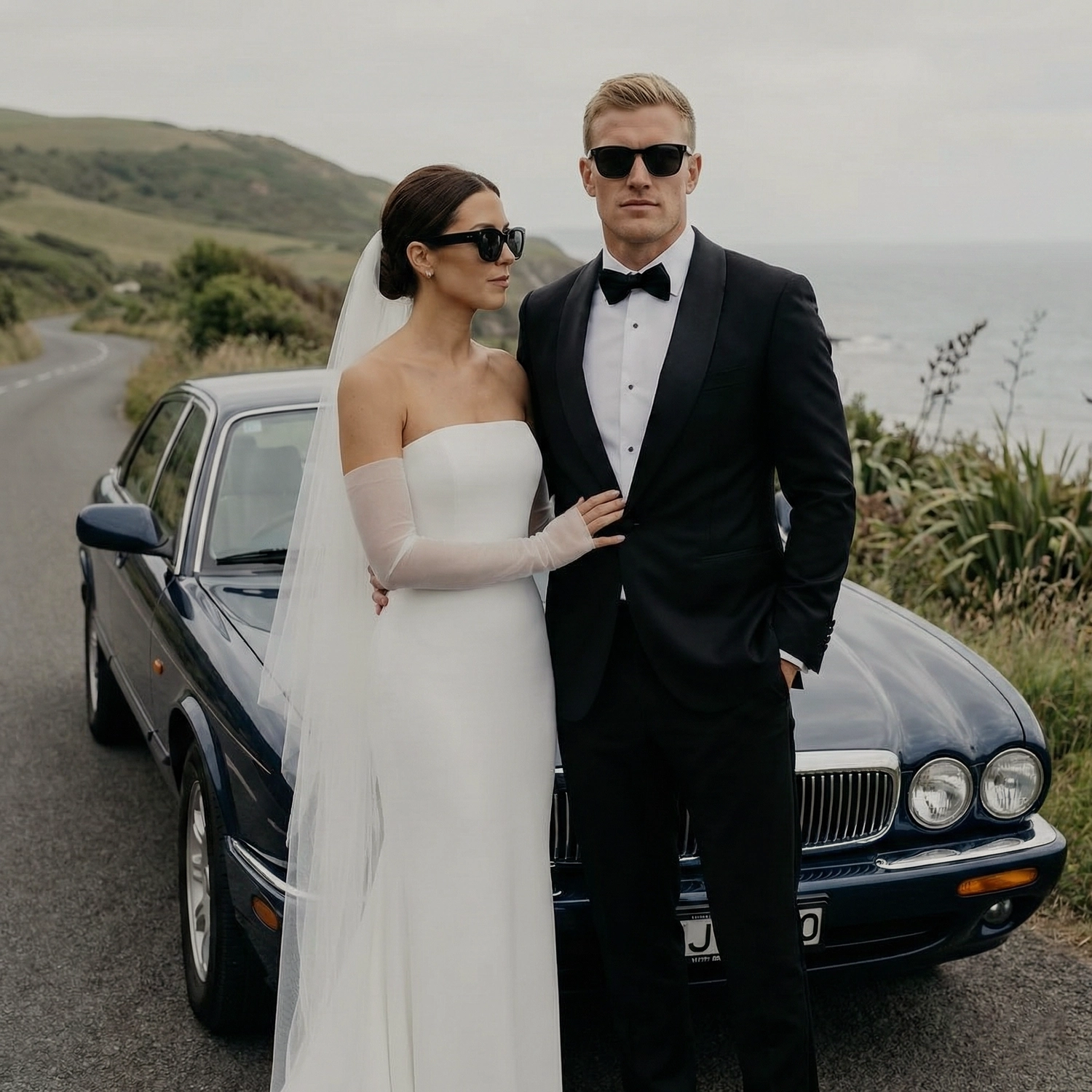
A Black Tie wedding represents the pinnacle of formal elegance, yet it presents a unique dilemma: the ‘Penguin Effect,’ where uniformity risks blending the host into the crowd. Mastering Groom’s Black Tie is not about wearing the loudest outfit or overshadowing the bride’s radiance; it is about distinguishing yourself from the groomsmen with quiet authority. The secret lies in standing out with subtlety. In the world of bespoke tailoring, true status isn’t shouted; it is whispered through the nuanced details and impeccable fit that define the leading man.
Wedding Black Tie vs. Gala Black Tie: Understanding the Context
Many men assume that “Black Tie is Black Tie,” believing the tuxedo hanging in their closet for corporate galas is perfectly adequate for their wedding day. However, in the world of bespoke tailoring, context is everything. While both events require a dinner jacket, their underlying philosophies and the environments in which they take place are fundamentally different.
- The Shift in Spirit: Conformity vs. Celebration
A corporate gala or red carpet event is an exercise in social uniformity. The goal is to blend in, adhering to rigid rules to show respect for the host and the occasion. You are one of many. Your wedding, conversely, is a personal narrative where you are the protagonist. While the attire must remain formal, the wedding context allows for a subtle bending of the rules. It is not about conformity; it is about distinction. This is the moment to introduce personal flair, be it through a unique lapel shape or a specific fabric with superior depth and texture, that elevates you from a participant to the guest of honor.
- The Challenge of Lighting
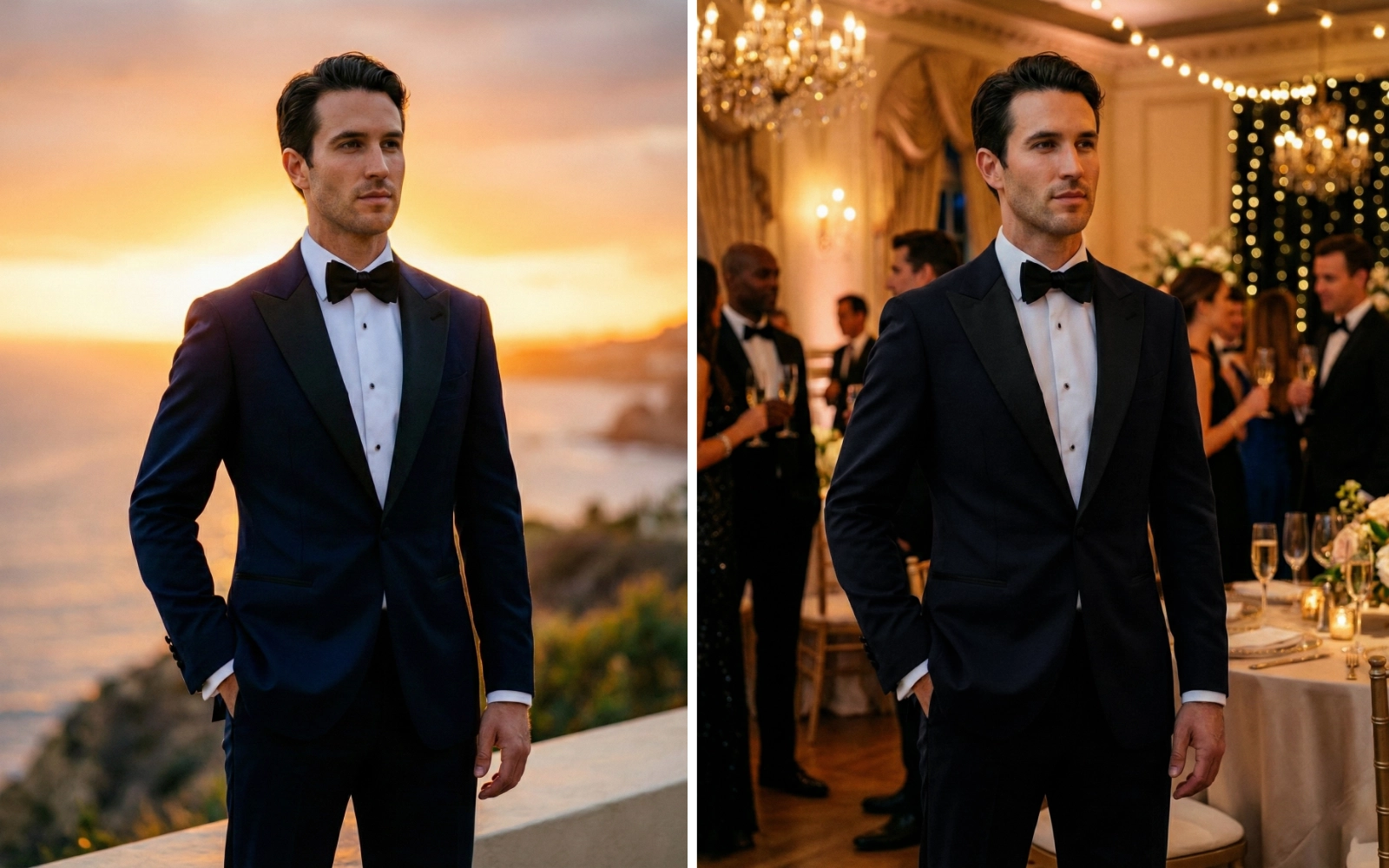
Beyond the social nuance, there is a critical technical difference: lighting. A gala typically occurs entirely indoors under controlled, consistent artificial light. A wedding, however, is dynamic. It often begins with vows in the late afternoon sun or “golden hour” and transitions into an evening reception under dim chandeliers or flash photography.
This transition poses a risk for standard black wool. Under harsh daylight, an average black tuxedo can appear “flat,” dusty, or even grayish. The Groom’s Black Tie requires a fabric that possesses the versatility to look rich and commanding in both natural daylight and evening ambiance. This demand for depth is exactly why we look beyond standard black.
The Foundation of Groom’s Black Tie: Strategic Fabric Selection
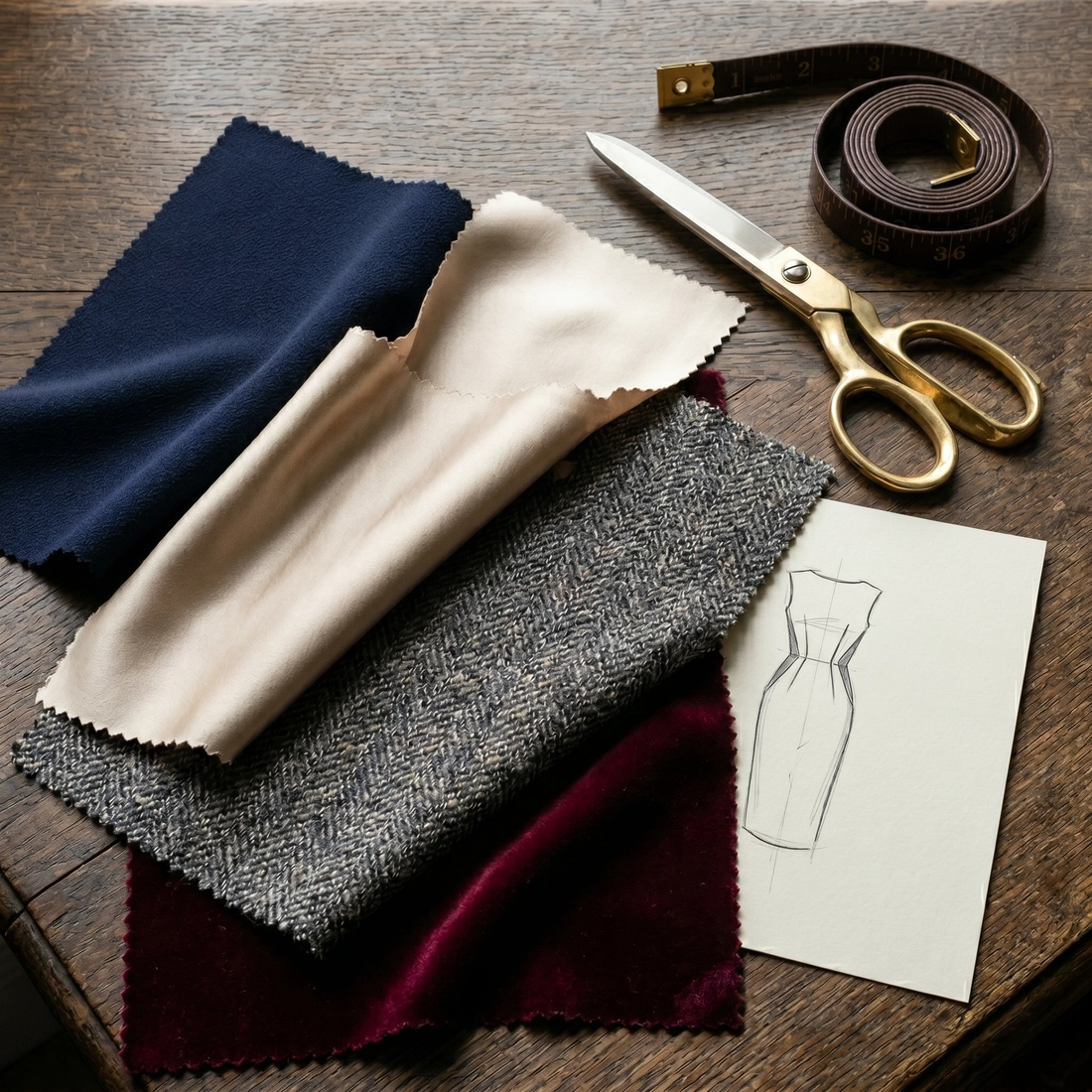
Once you understand the context of a wedding, the next step is selecting the canvas: the fabric. For the groom, color is not merely an aesthetic choice; it is a strategic one. While black is the traditional default, Midnight Blue is the connoisseur’s secret weapon.
The Photogenic Requirement: Depth Over Darkness
Unlike the controlled environment of a gala, a wedding presents a unique lighting challenge. To ensure you look your best from the ceremony to the after-party, consider these factors:
- Mixed Lighting Conditions: You will transition through extreme lighting changes from natural daylight and harsh photographer flashes to the warm, dim glow of the reception hall.
- The “Black Hole” Effect: True black fabric absorbs almost all light. In photographs, this often creates a flat, dark void where your silhouette loses definition.
- Loss of Detail: Without tonal depth, the subtle markers of bespoke tailoring – such as the roll of the lapel, the drape of the chest, and the texture of the fabric disappear into the darkness.
- The Solution: A wedding tuxedo requires a fabric with tonal depth, ensuring that the richness and structure of the suit remain visible in every frame.
The “Blacker Than Black” Visual Trick
This is where Midnight Blue comes into play. Popularized by the Duke of Windsor in the 1920s, this color choice relies on a phenomenon of chromatic physics rather than mere fashion.
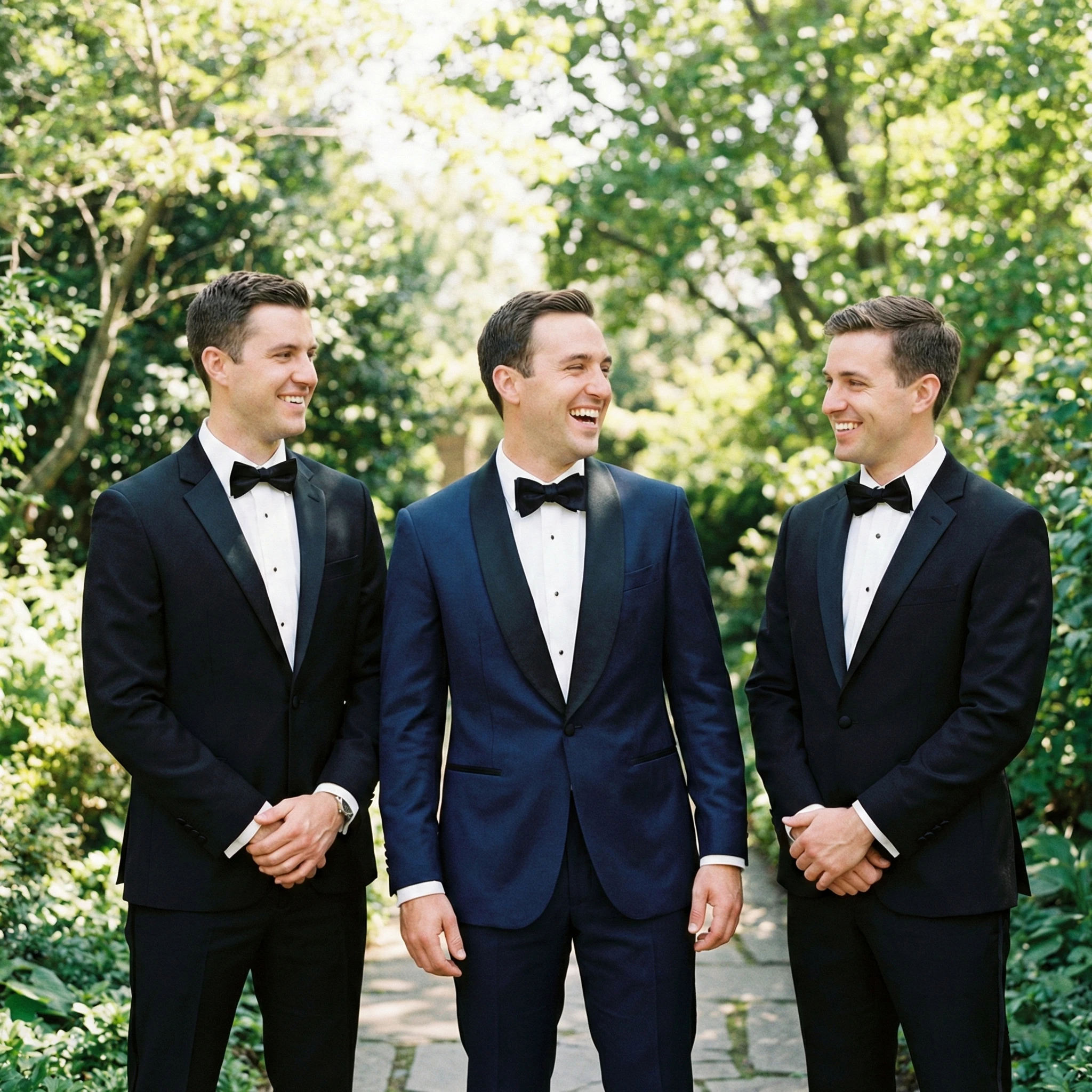
Under the artificial yellow-toned lights of a banquet hall, true black wool tends to absorb light aggressively, often reflecting a dull grey or faint greenish cast. Midnight Blue, however, works differently. The deep blue pigments absorb the yellow wavelengths of artificial light. The result? To the human eye, the fabric ceases to look blue and instead appears as a rich, velvety black that looks “blacker” than black itself.
This is the definition of standing out with subtlety. When standing next to guests wearing standard black rental suits, the groom in Midnight Blue will look sharper, crisper, and infinitely more elegant, even if observers cannot immediately pinpoint why.
The Seasonal Alternative: The Ivory Dinner Jacket
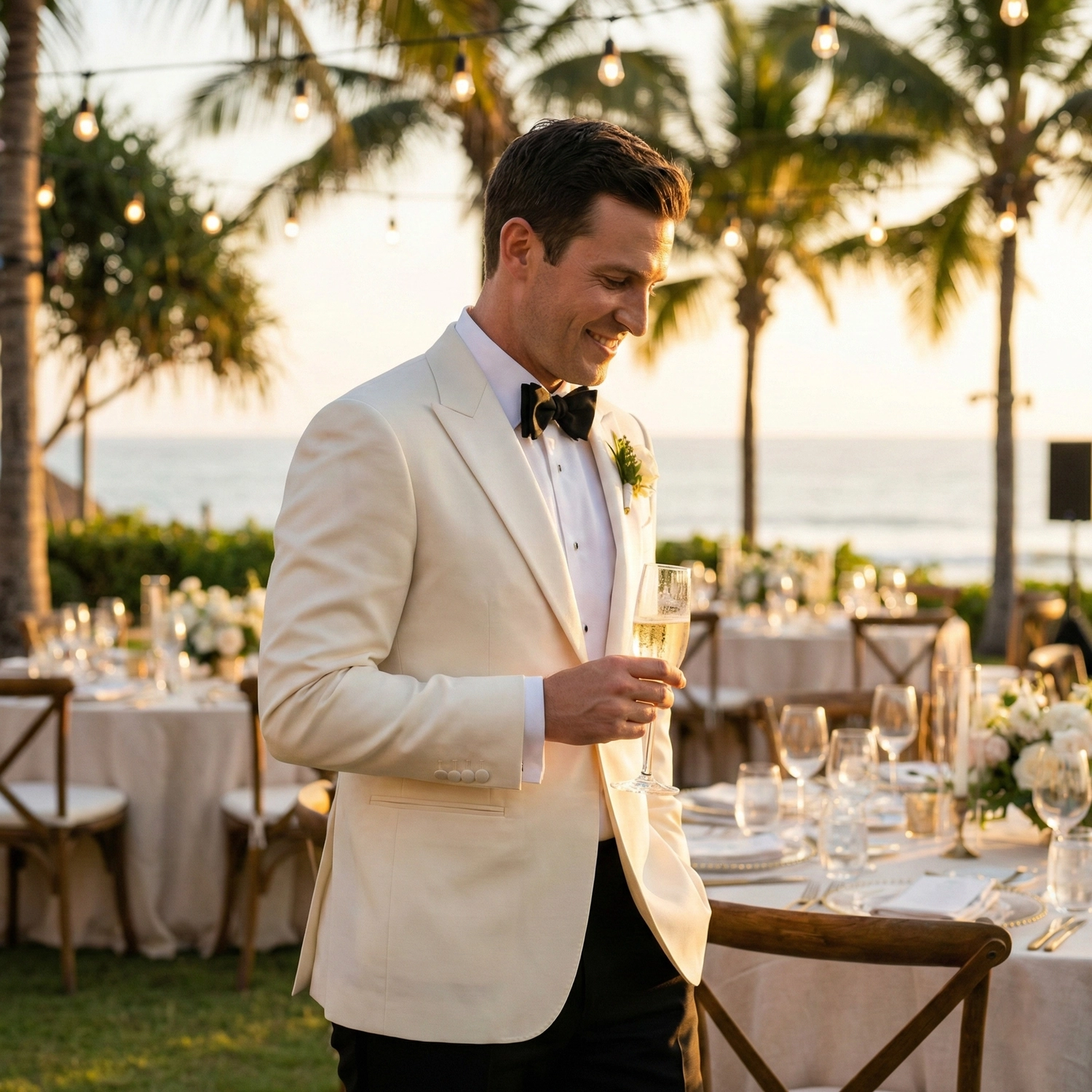
While Midnight Blue is the versatile king of evening wear, for weddings held in high summer or tropical climates, the Ivory Dinner Jacket is a distinguished alternative. Often referred to as “Warm Weather Black Tie,” this look channels the glamour of Old Hollywood and sets the groom apart instantly.
However, execution is key to avoiding the dreaded “waiter effect.”
- Tone Matters: Avoid stark, bright white fabrics, which can look cheap and synthetic. Instead, opt for rich Ivory wool blends. These warm hues absorb light softly and exude luxury.
- The Rule of Contrast: Unlike a full suit, this jacket must always be worn with black trousers. The high contrast between the light jacket and dark trousers draws the eye upward to the groom’s face.
- Bridal Coordination: This is the most critical check. You must compare your fabric swatch with the bride’s dress. The tones must harmonize to ensure the couple looks perfect together in photographs.
Texture and Light: Barathea vs. Mohair
Once you have committed to your color choice (especially for Midnight Blue), the final variable that defines your “vibe” is the texture of the weave.
- Barathea Wool: This is the purist’s choice. It features a broken-rib weave with a pebbled surface that is largely matte. Barathea absorbs light rather than reflecting it, creating a soft, deep silhouette. It is understated and solemn, making it perfect for traditional church ceremonies or strictly classic aesthetics.
- Mohair Blend: For a groom who wants to look razor-sharp, a blend of wool and Mohair (from the Angora goat) is superior. Mohair has a natural, high-luster finish that catches the light subtly. It is crisper and holds a crease better than any other fabric. Under the evening spotlights, a Midnight Blue Mohair tuxedo offers a slight sheen that separates the groom from the matte wools of the crowd.
To make the most precise decision regarding fabric weight and how to choose between wool or mohair based on your wedding climate, please refer to the Fabric Selection chapter in our [The Ultimate Guide to Black Tie].
Styling the Groom: Differentiating from the Groomsmen
If the fabric is the foundation, the styling is the architecture. A common pitfall in weddings is the “uniformity trap,” where the groom is indistinguishable from his supporting cast. While coordination is necessary, you are the protagonist, not a member of the chorus.
Mastering Groom’s Black Tie requires a strategic departure from the standard rental market. While the groomsmen suits or standard tuxedos serve as a cohesive visual backdrop, your attire must feature elevated details that subtly command authority and celebrate the occasion.
The Shawl Lapel: A Mark of Celebration
One of the most effective ways to separate yourself is through the lapel shape.
- The Context: Most groomsmen suits and rental tuxedos feature a standard Notch lapel or a sharp Peak lapel. These are safe, business-like, and widely available.
- The Groom’s Choice: Opt for a Shawl Lapel (rounded lapel). This continuous curve of silk is the purest form of evening wear. It is softer, more romantic, and inherently festive – distinctly different from the aggressive lines of corporate power suits. If your groomsmen are in Peak lapels, a Shawl lapel immediately identifies you as the host and the man of the hour.
The Double-Breasted Option: An Elevated Silhouette
Another powerful tool in Groom’s Black Tie is the double-breasted cut.
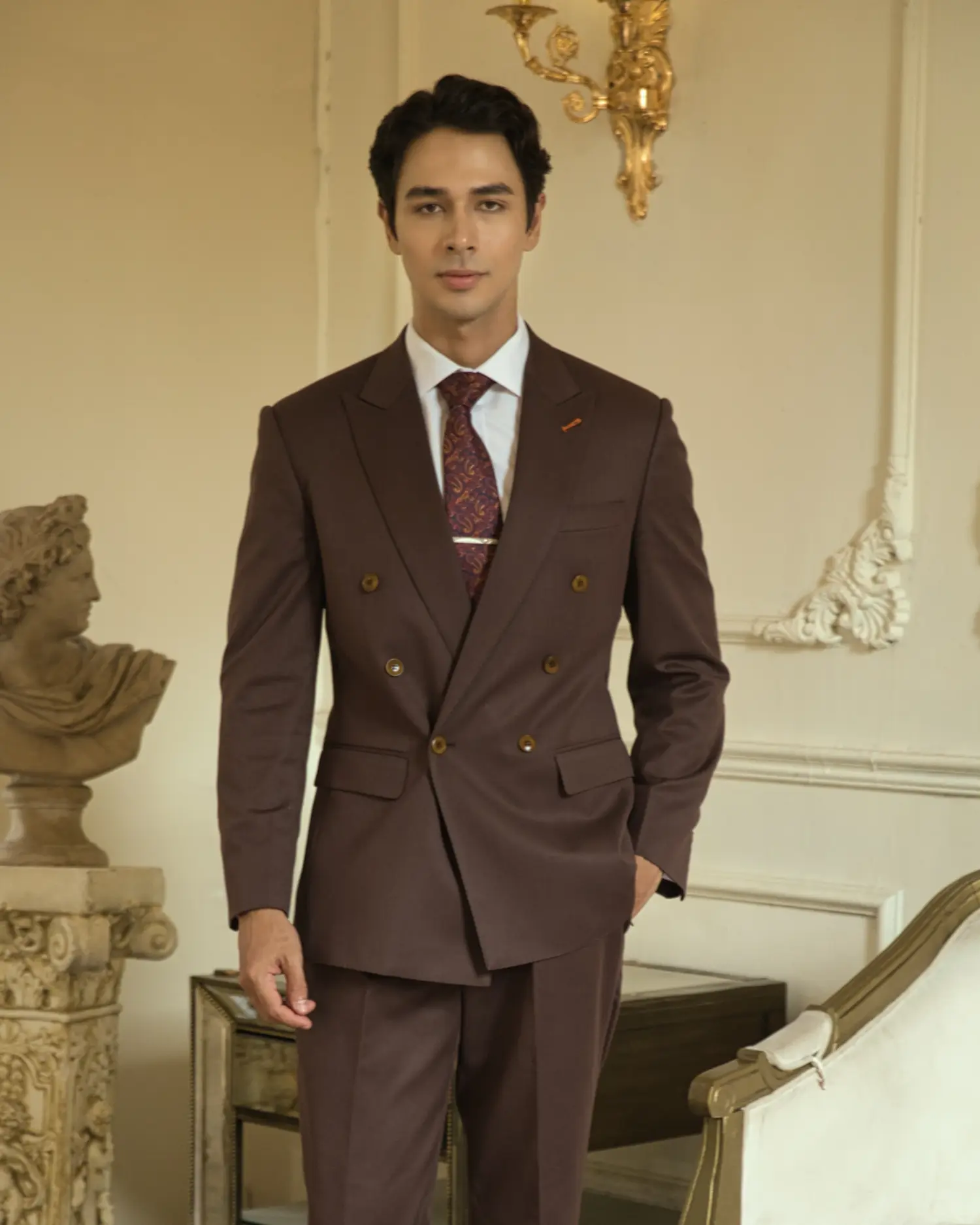
- The Silhouette: A double-breasted tuxedo jacket wraps across the body, creating a clean, uninterrupted V-shape that broadens the shoulders and narrows the waist.
- The Advantage: Because it remains buttoned, it hides the waistline perfectly, removing the need for a cummerbund or waistcoat. Since most groomsmen suits are single-breasted (one button), your double-breasted silhouette will naturally draw the eye, offering a more statuesque and composed appearance in photographs.
The Bride’s Partner: Mastering the Art of Complementary Style
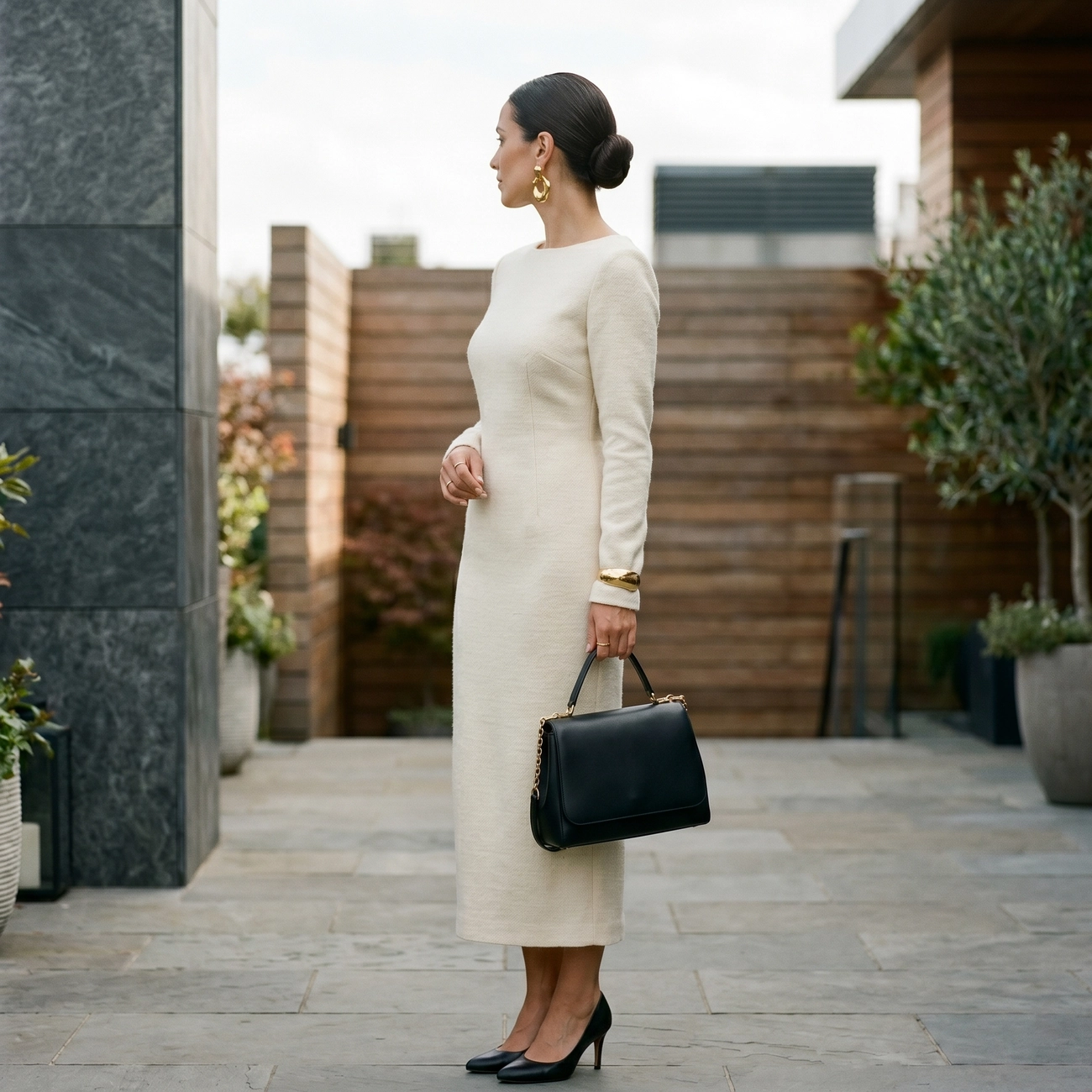
A wedding tuxedo does not exist in a vacuum. For the majority of the event, it stands next to the most significant garment in the room: the bridal gown. When searching for the perfect wedding suits for groom, many men overlook this critical style cue. Your attire should not compete with the bride, but rather frame her, creating a cohesive visual narrative for the couple.
Matching the Vibe: From Modern Satin to Classic Lace
Harmony is achieved not by matching colors, but by matching the “vibe” and texture of the fabrics.
- The Modern Aesthetic: If the bride is wearing a sleek, unembellished gown (such as silk satin or crepe) with clean architectural lines, the groom should mirror this minimalism. A sharp Midnight Blue tuxedo with high-gloss satin lapels is the perfect counterpart. It reflects the sheen of her dress, creating a polished, contemporary look.
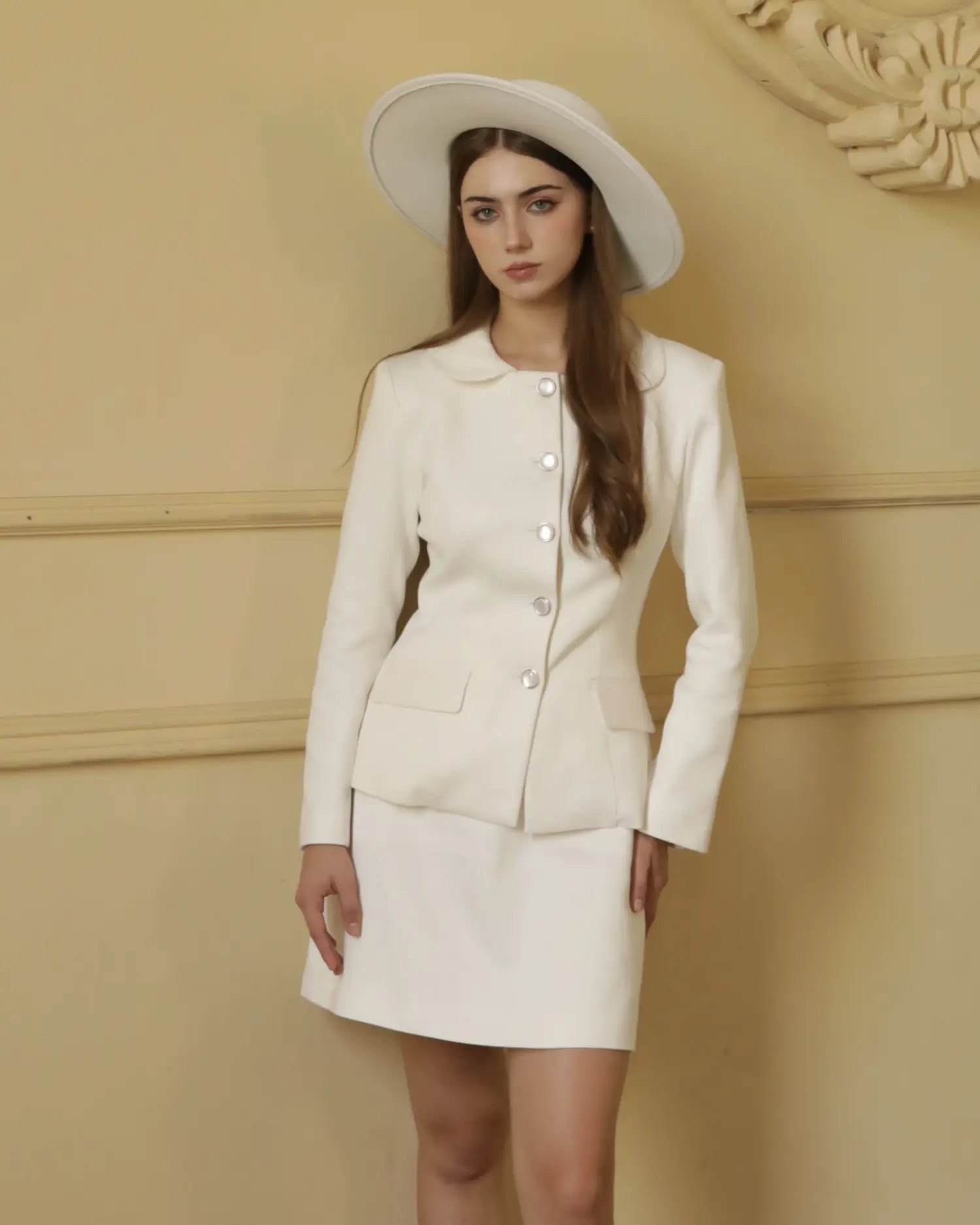
- The Tonal Harmony (Ivory): For couples seeking a “power duo” aesthetic reminiscent of Old Hollywood, the Ivory Dinner Jacket is unmatched. This choice creates a seamless visual link with the bride, especially if her gown is in warm tones like Champagne, Cream, or Ivory. It removes the stark contrast of black, softening the overall image and making the couple look radiantly unified.
- The Romantic/Classic Aesthetic: If the bride chooses a gown with intricate lace, tulle, or vintage detailing, a shiny suit might feel too harsh. Instead, consider a Velvet Dinner Jacket. The soft, light-absorbing texture of velvet complements the depth of lace perfectly. It adds a layer of aristocratic softness that feels romantic and “together” without stealing the spotlight.
The Connection Points: Boutonnières and Accessories
How do you signal that you are a pair without looking like you are wearing costumes?
- The Golden Rule of Bow Ties: A common amateur mistake is matching the bow tie and pocket square to the bridesmaids’ dresses or the wedding color scheme (e.g., wearing a purple bow tie because the tablecloths are purple). Do not do this. It cheapens the look, reminiscent of a high school prom.
- Keep it Classic: Always stick to a black silk bow tie. It is timeless and respectful of the Black Tie code.
- The True Link: The only connection point between the groom and the bride should be the Boutonnière (lapel flower). A single white bloom, selected from the flowers in the bride’s bouquet, is the subtle, romantic thread that visually ties the wedding suits for groom to the bride’s ensemble. This is the definition of sophistication.
Conclusion: The Quiet Confidence of Bespoke
Ultimately, mastering Groom’s Black Tie is about finding the delicate balance between honoring tradition and expressing personal style. You do not need loud colors to command attention. A bespoke wedding tuxedo, cut to your exact measurements, provides a quiet confidence that off-the-rack garments simply cannot match. It allows you to shine beside your bride, perfectly embodying the art of standing out with subtlety. This is not just a suit; it is a tribute to your most significant day.
DISCOVER PHYIGITAL BESPOKE TAILORING