Coordinating Suits for Two Grooms or Two Brides
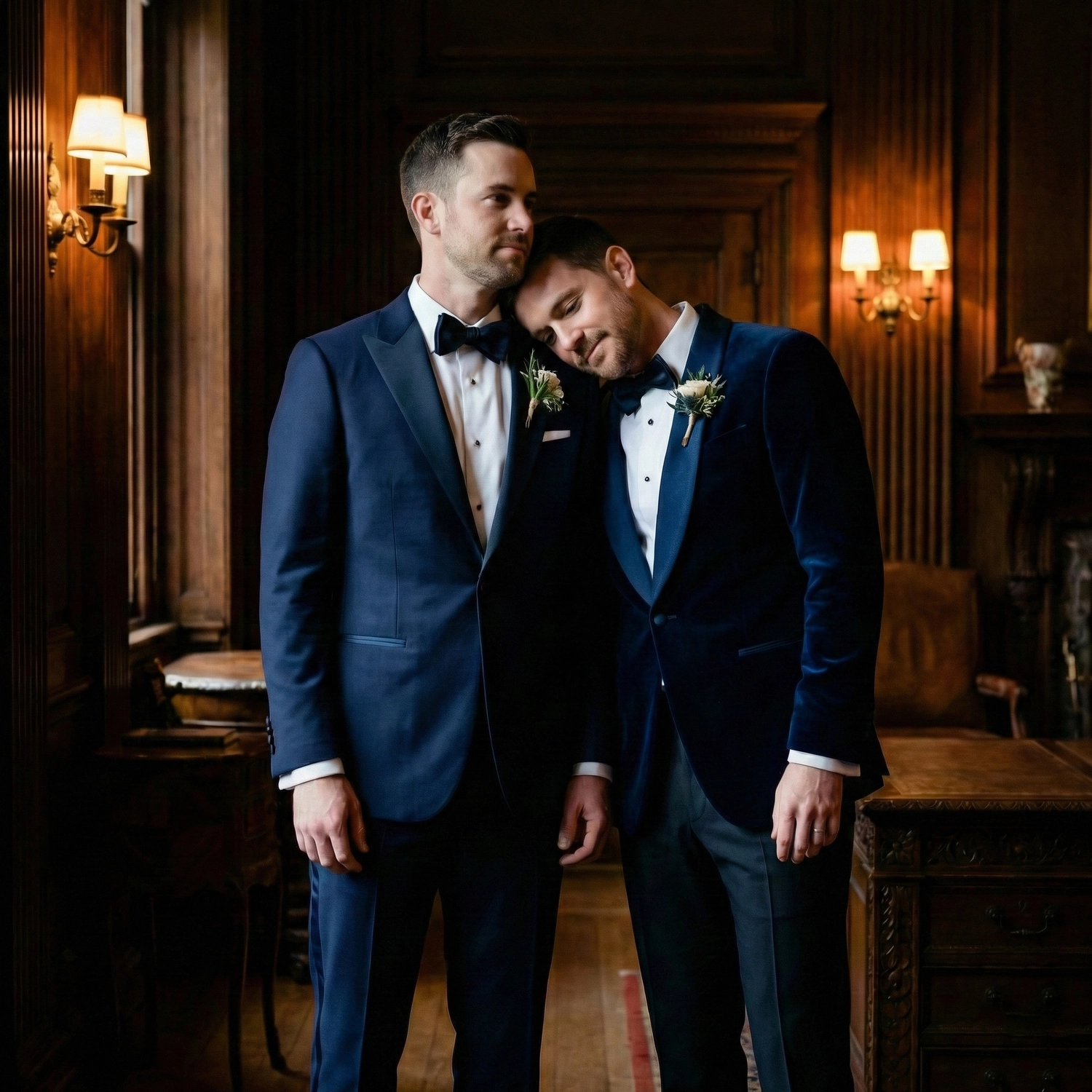
Coordinating suits for a same-sex union is a nuanced art form that prioritizes harmony over uniformity. When two grooms or two brides stand side-by-side, the goal is to create a visual dialogue, not an echo. A common pitfall for many couples is the “twin effect”, wearing identical garments that inadvertently strip away individual personality. True elegance lies in distinction. Whether through the subtlety of texture or the precise rules of Black Tie, the focus must remain on complementary aesthetics that celebrate two distinct individuals. This guide explores how to leverage the architectural precision of bespoke tailoring to craft a look that is cohesive, authentic, and undeniably yours..
The Foundation: Understanding Black Tie Rules
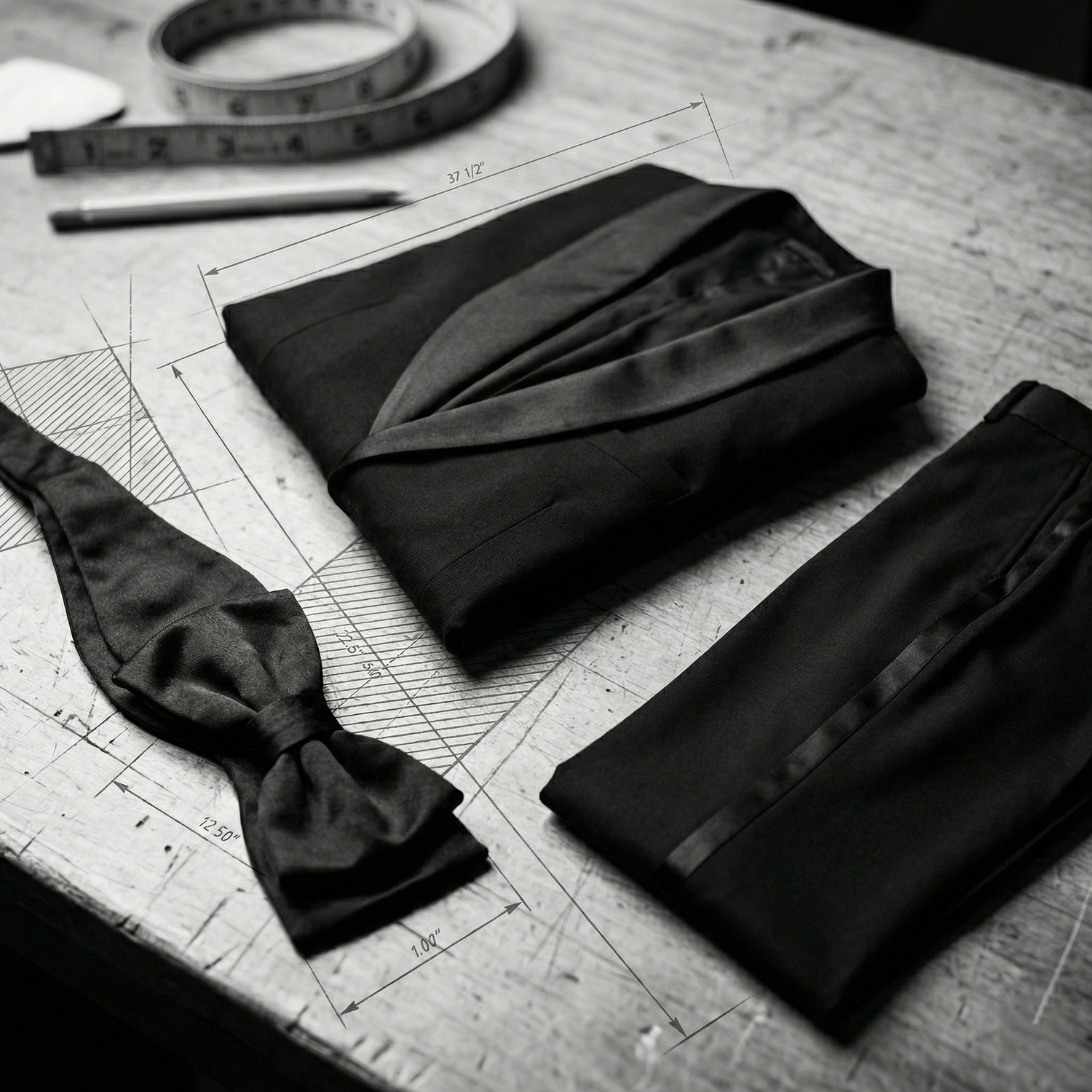
Before attempting to coordinate, one must first understand the canvas. Black Tie is the gold standard for weddings because of its inherent elegance and simplicity. However, strictly speaking, it is a uniform. Unlike a standard lounge suit, a proper Black Tie ensemble adheres to rigid architectural codes: a dinner jacket featuring silk (satin or grosgrain) lapels, trousers with a matching side braid (galon), and a self-tie bow tie.
For couples, this shared code is a powerful advantage. It automatically establishes a baseline of visual harmony. When both partners commit to these standards, half the work of coordination is already done. The role of a Bespoke Tuxedo is to respect these traditions while identifying subtle avenues for differentiation. By adhering to the rules of structure – fit, proportion, and formality – you ensure that your individuality is expressed through refined details rather than conflicting styles.
The Classic Contrast: Black vs. Ivory (The Dinner Jacket)
The Challenge: Distinct but Equal
The primary dilemma for many couples is how to wear different suits without one looking more formal or “important” than the other. If one wears a tuxedo and the other a standard suit, the visual balance is broken. The solution lies in varying the color palette while maintaining the strict structural hierarchy of Black Tie.
The Concept: Warm Weather Black Tie
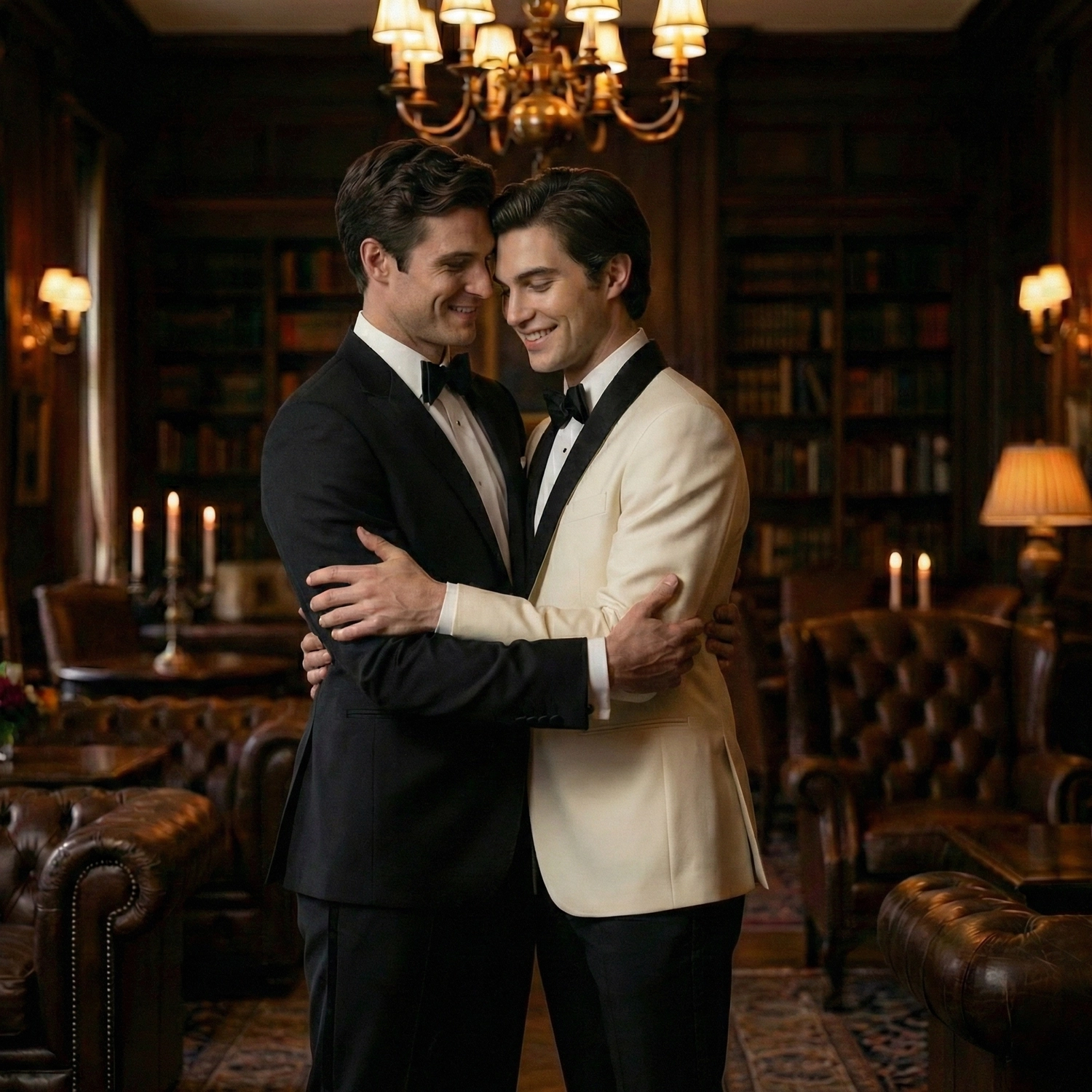
The Ivory Dinner Jacket is often misunderstood as a modern fashion statement, but it is, in fact, a historical stalwart known as “Warm Weather Black Tie.” Originally designed for tropical climates and high-society summer evenings, it is the international standard for elegance in heat. It is crucial to distinguish this from a “white suit.” A true bespoke Ivory jacket is paired strictly with black tuxedo trousers featuring the requisite side braid (galon). This is not an arbitrary mix-and-match; it is a rooted sartorial tradition that signals sophistication rather than rebellion.
How to Coordinate
To execute this look, the division of labor between the two outfits must be deliberate:
- Partner A (The Anchor): Wears a Classic Black Bespoke Tuxedo. This look provides the grounding element of the couple. It represents the traditional “Black Tie” archetype – mysterious, powerful, and timeless.
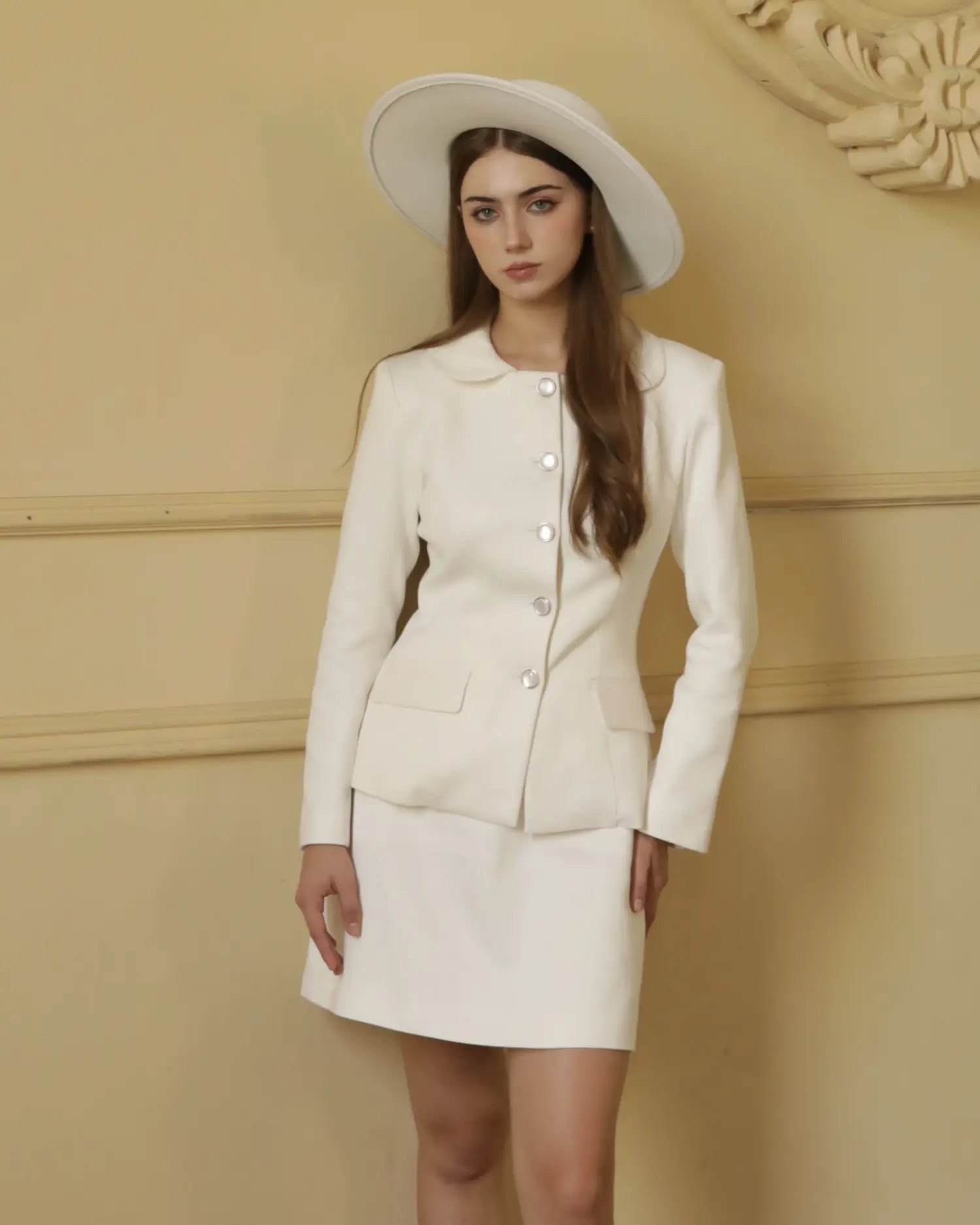
- Partner B (The Statement): Wears an Ivory Dinner Jacket with black trousers. The fabric should not be optical white (which looks synthetic and cheap) but a rich cream or off-white wool that absorbs light. This look offers softness, flair, and a nod to old-world glamour.
Why It Works
This combination creates a perfect “Yin and Yang” visual balance. The contrast between the deep, light-absorbing black wool and the soft, warm ivory creates a dynamic interplay in photography. It allows both individuals to stand out – one through sharp definition, the other through luminosity – while the shared elements (black bow ties, black trousers, and patent shoes) tie the two looks together into a cohesive, intentional union.
Texture Play: Velvet and Wool (Same Color, Different Feel)
The Idea: Monochromatic Depth
For couples who find the Black vs. Ivory contrast too bold or prefer the solemnity of a darker palette, the solution lies in texture. Wearing the exact same fabric in the same color often results in a “flat” image where the two suits blend into indistinguishable blocks of darkness. By manipulating texture, you can maintain a unified color story (such as matching Midnight Blue or Black) while creating a distinct visual boundary between partners.
The Execution
To achieve this sophisticated interplay, the distinction is found in the “hand” and “finish” of the cloth:
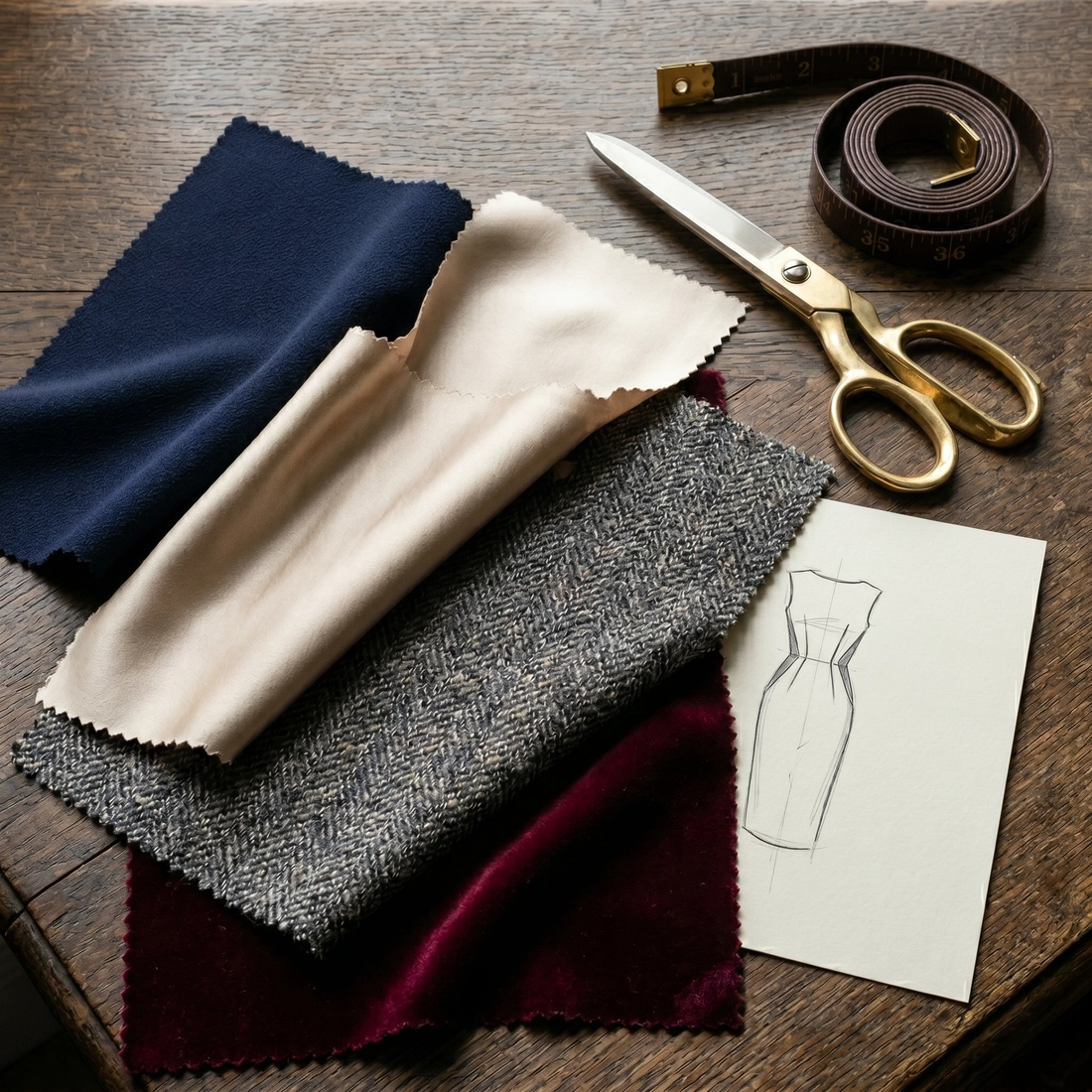
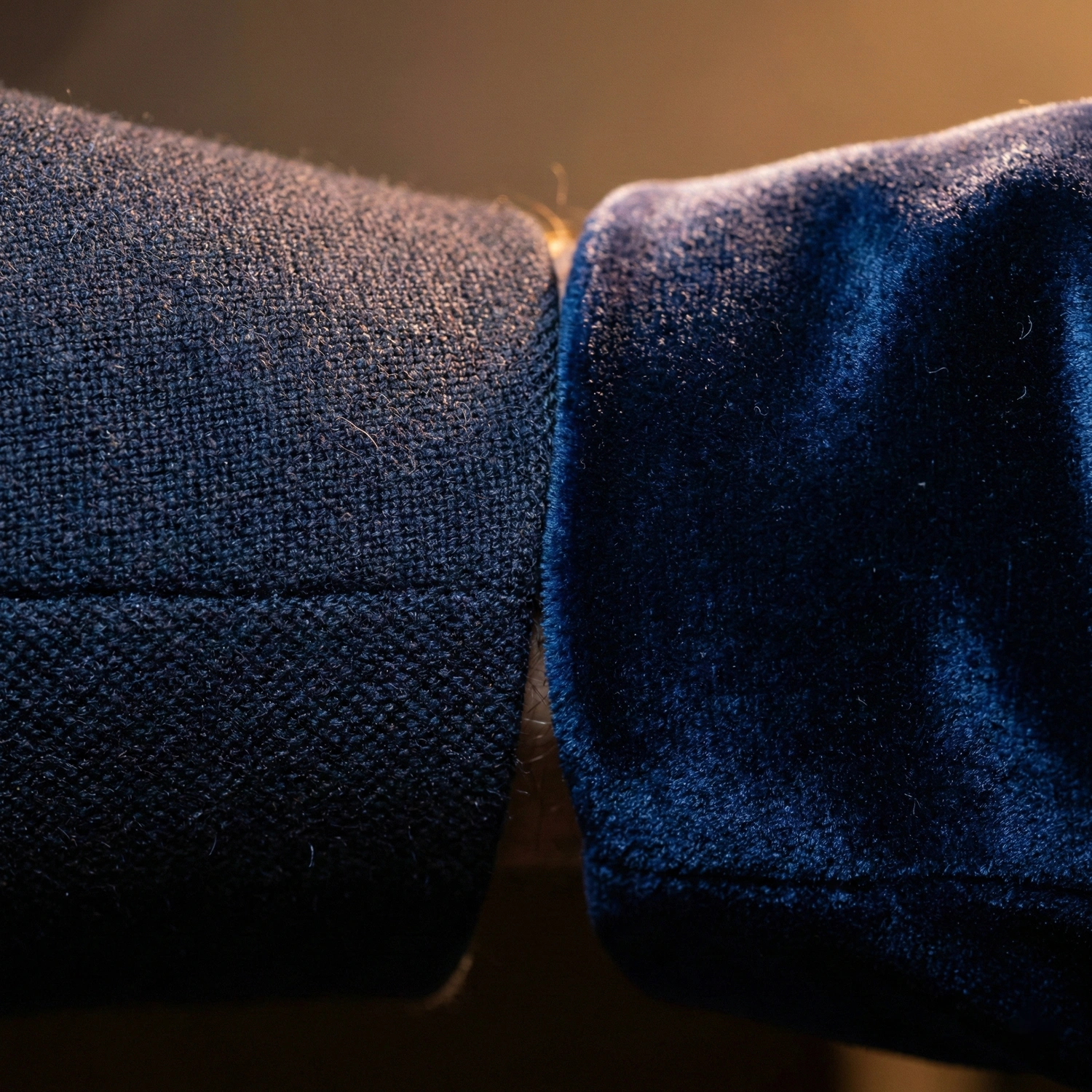
- Partner A (The Structure): Wears a Bespoke Wedding Suit crafted from Barathea Wool. This is the gold standard for traditional formalwear. Barathea is a high-twist yarn with a pebbled texture that is matte, crisp, and holds a sharp architectural line. It represents the “rigid” and classical side of the equation.
- Partner B (The Softness): Wears a Velvet Dinner Jacket in the exact same hue (e.g., Midnight Blue or Deep Burgundy). Unlike wool, velvet is a pile fabric. It is plush, soft, and carries a natural luster. This garment adds a layer of opulence and “Dandy” flair to the coupling.
The Effect
The magic of this combination is revealed under venue lighting. Velvet is a “light trap” – it absorbs light, creating a deep, rich saturation that looks almost regal in photography. In contrast, the Barathea wool reflects light subtly, highlighting the sharp edges of the lapels and the clean drape of the trousers. This textural contrast ensures that even when standing shoulder-to-shoulder in the same color, the couple looks like a curated set rather than a uniform match.
Coordinating Suits for Two Brides: Silhouette & Styling
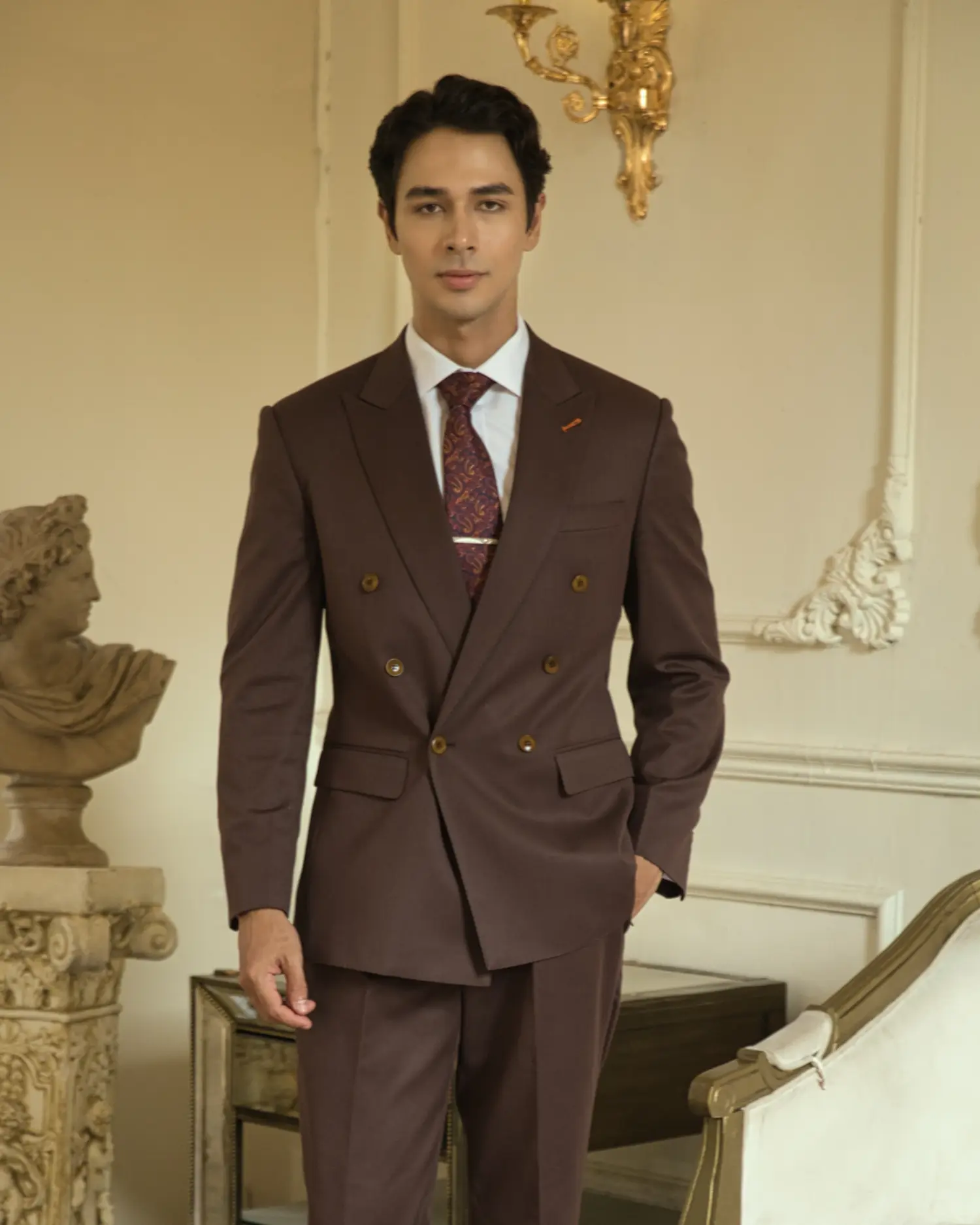
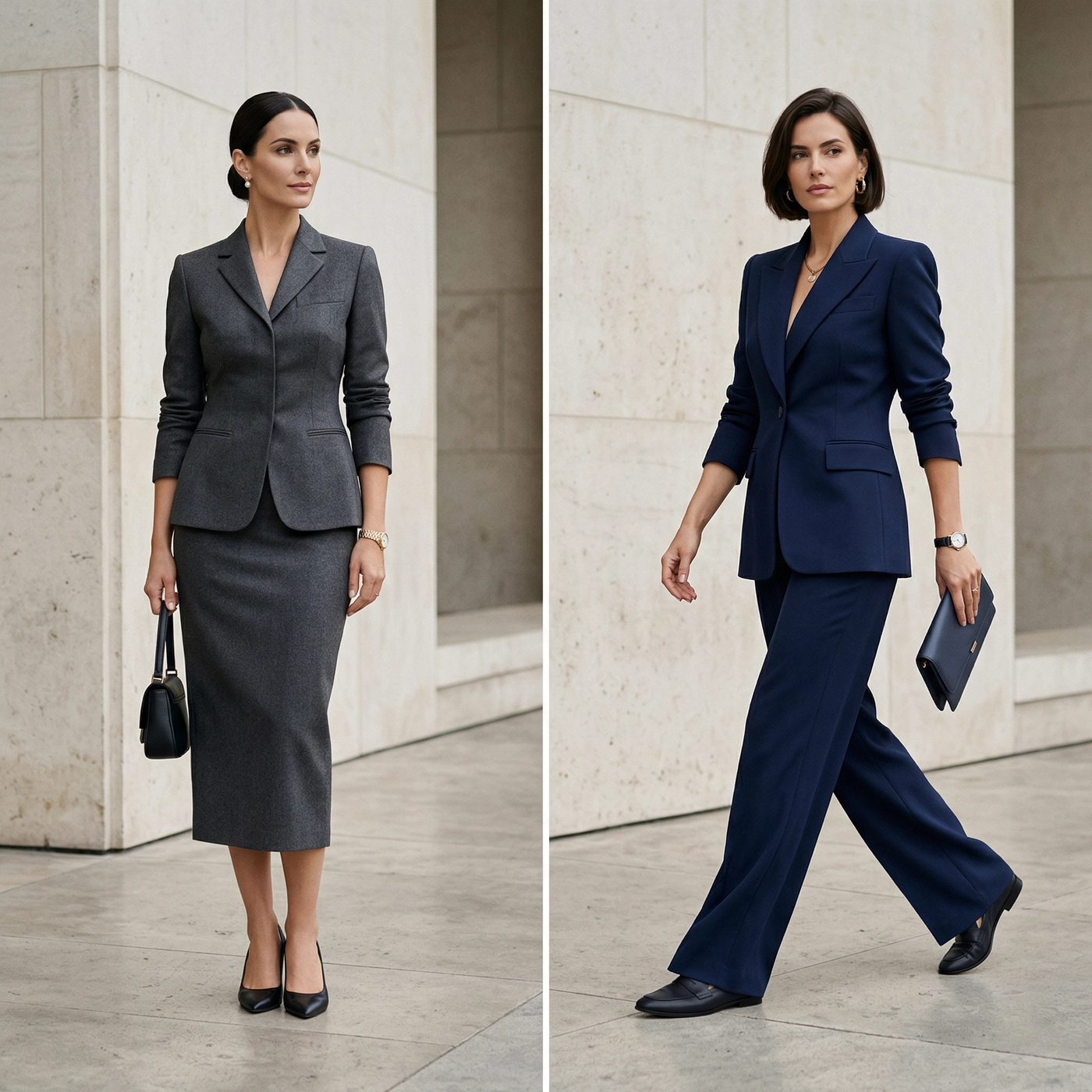
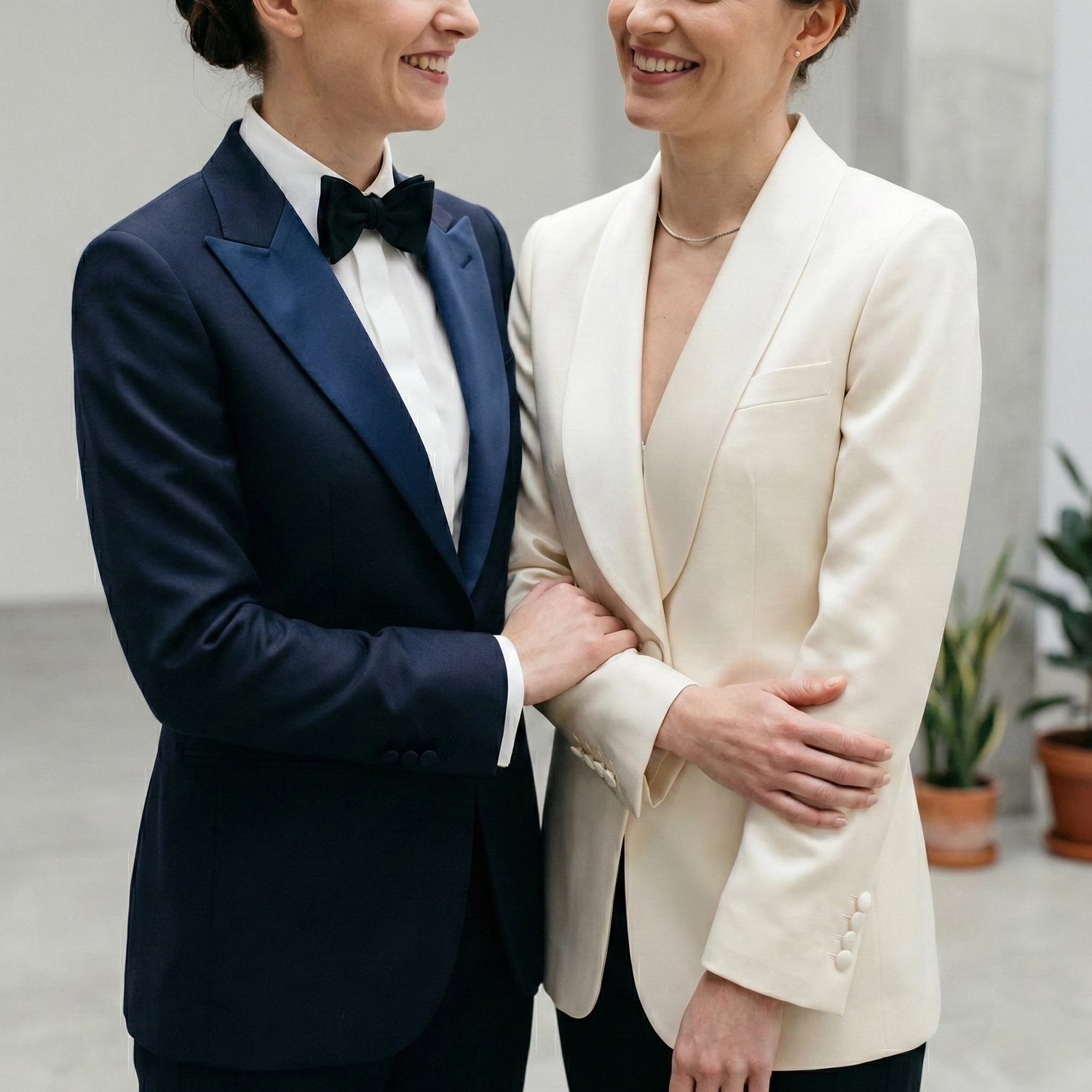
For two brides, the approach to coordination depends entirely on the chosen silhouettes. When both partners step away from tradition to don wedding suits, the priority is distinguishing the individual within the “masculine” aesthetic.As explored in our pillar guide, [Beyond the Gown], a Bespoke Tuxedo on an AFAB body is an engineering feat, using canvas to create a powerful, columnar shape. To avoid the “uniform” look here, differentiation should come from geometry. One partner might choose the aggressive, upward lines of a Peak Lapel to broaden the shoulders, while the other opts for the fluid, timeless curve of a Shawl Lapel. This creates a compelling dynamic of “The Sharp” and “The Smooth” – united by fabric, but distinguished by attitude.
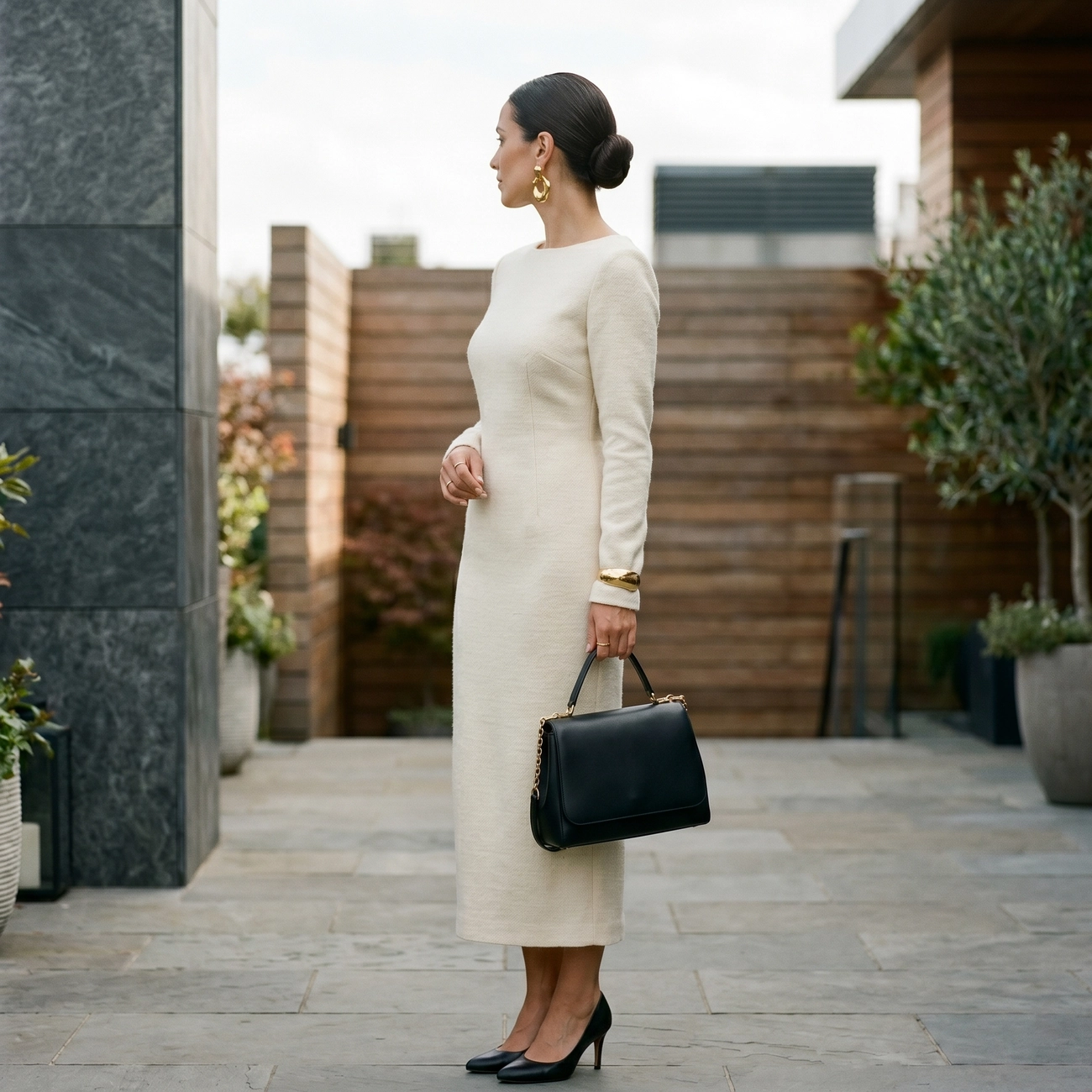
However, the dynamic shifts when one partner wears a gown and the other a suit. Here, the challenge is “Complementary Contrast.” The suit must hold enough visual weight to stand up to the grandeur of the dress. If your partner wears a voluminous ballgown, a casual suit will vanish; a structured Black Tie ensemble is required to match that energy. Coordination in this scenario is found in the whispers of detail: a pocket square that echoes the lace pattern of the gown, or a jacket lining custom-dyed to match the exact shade of ivory in the dress. This ensures that while the silhouettes are binary – one soft, one structured – the visual story remains undeniably singular.
Subtle Ties: Accessories That Bind You Together
In the realm of Black Tie, where the color palette is restrained, the connection between partners is forged in the details. Accessories should not be loud; they must be intentional. To maintain the sanctity of the formal dress code while establishing a visual link, we recommend the following coordination strategies:
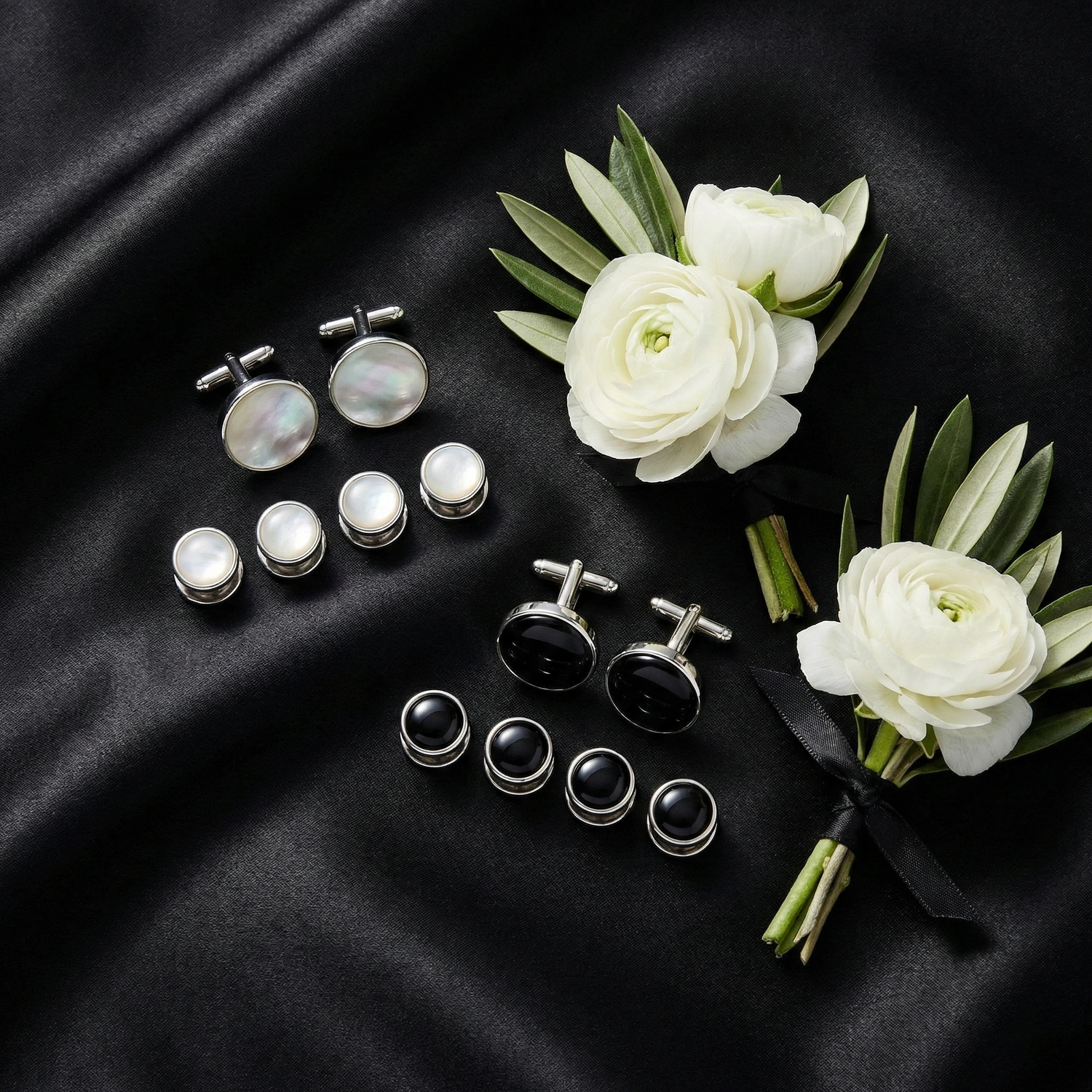
- Floral Continuity (Boutonnieres): Flowers are a softening element against the rigid tailoring. To coordinate, select the same botanical species for both partners to establish a theme (e.g., white Calla Lilies or Ranunculus). Distinction is achieved through scale or shade: one partner might wear a full bloom in pure white, while the other wears a smaller bud or a variation in soft ivory.
- Unified Hardware (Cufflinks & Studs): For a tuxedo shirt, replacing standard buttons with stud sets is non-negotiable. To create unity, agree on a metal tone – typically silver, platinum, or white gold for Black Tie and stick to it. Individuality can then be expressed through the insert material: one set might feature classic Mother-of-Pearl (white), while the other features Onyx (black) or a textured metal design.
- Grounding Textures (Footwear): Your choice of shoes dictates the “finish” of your outfit. Both options must be formal, but they offer different vibes. One partner can anchor the look with Patent Leather Oxfords (the high-gloss standard of Black Tie), while the other opts for Velvet Slippers (a sophisticated, matte alternative). This mirrors the “Velvet vs. Wool” suit concept, bringing the coordination down to the very ground you walk on.
Conclusion
True style is never about uniformity; it is about harmony. The most powerful wedding aesthetics emerge when two distinct personalities find a visual rhythm that connects them without erasing their individuality. Coordinating suits is the physical manifestation of this balance. By mastering the interplay of texture, silhouette, and detail, you create a tableau where neither partner overshadows the other. This is the definitive promise of bespoke tailoring: to craft an image where you stand tall as individuals, yet appear unbreakable as a pair.
DISCOVER PHYIGITAL BESPOKE TAILORING