The Finer Details: Androgynous Wedding Accessories to Elevate Your Look
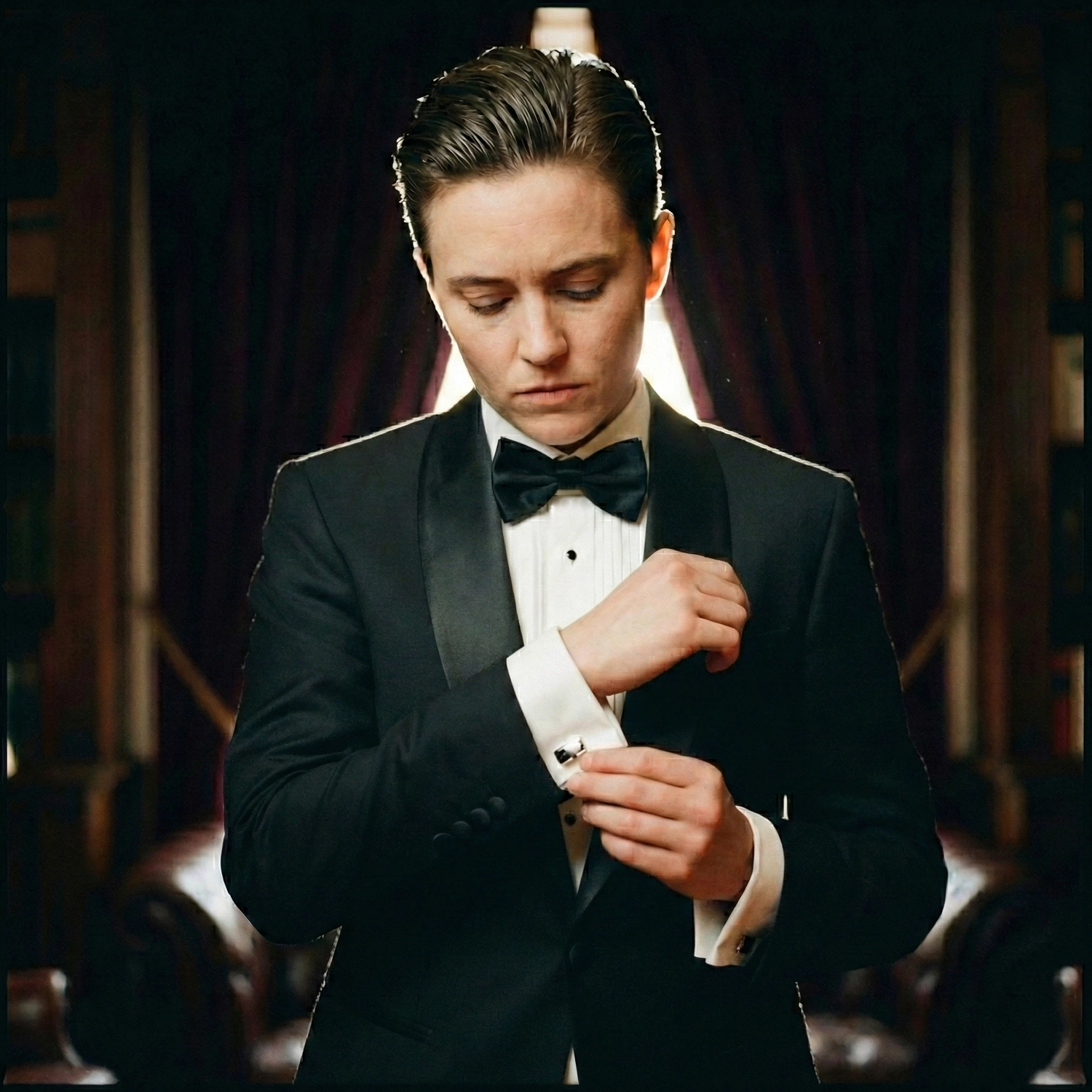
While a bespoke tuxedo builds the foundation, the right androgynous wedding accessories define the narrative. To elevate a look from simply “formal” to truly ceremonial, you must master the art of the finish. From the architectural gleam of a lapel pin to the profile of a shoe, these details are what transform a garment into a personal statement.
Before diving into these styling details, ensure your structural base is solid with our guide: [Beyond the Gown: The Definitive Guide to LGBT & Androgynous Bridal Suits].
Grounding the Look: Footwear with Intent
Shoes are more than a functional necessity; they are the visual anchor of your entire silhouette. The wrong footwear can drag down the sharpest bespoke tuxedo, while the right pair elevates your posture and dictates the formality of your outfit. When refining your queer wedding style, consider the venue, the fabric of your suit, and the message you wish to convey through your footwear.
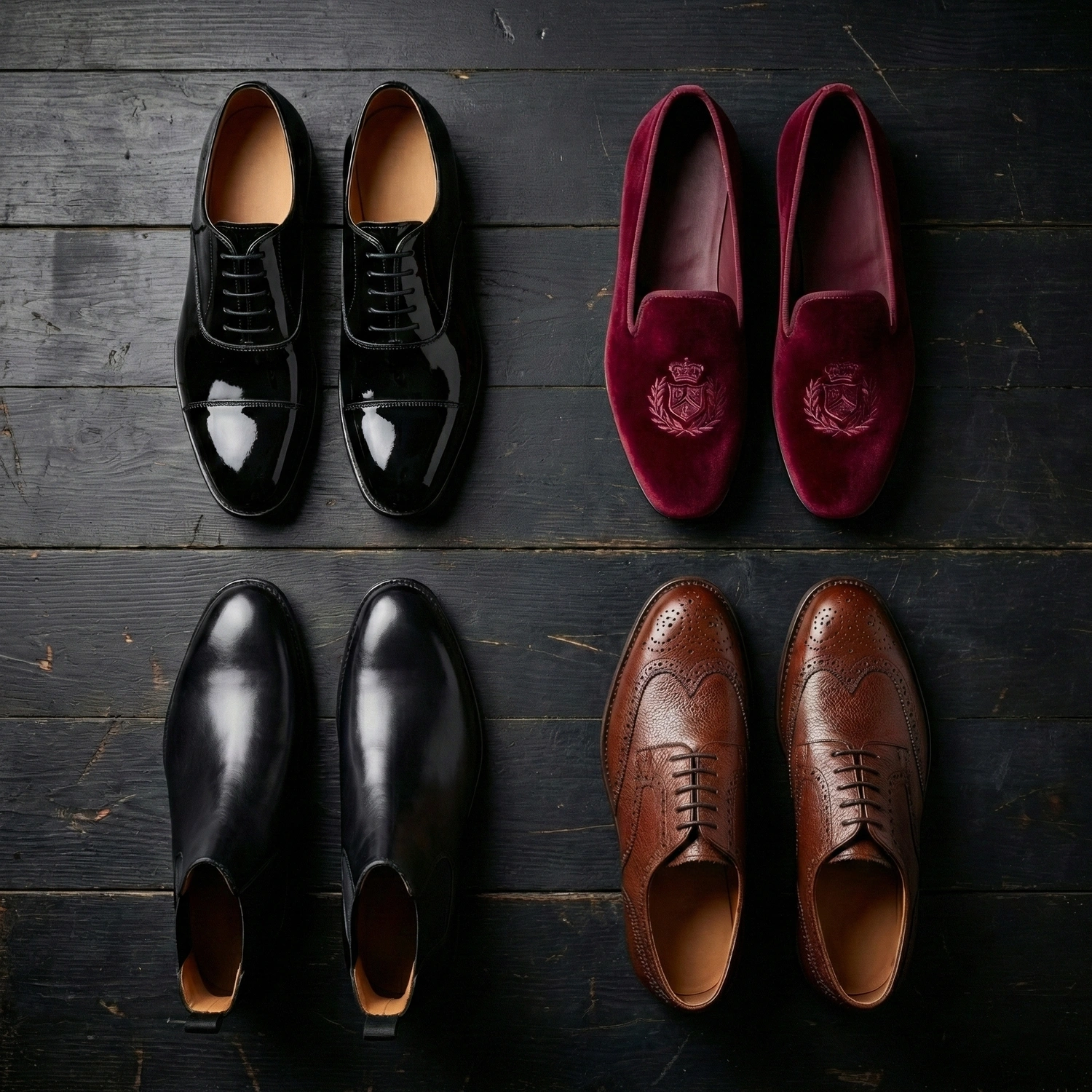
The Black Tie Standard: Patent Oxfords
If you are adhering to Black Tie protocols, Patent Leather Oxfords are non-negotiable.
- The Logic: Under dim ballroom lighting, matte leather absorbs light and looks dull. Patent leather reflects light, creating a necessary contrast against wool trousers to ensure your feet don’t “disappear.”
- The Look: Opt for a “Wholecut” or “Plain Toe” Oxford to complement the clean minimalism of the suit.
The Dandy Choice: Velvet Slippers & Loafers
For those seeking sophisticated comfort or a touch of “old-world” luxury, the Velvet Slipper (often called the Prince Albert slipper) is a powerful alternative.
- The “Why”: Velvet adds depth and richness, particularly if you are wearing a velvet jacket or a jacquard dinner jacket. This choice signals confidence, a relaxed elegance that suggests you are the host of the party, not just a guest. You can further personalize this look by having your initials or a meaningful motif embroidered on the vamp (the top of the shoe).
- Critical Styling Rule: Loafers and slippers require a specific trouser length. You must ask your tailor for a “No-Break” or slightly cropped hemline. If the trousers are too long and bunch up over the shoe, it destroys the sleek profile of the loafer and makes the legs appear shorter.
The Modern Edge: Chelsea Boots & Brogues
For rustic or bohemian themes, traditional dress shoes may feel out of place.
- Chelsea Boots: The lack of laces creates a smooth continuity with the trouser leg. The higher ankle and thicker sole add visual weight and height, helping to ground the silhouette.
- Brogues: The decorative perforations add texture that pairs beautifully with tweed or heavy wool. Remember: the more decoration, the less formal the shoe.
The Neckwear Debate: Bow Tie, Necktie, or Air Tie?
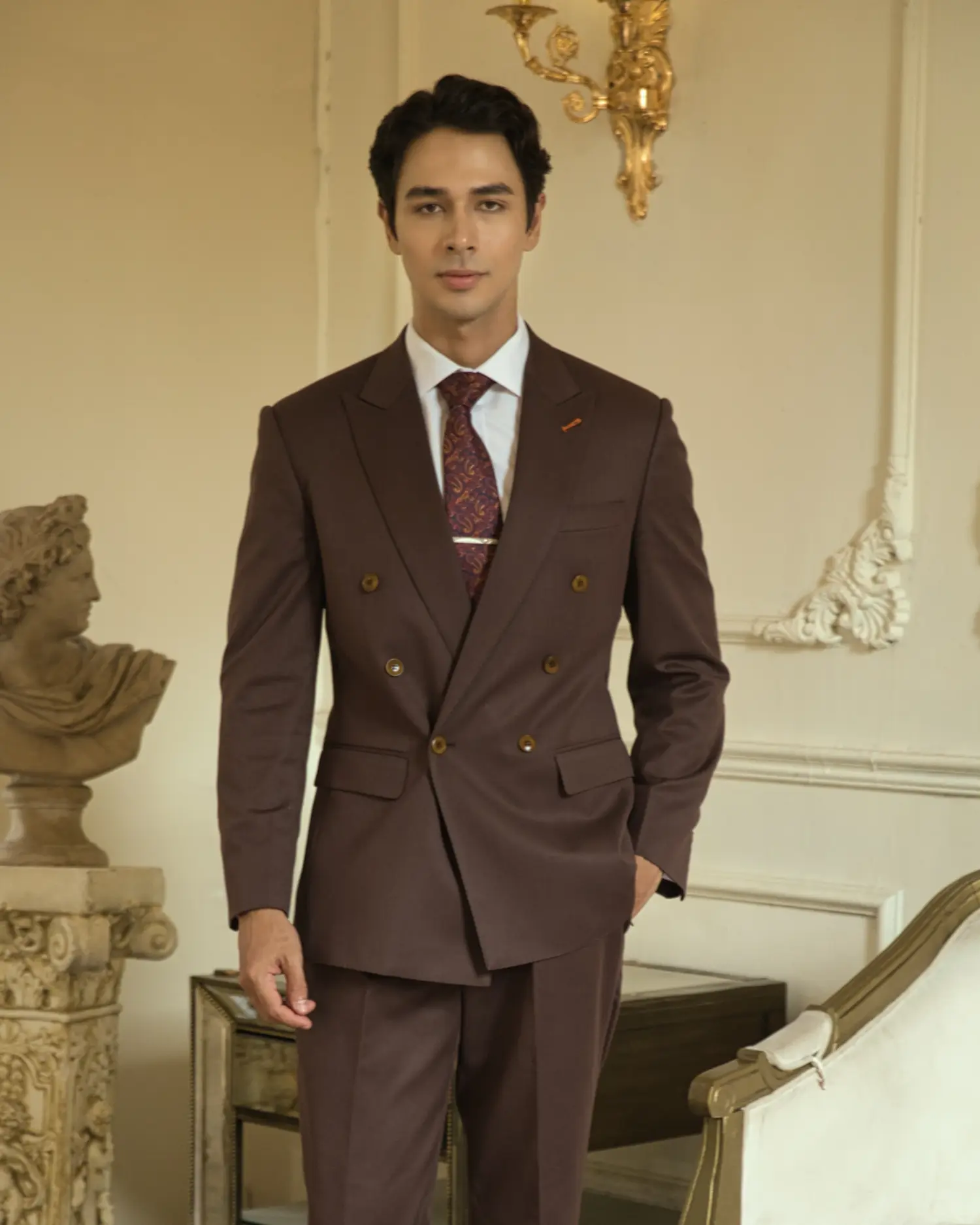
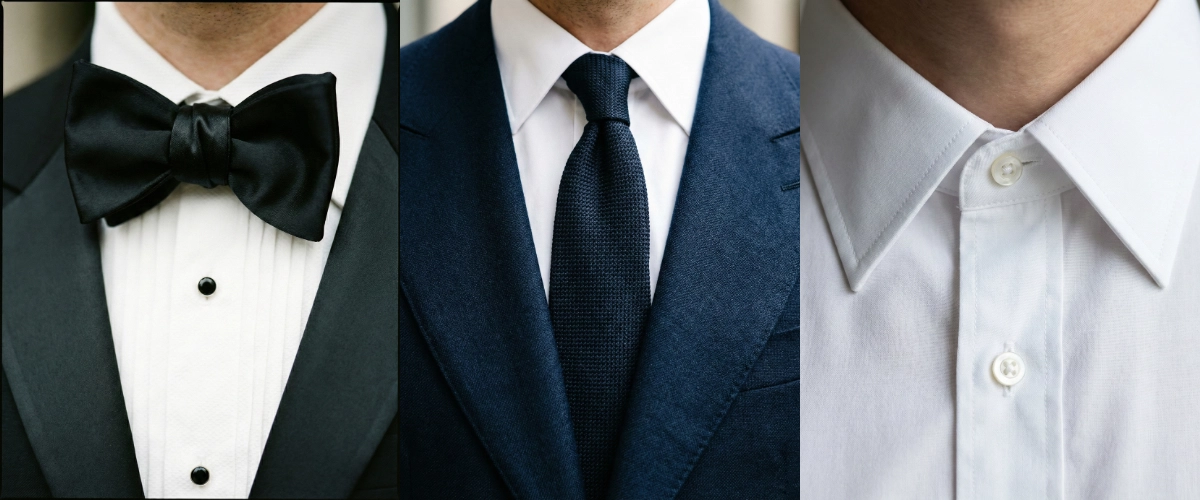
The “V-zone” – the area encompassing your chest, collar, and neckwear – is the visual epicenter of your outfit. In photography, especially close-up portraits, this is where the eye naturally lands. For an androgynous wedding look, your choice of neckwear does more than accessorize; it defines the genre of your style.
The Bow Tie (The Ceremonial Classic)
If you have chosen a tuxedo, the Bow Tie is not just a suggestion; it is a requirement. It respects the architectural lines of the suit, allowing the shirt bib and lapels to shine without the visual clutter of a long tie.
- The “Self-Tie” Rule: We strongly advocate for a “Self-Tie” bow tie over a “Pre-Tied” one. A factory-made knot is often too symmetrical, appearing stiff and artificial. A hand-tied knot, with its slight asymmetry and natural dimple, possesses sprezzatura – a sense of effortless elegance.
- Proportion: For smaller frames or narrower faces, avoid the “jumbo” butterfly shapes often rented at formalwear shops. Opt for a “Batwing” or a standard size that aligns with the outer corners of your eyes, ensuring the tie doesn’t overwhelm your face.
The Necktie (Relaxed & Traditional)
The long necktie is traditionally associated with business suits, but it is perfectly appropriate for weddings (unless strict Black Tie is required), provided you choose the right texture. To pull this off, you must adhere to The Golden Rule of Proportion:
- Match the Widths: The width of your tie at its widest point must roughly match the width of your jacket’s lapel. Since many androgynous suits feature modern, slimmer lapels to accommodate narrower shoulders, you should opt for a slimmer tie to maintain harmony.
- Avoid Visual Disconnect: Wearing a wide tie with a narrow lapel (or vice versa) throws off the architectural balance of your upper body. This mismatch draws the eye to the discrepancy rather than the face, making the overall outfit look disjointed.
The “Air Tie” (The Minimalist Statement)
For the modern minimalist who finds traditional neckwear restricting, the “Air Tie” (buttoning the shirt all the way to the top without a tie) or the “Open Collar” is a chic, fashion-forward alternative.
- The Risk: Without a tie to hold the collar together, a shirt collar can easily collapse, looking messy or tired halfway through the reception.
- The Technical Solution: If you go tie-less, structure is everything. You must ensure your shirt is fitted with Metal Collar Stays (stiffeners inserted into the collar points). Furthermore, consider a shirt with a slightly higher collar stand. This ensures the collar remains upright, crisp, and architectural, framing the face sharply even without the support of a knot.
Jewelry & Hardware: Essential Androgynous Wedding Accessories
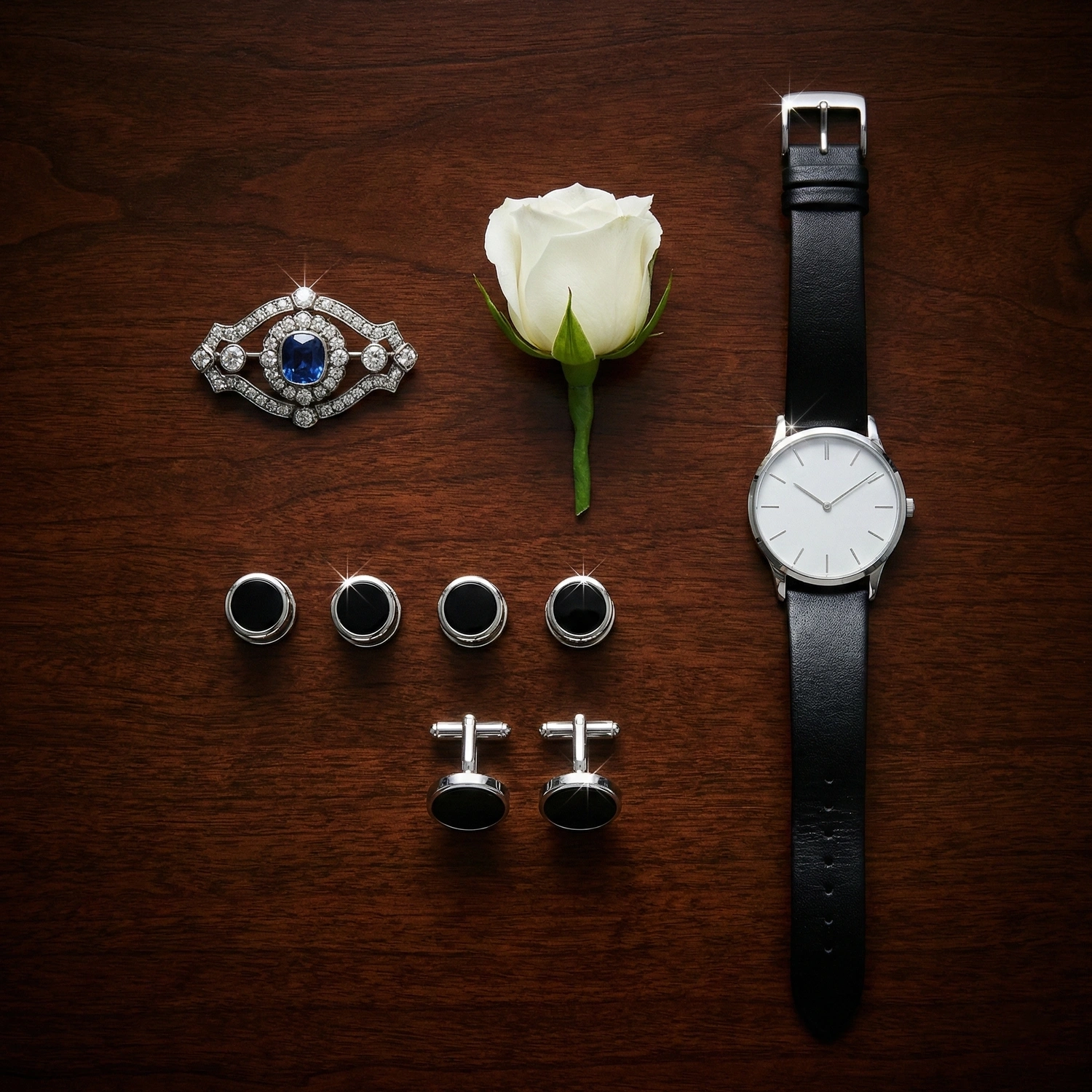
While a fresh flower (boutonniere) on the left lapel is the timeless standard for Black Tie, the contemporary aesthetic often leans towards permanence and structure. In the realm of androgynous wedding accessories, jewelry provides a distinct edge. Shifting from organic elements to metal accessories changes the visual language from “soft and ephemeral” to “structured and enduring.”
The Statement Brooch vs. The Classic Boutonniere
For many, the choice between a flower and a brooch comes down to the “vibe” of the wedding.
- The Classic Boutonniere: A single fresh flower (often a white carnation or rosebud) inserted into the lapel buttonhole signals strict adherence to tradition. It softens the look and connects you visually to the bridal bouquet or wedding decor.
- The Statement Brooch: A lapel pin or vintage brooch offers a sophisticated, non-traditional alternative. Unlike a flower that may wilt or bruise after hours of hugging guests, a piece of jewelry remains pristine. Placed on the left lapel, metal and stone catch the light in a way that petals cannot, providing a focal point of sparkle that contrasts beautifully against the matte texture of a tuxedo.
Functional Jewelry: Cufflinks & Studs
If you are wearing a proper Tuxedo Shirt, standard buttons are unacceptable. The shirt’s placket (the front strip) is designed to be fastened with Studs, and the cuffs with Cufflinks. These are the “nuts and bolts” of formal elegance.
- The Shirt Studs: These small, decorative fasteners replace the sewn-on buttons down the front of the shirt. They typically come in sets of four or five. For a classic look, opt for Black Onyx (for silver/platinum settings) or Mother of Pearl (for gold settings). They create a clean, vertical line of “jewels” down your chest, adding rhythm to the white expanse of the shirt.
- The Cufflinks: These secure the French Cuffs (double cuffs) of your shirt. Unlike studs, cufflinks allow for more personal expression. You might choose a design that reflects a personal interest or matches the metal of your wedding ring.
- The Rule of Matching Metals: Ensure your hardware is cohesive. If your belt buckle (if worn), watch case, or glasses frames are silver, your studs and cufflinks should also be in the silver/platinum family. Mixing gold and silver can make the outfit look accidental rather than curated.
The Timepiece (Watches)
Historically, wearing a watch to a Black Tie event was considered a faux pas. However, in the modern era, a timepiece is accepted and often admired strictly as a piece of jewelry. If you choose to wear a watch, follow the “Dress Watch” protocol:
- The “Slide” Test: The watch must be slim enough to slide effortlessly under your shirt cuff. It should never catch on the fabric or create a bulky outline at the wrist.
- Simplicity is Key: A proper dress watch features a clean, simple dial and a leather strap (ideally matching the color of your shoes). Avoid bulky sports watches, chronographs with busy faces, or metal diving watches.
- A Note on Smartwatches: We strongly recommend leaving the digital smartwatch at home. A glowing screen or a silicone strap disrupts the timeless elegance of a tuxedo. If you must wear one, ensure the screen is off and swap the band for a leather one.
The Unsung Heroes: Waist & Pocket Accessories
In the architecture of a bespoke tuxedo, functionality meets flair at the waist and pocket. Mastering these details prevents a “cluttered” silhouette.
Suspenders Over Belts: The Structural Advantage
Belts are forbidden in Black Tie. They cut the body in half and ruin the vertical line.
- The Silhouette Logic (Crucial for AFAB (Assigned Female at Birth) Bodies): A belt cinches the waist, emphasizing the hip curve (hourglass effect).
- The Solution: Suspenders (Braces) allow trousers to hang from the shoulders. This drape bypasses the hips, creating a straighter, more masculine leg line. Ensure they are “Button-On” style, not clip-on.
The Pocket Square: A Splash of Personality
The only place to safely introduce pattern or texture.
- The Golden Rule: Complement, do not match. Never wear a square identical to your tie.
- The Folds: Use a sharp Presidential Fold (white linen) for severe formality, or a softer Puff Fold (silk) for relaxed queer wedding style vibes.
Conclusion
A bespoke tuxedo sets the stage, but the accessories control the narrative. By carefully selecting elements – whether it is the gleam of patent oxfords or the structure of a self-tied bow tie – you do more than follow Black Tie rules; you claim them. These finishing touches bridge the gap between ceremonial expectation and personal truth, ensuring your look is sharp, cohesive, and intentional.
When you stand at the altar, your attire should never feel like a costume; it should be a seamless extension of your identity. By mastering these androgynous wedding accessories, you ensure that you are not just dressed for the occasion, but that you are seen authentically and confidently as your best self.
DISCOVER PHYIGITAL BESPOKE TAILORING