The Foundation of Style: A Guide to Pairing Shoes with Trousers
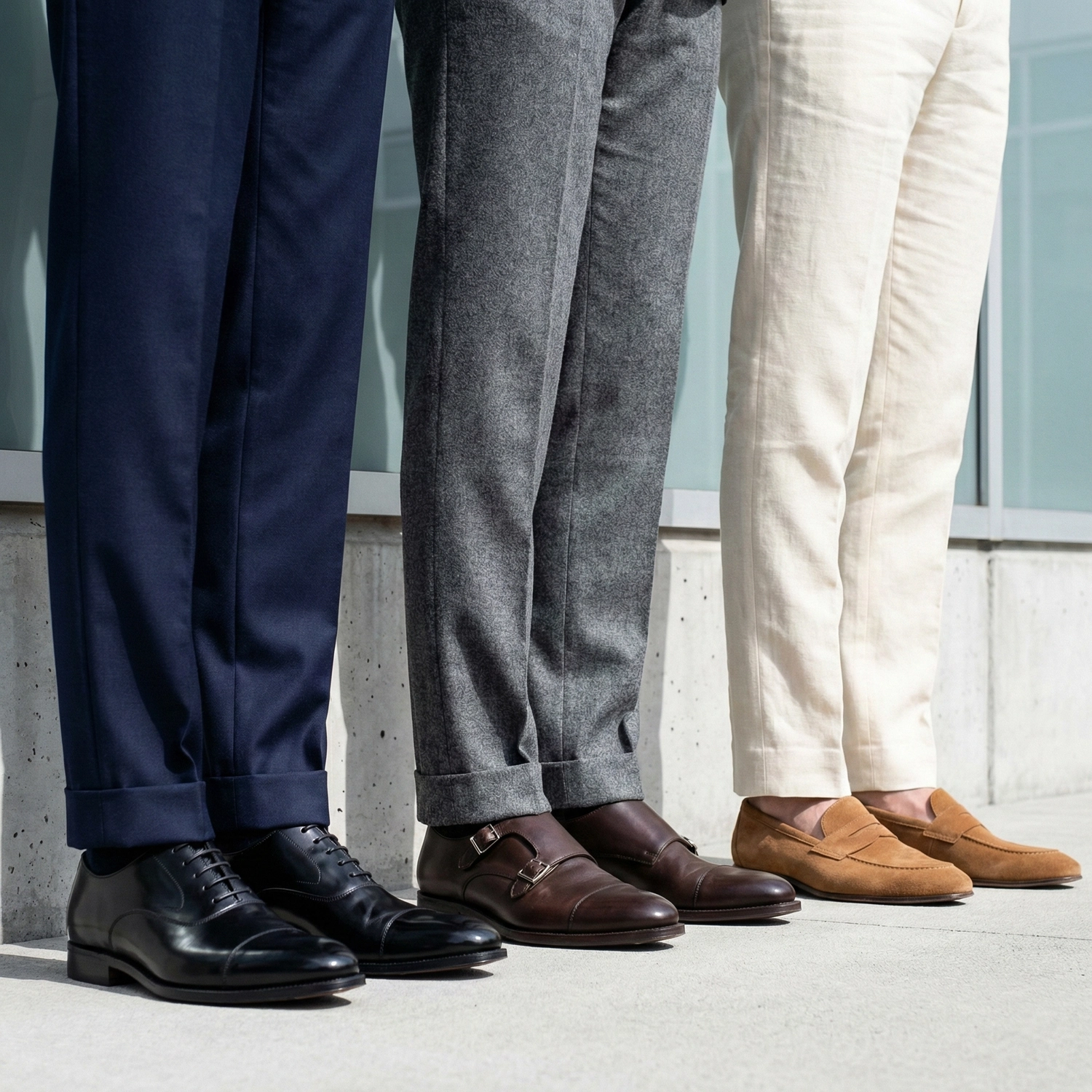
The art of pairing shoes with trousers is governed less by fleeting trends and more by the physics of silhouette and proportion. Even the most precisely cut bespoke suit relies on the critical interaction at the hem, specifically “The Break”, to maintain its structural integrity. A misalignment here creates a technical discord, where a heavy shoe might drag down a light fabric, or a wide leg might swallow a sleek profile. This guide examines those mechanics, ensuring your foundation technically supports the tailoring above it.
The Four Pillars of Footwear
Understanding shoes with trousers begins with identifying the “Genealogy of Formality.” Each shoe type possesses a specific architectural weight that dictates which trouser fabric and cut it can support.
The Oxford (The Formal Standard)
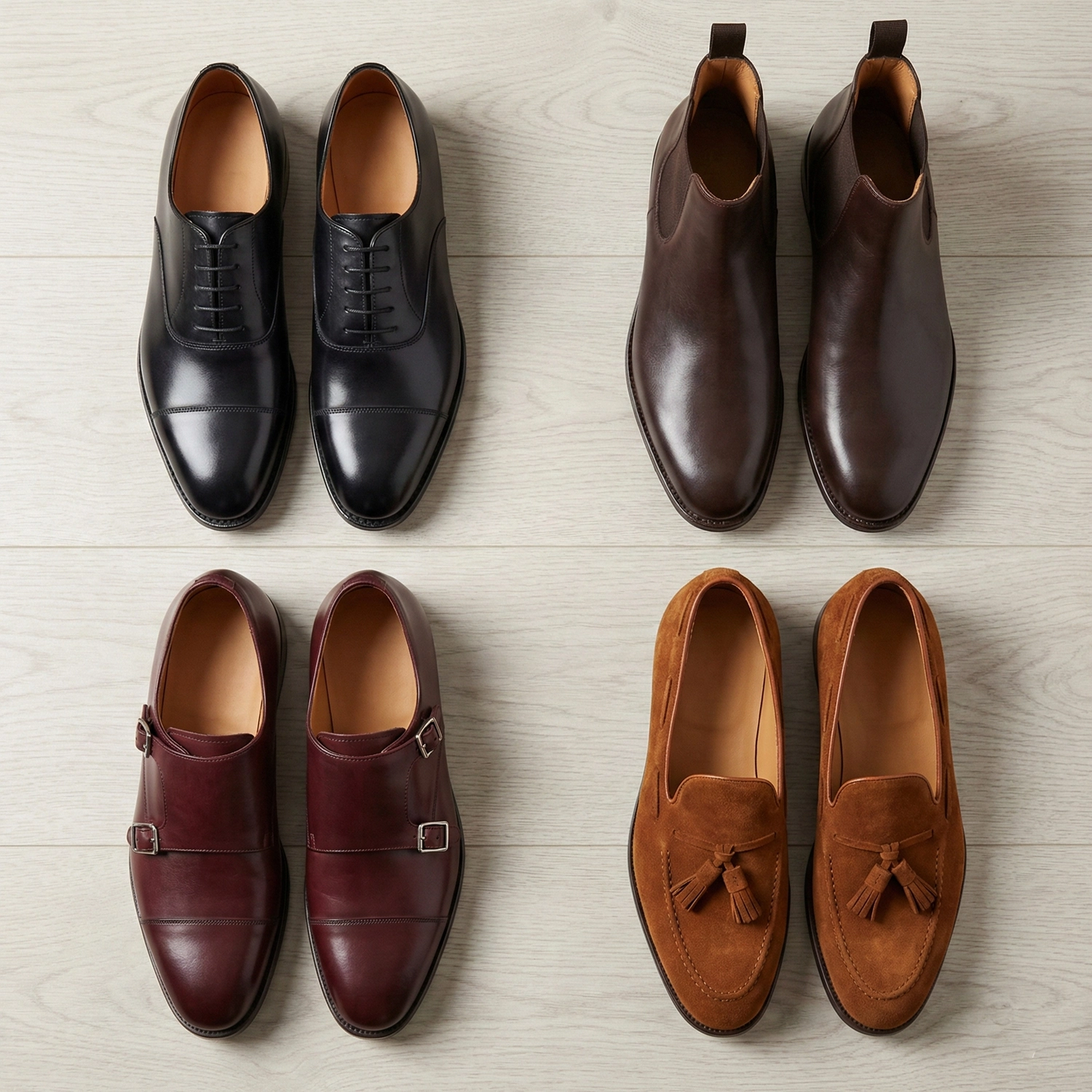
Defined by its “closed lacing” system (where the facing is stitched underneath the vamp) the Oxford offers the sleekest, most aerodynamic silhouette.
- The Rule: This is the non-negotiable anchor for your most formal bespoke suit. The smoothness of the shoe mirrors the smooth finish of high-twist worsted wool.
- The Pairing: Black Cap-toe Oxfords are the only correct choice for Charcoal or Navy business suits and Black Tie ensembles.
- The Warning: Never pair Oxfords with denim or chinos. The formality gap is too wide, creating a jarring disconnect between the refined footwear and the rugged trouser.
The Derby (The Versatile Workhorse)
Characterised by “open lacing” (where the facing is stitched on top of the vamp) the Derby (and by extension, High-ankle Dress Boots like Chukkas or Chelseas) allows for a wider opening and a bulkier profile.
- The Rule: The construction adds significant visual weight, making it the ideal partner for fabrics with textural depth.
- The Pairing: These work exceptionally well with suit trousers cut from flannel, tweed, or heavy cotton drill. The rugged nature of the shoe stands up to the weight of the cloth.
- The Warning: Avoid wearing chunky-soled Derbies or Boots with a tuxedo or a lightweight summer suit; they will visually weigh down the look, destroying the intended elegance.
The Monk-Strap (The Rakish Alternative)
Replacing laces with buckles, the Monk-strap (Single or Double) occupies a unique middle ground between the formality of the Oxford and the ease of the Loafer.
- The Rule: This shoe is a statement piece. It demands a trouser that frames it properly.
- The Pairing: Double Monk-straps look particularly striking when paired with bespoke trousers featuring turn-ups (cuffs). The weight of the cuff balances the visual complexity of the buckles.
- The Warning: Ensure your hardware matches. Silver buckles demand a silver belt buckle and watch case; mixing metals disrupts the vertical line.
The Loafer (The Relaxed Sophistication)
Whether a Penny or a Tassel, the Loafer is defined by the absence of laces and a lower profile that exposes more of the foot.
- The Rule: Because Loafers have a lower vamp (the top part of the shoe), they are the most sensitive to trouser length.
- The Pairing: They require a tapered leg opening. A Tassel Loafer is the perfect companion for a Neapolitan-style bespoke suit or separate trousers in linen or cotton.
- The Warning: This is where the “Break” becomes critical. A Loafer cannot tolerate a full break (puddling fabric). The hem must just graze the shoe to keep the silhouette sharp.
The Color Handbook & The “No Brown” Myth
Once the silhouette is established, the next challenge is colour harmony. Pairing the right shoes with trousers is not just about matching hues; it is about creating a cohesive visual narrative.
Debunking “No Brown in Town”
For decades, the City of London operated under a strict edict: “No Brown in Town.” It implied that brown shoes were strictly for the country, while the city demanded black. Today, this rule is largely antiquated.
- The Modern Reality: While black remains the undisputed king of strict formality, it can often feel flat and one-dimensional. For the modern connoisseur, a pair of Dark Brown or Espresso calfskin shoes adds depth and patina to a Navy bespoke suit that black simply cannot achieve.
- The Nuance: The key is the shade. Lighter tans can look too casual for the boardroom, but deep, rich browns are perfectly acceptable, and often more stylish, in almost all professional settings.
The Pairing Matrix (Matching Shoes with Trousers)
To simplify the complexity of colour coordination, use this matrix as your guide when selecting footwear for your suit trousers.
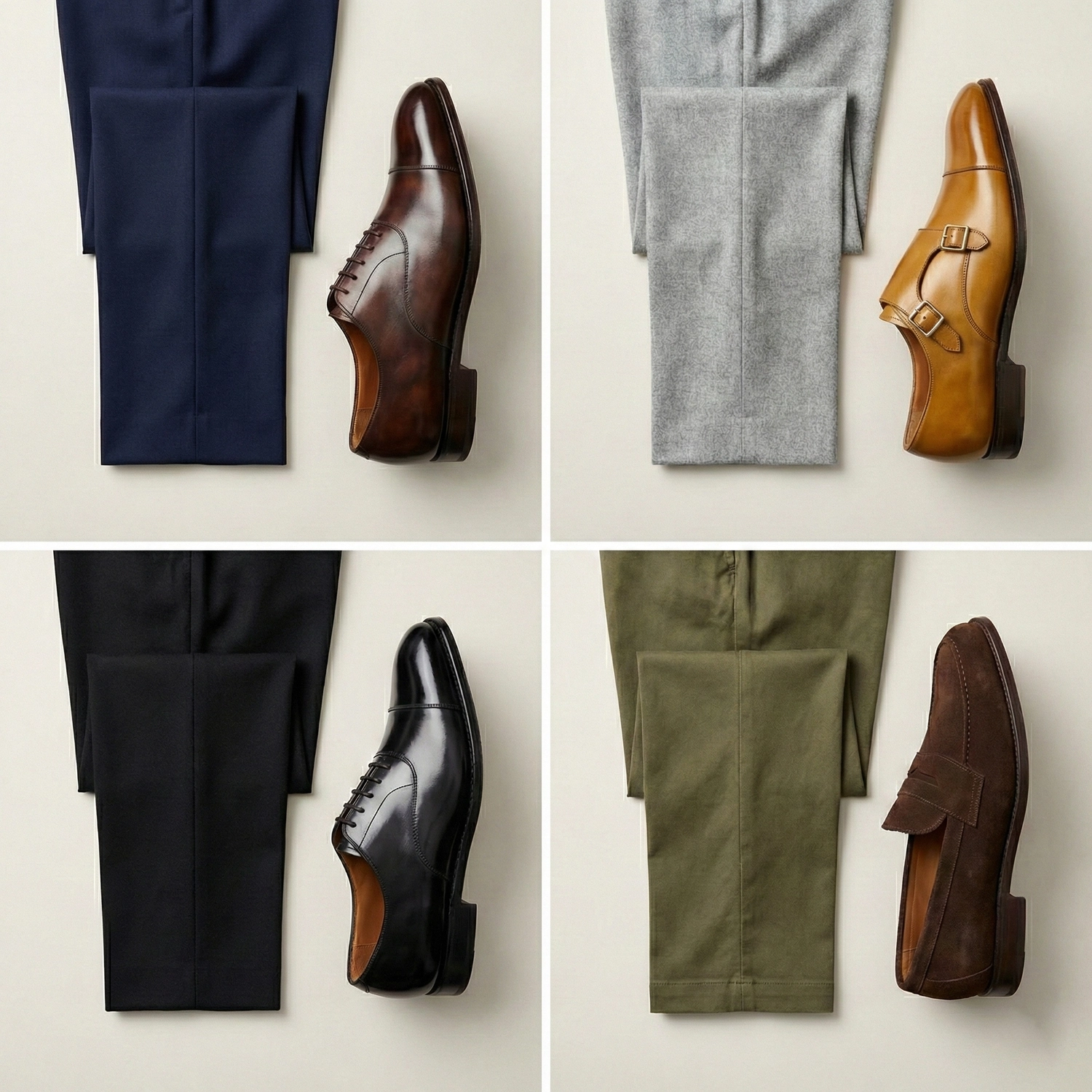
Navy Trousers: The Versatile Canvas
- The Go-To: Dark Brown. It provides a subtle warmth that complements the blue tones.
- The Connoisseur’s Choice: Burgundy or Oxblood. The red undertones in the leather vibrate beautifully against the navy wool, creating a look that is confident and sophisticated.
- The Formal Option: Black. Essential for high-stakes meetings, but can look severe if the navy is too bright.
Grey Trousers: The Shade Dictates the Shoe
- Charcoal (Dark Grey): Treat this almost like black. Stick to Black or Deep Burgundy. Pairing lighter brown shoes with charcoal creates a jarring contrast that draws the eye down to the feet, distracting from the face.
- Mid-Grey & Light Grey: Here, flexibility reigns. These suit trousers pair exceptionally well with the entire brown spectrum, from Tan and Walnut to Dark Chocolate. The lighter the grey, the lighter the shoe can be.
Black Trousers: The Zero-Tolerance Zone
- The Rule: There is only one option: Black.
- The Why: Black absorbs all light. Placing a brown shoe next to black trousers makes the shoe look faded and the trousers look dusty. It is a fundamental clash of saturation.
Earth Tones (Olive, Beige, Tobacco)
- The Rule: These colours are inherently rooted in nature, so your footwear must follow suit.
- The Pairing: Browns, Tans, and Suedes are the only logical choices. Black shoes are too harsh and “urban” for these softer, warmer tones. A pair of Suede Loafers with Olive bespoke trousers is a masterclass in textural harmony.
The Architecture of the Break
Even with the perfect colour and style selected, the interaction of shoes with trousers ultimately depends on one physical factor: The Break. This is the fold or creasing of fabric created where the front of the trouser leg meets the shoe. It is not a random occurrence; it is a calculated engineering decision made during the tailoring process.
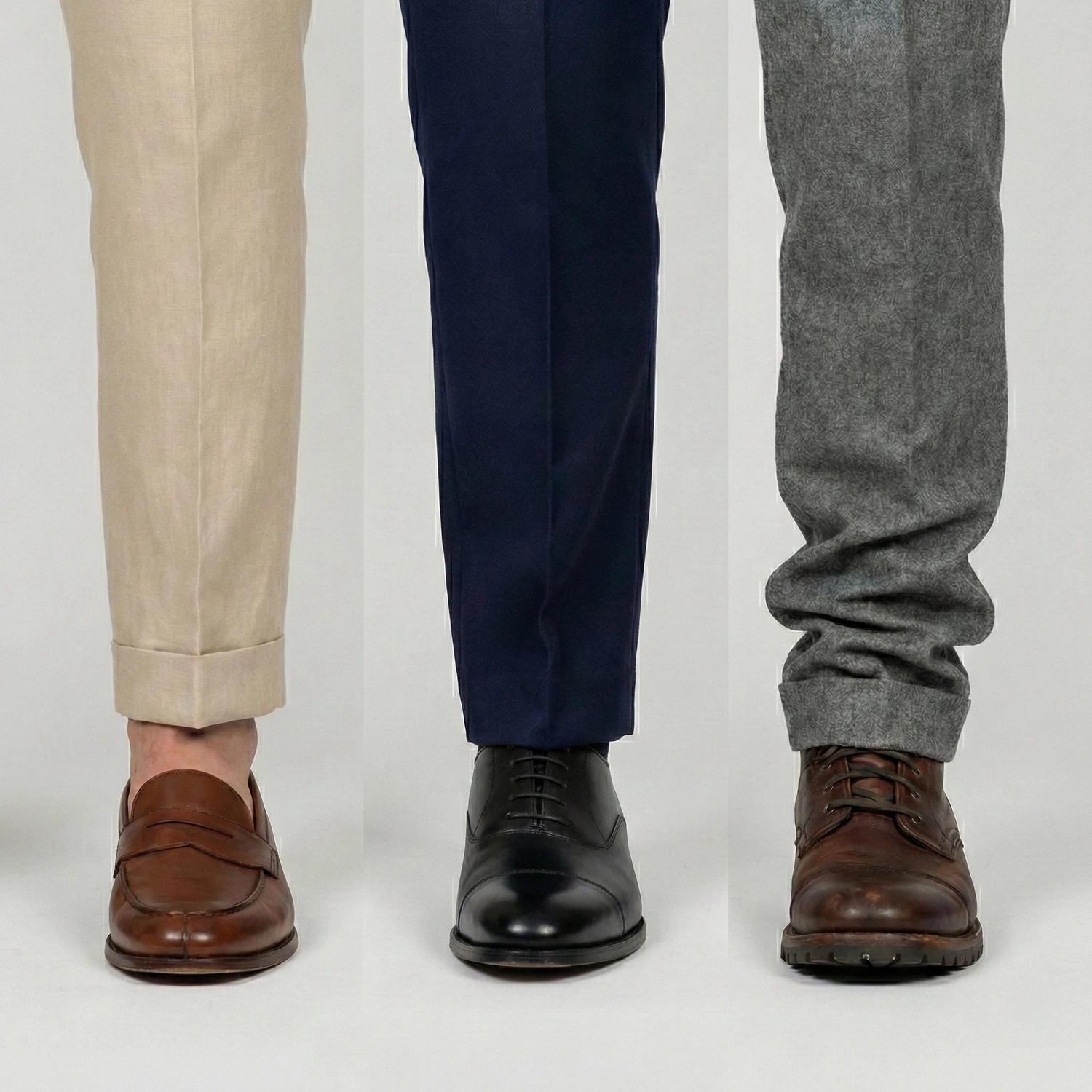
The No Break (The Modern Clean Line)
- The Definition: The hem of the trouser barely skims the top of the shoe, creating a straight, uninterrupted line from hip to ankle with zero folding.
- The Pairing: This is the mandatory cut for Loafers. Because loafers have a low vamp, a longer trouser would look messy and hide the shoe entirely. It is also the preferred choice for those who favour a slimmer, more contemporary silhouette.
- The Effect: It elongates the leg and places the footwear on full display. However, it requires your bespoke trousers to be cut with absolute precision; there is no margin for error.
The Slight / Half Break (The Timeless Standard)
- The Definition: The hem rests lightly on the shoe, creating a single, subtle fold in the fabric just above the ankle.
- The Pairing: This is the “Gold Standard” for Oxfords and Monk-straps. It bridges the gap between the shoe and the leg while maintaining a professional appearance.
- The Effect: It is safe, elegant, and timeless. When walking, the socks remain hidden, but the line of the bespoke suit is not compromised by excessive fabric.
The Full Break (The Danger Zone)
- The Definition: The trouser leg is long enough to create multiple folds, causing the fabric to “puddle” around the shoe.
- The Verdict: In modern tailoring, this is generally considered a mistake. It visually shortens the wearer and makes the suit trousers look ill-fitting or rented.
- The Exception: A full break is only acceptable if you are wearing wide-legged trousers in a vintage 1940s style, paired with substantial footwear like heavy Derbies or Boots to support the excess cloth.
The Hem Width Equation
- The Rule: The “Break” (length) must work in tandem with the “Hem Width” (circumference).
- The Proportion: A narrow hem (17-18cm) cannot fit over a chunky shoe; it will bunch up and look like an ice-cream cone. Conversely, a wide hem (21cm+) will swallow a sleek Oxford.
- The Advice: When commissioning bespoke trousers, always bring the specific shoes you intend to wear to the fitting. A master tailor adjusts the hem width to perfectly frame the shoe’s silhouette, ensuring a seamless transition.
Conclusion: Precision is Key
Mastering the art of pairing shoes with trousers is not merely an exercise in following rules; it is an appreciation of engineering. It is the understanding that a millimetre of difference in a hem, or a slight shift in leather shade, can dramatically alter the authority of your silhouette.
Don’t just dress by habit. Look down. Does the break of your trouser respect the line of your shoe? Does the weight of your footwear support the texture of your fabric? These are the questions that separate the novice from the connoisseur.
Now that you have secured the foundation, the journey continues upward. To understand how these principles apply to the rest of your wardrobe, from the geometry of your tie to the etiquette of your socks, we invite you to explore our comprehensive guide: [Completing the Masterpiece: The Definitive Guide to Men’s Shoes and Accessories].
True style is a holistic pursuit. It starts at the ground, but it encompasses every detail.
DISCOVER PHYIGITAL BESPOKE TAILORING