Mastering Menswear Texture: Escaping the “Flatness Trap”
To truly master the art of dressing, one must look beyond color and fit to the often-overlooked dimension of menswear texture. While a wardrobe defined by smooth surfaces feels safe, it often falls into the “Flatness Trap”: technically correct, yet visually sterile.
True elegance requires depth. Whether you are commissioning a new bespoke suit or selecting accessories, the interplay of light and surface is what separates a novice from a connoisseur. In this guide, we unveil the distinct character of the three most iconic fabrics (Flannel, Linen, and Silk) and share the art of elevating your look through tactile contrast.
Flannel: The Art of Soft Power
If the crisp navy suit is the armor of business, the flannel suit is the signature of the connoisseur. It projects a different kind of authority: one that does not need to shout to be heard.
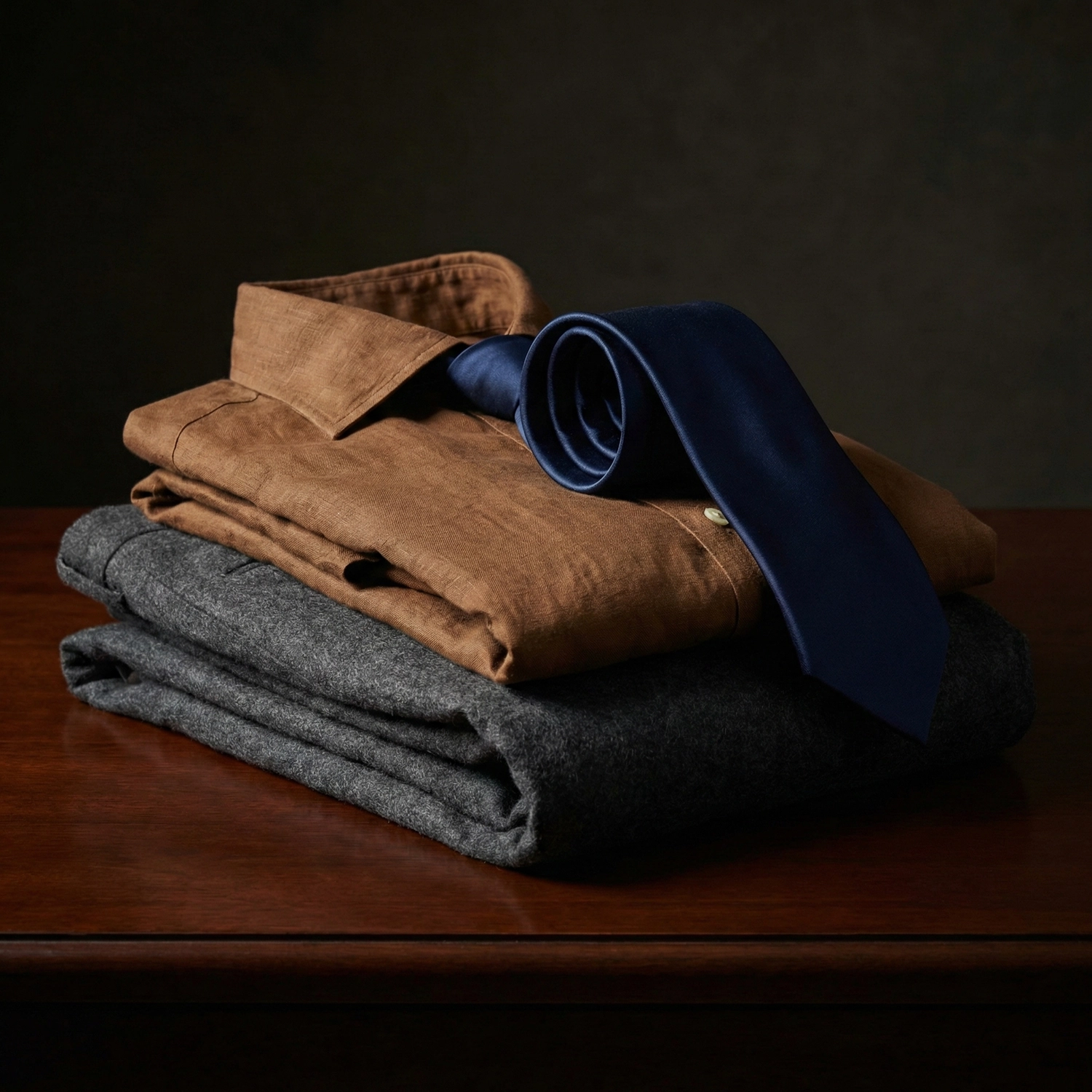
The defining characteristic of flannel is its “nap”: the fuzzy, raised surface created by brushing the wool. This texture does something remarkable with light: it absorbs it entirely. Instead of the sharp reflection you get from a standard worsted wool suit, flannel offers a deep, matte finish that feels rich and grounded.
The Occasion: Winter & Trust
Because of its density and heat-retaining properties, flannel is the undisputed uniform of Winter. But its utility extends beyond the weather. In terms of social signaling, the soft texture of a flannel suit lowers the barrier between you and the viewer. It is less “Boardroom Aggression” and more “Fireside Chat.” This makes it the ultimate choice for high-level networking, client dinners, or business casual environments where building trust is more effective than asserting dominance.
Navigating Reflection
The most frequent styling error lies in the mismanagement of light. Pairing this matte fabric with high-luster accessories (such as a satin silk tie or polished patent leather shoes) creates a visual dissonance. The aggressive shine of the silk fights against the soft, muted nature of the wool, making the tie look incongruous and the suit look dull.
Elevating the Look: Matte on Matte
To master flannel, you must lean into its softness. The goal is to create a seamless, harmonious transition of textures.
- The Tie: Swap your standard shiny silks for materials that share flannel’s light-absorbing quality. A Wool or Cashmere tie is the perfect companion, creating a look of consistent warmth. If you prefer silk, opt for Ancient Madder: a special type of treated silk with a chalky, suede-like finish that perfectly complements the rustic nature of the suit.
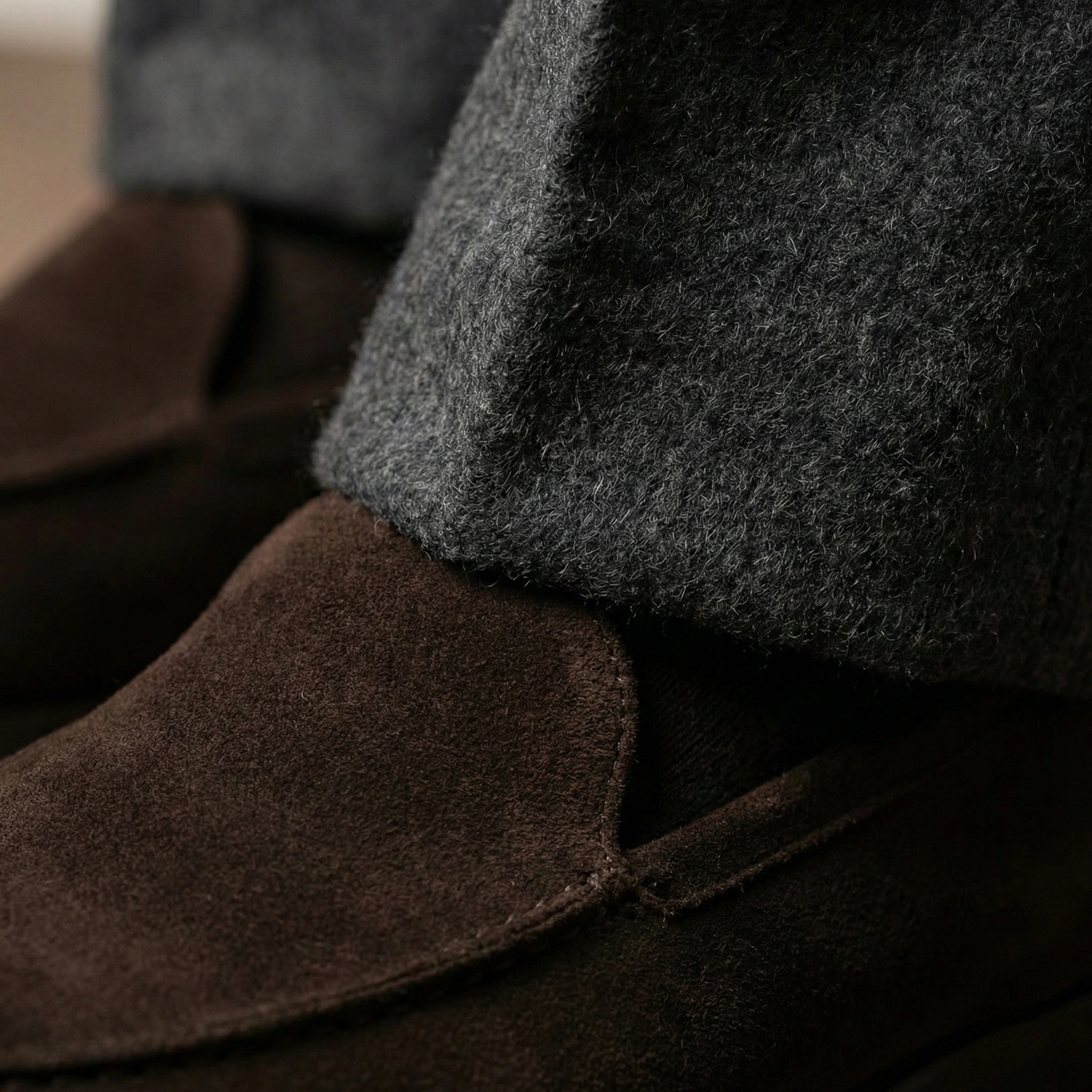
- The Footwear: Your shoes must anchor the outfit visually. Smooth calfskin works, but Suede is the superior choice. The velvety texture of a dark brown suede loafer or oxford mirrors the nap of the trousers, creating a look that is tactile, coherent, and undeniably sophisticated.
Linen: The Elegance of Imperfection
In the rigid world of corporate tailoring, wrinkles are often seen as a failure of maintenance. In the relaxed, sophisticated world of the linen suit, however, they are a badge of honor.
Linen is defined by its “slubs” (the natural, uneven thickenings in the yarn) and its crisp, dry hand-feel. The beauty of linen lies in its Sprezzatura: a studied nonchalance that suggests you are too busy enjoying your life to worry about a crease in your sleeve.
The Fabric Choice: Pure vs. Blends
While pure linen is the choice for purists who embrace the full “crumpled” character, it can be demanding. For those who desire the summer aesthetic but require a sharper silhouette, Linen Blends are the secret weapon of the bespoke tailor. Mixing linen with High-Twist Wool or Silk stabilizes the fabric structure. This “hybrid” approach offers the best of both worlds: you retain the breathable, dry texture of linen, but gain the resilience and drape of wool. The result is a linen suit that resists aggressive creasing, keeping you looking polished from the morning meeting to the evening aperitivo.
The Occasion: High Summer & Resort
Linen is the fabric of leisure. While a dark navy linen blend can pass in a creative office, a tobacco, cream, or olive suit is the ultimate uniform for summer weddings, garden parties, or coastal retreats. It signals that you have shifted gears from “Efficiency” to “Enjoyment.”
Elevating the Look: Embracing the Crunch
Since linen is inherently textured and slightly “rough,” your accessories should speak the same language.
- The Tie: A smooth satin tie looks slippery and out of place against the dry surface of linen. Instead, opt for a Knit Tie or Shantung Silk. The “crunchy,” open weave of a knit tie or the raw, nubby texture of Shantung mirrors the slubs in the jacket, creating a coherent, artisanal aesthetic.
- The Footwear: Formal black oxfords are visually too heavy and culturally too serious for linen. The correct pairing is a Loafer, preferably unlined, offering a soft collapse that matches the relaxed drape of the trousers. Colors like Tan, Tobacco, or Dark Brown Suede harmonize perfectly with the earthy, organic vibe of the suit.

Silk: The Danger of Shine
If Flannel is the bassline and Linen is the rhythm, Silk is the high note. It is defined by its “Luster”: the ability to reflect light with a sharp, glass-like intensity. In the hierarchy of menswear, this shine is synonymous with formality, celebration, and high-stakes evening wear.
However, precisely because it catches the eye so aggressively, silk is the most dangerous texture to mishandle.
The Suit Paradox: Fluidity vs. Structure
A common question in bespoke tailoring is: “How do I wear a shiny suit without looking like I’m in pajamas?” The answer lies in the weight and composition of the fabric.
- Option 1: The “Natural” Blend (The Connoisseur’s Choice) For a subtle, daytime glow, we use the famous Wool-Silk-Linen trinity. This blend harnesses the strength of silk to add a sophisticated “micro-luster,” while the wool and linen keep the fabric breathable and soft. It does not glare; it glows.
- Option 2: The “Structured” Satin (The Modern Statement) For those seeking a high-impact evening look (think Red Carpet or Dinner Jacket), modern tailoring offers High-Density Technical Satin. Unlike natural silk which is fluid and drape-heavy, this fabric is thicker and more structured.
The Advantage: It mimics the high-gloss finish of silk but possesses the architectural weight to hold a razor-sharp silhouette. It does not cling to the body; it frames it. This is the ideal choice for a bespoke suit intended to dominate a room under artificial lighting.
Styling the Look: The “Texture Bridge”
Accessorizing these shiny fabrics requires a strategic eye.
- For the Natural Blend: Pair with Shantung Silk or Grenadine. The natural slubs/knots in these ties bridge the gap between the matte linen threads and the shiny silk threads.
- For the Structured Satin: Since the suit is already very shiny and smooth, avoid a satin tie (it becomes too slippery). Instead, anchor the look with a Velvet Bow Tie or a matte Grosgrain texture. The density of velvet compliments the thickness of the suit while absorbing the excess light.
The Accessory Rule: A Worthy Foundation
When moving to pure silk accessories (like a high-gloss satin tie), the rule of “Origin” applies strictly. A shiny silk tie belongs to the “City.” A rough Tweed or heavy Flannel jacket belongs to the “Country.” When you pair a high-gloss silk tie with a rustic, hairy jacket, you create a visual dissonance. The shine of the silk makes the jacket look dusty, while the roughness of the jacket makes the tie look gaudy and superficial.
To wear high-shine silk accessories successfully, you must provide a foundation that can support their brilliance. A silk tie requires a bespoke suit cut from Fine Worsted Wool, Mohair, or High-Twist Wool. When a silk tie sits upon a crisp, combed lapel, the light reflects evenly across both surfaces, creating a look of seamless, high-powered authority.
The “Pocket Square” Strategy
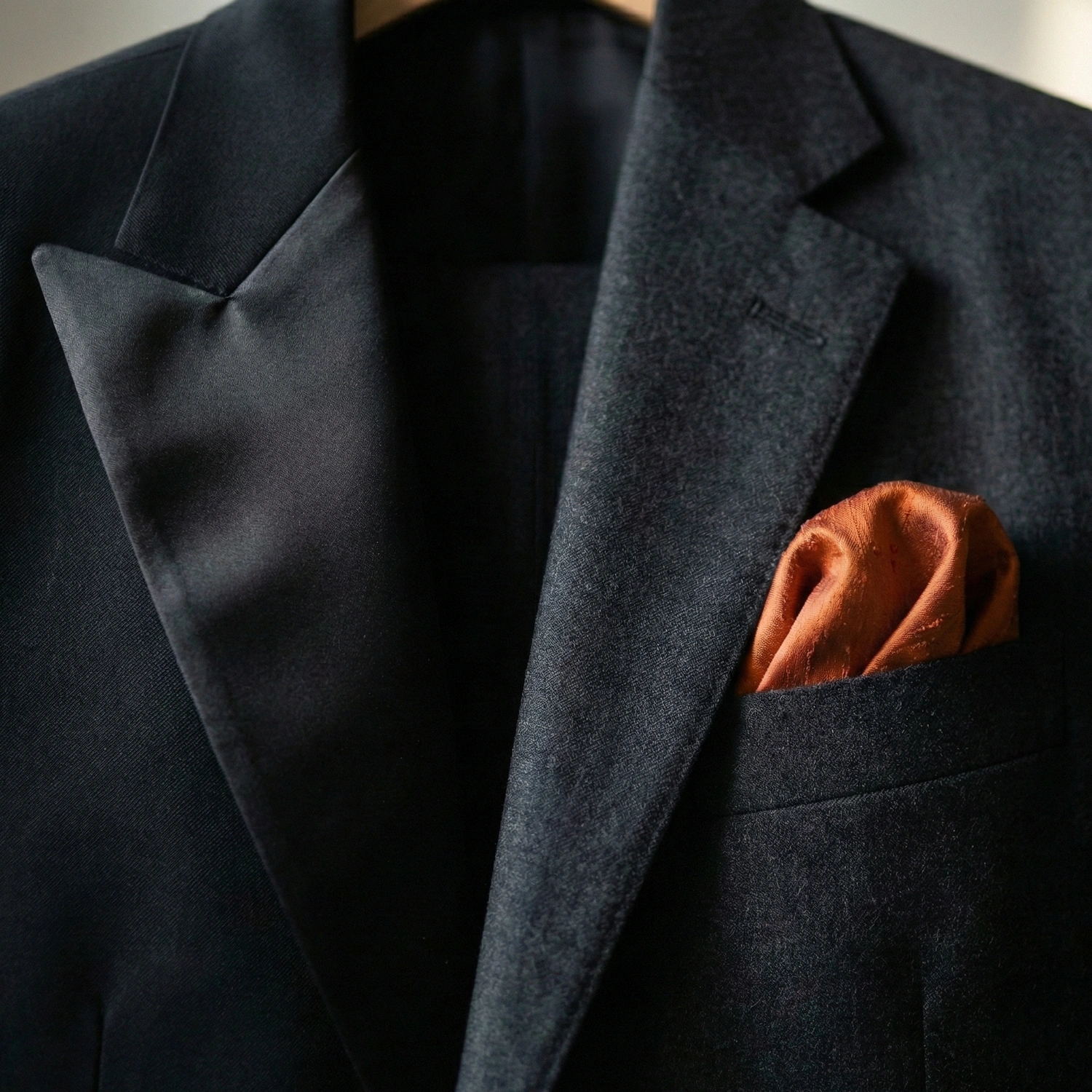
Does this mean you can never wear silk with a matte suit? Not quite. The secret lies in dosage. If you are wearing a matte Flannel or Fresco suit, avoid the silk tie, but consider a Silk Pocket Square. By restricting the shine to a small, controlled area, you create a deliberate point of contrast: a singular “spark” of light that enlivens the matte fabric without overpowering it. This is the mark of a man who understands balance.
The Architecture of Accessories: 3 Winning Uniforms
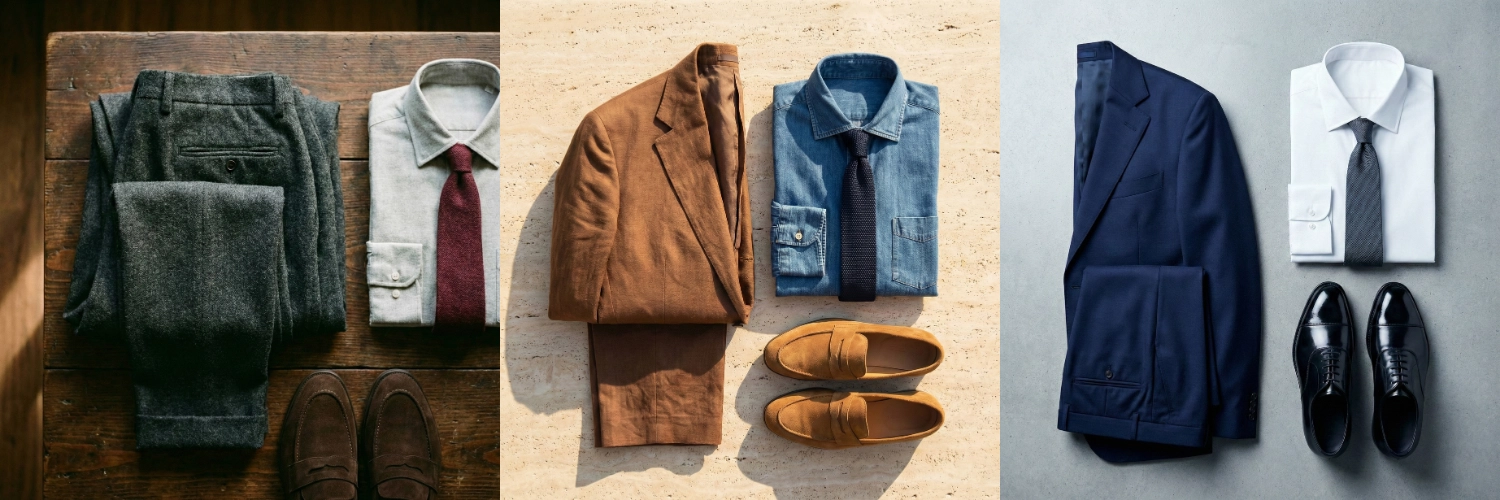
Theory is essential, but execution is what matters. To help you navigate the complex world of menswear texture, we have curated three definitive uniforms. Each corresponds to a specific fabric character, ensuring you are always perfectly calibrated.
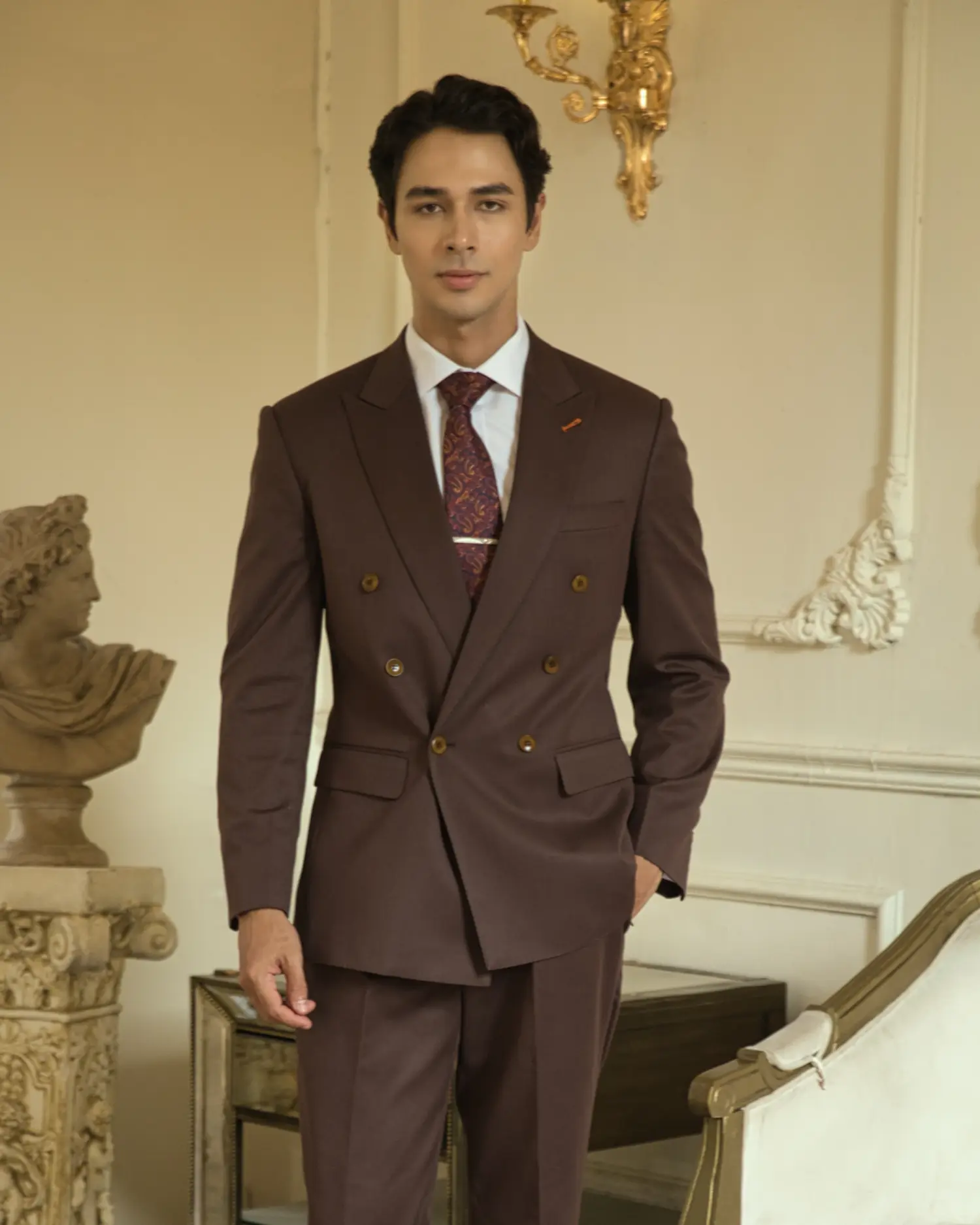
Uniform 1: The Winter Connoisseur (Matte on Matte) Best for: Flannel, Tweed, and Cold Weather.
- The Suit: Charcoal Grey or Navy Flannel Suit (Texture: Plush/Nap).
- The Tie: Burgundy Wool or Cashmere Tie (Texture: Matte/Warm).
- The Shoes: Dark Brown Suede Loafers (Texture: Velvety).
- Why It Works: This is the definition of “Soft Power.” By keeping every element light-absorbing, you create an aura of warmth, depth, and approachability. The suede shoes anchor the heavy visual weight of the flannel trousers perfectly.
Uniform 2: The Riviera Resort (Embracing the Crunch) Best for: Linen and High Summer.
- The Suit: Tobacco, Olive, or Cream Linen Suit (Texture: Crisp/Slubby).
- The Shirt: Denim or Chambray Shirt (Texture: Raw/Washed).
- The Tie: Navy Knit Tie.
- The Shoes: Tan Belgian Loafers (Unlined).
- Why It Works: Instead of fighting the wrinkles, you harmonize with them. The rougher textures of denim and knitwear complement the natural slubs of the linen. The unlined loafers offer a soft collapse that matches the relaxed drape of the trousers, creating a look of effortless Sprezzatura.
Uniform 3: The Boardroom Power (Texture Contrast) Best for: High-Twist Wool, Mohair, and Formal Business.
- The Suit: Navy Blue High-Twist Bespoke Suit (Texture: Sharp/Dry).
- The Shirt: Crisp White Poplin (Texture: Smooth).
- The Tie: Dark Blue or Slate Grey Grenadine Tie.
- The Shoes: Black Calfskin Oxfords (Texture: High Shine).
- Why It Works: Here, we use texture to break the monotony. The suit and shirt provide a clean, architectural canvas, allowing the granular, honeycomb weave of the Grenadine tie to serve as the sophisticated focal point. It prevents the outfit from looking “slippery” while maintaining absolute professionalism.
Conclusion: Feel the Difference
The journey through the Science of Elegance is incomplete without mastering the silent language of Touch. We have traversed Color and Pattern, but texture is what grounds a look in reality.
Whether it is the soft approachability of a flannel suit, the studied nonchalance of a linen suit, or the architectural authority of a bespoke suit in high-twist wool, texture dictates how you are perceived. Master this dimension, and you do not just look the part, you feel it.
Ready to unify these principles? Return to our foundational guide: [The Science of Elegance: The Ultimate Bespoke Tailoring Style Guide] to perfect every inch of your commission.
DISCOVER PHYIGITAL BESPOKE TAILORING