The Modern Gentleman’s Playbook: A Suit Styling Guide for Every Occasion
Style is your introduction long before you speak. That is why this suit styling guide focuses on something far more significant than fashion trends: social intelligence.
True elegance isn’t about flaunting wealth; it is the ability to “read the room.” A modern gentleman understands that the armor-like structure of a boardroom suit can feel aggressive at a romantic dinner, just as casual attire signals a lack of seriousness in a negotiation. This playbook goes beyond simple rules to help you master situational awareness, ensuring your attire always bridges the gap between you and your environment.
The Philosophy: The Social Impact of a Bespoke Tailored Suit
In the world of bespoke tailoring, “fit” is often measured in inches. However, in the social sphere, fit is a measure of self-awareness. It is the physical manifestation of how you perceive yourself and the respect you hold for your environment.
- Fit as Respect: An ill-fitting suit, whether billowing at the shoulders or straining at the buttons, signals a lack of control. It subconsciously suggests to your peers that if you cannot manage your own appearance, you may not be able to manage complex affairs. A perfectly fitted bespoke tailored suit communicates discipline, attention to detail, and deference to the people you meet. Because the psychological demands of a courtroom differ vastly from a creative studio, mastering this fit also means understanding the specific visual codes of your industry. For a deep dive into these codes, explore our guide on “Bespoke Tailoring for Different Professions: Lawyer, Architect, Artist, and More“.
- The Silhouette of Confidence: Great bespoke tailoring alters your physiology. It corrects your posture, encourages you to stand taller, and allows you to breathe freely. When your clothing supports rather than restricts you, your non-verbal communication becomes more open, authoritative, and assured.
- Material Literacy: Social intelligence is also about harmony with nature. Wearing heavy flannel in the heat of summer doesn’t just make you uncomfortable; it creates a visceral sense of unease for those around you. Understanding fabrics is not just technical knowledge; it is an act of empathy toward the shared environment.
Chapter 1: The Boardroom – The Language of Competence & Trust
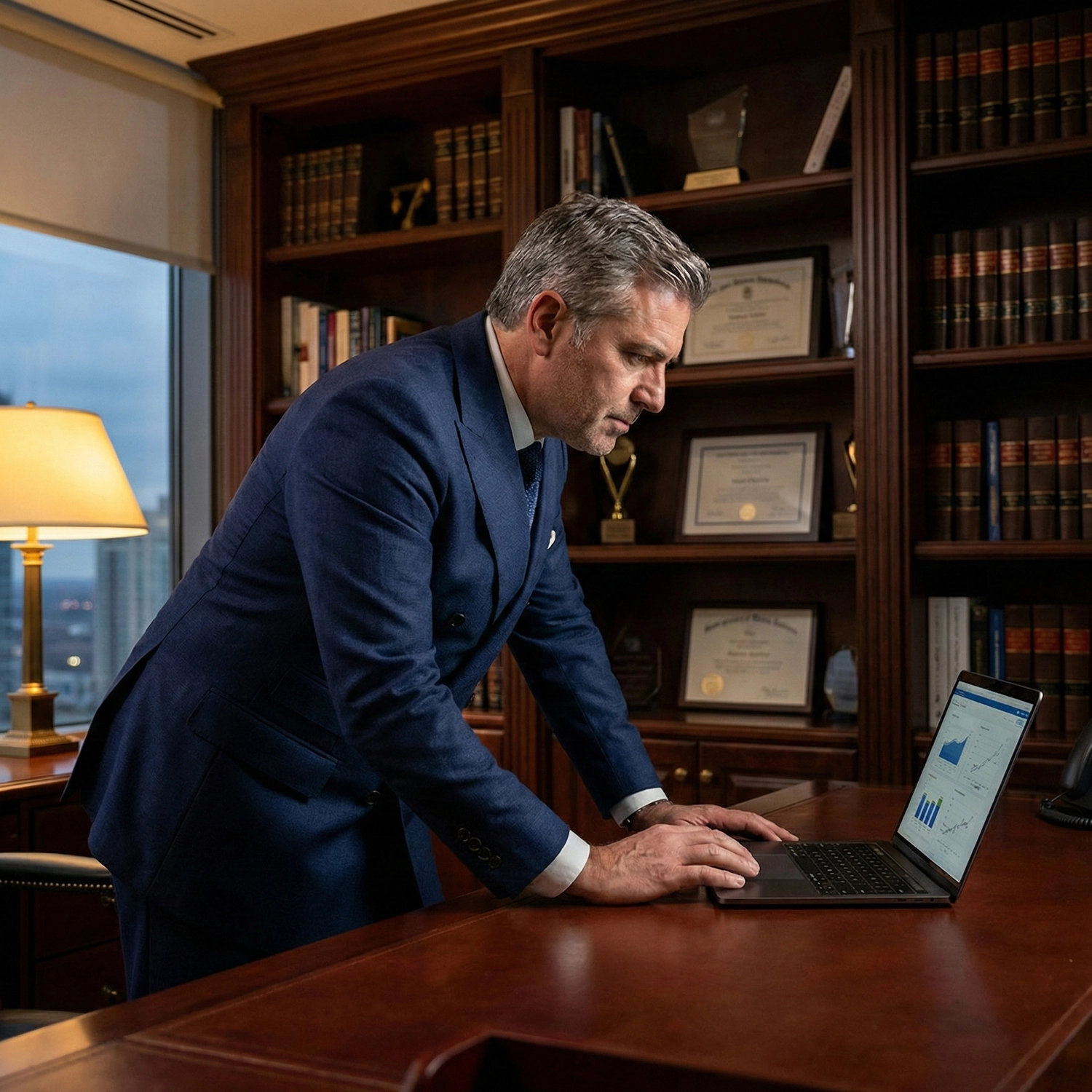
In high-stakes environments such as negotiations, board meetings, or investor pitches, your attire serves a singular purpose: to establish authority while maintaining trust. The goal is to remove visual friction. You want the room to focus entirely on your words and your intellect, not your clothing.
The Psychological Goal: Authority and Neutrality
A common misconception is that a “power suit” must be loud to be heard. In reality, true power is quiet. Bespoke tailored suits for the boardroom should act as a frame, directing all attention to your face.
Color Psychology: The dominance of Navy and Charcoal
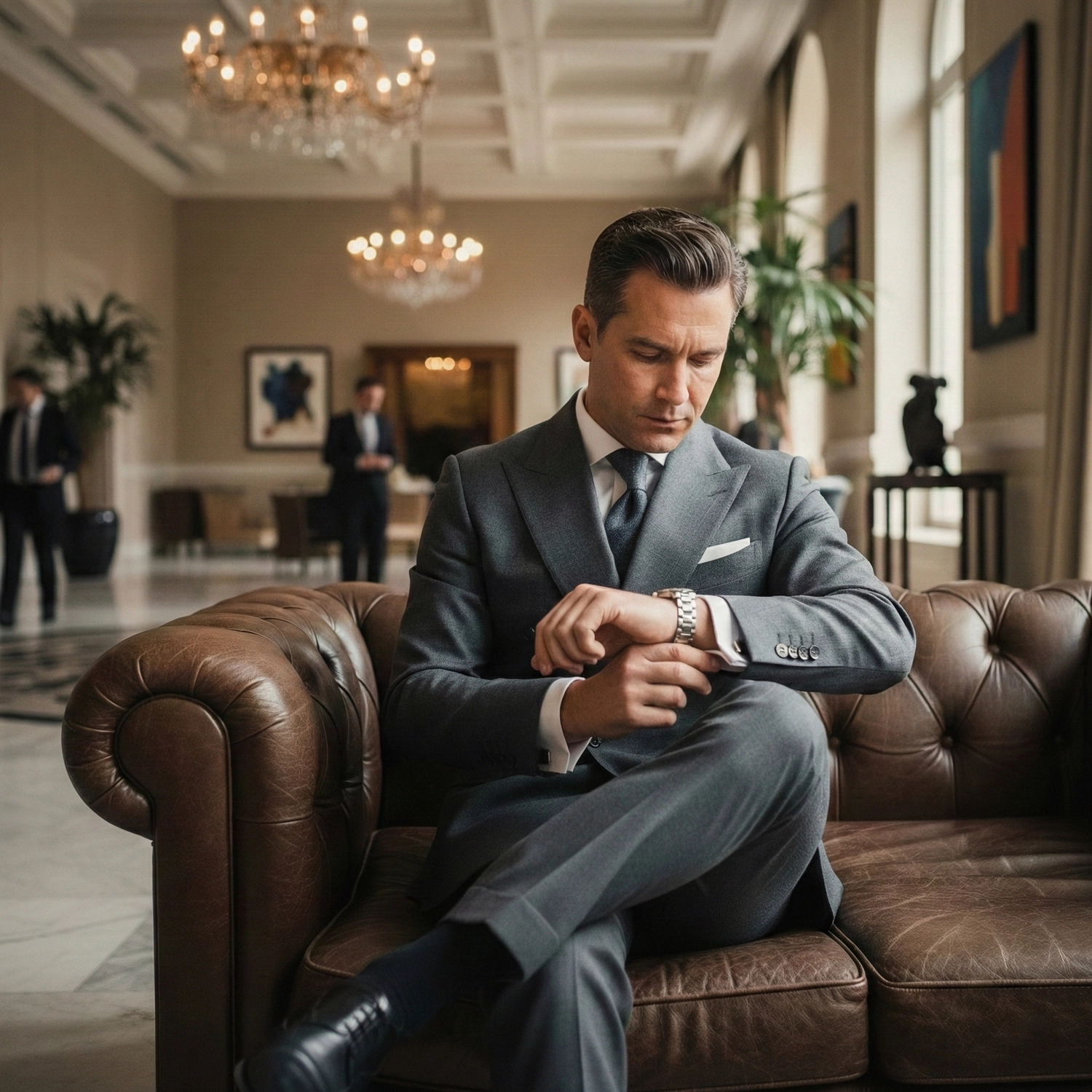
- Navy Blue: This is the universal language of business. Psychologically, navy evokes feelings of trust, logic, and stability. It is assertive without being aggressive.
- Charcoal Grey: The color of wisdom and neutrality. It projects an image of unwavering professionalism. To master these essential hues, read our deep dive on “Commanding the Room: Styling the Navy & Charcoal Power Suit“.
- The “Black” Trap: Avoid jet-black bespoke tailored suits for business. In daylight and under office lighting, black can appear too severe or funereal, creating an unconscious psychological distance between you and your counterparts.
Styling for Focus: The “Quiet” Suit
To demonstrate social intelligence in a meeting, you must minimize distractions.
- Texture over Loud Patterns: Instead of bold pinstripes that might feel aggressive, opt for subtle textures like sharkskin, bird’s eye, or a faint herringbone. These fabrics offer depth and richness upon closer inspection but appear solid and grounded from across the table.
- The Power of the White Shirt: A crisp white shirt is non-negotiable in the boardroom. It symbolizes transparency, clarity, and a “clean slate.” Ensure the collar is stiff and substantial; a flimsy collar undermines the authority of the entire ensemble.
The Nuance of Leadership: The Bespoke 3-Piece Suit & Double-Breasted
If you are leading the meeting or closing a deal, you can elevate your presence with structure.
- The Bespoke 3-Piece Suit: Adding a waistcoat (vest) does not just add formality; it creates a visual armor. This configuration of a bespoke tailored suit keeps your shirt tucked and your silhouette streamlined even when you move or gesture energetically.
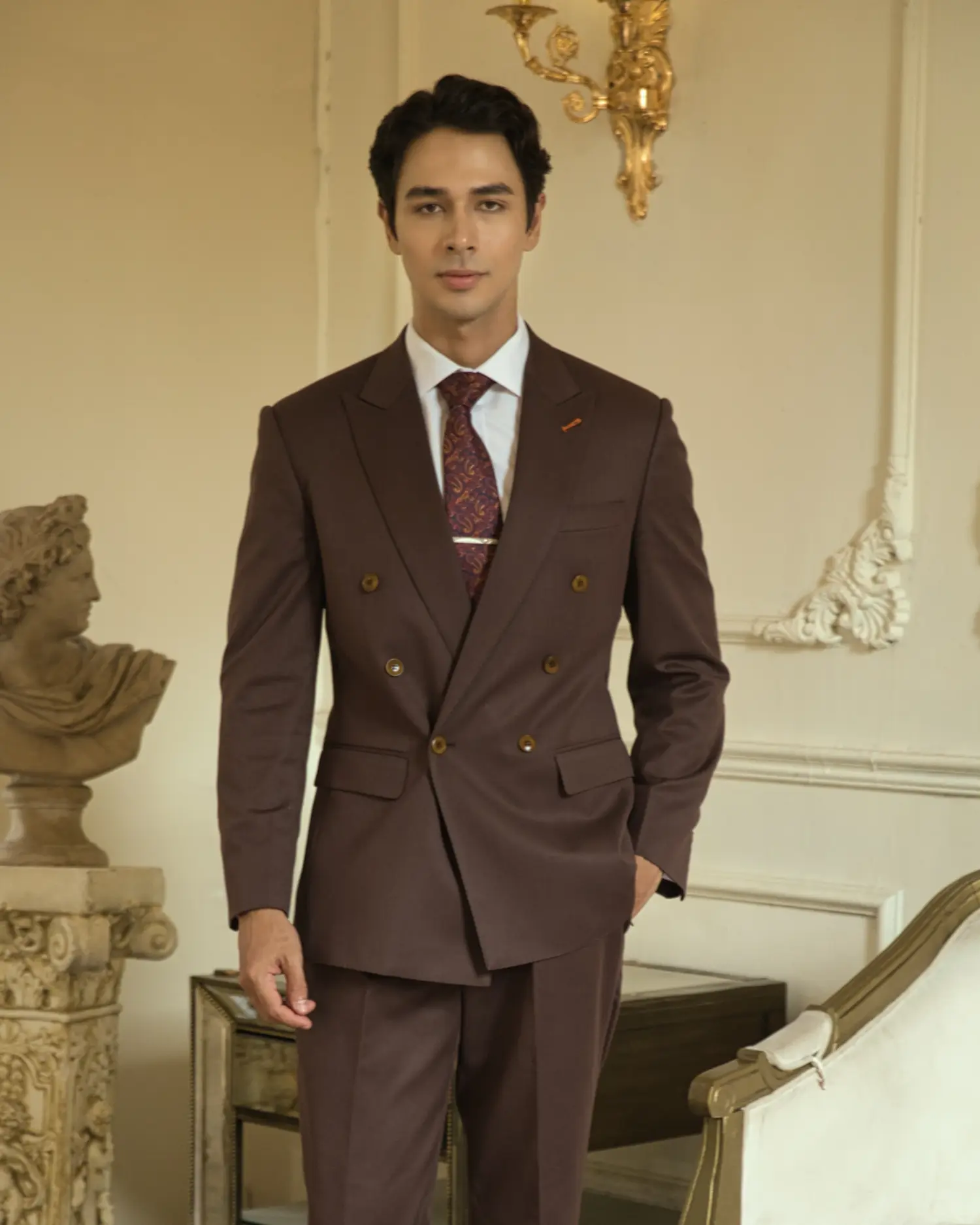
- The Double-Breasted Jacket: This is a garment of command. It broadens the chest and emphasizes the shoulders. However, wear it only if you are ready to be the focal point of the room.
Chapter 2: The Transition – The Art of Travel & Movement
The modern global citizen moves between time zones and climates, yet his appearance must remain constant. There is a distinct social advantage to stepping off a ten-hour flight looking fresh and composed while others look disheveled. In this context, style is about resilience and adaptability.
The Psychological Goal: Resilience
Arriving at your destination looking “crumpled” suggests that the journey has defeated you. Conversely, maintaining a crisp silhouette signals that you are prepared, organized, and ready for business immediately upon arrival.
Technical Mastery: The Engineering of Travel Suits
To master travel style, you must look beyond the color and understand the engineering of the fabric. This is where bespoke tailoring truly outperforms ready-to-wear. A subject we dive deeper into in our guide: “The Art of Arrival: Mastering the Bespoke Travel Suit“.
- High-Twist Wools (The Traveler’s Secret): For the frequent flyer, the ideal choice is a suit cut from high-twist wool (often known as Fresco or Crispaire). These yarns are spun much tighter than standard wool. This tension creates a natural “spring-like” memory in the fibers. You can sit in an airport lounge for hours, and when you stand up, the fabric naturally bounces back, shedding wrinkles instantly.
- Open Weave for Breathability: High-twist fabrics often feature an open weave structure. This allows maximum airflow, keeping you cool during the rush through terminals or when landing in a humid climate.
Construction: The Unstructured Jacket
Travel demands comfort, but sweatpants are not an option for the gentleman. The solution lies in unstructured bespoke tailored suits. By removing the heavy internal canvas and shoulder padding, a skilled tailor can create a jacket that feels as soft and unrestricted as a cardigan but retains the sharp, professional lines of a suit. This soft construction allows you to move freely in confined spaces without the jacket “fighting” against you.
The “Airport to Meeting” Strategy
How do you transition from the seat 1A to the boardroom without changing?
- Layering with Knitwear: Swap the stiff, starched dress shirt for a long-sleeve polo shirt (in merino wool or sea island cotton) or a fine-gauge turtleneck. These pieces offer superior comfort during the flight and resist wrinkling better than cotton shirting.
- The Arrival: Simply throwing your unstructured jacket over this base layer instantly elevates your look. You are comfortable enough to sleep on the plane, yet polished enough to shake hands with a client the moment you land.

Chapter 3: The Social & Date Night – A Suit Styling Guide for Approachability
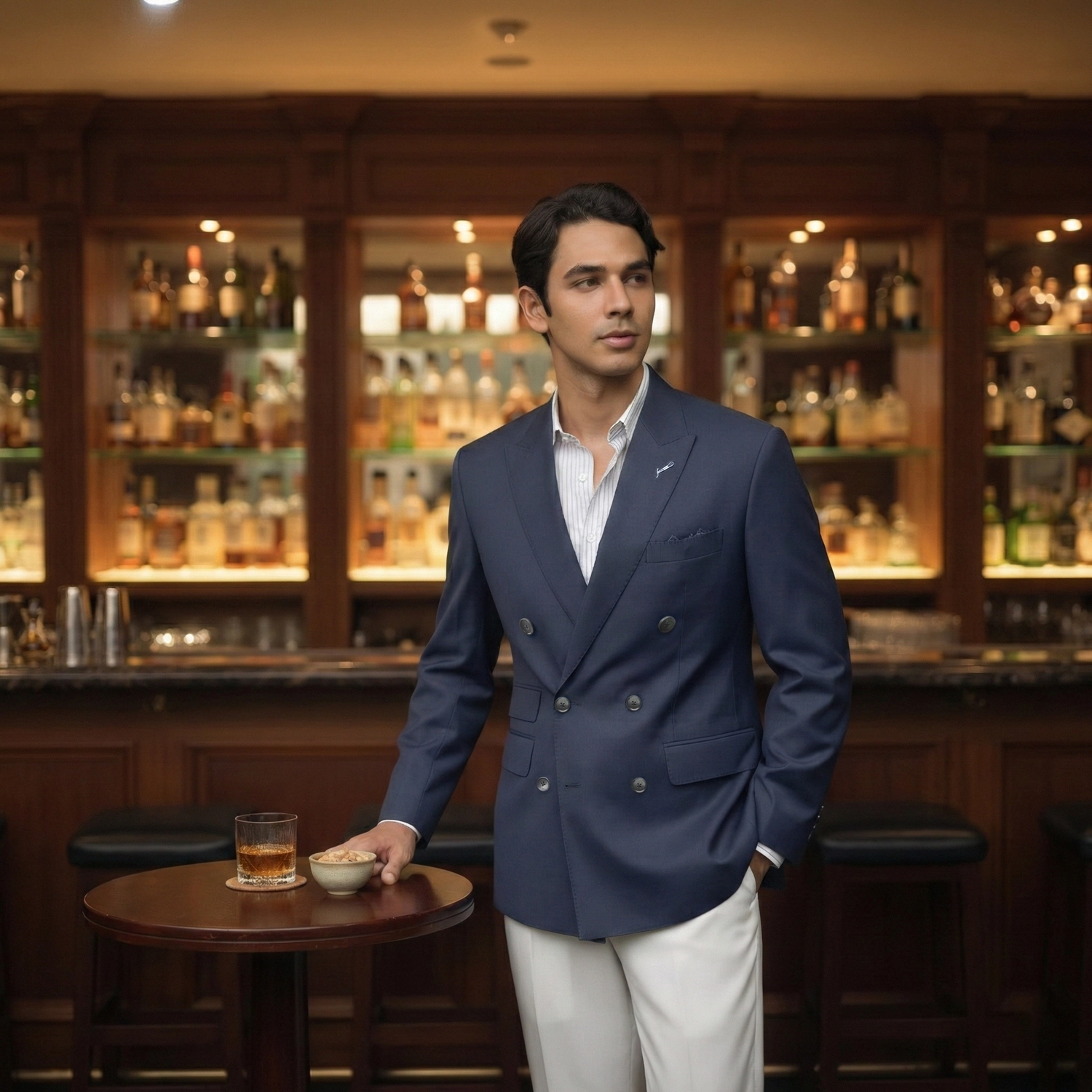
When you leave the office for a romantic dinner or a social gathering, the rules of engagement change. The “armor” that served you well in the boardroom – the hard, smooth, dark suit – now works against you. For a complete strategy on this crucial shift, refer to our guide on “From Boardroom to Lounge: The Ultimate Guide to the Cocktail Bar Suit“. Wearing a business suit on a date often signals that you are still in “work mode,” creating an invisible barrier of formality.
The Psychological Goal: Disarming Charm
Social intelligence in this context is about disarming the other person. You want to bridge the gap, inviting intimacy and conversation rather than commanding respect. Your attire should say: “I made an effort for you, but I am comfortable and open.”
Softening the Armor: Texture Over Sheen
In the boardroom, we value smooth, high-sheen fabrics because they project sharpness. In social settings, we prioritize texture.
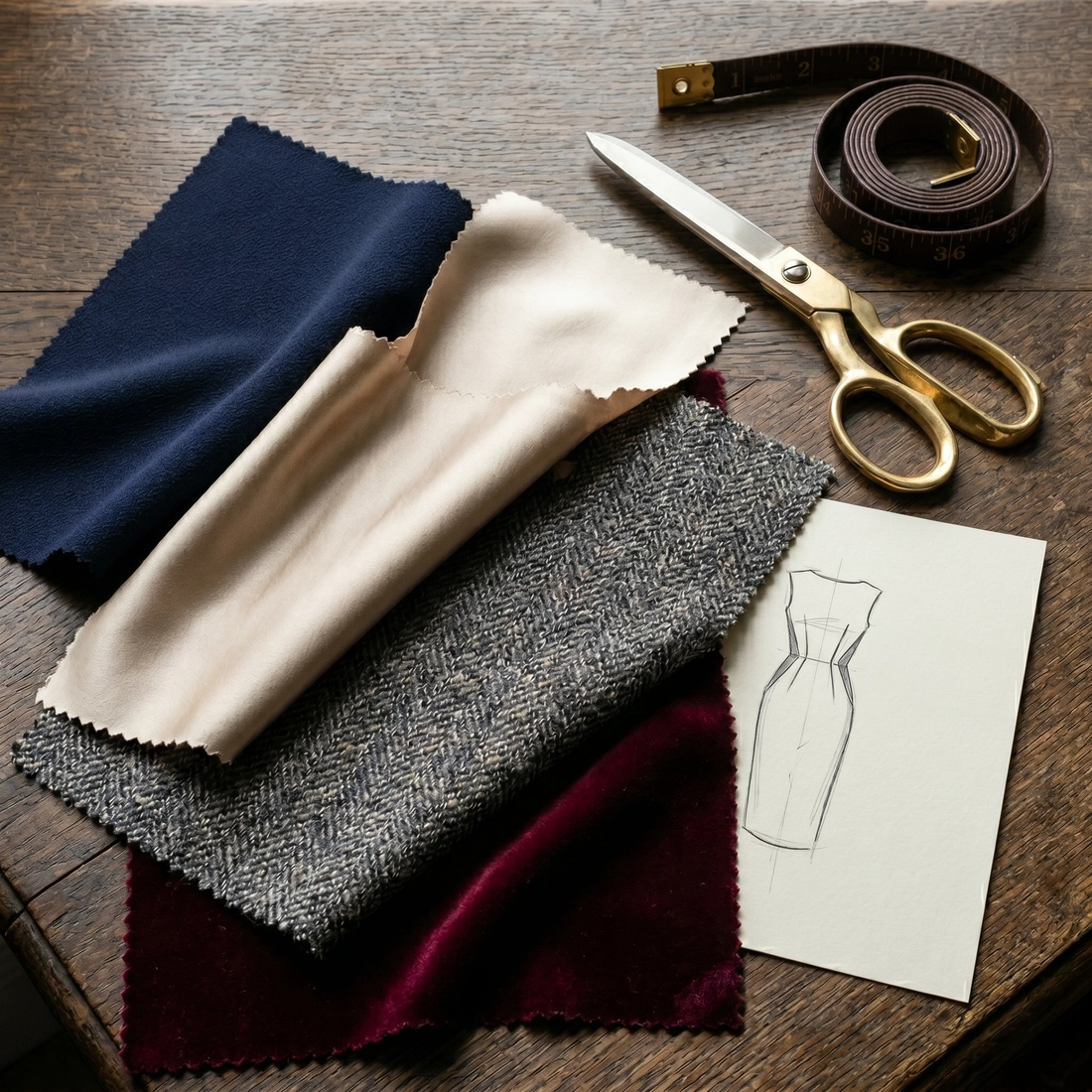
- The “Touchability” Factor: A gentleman understands the subconscious power of tactile fabrics. Materials like Flannel, Tweed, Corduroy, or Linen absorb light rather than reflecting it. This creates a softer, warmer visual depth.
- Why it works: These fabrics look and feel softer. They psychologically lower the temperature of the interaction, making you appear more approachable and grounded. A bespoke tailoring service allows you to select these specific seasonal fabrics that are rarely found in standard off-the-rack collections.
The Art of “Spezzato” (The Broken Suit)
One of the most sophisticated moves in a gentleman’s playbook is the art of Spezzato – mixing a jacket from one bespoke tailored suit with the trousers of another.
- Breaking the Uniform: By breaking the continuity of a full suit, you remove the rigidity of the “uniform.” For example, pairing a textured Navy blazer with Grey flannel trousers or Beige chinos strikes the perfect balance between elegance and ease.
- The Message: This combination signals high social intelligence. It shows you respect the venue enough to wear a jacket, but you are relaxed enough to break the rules.
You can read more about Spezzato in our guide: “The Art of Spezzato: Breaking the Suit for a Relaxed Elegance”
Color & Pattern Play: Earth Tones
Move away from the “Power Navy” and “Charcoal” dominance. For social occasions, look to nature.
- Earth Tones: Browns, Greens (Olive/Forest), and warm Beiges are inherently relaxing colors. They are less stark than black or navy and suggest a personality that is reliable and organic.
- Playful Patterns: This is the safe space to experiment with checks (Prince of Wales, Windowpane) which add character and wit to your outfit without being loud.
Styling Note: The “Tie-less” Challenge
- The Risk of Sloppiness: Going without a tie is relaxed, but a weak shirt collar that collapses under your jacket lapel creates a disheveled look. It breaks the clean lines of your outfit and suggests negligence rather than ease.
- The Structural Solution: To master the open-collar look, the shirt itself must do the work. Require a shirt with a stiffer interlining or a “hidden button-down” feature. This engineering allows the collar to stand upright and frame your face perfectly, maintaining the architectural integrity of bespoke suits even without a tie.
Chapter 4: The Ritual – Black Tie, Weddings & Ceremonies
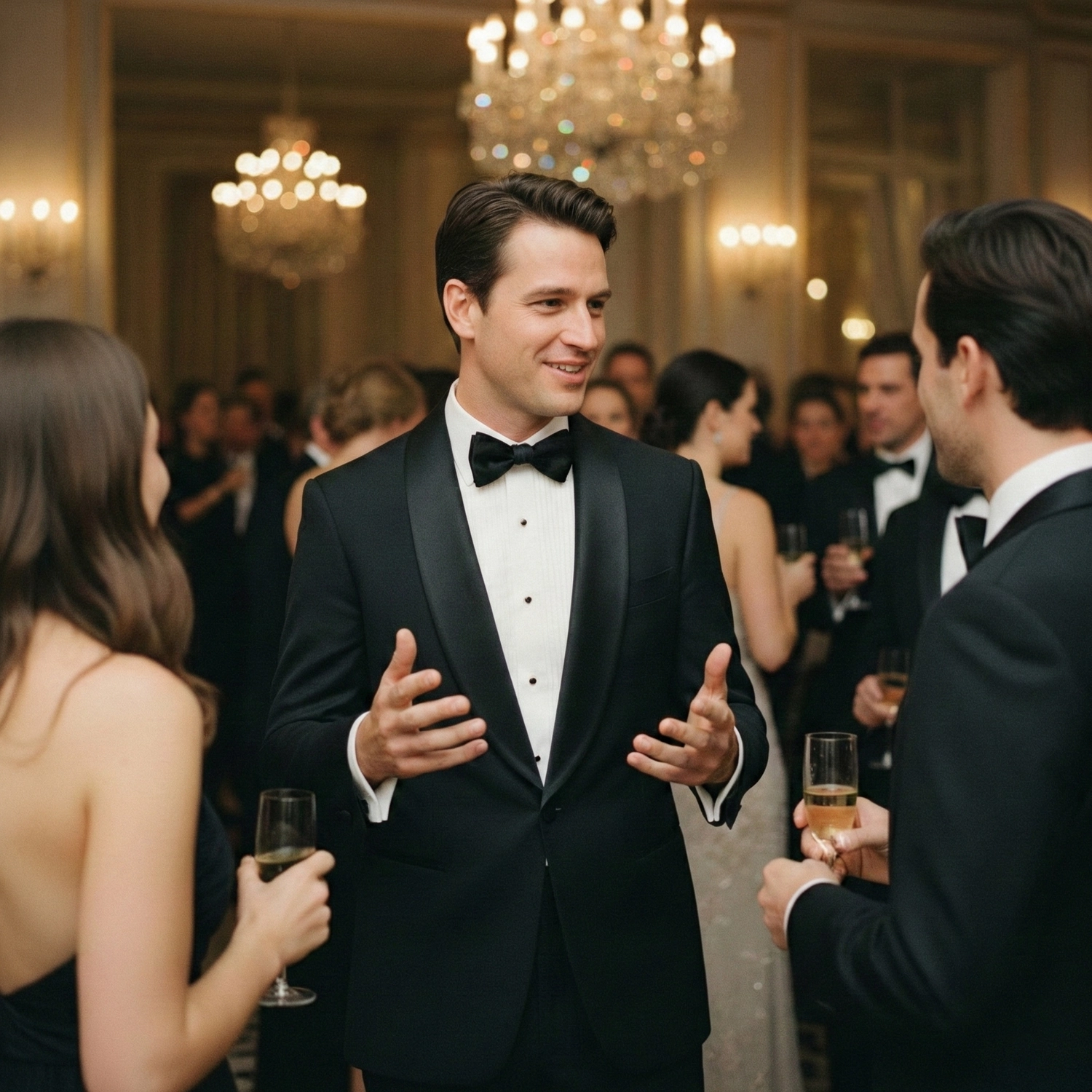
In a world that is becoming increasingly casual, formal events remain the last bastion of sartorial tradition. Whether it is a gala dinner, the opera, or a wedding, these occasions are governed by strict codes. Social intelligence here is not about “standing out”; it is about deference.
The Psychological Goal: Respect and Unity
When an invitation reads “Black Tie,” the host is asking you to participate in a collective aesthetic. To ignore this request by “dressing down” or deliberately breaking the rules is not an act of rebellion; it is an act of selfishness. By adhering to the code, you honor the significance of the event and the people celebrating it.
Mastering the Tuxedo (Black Tie)
The Tuxedo (or Dinner Jacket) is the ultimate uniform of celebration, distinct from the commerce of daily life.
- The Color of Night: While black is traditional, the connoisseur’s choice for a bespoke tailored suit in a tuxedo cut is often Midnight Blue. Under artificial ballroom lighting, standard black wool can appear dull or grayish, whereas midnight blue absorbs the light to appear “blacker than black,” creating the richest possible contrast with your white shirt.
- The Lapel Hierarchy: To distinguish it from a business suit, a tuxedo lapel must be faced with satin or grosgrain silk. Bespoke tailoring offers options like Peak Lapels for a sharp, authoritative silhouette or a Shawl Collar for relaxed elegance. Crucially, avoid the “Notch Lapel” entirely; it lacks ceremonial flair and belongs strictly in the office.
The Wedding Guest Guide: The Art of Subtle Support
Dressing as a wedding guest is a delicate exercise in balance. Your goal is to look impeccable without drawing focus away from the groom.
- The Cardinal Rule: Never outshine the host. Avoid wearing a Tuxedo unless the invitation explicitly states “Black Tie.” Similarly, avoid brightly colored suits or aggressive patterns that make you a focal point in photographs.
- The Perfect Guest Attire: A bespoke tailored suit in charcoal grey or navy is the gold standard. The waistcoat adds a layer of formality appropriate for a ceremony, allowing you to remove your jacket during the reception while still looking completely finished and respectful.
Conclusion: Curating Your Narrative
We have seen that style is not merely aesthetic; it is a strategic tool for social intelligence. A true suit styling guide is about curating a personal narrative, not chasing trends. Instead of filling a closet with mediocrity, the modern gentleman invests in bespoke tailored suits that honor both his physique and the specific roles he plays in life, prioritizing quality and purpose over quantity.
Ultimately, when your attire aligns perfectly with the occasion, you are liberated from the anxiety of appearance. This is the profound value of bespoke tailoring: it grants you the confidence to focus entirely on the human connection, knowing your presence speaks for itself. “Manners maketh man,” but in the modern world, the suit introduces him.
DISCOVER PHYIGITAL BESPOKE TAILORING