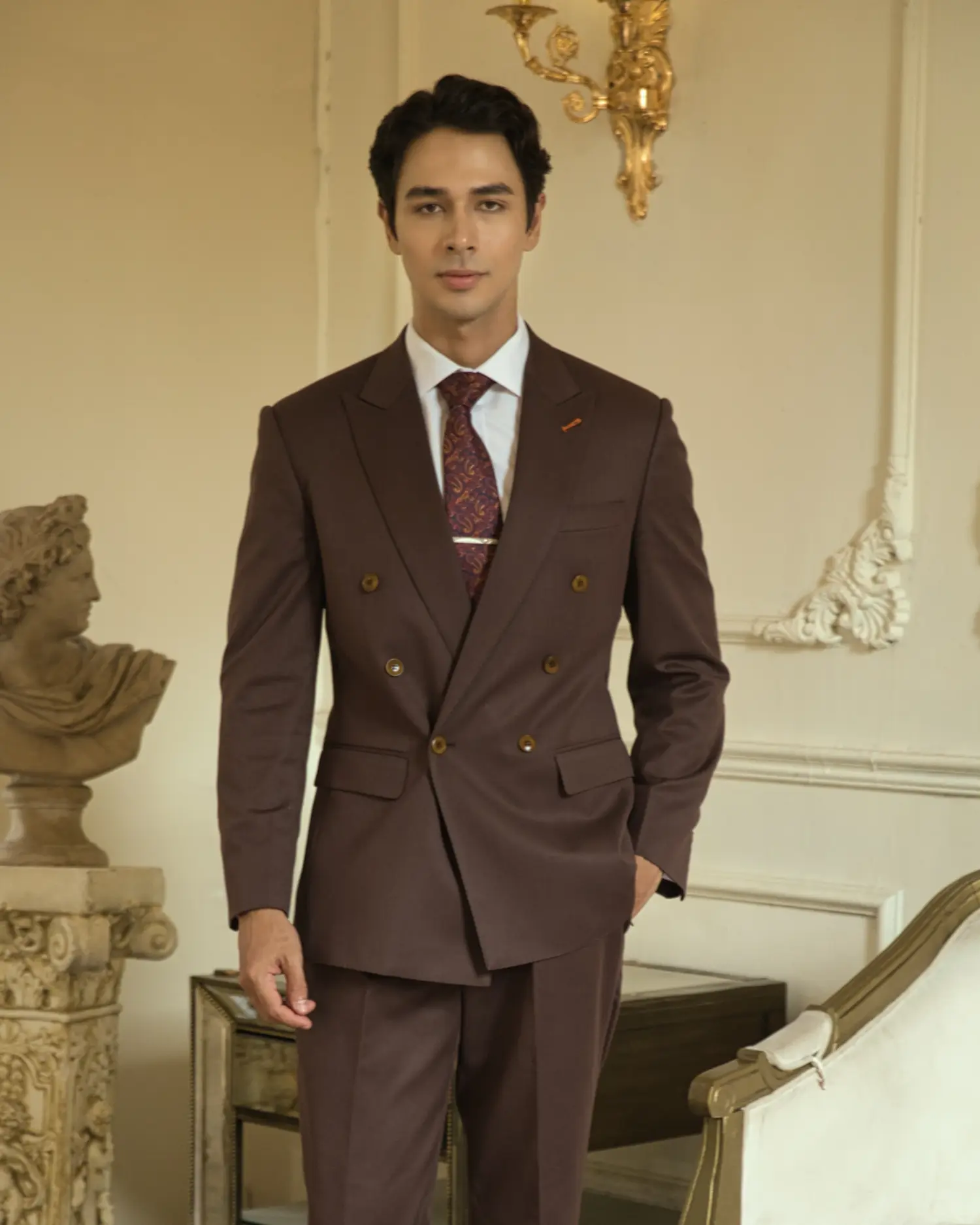
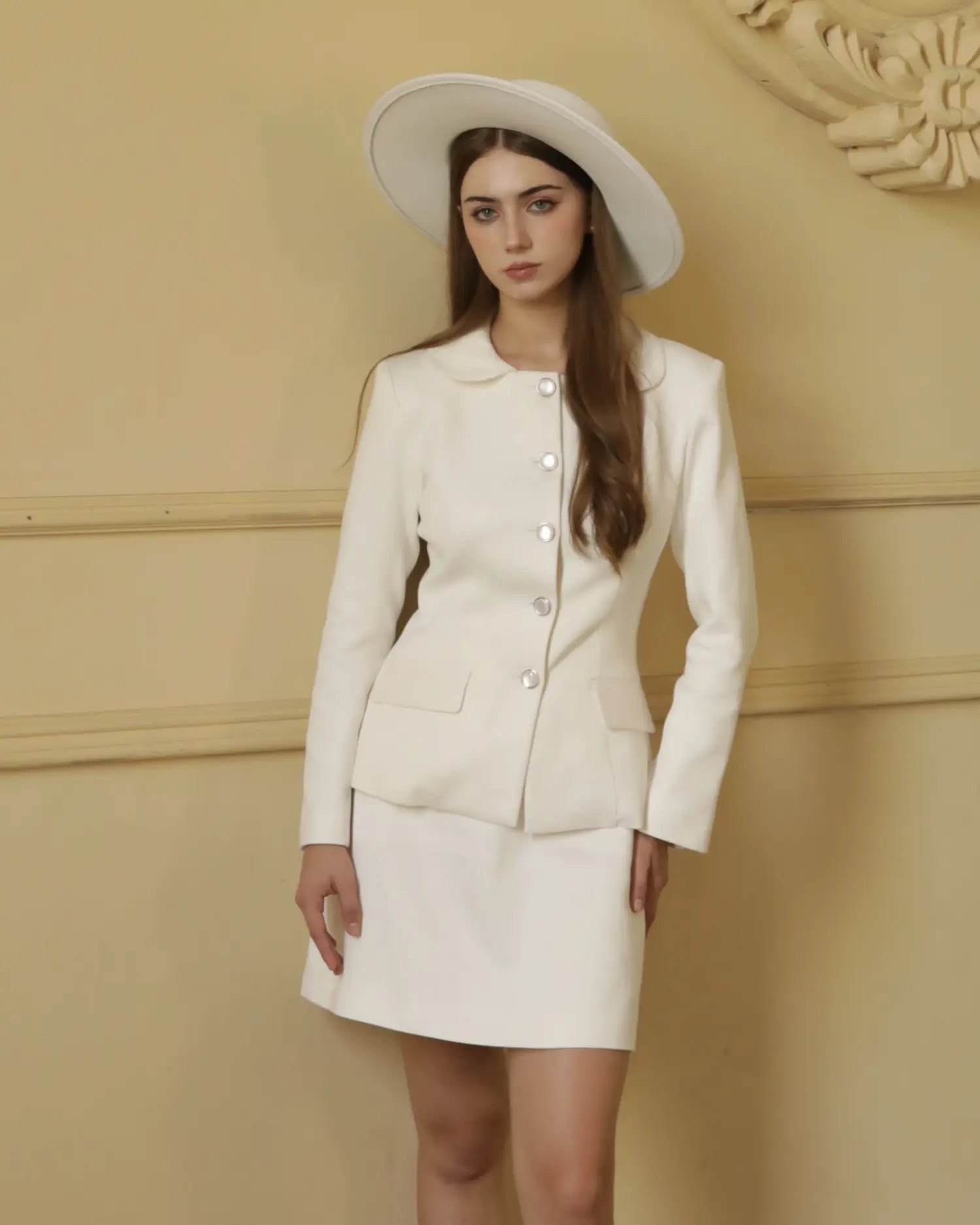
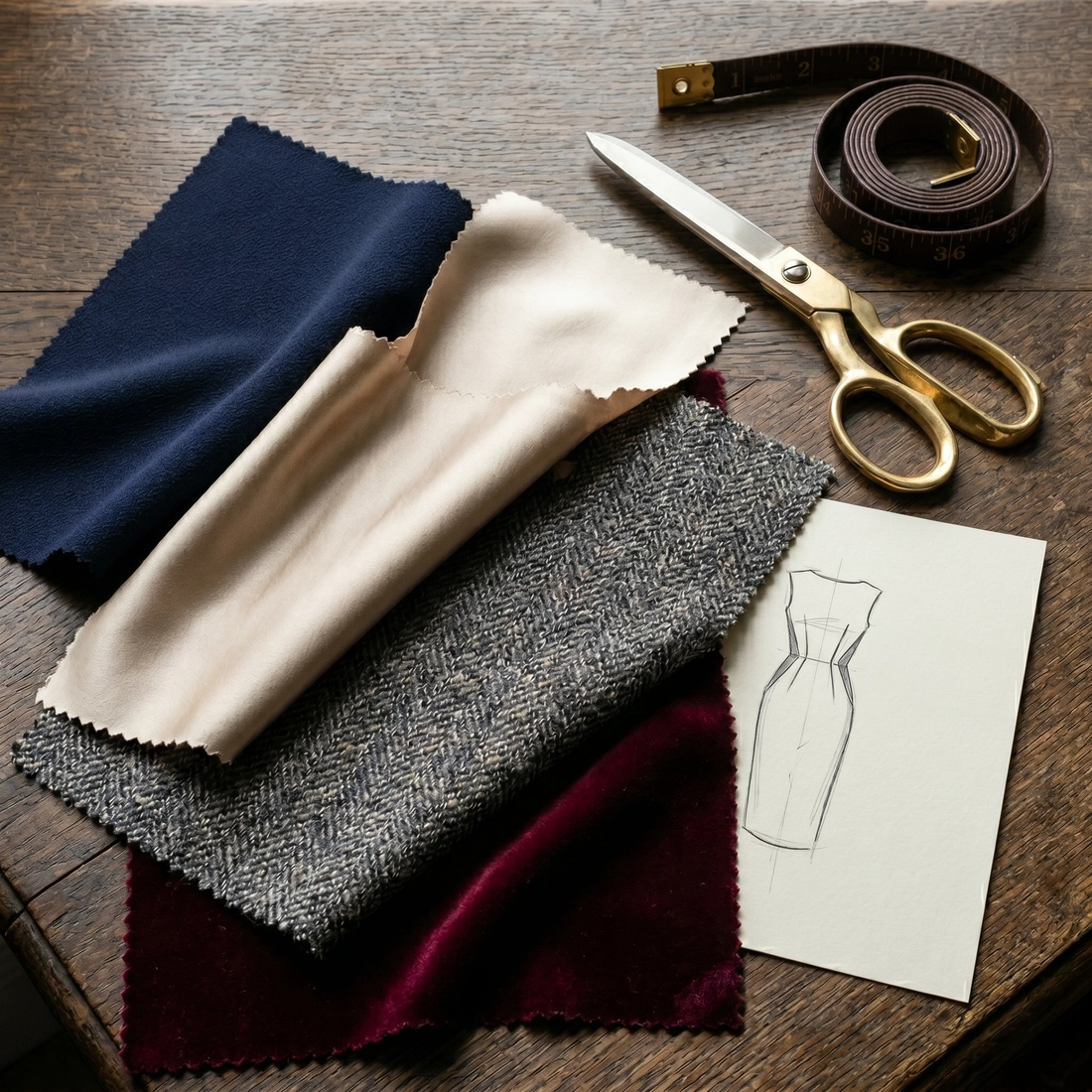
Suit Linings Explained: The Hidden Craftsmanship That Defines a Bespoke Suit
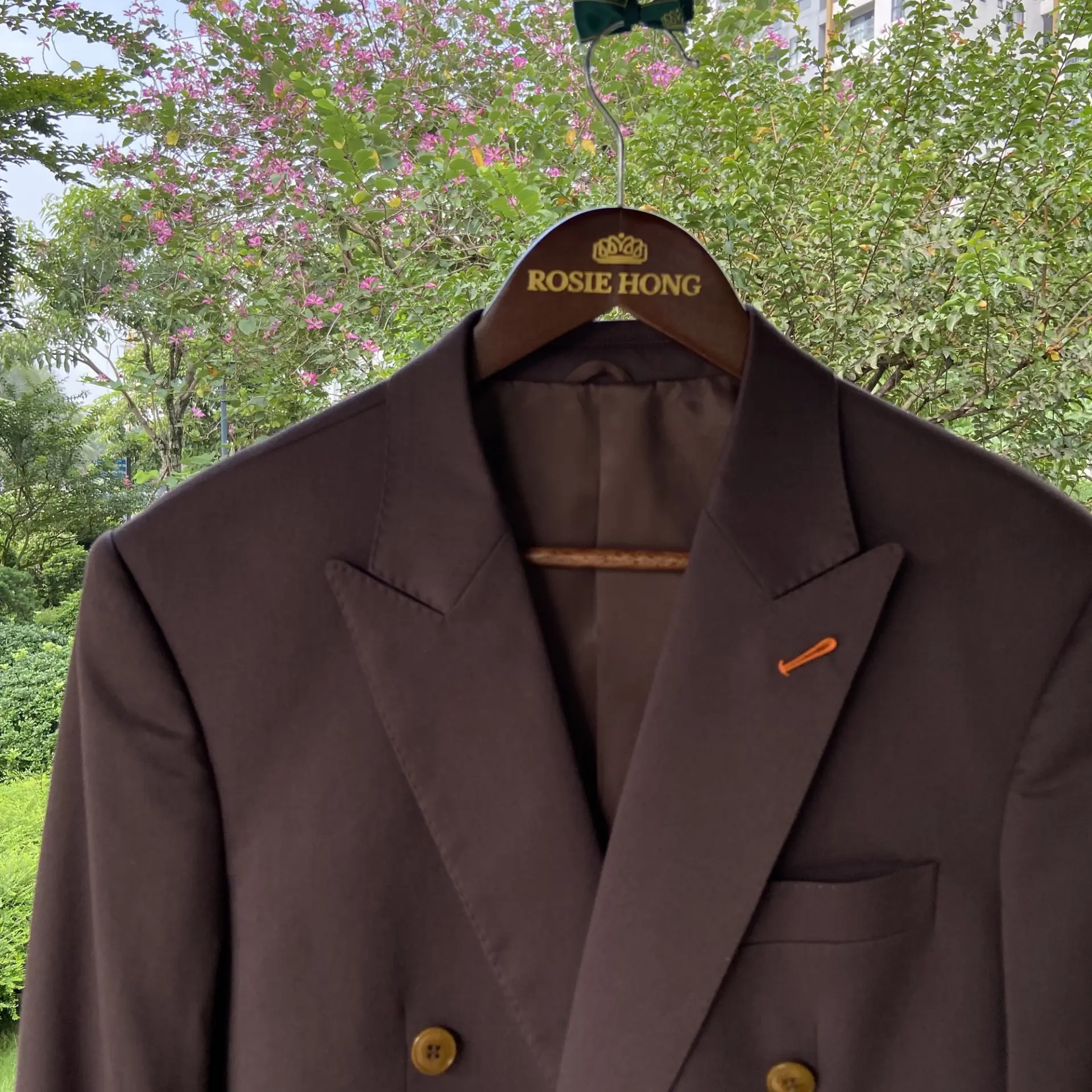
When people talk about a suit, they usually focus on what can be seen – the fabric, the cut, the lapel shape. Yet the true experience of wearing a suit begins elsewhere. It begins with the suit lining, the layer that rests against the body, moves with every step, and quietly shapes how the garment feels from morning to night.
Suit linings are rarely noticed by others, but they are felt by the wearer in every moment of movement. They influence comfort, breathability, and how naturally a suit responds to the body. In bespoke tailoring, these unseen details are never accidental. They are choices made with intention, guided by the belief that what you don’t see often matters the most.
What Are Suit Linings? A Brief Introduction
Suit linings are the inner layer of a jacket, positioned between the outer fabric and the wearer’s body. For most clients who consider tailoring, this is already understood. What is often overlooked, however, is what that layer actually does once the suit is worn.
A well-chosen lining directly affects comfort by regulating heat and reducing friction between the jacket and the shirt. It supports the structure of the garment, helping the jacket maintain its shape over time without feeling rigid. Breathability is another quiet but essential role, especially for those who wear suits for long hours or in warm climates. Durability, too, depends heavily on the lining, as it absorbs daily wear long before the outer cloth shows any sign of age.
For bespoke clients, understanding suit linings is not about learning definitions. It is about making informed choices. The lining determines how a suit feels in real life – how it moves, how it breathes, and how well it endures. In true bespoke tailoring, these decisions are never secondary; they are part of what makes the suit genuinely personal.
Suit Lining Materials – Understanding the Differences
Not all suit linings serve the same purpose. While they may appear similar at first glance, the material used inside a jacket plays a decisive role in how a suit feels, moves, and ages over time. Understanding the differences between common lining materials allows bespoke clients to make choices that align with their lifestyle, climate, and expectations of comfort.
Polyester – Durable but Limited
- Polyester is widely used due to its low cost and durability. It resists wrinkles well and holds up under frequent wear, which makes it common in entry-level or mass-produced suits. However, polyester lacks breathability, does not absorb moisture, and tends to trap heat. Static buildup is another frequent issue.
- For these reasons, polyester linings are best suited to budget-conscious garments or suits worn in consistently cold environments, where comfort and breathability are less of a concern.
Rayon / Viscose – A Middle Ground
- Rayon, also known as viscose, is often positioned as an upgrade from polyester. It feels softer against the skin and offers improved airflow, making it more comfortable in moderate climates. That said, it wrinkles more easily and does not match the long-term durability expected from high-end tailoring.
- Compared to polyester, rayon represents a step forward, but it remains a compromise rather than a true bespoke solution.
Cupro / Bemberg – The Gold Standard of Bespoke Suit Linings
- Cupro, commonly known by its premium trade name Bemberg, is derived from cotton linter – a natural byproduct of cotton production. This origin gives it exceptional breathability, similar to cotton, while maintaining a smooth, silk-like surface.
- Bemberg linings regulate temperature effectively, reduce friction between the jacket and shirt, and are naturally anti-static. Most importantly, they allow the jacket to move effortlessly with the body, enhancing comfort throughout the day.
- Bemberg has long been considered the gold standard in high-end bespoke tailoring. Its use reflects a commitment to comfort, longevity, and understated luxury qualities that define a well-made bespoke suit. For these same reasons, Bemberg is the lining of choice in every Rosie Hong bespoke jacket, particularly for clients who value breathability, fluid movement, and all-day comfort in warm or transitional climates.
Silk – Luxury with Practical Limitations
Silk linings offer an unmistakable sense of refinement. Naturally smooth and lustrous, silk brings visual depth and a soft hand-feel that elevates the interior of a jacket immediately. As a natural fiber, silk is breathable and pleasant against the skin, making it appealing from a sensory perspective.
That said, silk presents practical limitations in tailoring. It is more delicate than Curpo/Bemberg, prone to creasing, and less resilient under daily friction. Silk linings also require careful maintenance and do not provide the same structural support or stability that tailored jackets often demand. Over time, they are more likely to show wear, particularly in high-movement areas.
Suit Lining Patterns – From Classic to Contemporary
While material defines how a suit feels, pattern defines how it speaks. Suit linings offer a rare opportunity for personal expression – one that remains discreet yet deeply intentional. Whether understated or expressive, the right lining pattern adds character without disrupting the elegance of the exterior, a balance that is central to bespoke tailoring.
Solid Linings – Timeless and Refined
- Solid linings remain the most enduring choice in bespoke tailoring. Clean, restrained, and versatile, they complement the outer cloth rather than compete with it. Their strength lies in subtlety, making them ideal for clients who value longevity and effortless sophistication.
- Color selection, however, is far from arbitrary. A navy suit paired with a deep burgundy or warm gold lining introduces quiet contrast, adding depth without excess. Tonal combinations such as charcoal with soft grey or navy with midnight blue create harmony and refinement. In bespoke tailored suits, these decisions are often what distinguish thoughtful design from mere convention.
Patterned Linings – Classic Expressions
Patterned suit linings represent a dialogue between tradition and individuality. Long before linings became a canvas for personal expression, these motifs carried cultural meaning, craftsmanship, and social identity. When used with restraint, patterned linings add depth to a jacket’s interior without disturbing its outward formality – an approach that has long been embraced in bespoke tailoring.
Paisley – Aristocratic and Timeless
- Paisley is one of the oldest and most storied motifs in tailoring. Originating from ancient Persia and later adopted across Kashmir, the distinctive boteh form eventually found its way into European dress during the height of the British Empire. By the time it reached Savile Row, paisley had become a quiet emblem of cultivated taste.
- In suit linings, paisley conveys a sense of aristocratic ease – ornate yet controlled. Its flowing curves soften the structure of a tailored jacket, offering richness without excess. For classic suits, paisley remains a timeless choice that signals confidence, heritage, and an appreciation for history rather than trend.
Geographic – Subtle Power and Sophistication
- Geographic patterns draw inspiration from vintage atlases and the cartographic art of the Age of Exploration. Once symbols of imperial ambition and intellectual curiosity, maps represented a worldview shaped by movement, discovery, and reach.
- As a suit lining, the geographic motif becomes a quiet manifesto. It speaks to the wearer rather than the observer – an interior reminder of journeys taken and those yet to come. Structured, orderly, and precise, it suits the modern gentleman whose sense of freedom is internal rather than performative.
Floral and Dot – Order in Bloom
- The combination of floral motifs with rhythmic dot patterns creates a deliberate tension between structure and spontaneity. Historically, florals symbolized renewal and celebration, while dots introduced balance and repetition. Together, they form a composition that feels both disciplined and expressive.
- In tailored jackets, this interplay works particularly well when rendered in deeper tones. The result is a lining that carries warmth and personality without compromising sophistication – ideal for ceremonial wear or occasions where elegance is meant to feel personal rather than formal.
Jacquard – The Art of the Loom
- Jacquard patterns differ fundamentally from printed designs. Developed in the early 19th century, the Jacquard loom revolutionized textile craftsmanship by weaving complex patterns directly into the fabric’s structure. This technique creates depth, texture, and a tactile richness that cannot be replicated through surface printing.
- In suit linings, jacquard conveys a quieter, more architectural form of luxury. The subtle interplay between matte and sheen within the weave adds dimension, rewarding close attention. It is a choice rooted in craftsmanship – best appreciated by those who understand that true luxury is often felt before it is seen.
Swirl – The Geometry of Evolution
- The spiral is among humanity’s oldest symbols, appearing across cultures as a representation of growth, movement, and continuity. Unlike rigid geometry, the swirl suggests energy in motion – a form that evolves rather than repeats.
- Used as a lining motif, the swirl transforms the interior of a jacket into something dynamic. It introduces rhythm and momentum beneath a structured exterior, reflecting a modern approach to tailoring where tradition and progression coexist. The result is expressive yet controlled, bold yet hidden – an embodiment of contemporary bespoke sensibility.
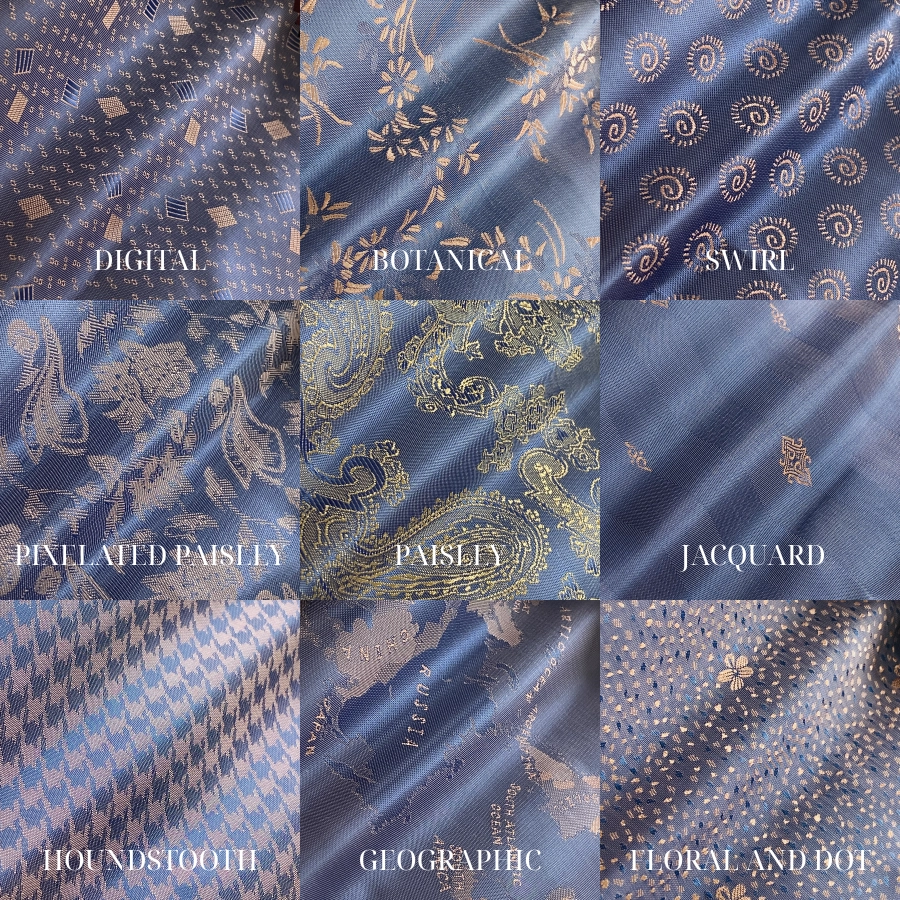
Beyond these classics, suit linings form an expansive language of pattern and meaning. Choosing the right motif is less about decoration and more about alignment between history, personality, and the way a garment is meant to be worn. It is this balance between expression and restraint that completes a well-considered suit, where the interior speaks quietly but with intention.
Further explorations of this approach can be found in the Rosie Hong suit linings collection.
Custom Printed Linings – The Most Personal Choice
Custom printed linings represent the most intimate form of expression in tailoring. Names, wedding dates, meaningful symbols, or personal imagery transform the lining into a private narrative, visible only to the wearer. This approach moves beyond aesthetics into emotional tailoring, where memory and craftsmanship intersect. In bespoke tailored suits, such details often become the most cherished.
Designing the Inside – Color and Construction in Suit Linings
Beyond material and pattern, the true refinement of suit linings lies in two closely related decisions: color and construction. These choices determine not only how a jacket looks when revealed, but how it behaves in motion and adapts to the wearer’s environment. In bespoke tailoring, they are never decorative afterthoughts – they are functional design decisions shaped by lifestyle, climate, and personal sensibility.
Choosing Suit Lining Colors
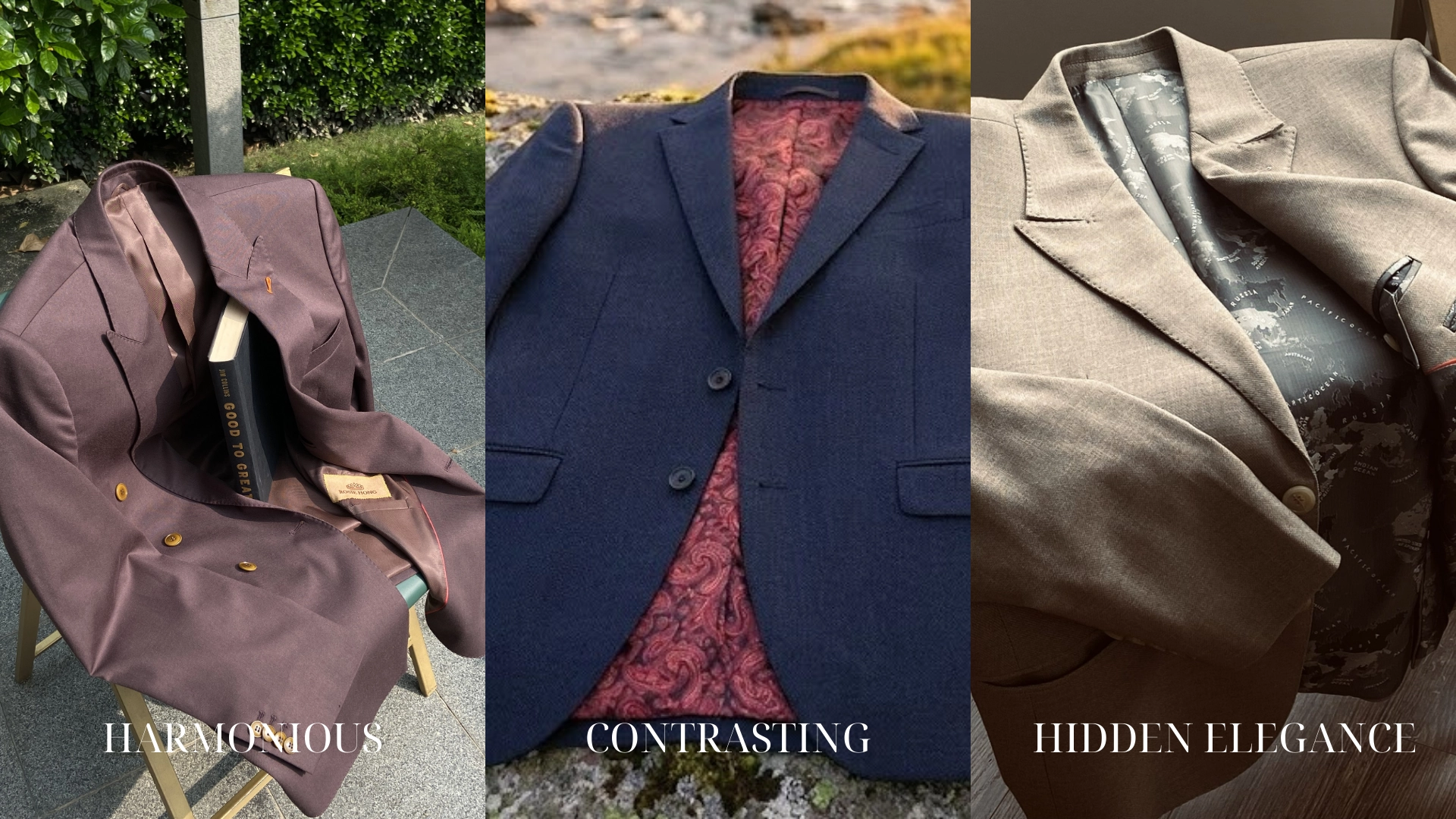
Color selection is where suit linings become a personal signature. Unlike the exterior, lining colors are chosen primarily for the wearer rather than the observer. In a bespoke blazer, this choice often reflects how the garment is intended to be lived in rather than simply how it is meant to be seen. There are three timeless approaches, each offering a distinct expression while remaining rooted in tailoring tradition.
- Harmonious (Ton-sur-ton): A harmonious approach keeps the lining within the same color family as the outer cloth. Navy with deep blue, charcoal with soft grey, or brown with warm taupe create visual continuity and quiet sophistication. This approach feels natural and restrained, making it ideal for daily wear and professional settings where elegance is best expressed through subtlety.
- Contrasting (Statement Lining): Contrasting linings introduce controlled boldness. A navy suit paired with burgundy, forest green, or muted gold adds depth and individuality without altering the suit’s outward formality. When executed with restraint, contrast does not seek attention – it reveals character only when the jacket opens, reinforcing the bespoke nature of the garment.
- Hidden Elegance (Only Visible in Motion): The most understated approach is one that reveals itself gradually. Linings chosen to complement movement rather than contrast – soft patterns, muted tones, or textures visible only in certain light – create a sense of discovery. This philosophy aligns closely with bespoke tailoring, where refinement is felt more than seen.
Full Lined or Half Lined – Choosing Based on Climate
Construction plays an equally important role in how suit linings perform. The choice between full lining and reduced lining is less about aesthetics and more about climate, comfort, and intended use.
- A fully lined jacket provides added structure and insulation. It helps the garment hold its shape and offers warmth, making it well suited to cooler climates or a bespoke blazer designed for seasonal wear.
- In contrast, half-lined or quarter-lined jackets reduce internal layers, allowing greater airflow and flexibility. This construction is particularly valued in warm or tropical climates, where breathability becomes essential. By exposing more of the jacket’s internal canvas, the suit feels lighter and more responsive, adapting naturally to the wearer’s movement throughout the day.
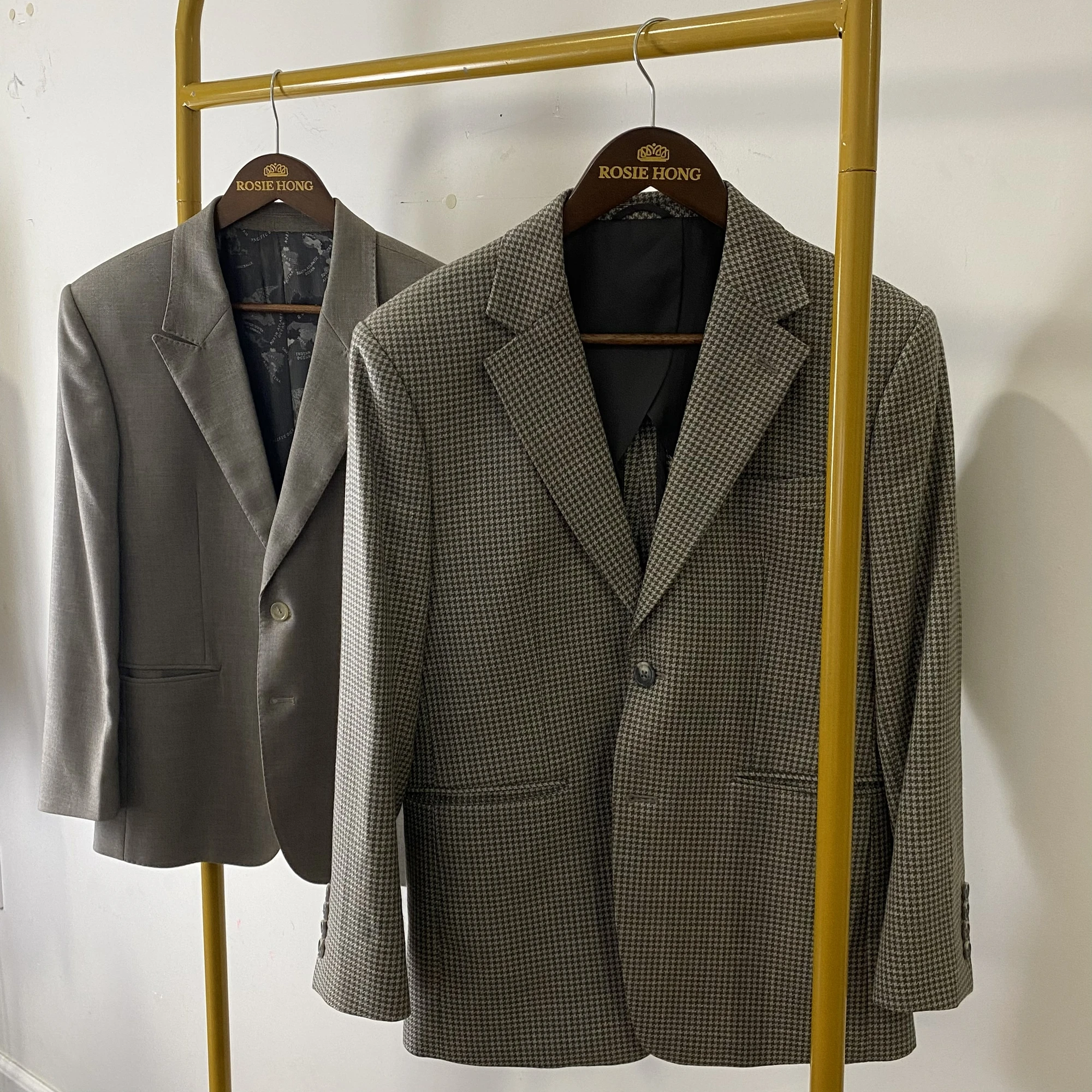
Choosing between these constructions is not about hierarchy but appropriateness. In well-considered suit linings, structure and climate work together to ensure the garment performs as beautifully as it appears. Seen in context, suit linings are just one element within the broader structure of a suit, where materials, construction, and tailoring decisions collectively shape how a jacket is built and worn.
Conclusion
Suit linings are rarely chosen for attention, yet they shape the lived experience of a tailored jacket more than most visible details. They influence comfort, movement, and how naturally a suit adapts to the body over time. In bespoke tailoring, lining is not a secondary choice – it is part of the garment’s foundation.
When material, pattern, color, and construction are selected with intention, the suit becomes something personal rather than merely well made. For those wishing to explore suit linings as a considered element of bespoke design, a curated selection can be found within the Rosie Hong suit linings collection, where interior details are approached with the same care as the exterior form.
DISCOVER PHYIGITAL BESPOKE TAILORING