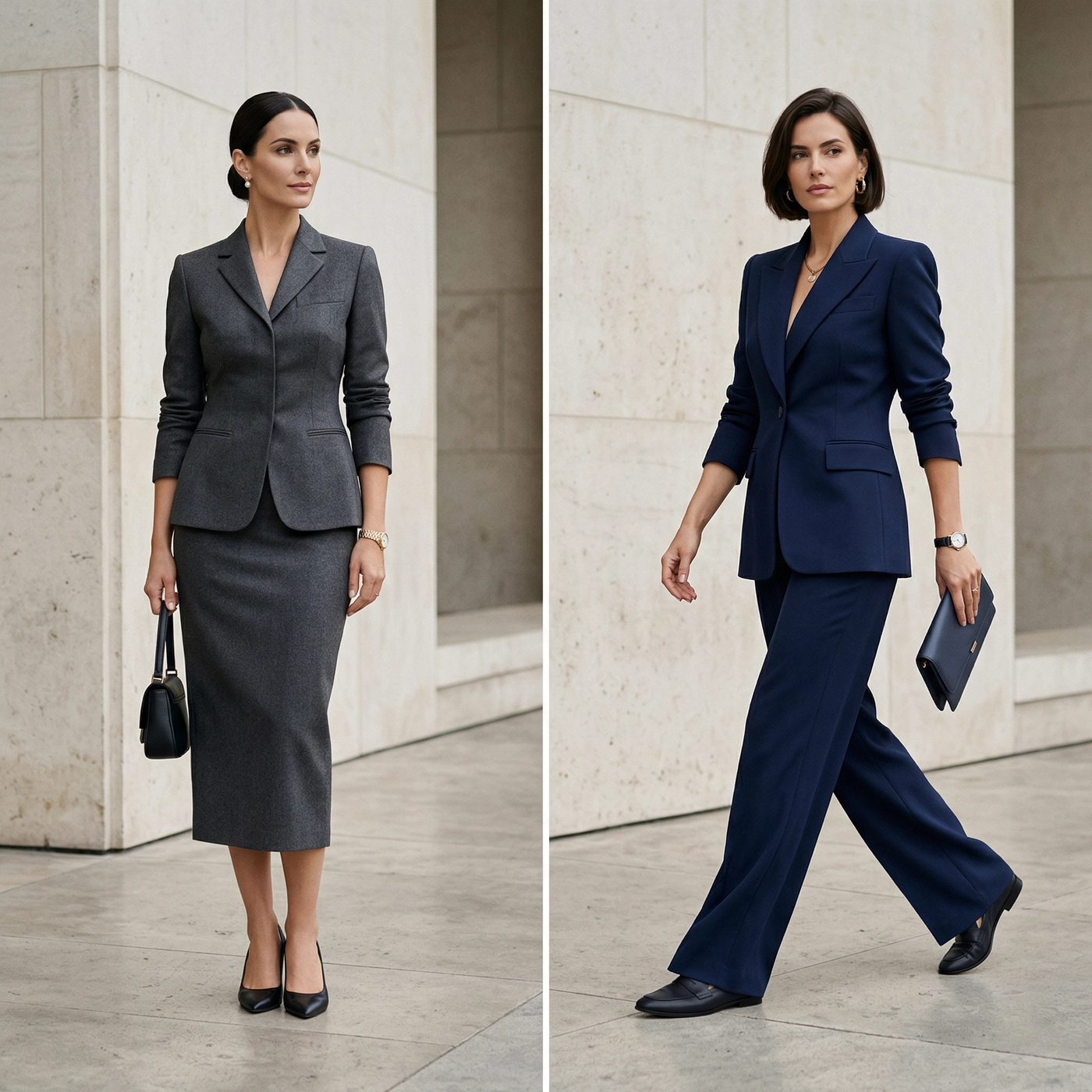
Commanding the Room: Styling the Navy & Charcoal Power Suit
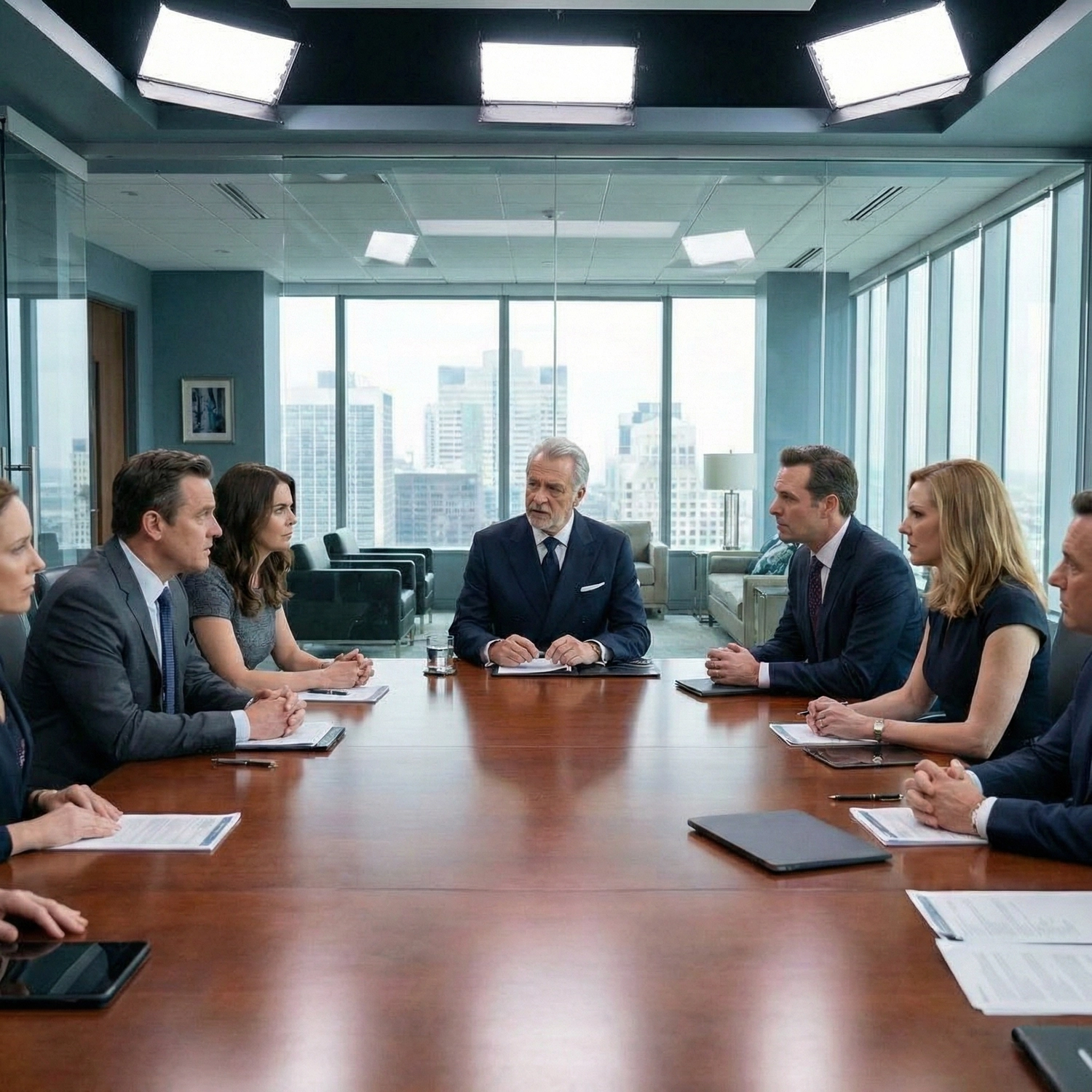
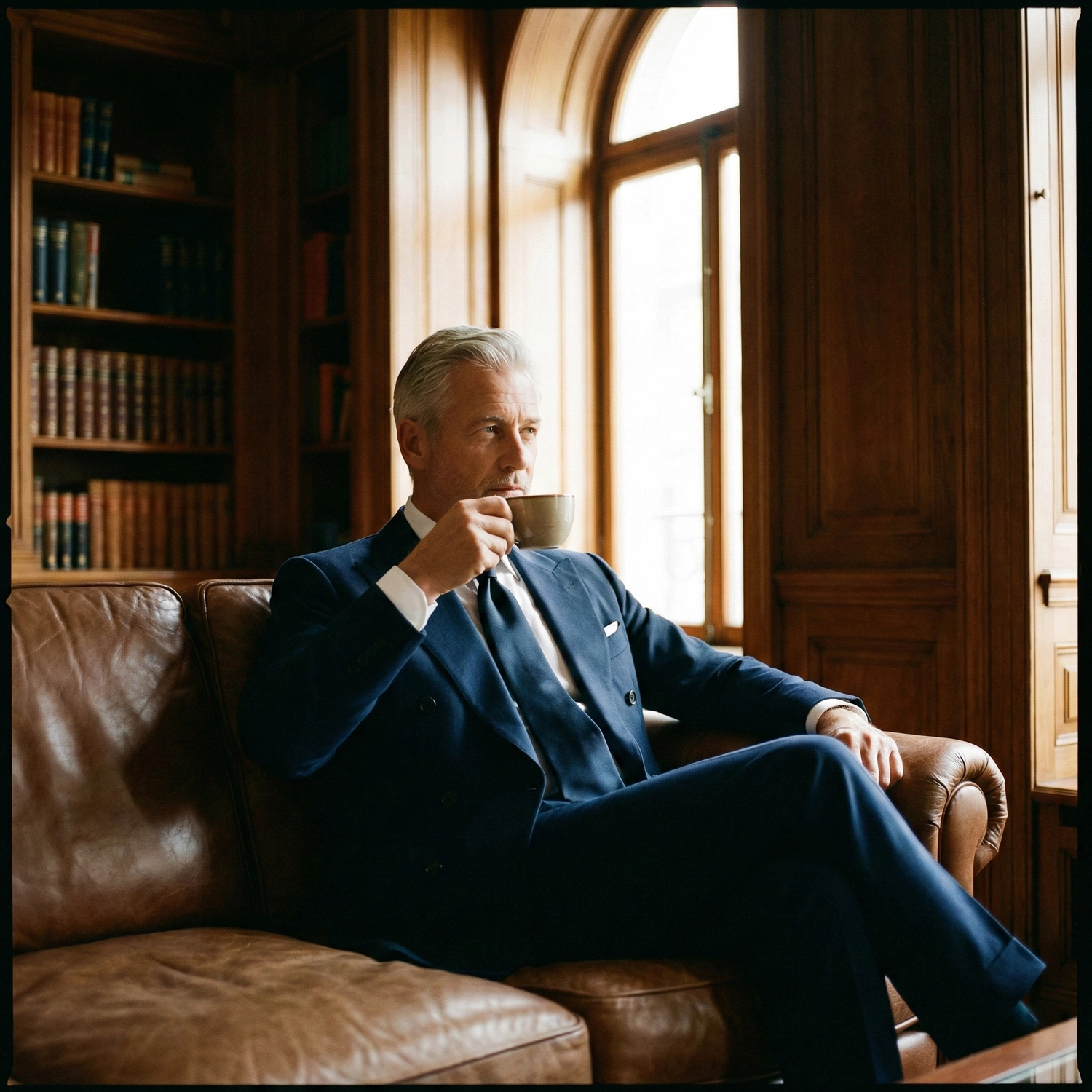
The power suit is often misunderstood as a tool for aggression, but in the modern boardroom, true authority does not need to shout. Instead of relying on loud patterns or fleeting trends, the most commanding presence is built on strategic minimalism, using your attire to eliminate visual noise so that your intellect and presence take center stage.
This guide focuses on the quiet dominance of the navy suit and the charcoal grey suit. While our [Modern Gentleman’s Playbook] covers styling for every social occasion, this chapter is dedicated exclusively to the boardroom. By mastering these foundational colors, you create an image of unshakeable trust and sophisticated luxury, proving that in a chaotic world, the simpler you look, the more significant you become.
The Foundation: Why Simplicity Commands Respect (Navy & Charcoal)
In the theater of business, your attire is the backdrop, not the main character. A busy pattern or an unusual color demands the viewer’s cognitive energy to process. By contrast, a solid business suit in navy or charcoal reduces “visual noise.” It acts as a neutral anchor in a chaotic room, forcing your counterparts to focus entirely on your face, your eyes, and the substance of your words.
This is not about playing it safe; it is about playing it smart.
The Psychology of the Navy Suit: The Architecture of Trust
- The Meaning: Navy blue is the global gold standard for corporate attire because it is intrinsically linked to logic, stability, and loyalty. When you wear a navy suit, you are subliminally projecting an image of reliability and team-oriented leadership.
- Material & Shade: To maintain authority, precision is key. Opt for a deep Midnight Navy woven in Worsted Wool. Unlike synthetic blends which can appear shiny and cheap under office lights, high-quality worsted wool absorbs light, offering a rich, matte finish that commands respect.
The Psychology of the Charcoal Grey Suit: The Color of Wisdom
- The Meaning: If Navy is the color of camaraderie, Charcoal is the color of wisdom. A charcoal grey suit projects absolute neutrality and experience. It is starker and more serious than medium grey, yet it avoids the funereal severity of a black suit.
- Texture & Depth: The “Power” of charcoal lies in its texture. A flat, cheap fabric looks dull, but a high-quality Sharkskin weave or High-Twist Wool adds microscopic depth to the color. This texture prevents the suit from looking monolithic, giving it a vibrant, three-dimensional quality that suggests luxury without screaming for attention.
The “Blank Canvas” Rule: Why Construction is Key
- The Risk of Minimalism: There is a catch to minimalism, and it is unforgiving. When you remove distracting patterns and loud accessories, there is nowhere for bad tailoring to hide. A simple suit relies entirely on its internal engineering to convey power.
- The Internal Architecture (Canvas): This is the hidden secret of a bespoke tailored suit. Unlike mass-produced suits that use glue (fusing) to stiffen the fabric, a power suit should feature a Full Canvas or Half Canvas construction. This floating layer of horsehair canvas allows the jacket to drape naturally over your chest rather than sitting stiffly like cardboard, creating a silhouette that is both armor-like and fluid.
The Canvas: Using Contrast to Signal Clarity
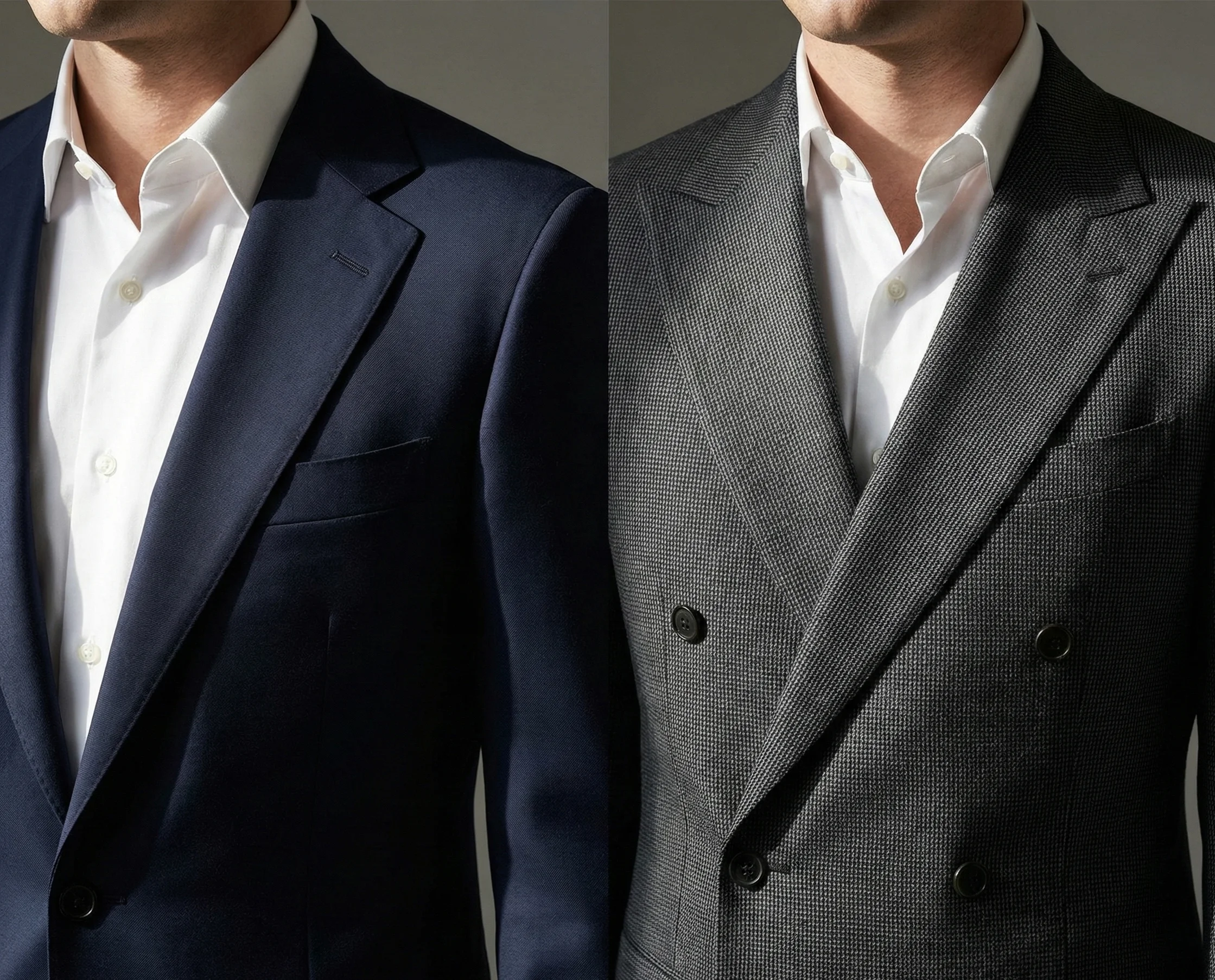
A dark power suit is effectively a frame; the shirt is the canvas. The relationship between the two defines where the viewer’s eye will rest. If the shirt is too busy or the color is muddy, the visual hierarchy collapses. To command the room, you must leverage the principle of high contrast.
The Crisp White Shirt: The Ultimate Power Move
- The Strategy: There is a reason the white shirt is the unwavering standard of the boardroom. The sharp contrast between a dark Navy or Charcoal suit and bright white cotton creates a “V-shape” that acts as an arrow, pointing directly to your face. Psychologically, this combination signals clarity of thought, transparency, and a high standard of cleanliness.
- The Material Standard: Not all white shirts are created equal. For a true business setting, the fabric must be opaque; your skin tone should never show through. Opt for a crisp Poplin or a subtle Royal Twill. These weaves hold starch well and maintain a pristine, sharp look throughout a long day of meetings.
The Light Blue Option: Softening the Edge
- The Strategy: While white is authoritative, light blue is collaborative. Wearing a solid light blue shirt with a charcoal grey suit softens the severity of the look without sacrificing professionalism. It suggests a leader who is approachable and open to dialogue.
- The Rule of Tone: The shade must be “Ice Blue” or “Sky Blue.” Avoid saturated or dark blues, as they reduce the contrast with the suit jacket, making the overall outfit look muddy and less defined.
Collar Architecture: Framing the Face
- The Engineering: A shirt is only as good as its collar. In a bespoke tailored suit, the collar must stand tall and firm under the weight of the jacket lapel. A limp, collapsing collar ruins the entire aesthetic, signaling negligence.
- The Best Choice: Avoid the “Button-Down” collar, which is inherently casual (rooted in sport). Instead, choose a Semi-Spread or Spread Collar. This width accommodates a substantial tie knot and creates a horizontal line that broadens the jawline, enhancing the wearer’s presence.
The Focal Point: The Discipline of the Silk Tie
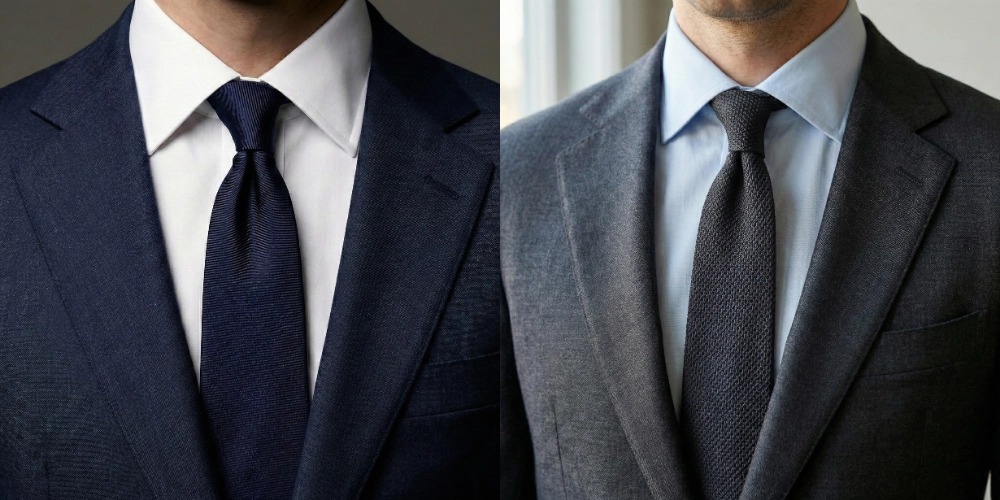
In a strict business suit, the tie is the only allowed variable of “emotion.” It is the focal point that draws the eye to the center of your chest and up to your face. However, a common mistake is using the tie to “show personality” with loud prints or novelty motifs. In the boardroom, the discipline of your selection speaks louder than the pattern itself.
Materiality: The Art of Visual Balance
- The Concept: Why silk? A navy suit or charcoal grey suit in worsted wool has a matte finish: it absorbs light. To create a balanced visual harmony, you need a material that reflects a subtle amount of light. High-quality silk provides this necessary luster, breathing life into the sobriety of the dark wool.
- The Texture: Avoid shiny, cheap satin that looks like plastic. Instead, opt for Woven Silk (like Reppe or Grenadine) or high-density Printed Silk. These textures offer a deep, rich sheen that whispers luxury rather than shouting it.
The Power of Restraint: Color & Pattern
- The Monochromatic Strategy (The Tonal Rule): The most confident move is the monochromatic look, pairing a Navy tie with a Navy suit. However, precision is required. The rule of thumb for a power suit is that your tie should be in the same color family but one tone darker than your jacket.
Why Darker? A darker tie creates a high-contrast anchor against the white shirt, directing authority upwards to your face. Conversely, a tie that is lighter than your suit breaks this visual strength. It often feels “festive” or casual (reminiscent of wedding attire) and lacks the seriousness required to command a boardroom.
- The Safe Zone: If you introduce color, stick to the “Power Trinity”: Deep Burgundy, Forest Green, or Steel Grey. If you introduce patterns, keep them microscopic. A Pin-dot or a classic Reppe Stripe adds interest upon close inspection but appears solid from across the conference table.
The Rule of Proportion: Anatomy of the Width
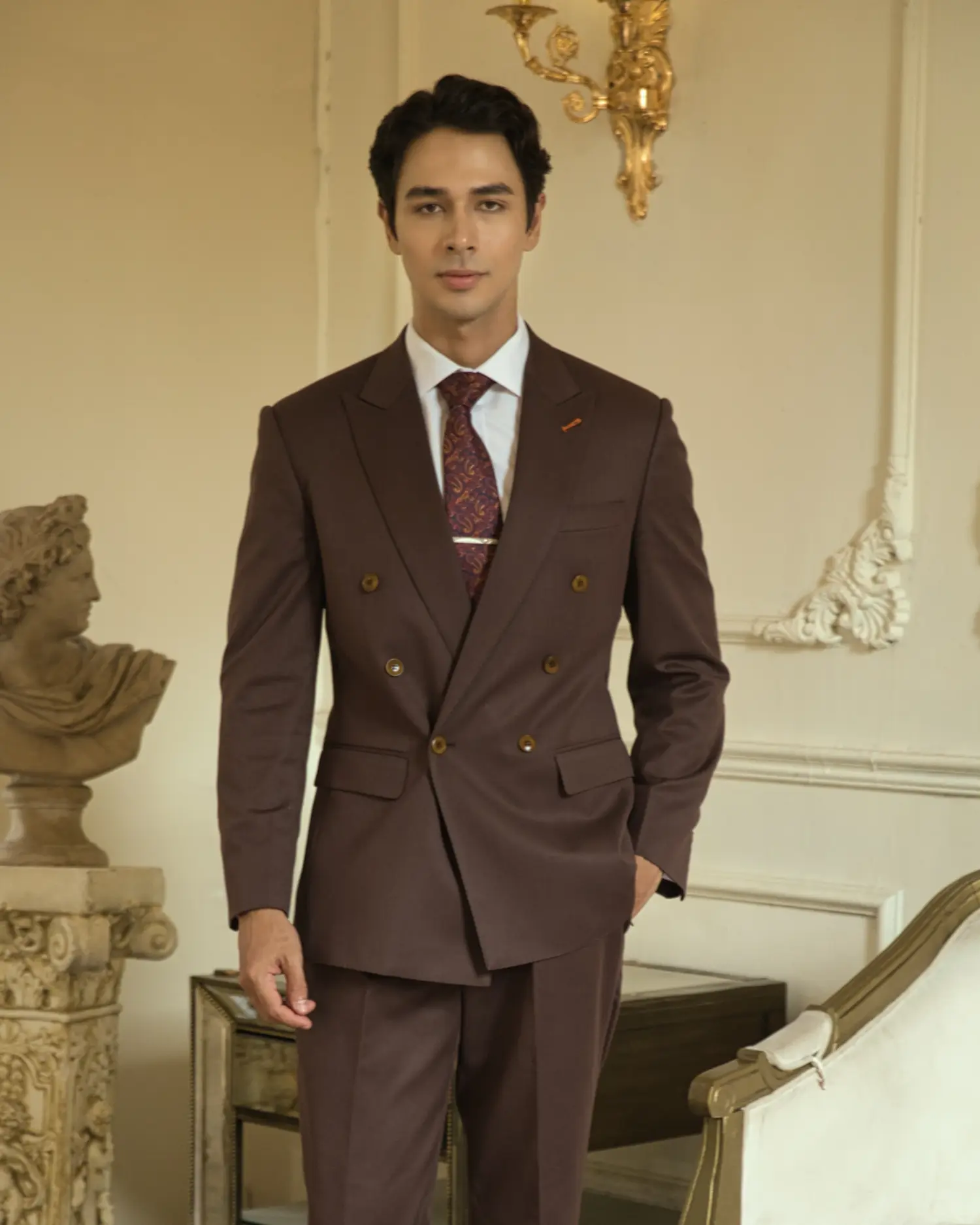
- The Golden Ratio (Tie = Lapel): In bespoke tailoring, there is no “one size fits all.” The width of your tie at its widest point must roughly match the width of your suit lapel. This creates visual harmony.
- For the Standard/Athletic Build (7.5cm – 8.5cm): For men with a standard or broad chest, a classic width of 8cm is ideal. It commands presence and holds its own against broad shoulders and a spread collar.
- For the Slender Build (6cm – 7cm): For men with a thinner frame, a wide tie can look overwhelming. Instead, opt for a slightly narrower width of 6cm to 7cm. This maintains the vertical line without “swallowing” the wearer.
Note: Avoid going below 6cm (Skinny Tie) for business. An ultra-skinny tie (5cm) belongs to fashion runways or casual parties; in a boardroom, it lacks the necessary gravitas and authority.
The Knot: The Architecture of the Neck
- The Knot Choice: The size of your knot must correspond to the width of your shirt collar and your lapels. For a spread collar (recommended above), a Half-Windsor is the gold standard. It is symmetrical, triangular, and substantial enough to fill the collar gap without looking bulbous like a Full Windsor.
- The Dimple (The Detail of Mastery): Never tighten a tie flat against the shirt. You must sculpt a “dimple” – the small indentation in the fabric just below the knot. This small architectural detail proves that the knot was tied with intention and care. It is the secret handshake of the well-dressed man.
Grounding the Look: Solidity in Footwear
If the tie is the focal point, the shoes are the anchor. They provide the visual weight that grounds the entire ensemble. In the context of a power suit, your footwear choices should not be experimental. They must be absolute. The goal is to create a seamless, unbroken vertical line from your shoulder down to the floor.
The Black Oxford: The Only Serious Contender
- The Rule of Black Leather: While brown shoes are acceptable in social settings, the boardroom demands black. Black leather signifies seriousness, finality, and firm ground. When paired with Navy or Charcoal, it creates the highest level of formality. Brown, by contrast, introduces an “earthy” or casual tone that can dilute the authority of a strict business meeting.
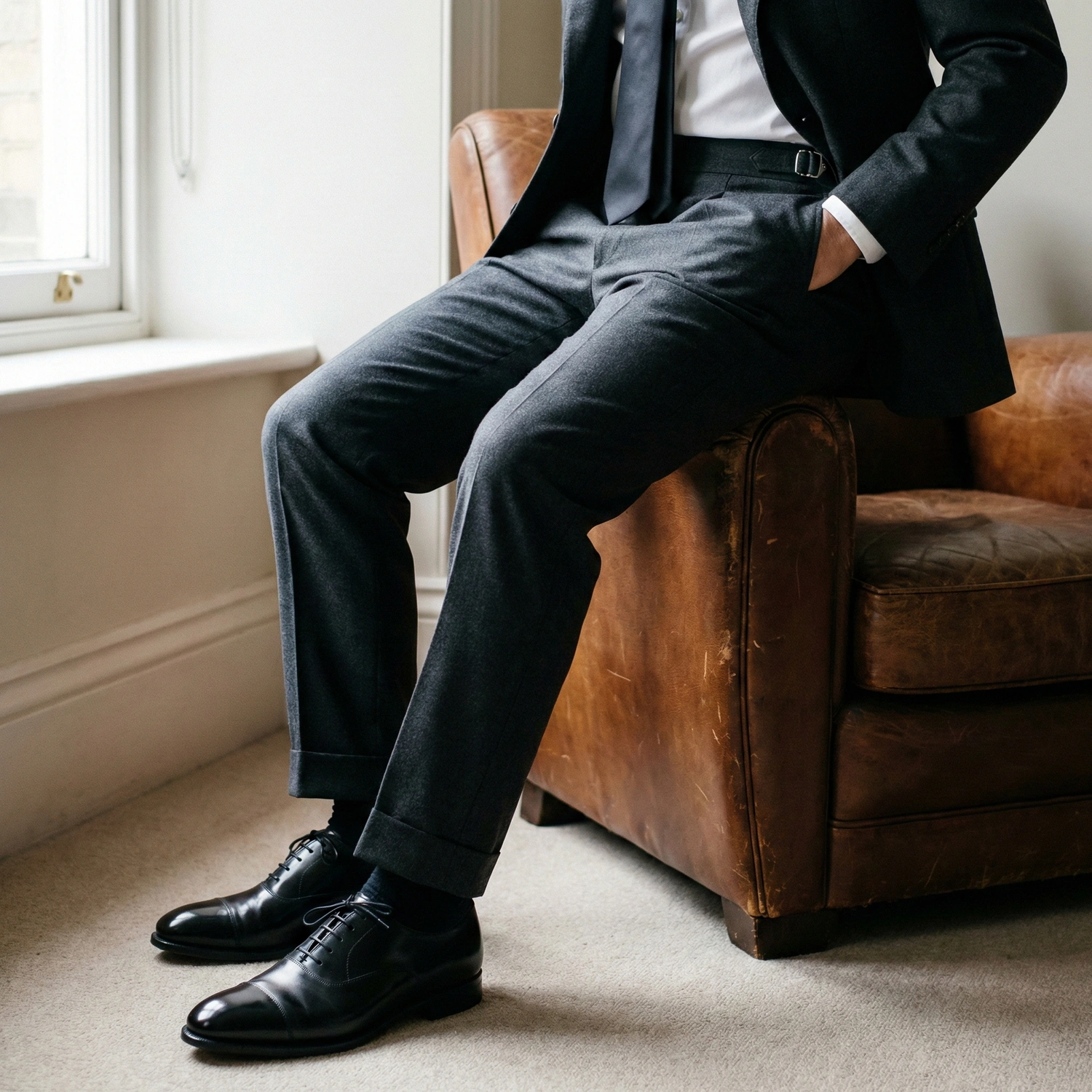
- The Oxford Silhouette (Closed Lacing): Not all black shoes are appropriate. You must distinguish between the “Derby” (open lacing, casual) and the “Oxford” (closed lacing, formal). For a bespoke tailored suit, the Cap-Toe Oxford is the undisputed king. Its sleek, streamlined profile hugs the foot and slips cleanly under the trouser hem without creating a bulky silhouette.
The Belt Paradox: Why Less is More
- The Visual Break: If your trousers have belt loops, wearing a belt is mandatory. However, a belt creates a horizontal line that cuts your body in half, visually shortening your legs and interrupting the suit’s vertical flow. The leather of the belt must always match the leather of the shoes perfectly – black with black.
- The Bespoke Advantage (Side Adjusters): The ultimate expression of minimalism is to remove the belt entirely. In high-end bespoke tailoring, trousers are often crafted with Side Adjusters (metal buckles or button tabs on the hips). This construction removes the clutter of loops and buckles, creating a cleaner, uninterrupted line from the waist down. It suggests that your clothes fit you so perfectly, they require no external hardware to stay in place.
Conclusion: The Art of Disappearing to Be Seen
We have explored the technicalities of fabric, fit, and color, but the ultimate lesson is psychological. A true power suit does not scream for attention; it waits for it. By stripping away the noise of loud patterns and trendy cuts, you force the world to engage with your substance rather than your surface.
This is the profound value of a bespoke tailored suit. It grants you the liberty to forget about your appearance. You know the shoulder is perfect; you know the length is precise; you know the colors are appropriate. When you are no longer worried about how you look, you are free to focus entirely on what you do.
In a room full of noise, the man who dresses with intentional simplicity is the one who controls the narrative. That is the art of disappearing to be seen. When the clothes are flawless, only the man remains.
DISCOVER PHYIGITAL BESPOKE TAILORING