Beyond Black: The Resurgence of the Velvet Dinner Jacket
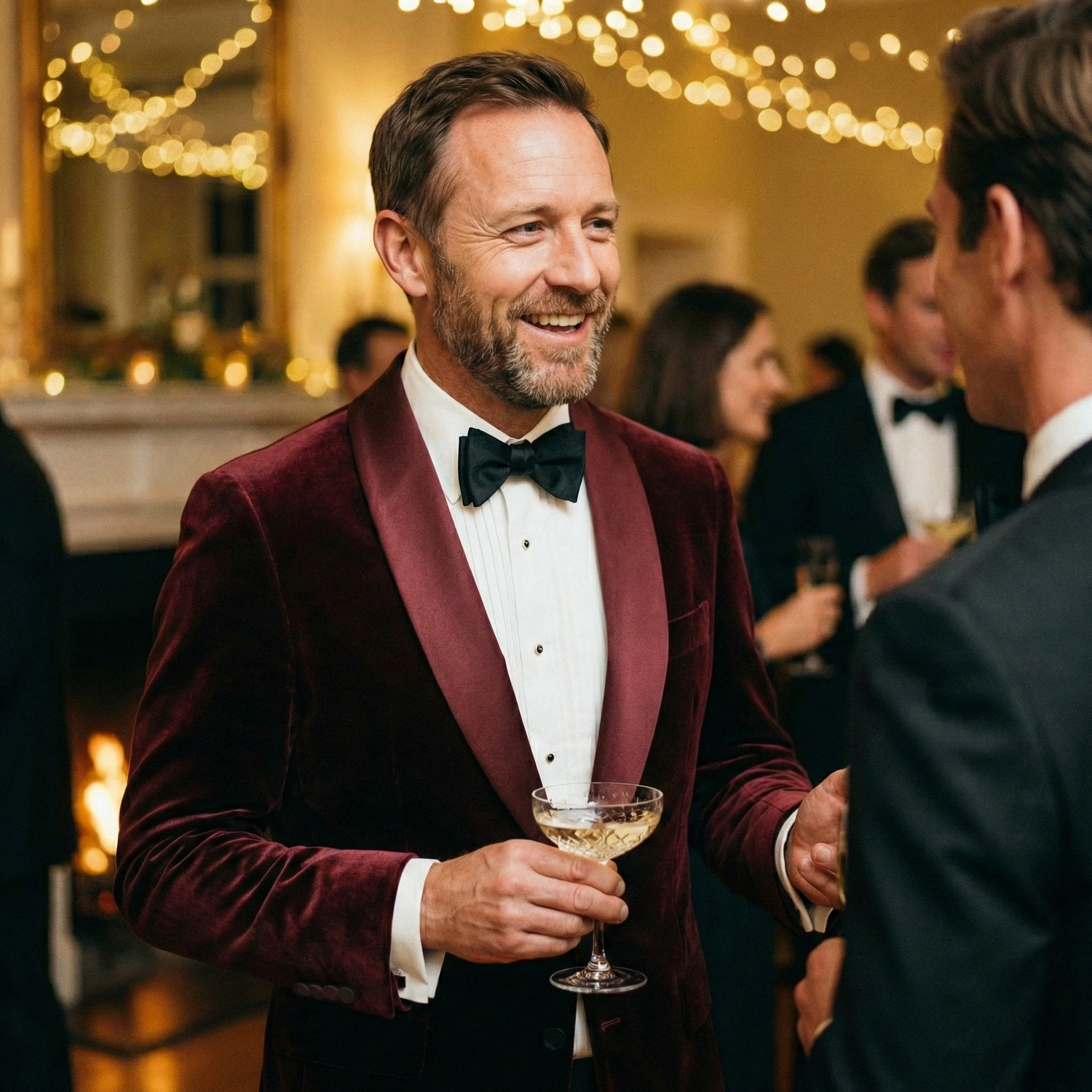
The velvet dinner jacket stands as the ultimate counterpoint to the traditional black tuxedo, offering a richness and warmth perfectly suited for the festive season. More than just a luxurious textile, velvet represents an attitude, a blend of confidence and refined indulgence designed for intimate soirées. This guide explores how to master its resurgence, from decoding Creative Black Tie rules to curating the perfect colour palette for your next event.
From Loungewear to Eveningwear: A Brief History
To truly appreciate the velvet dinner jacket, one must look back to the mid-19th century, where its origins were rooted in practicality rather than pure fashion.
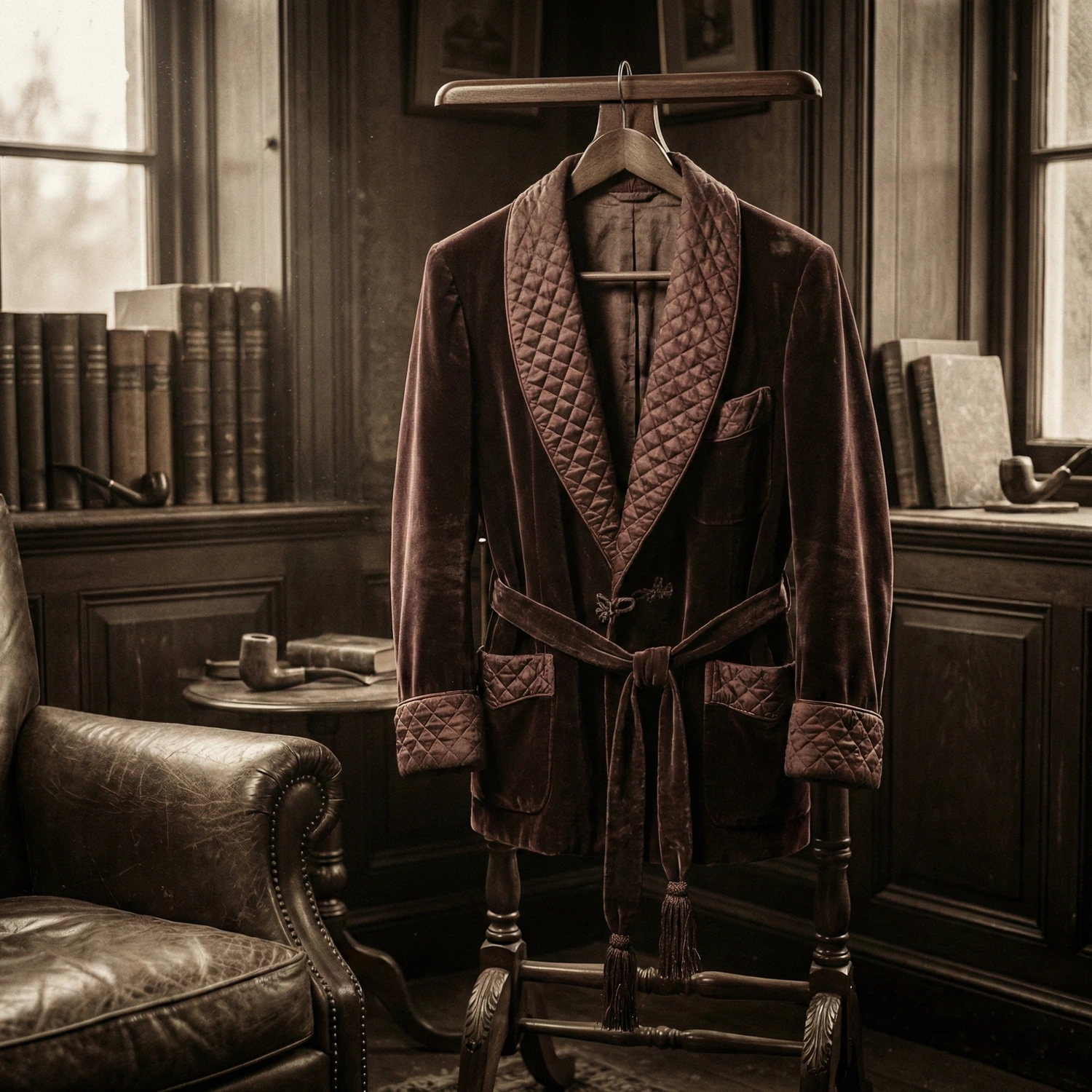
- The Victorian Necessity: Following the Crimean War in the 1850s, Turkish tobacco became immensely popular among British gentlemen. However, the ash and strong odour were detrimental to the rigid, expensive tailcoats worn during formal dinners. The solution was the Smoking Jacket, a mid-thigh garment originally made from velvet or silk. These materials were chosen specifically for their ability to absorb smoke and protect the clothing beneath. It was strictly a piece of “loungewear,” worn only in the private smoking room after dinner had concluded.
- The Royal Intervention (1865): The transition from private retreat to semi-formal attire is largely credited to the Prince of Wales (later King Edward VII). Seeking a comfortable alternative to the restrictive tailcoat for casual dinners at his Sandringham estate, the Prince commissioned the legendary tailor Henry Poole to cut a short, celestial blue silk jacket. This “lounging jacket” stripped away the tails but kept the elegance, effectively becoming the ancestor of the modern Tuxedo.
- The Modern Renaissance: Over the decades, the velvet jacket slowly migrated from the private parlour to the public ballroom. By the mid-20th century, style icons began adopting it as a glamorous alternative to standard black tie. Today, the velvet dinner jacket is no longer hidden away; it has been elevated to the pinnacle of Creative Black Tie, symbolizing a gentleman who values both history and individual flair.
Defining the Occasion: When to Wear Velvet
Velvet is undeniably luxurious, but it is not a “wear-anywhere” fabric. Its richness demands a setting that balances formality with festivity. Understanding where a velvet suit jacket belongs is the key to wearing it with confidence.
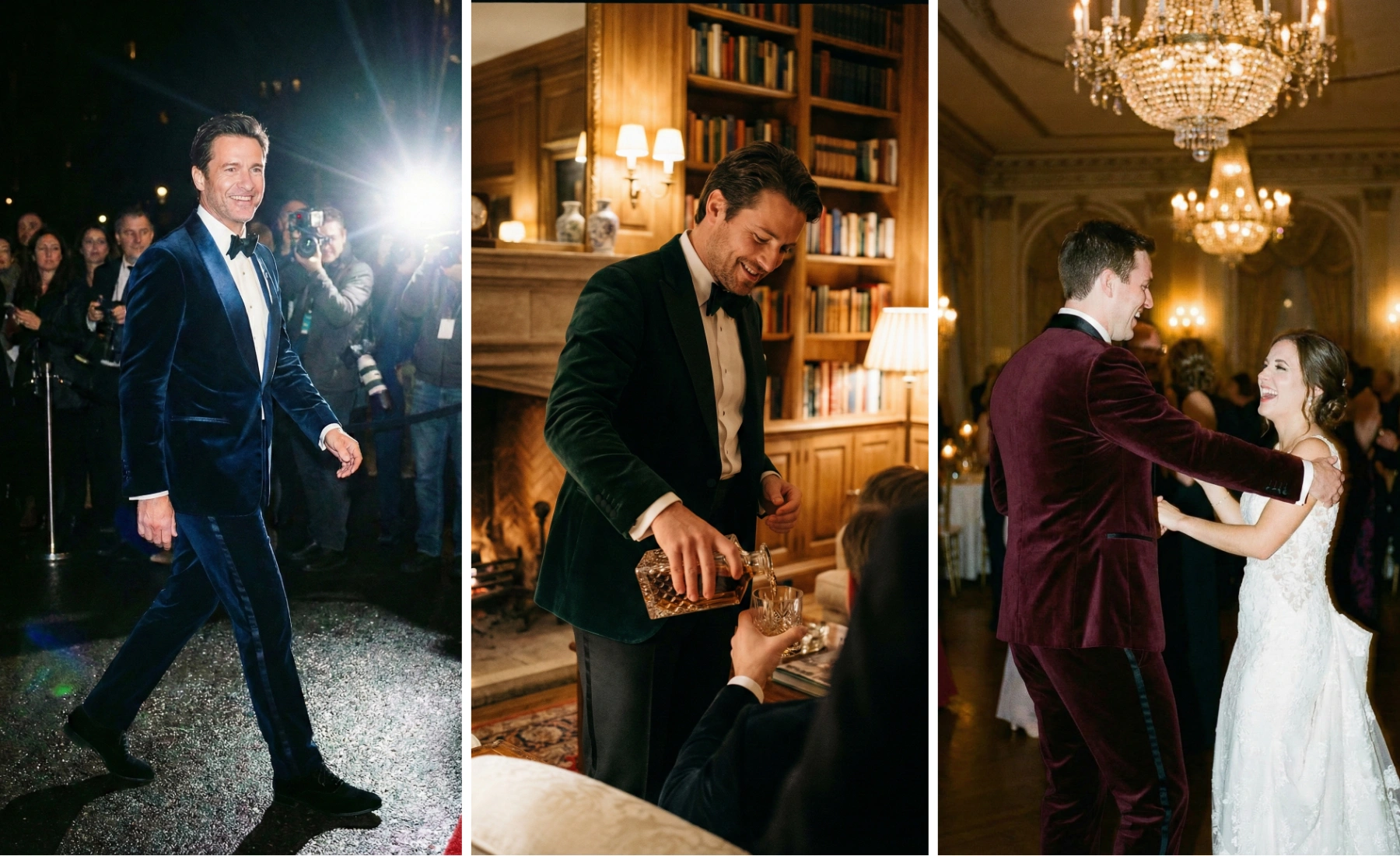
- Creative Black Tie: This is the primary domain of the velvet jacket and the perfect environment for a Creative Tuxedo. Unlike strict “Black Tie,” which demands adherence to a rigid uniform, this dress code invites personal expression within formal boundaries. It is the perfect opportunity to substitute the traditional monochrome wool for rich, textured velvet. Here, you are respecting the solemnity of the event through the silhouette, while distinguishing yourself through the sophisticated use of colour and fabric.
- The Art of Hosting: For intimate dinner parties or holiday gatherings at home, a tuxedo can often feel too stiff or “official.” Velvet is the ideal solution for the modern host. It nods to the historical purpose of the Smoking Jacket, garments originally designed for the comfort of the home. Wearing velvet signals to your guests that the evening is special, yet the softness of the fabric makes you appear approachable and relaxed, rather than armored in business-like formalwear.
- Winter Weddings (The Reception): For a groom, a winter wedding offers a unique sartorial opportunity. While the ceremony often calls for a classic black tuxedo or morning suit to maintain tradition, the evening reception is a time for celebration. Switching into a velvet jacket for the dinner and dancing not only provides practical warmth during the colder months but also visually distinguishes the “ceremonial” part of the day from the “party” aspect. It allows the groom to stand out as the protagonist of the evening under the venue lights.
Mastering the Colors of Elegance
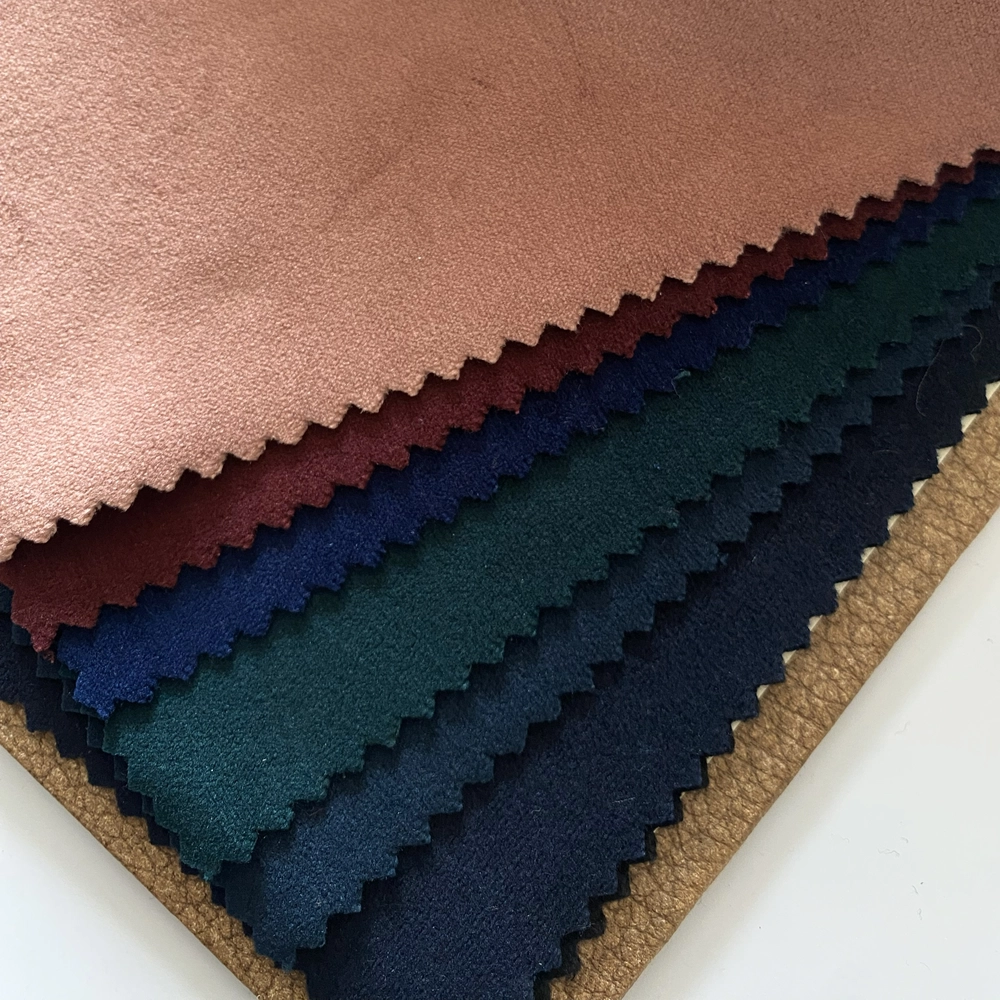
The allure of velvet lies in its texture. Unlike worsted wool which absorbs light flatly, the dense pile of velvet catches and reflects light, creating a lustrous effect known as “sheen.” This unique characteristic gives a velvet dinner jacket a visual depth that other fabrics simply cannot replicate.
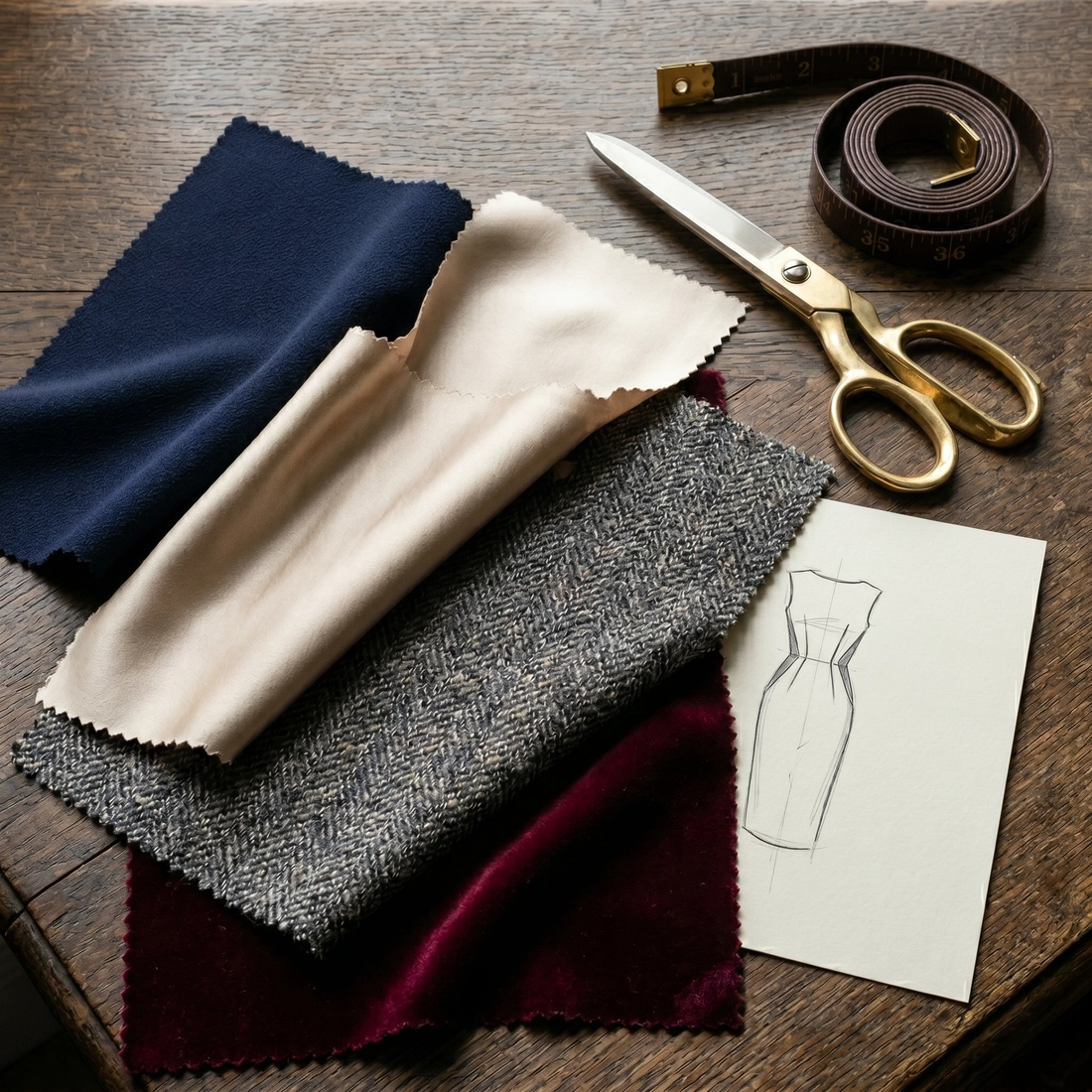
- Midnight Blue & Deep Navy: For those seeking a subtle departure from tradition, Midnight Blue is the most sophisticated choice. Under the artificial warm lighting of a ballroom or dinner party, black wool can sometimes appear dull or greyish. In contrast, deep navy velvet absorbs the light, appearing richer and often “blacker than black.” It offers a look of immense depth while maintaining the seriousness of formal wear.
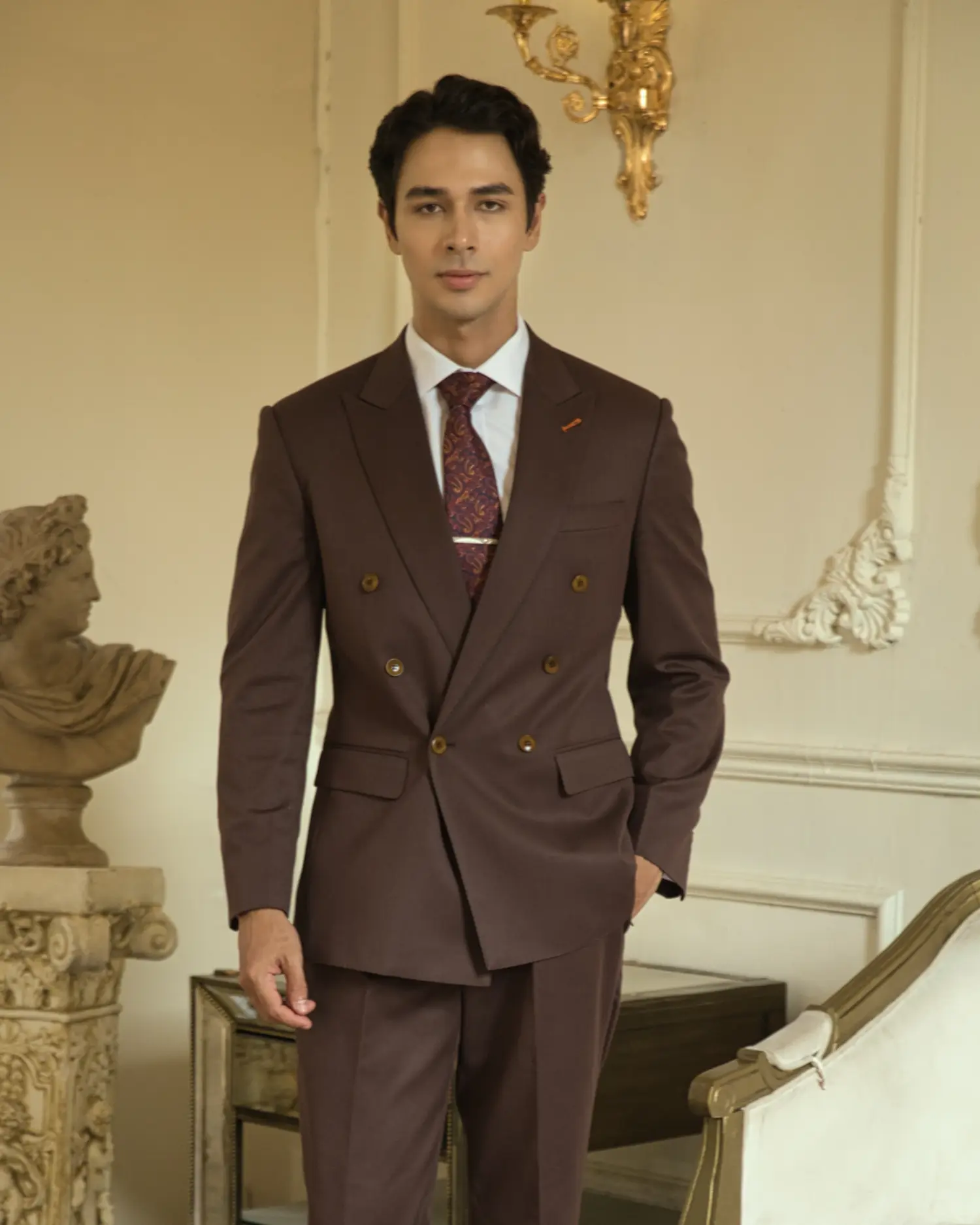
- Burgundy & Wine: This color family is the spiritual successor to the original Victorian smoking jacket. Burgundy and deep wine tones evoke a sense of warmth and regal heritage, making them particularly suited for winter festivities and holiday gatherings. It is a bold choice, but one that remains firmly rooted in classic menswear history.
- Bottle Green & Emerald: A nod to traditional British tailoring and the “old-money” aesthetic, Bottle Green is a distinctive choice for the gentleman who wants to stand out without shouting. It is less common than blue or red, offering a unique air of exclusivity. This shade works exceptionally well at private club events or creative black tie weddings, signaling a confident grasp of style.
Designing the Look: Style, Fit & Construction
A velvet tuxedo jacket is a statement piece, but the difference between a costume and a garment of distinction lies in the details. When designing your jacket, three key elements define the final aesthetic: construction, lapels, and trousers.
The Foundation: Why Soft Construction Matters
Velvet is, by nature, a substantial and dense fabric with a rich drape. Because the material already holds its shape well, adding heavy padding or stiff canvassing can make the jacket feel bulky and restrictive.
Modern tailoring favors “soft construction” or an unstructured make. By removing excess padding in the shoulders and chest, the jacket follows the natural line of the body. This creates an “effortless” silhouette – elegant but relaxed, allowing you to move freely through a crowded party. Unlike the rigid armor of a traditional bespoke tuxedo (read more in our [Guide to Bespoke Tuxedo Construction]), a velvet jacket should feel as comfortable as a second skin.
The Lapel Debate: Contrast vs. Self-Facing
When customizing your Velvet Dinner Jacket, the lapel choice dictates the level of formality and visual impact. Our Creative Tuxedo line offers three distinct approaches to framing your look:
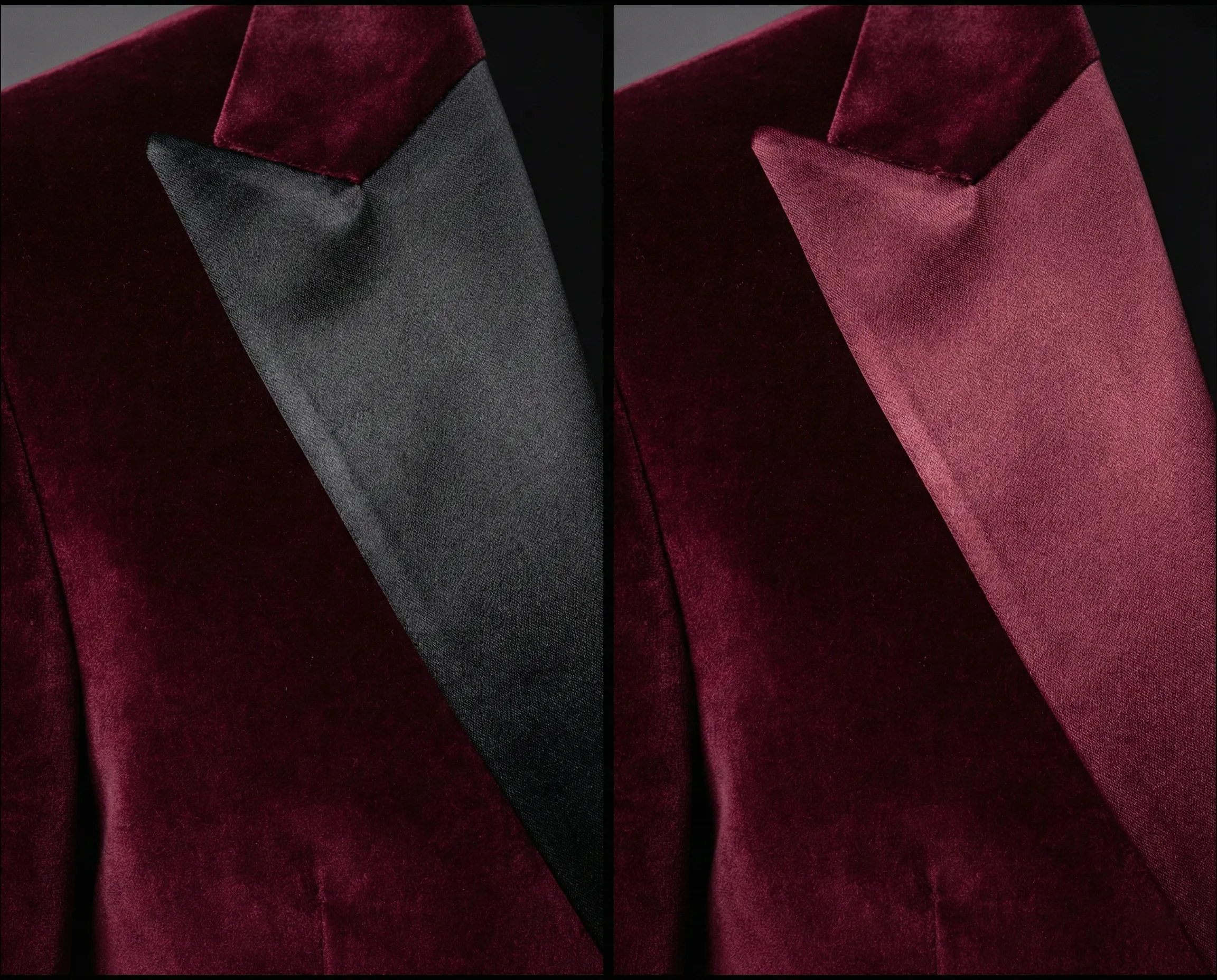
- Contrast Lapels (Black Silk – Satin or Grosgrain): This is the classic approach. The sheen of black silk creates a sharp, definitive frame for the chest and face. Crucially, the black lapel acts as a visual bridge, connecting the colored jacket to traditional black trousers, grounding the outfit in Black Tie history.
- Tone-on-Tone Satin (Matching Color Silk): A harmonious middle ground for the connoisseur. By selecting silk satin that perfectly matches the hue of the velvet (e.g., burgundy satin on burgundy velvet), you retain the traditional luster of a formal tuxedo without the stark interruption of black. This creates a sophisticated interplay of textures, shiny silk against plush velvet while maintaining a unified colour palette.
- Self-Facing (Velvet Lapels): The most modern, relaxed alternative. Here, the lapels are cut from the same velvet body fabric. This creates a seamless, minimalist silhouette that reduces contrast entirely. It creates a jacket that feels less like a “uniform” and more like a refined piece of evening tailoring, perfect for those who prefer a subtle, understated aesthetic.
The Trousers: Breaking the Monochromatic Rule
How you pair the jacket changes the entire “vibe” of the outfit.
- The Classic Approach: The golden rule of the dinner jacket is to pair a colored jacket with black tuxedo trousers (usually in wool or barathea). This grounds the outfit and keeps the focus entirely on the jacket.
- The “Full Velvet” Look: For a bold, red-carpet-worthy statement, you can opt for trousers made from the same velvet as your velvet suit jacket. This creates a full velvet suit – a look that creates a long, unbroken vertical line and exudes confidence. This style is increasingly popular for creative black tie events and winter weddings.
Completing the Look
Because velvet absorbs light, your accessories should provide the necessary contrast while strictly adhering to formal standards.
- The Shirt: Despite the creative nature of the jacket, the shirt must remain faithful to Black Tie rules. Do not wear a standard business shirt. You must opt for a proper Tuxedo Shirt featuring a Marcella (piqué) bib or a pleated front. These textures hold their own against the richness of the velvet. Crucially, the shirt should use studs (instead of standard buttons) to maintain the clean, ceremonial aesthetic required of a true tuxedo.
- Accessories: A black silk bow tie is standard to ground the look, but a velvet bow tie can add texture. For a more vintage, relaxed “host” aesthetic, consider swapping the tie for a silk scarf loosely draped around the neck.
Conclusion: The Mark of a Modern Gentleman
The velvet dinner jacket is not merely a seasonal alternative; it is a testament to sartorial maturity. It signifies a gentleman who has mastered the rules of Black Tie well enough to play with them. Whether you choose the understated depth of midnight blue or the bold charisma of a full velvet suit jacket, the garment serves as a personal signature in a sea of standard black uniforms.
Embracing the Creative Tuxedo is about more than just standing out; it is about feeling at home in your clothes. With the right soft construction and the perfect bespoke fit, a velvet jacket offers a level of comfort and confidence that rigid formalwear simply cannot match.
DISCOVER PHYIGITAL BESPOKE TAILORING