Peak vs. Shawl Lapel: Choosing the Right Profile for Your Physique
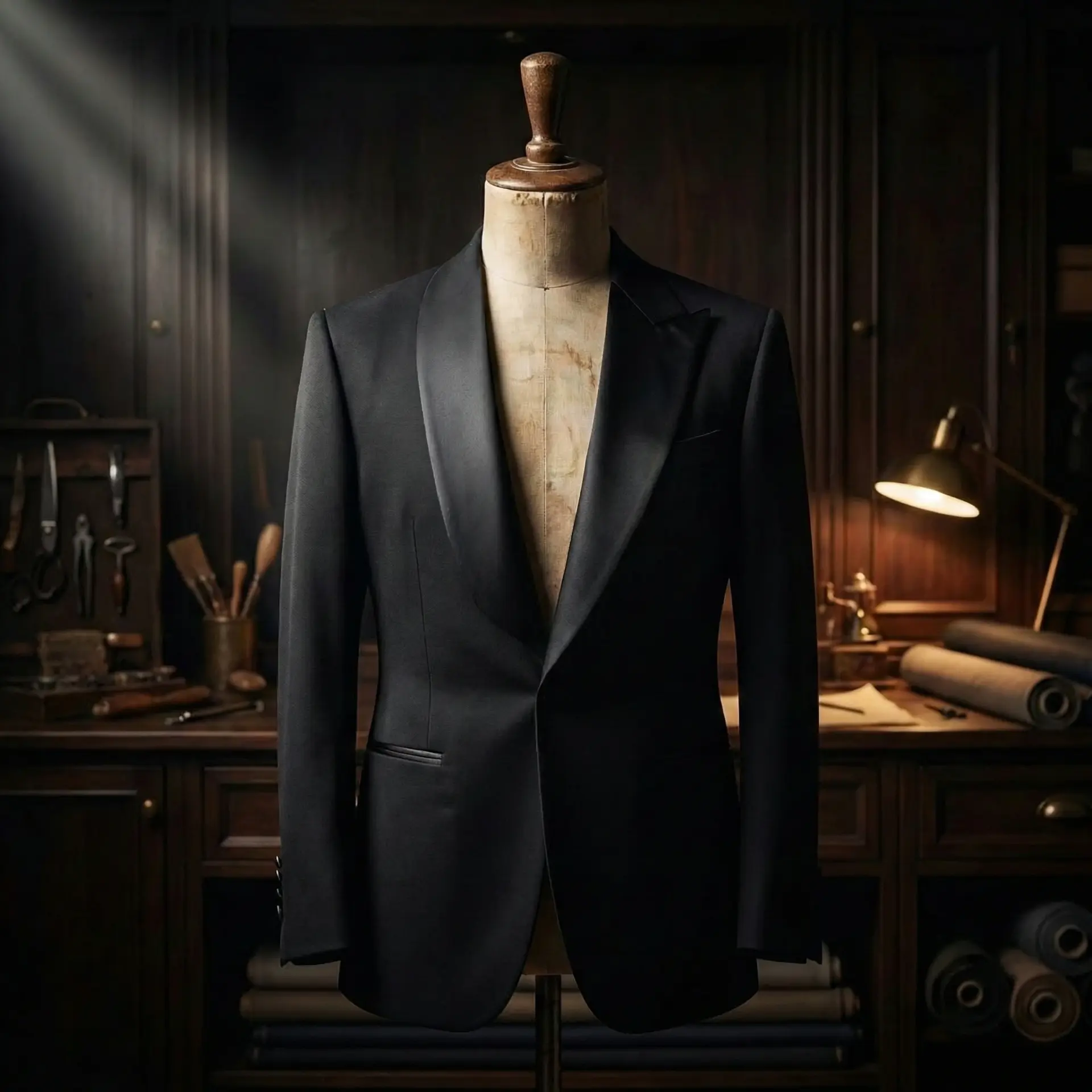
Deciding between a Peak vs. Shawl Lapel is arguably the most critical stylistic choice when commissioning a bespoke tuxedo. Yet, many gentlemen overlook how these contrasting profiles alter the body’s perceived geometry and balance. It is not merely a question of preference; it is a matter of proportion. This guide analyzes the technical mechanics of both styles within the strict rules of black tie, ensuring you choose the architecture that best commands your specific physique.
The Anatomy of a Tuxedo: Understanding the Contenders
Before analyzing which profile complements your physique, it is essential to understand the structural differences between these two icons of formal wear. Unlike a standard business suit, a tuxedo lapel is defined by its facing – a layer of contrasting silk (typically high-gloss Satin or the matte, ribbed texture of Grosgrain) that adorns the lapel.
For a comprehensive look at all components of formal wear, you can refer to our pillar post: [The Ultimate Guide to Black Tie: Mastering the Bespoke Tuxedo].
In terms of silhouette, however, the battle is strictly between the angular Peak and the curvilinear Shawl.
The Peak Lapel: The Architecture of Power
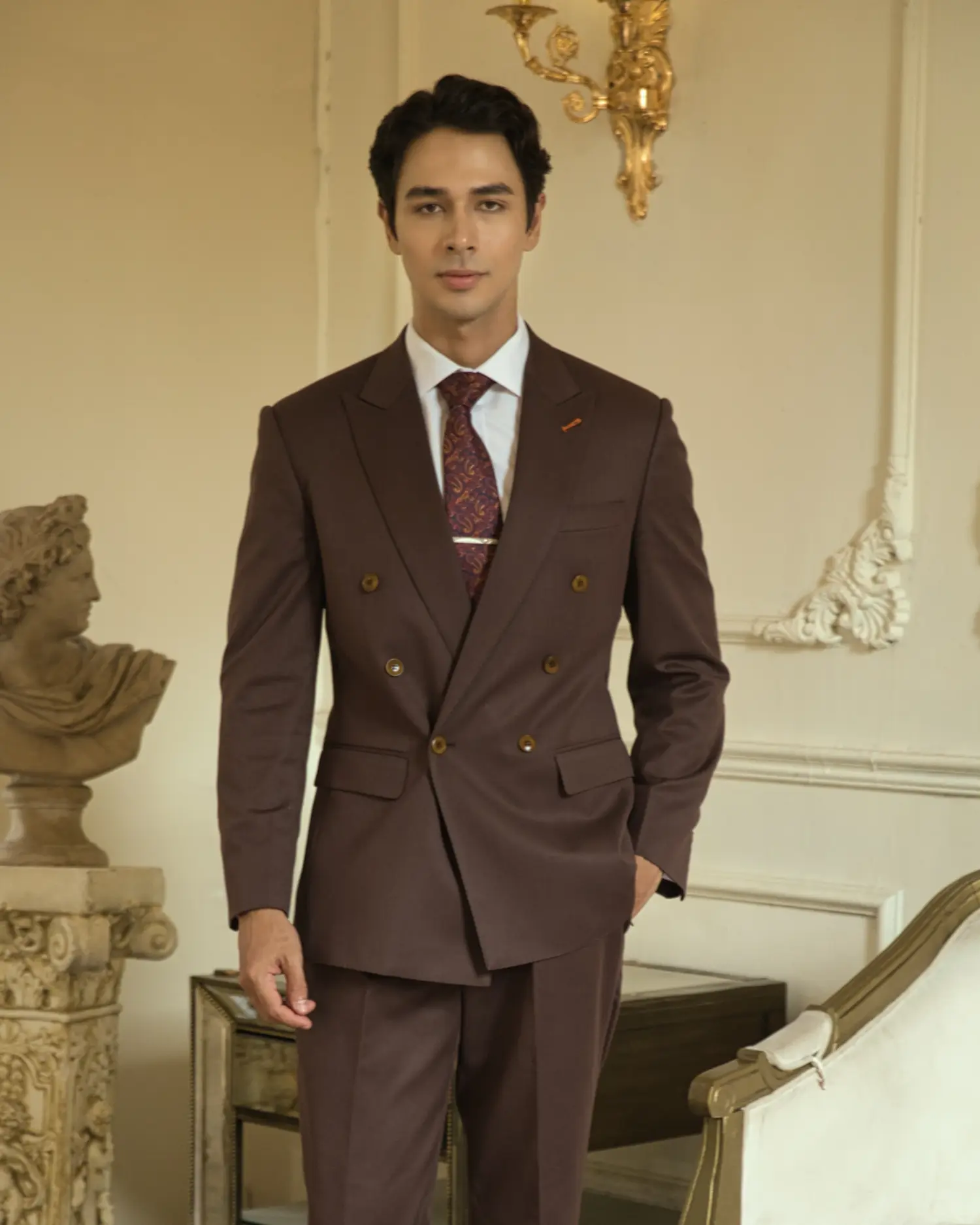
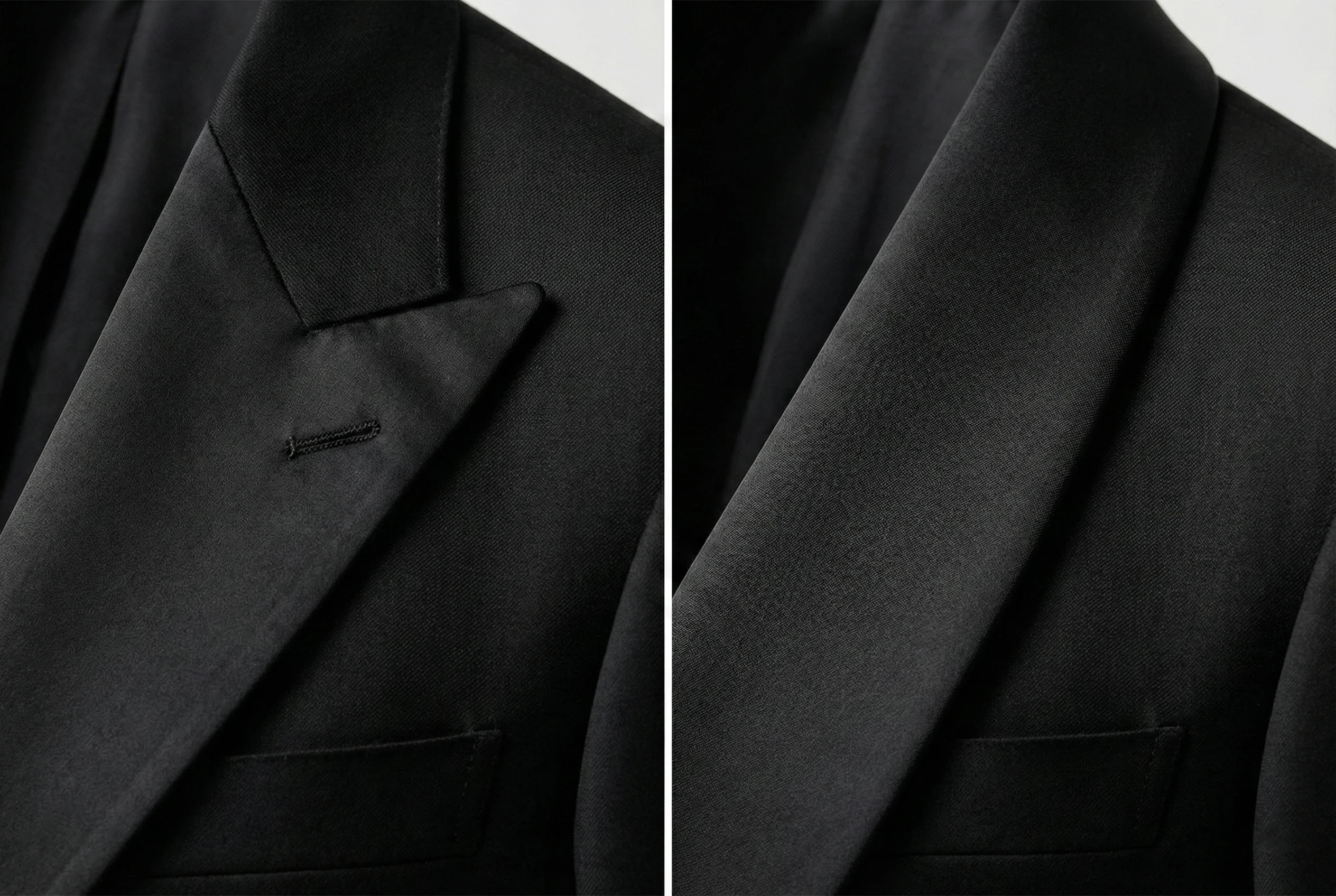
Derived from the highly formal tailcoat, the Peak Lapel is traditionally viewed as the most strictly formal option. It is defined by the lapel edges pointing upward and outward toward the shoulders, extending past the collar.
- The Definition: A structured, angular lapel where the gorge (the seam connecting the collar and lapel) is tight and the “peaks” sweep upward.
- Visual Effect: The Peak Lapel is all about width and structure. The upward-pointing lines create a powerful “V” shape across the chest. This naturally guides the observer’s eye upward and outward, visually broadening the shoulders and narrowing the waist.
- The Psychology: This profile projects authority and aggression. It is sharp, serious, and commands attention. It suggests a wearer who adheres to tradition and understands the “rules” of high formality.
The Shawl Lapel: The Curve of Sophistication
The Shawl Lapel (or Shawl Collar) traces its lineage back to the Victorian smoking jacket. It is distinct for having no gorge or notch, consisting instead of a continuous curve.
- The Definition: An unbroken ribbon of silk that rolls from the back of the neck down to the buttoning point, tapering as it descends.
- Visual Effect: The Shawl Lapel is all about fluidity and length. Because there are no sharp angles to interrupt the eye, it creates a long, continuous vertical line. This lack of horizontal breaks helps to elongate the torso rather than broaden it.
- The Psychology: This profile projects relaxed elegance. It is softer and less rigid than the Peak, evoking the golden age of Hollywood and the suave confidence of James Bond. It suggests a wearer who is comfortable, refined, and effortlessly stylish.
Matching Lapel to Physique: The Geometric Breakdown
In the world of bespoke tuxedo tailoring, we do not simply look at “fat” or “thin.” We analyze geometry. A master cutter assesses the relationship between your shoulders, waist, and hips to determine your specific body shape.
The goal is to create the illusion of the Trapezoid (broad shoulders tapering to a narrower waist). Your choice of Peak vs. Shawl Lapel is the primary tool to correct your natural proportions and achieve this ideal.
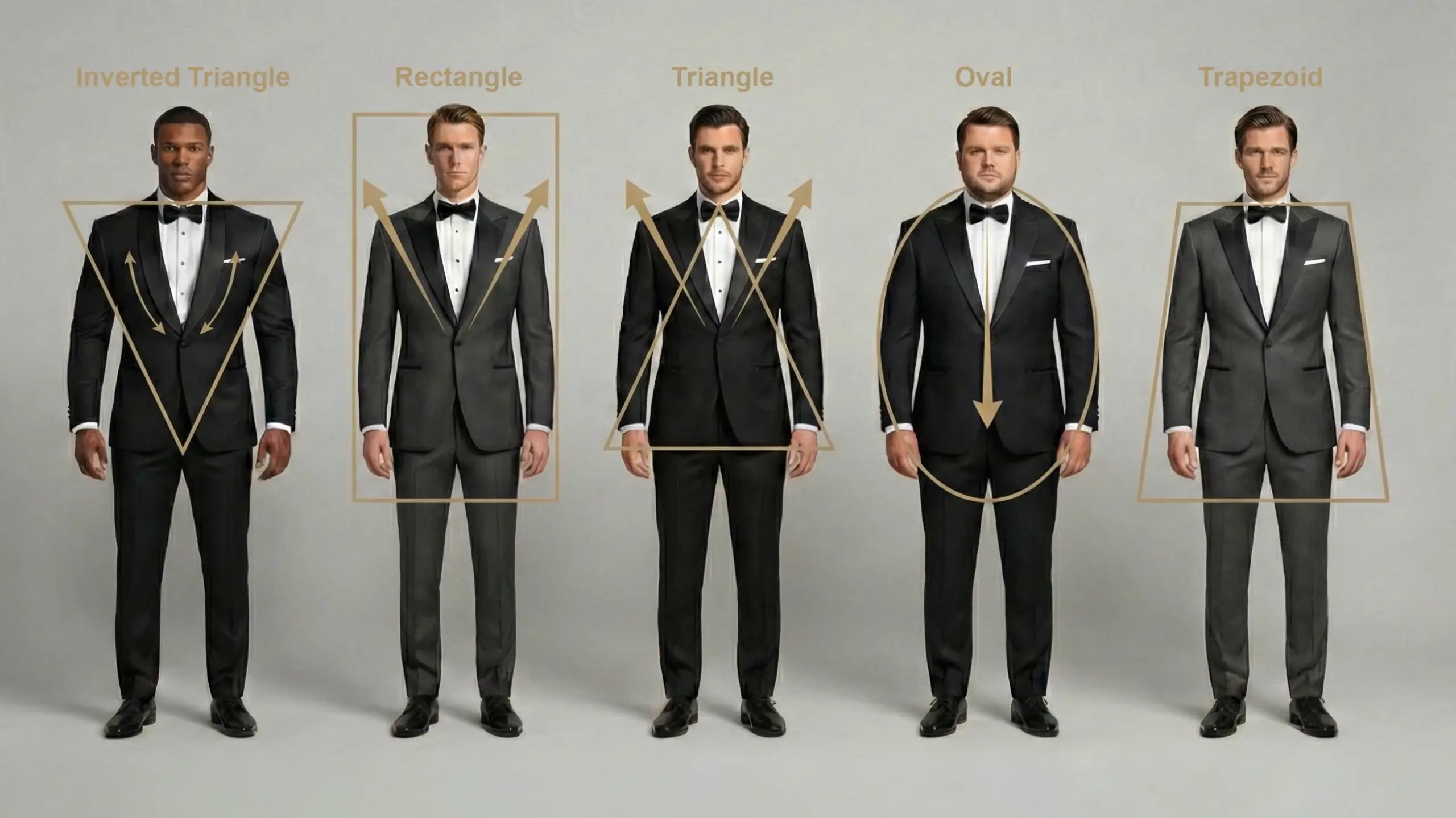
1. The Inverted Triangle (Athletic/Bodybuilder)
- The Profile: Defined by significantly broad shoulders and a narrow waist. While this is the athletic ideal, in formal wear, excessive bulk can appear aggressive or top-heavy rather than elegant.
- The Verdict: The Shawl Lapel.
- The Technical Mechanics: Your shoulder line is already dominant, so a Peak Lapel might over-exaggerate your width. The Shawl Lapel’s soft, rolling curve breaks up the massive expanse of the chest, transforming “brute strength” into “elegant power.”
- Height Adjustments: For taller gentlemen (over 182cm / 6’0”), a wider Shawl collar is advantageous as it fills the chest proportionally. However, if you have a more compact stature (under 172cm / 5’8”), stick to a thinner Shawl width; a heavy, thick roll on a shorter, muscular frame can inadvertently make you appear stocky rather than powerful.
2. The Rectangle (Columnar/Straight)
- The Profile: Shoulders, waist, and hips align with roughly the same width, often found on tall, lean frames. The primary sartorial challenge here is a lack of definition; without a visual break, the silhouette risks looking like a straight column.
- The Verdict: The Wide Peak Lapel.
- The Technical Mechanics: You need to artificially create width at the top to imply a waist taper. The sharp upward angles of a Peak Lapel (3.5 – 4 inches wide) extend the visual shoulder line outward, creating a dynamic “V” shape that nature didn’t provide.
- Height Adjustments: Height plays a crucial role here. Men with a towering, lanky frame (typically 185cm+ / 6’1”+) should go bold with a generous lapel width to handle the drama and fill out the chest. Conversely, those with a shorter vertical line (under 175cm / 5’9”) should choose a moderate width but request a higher gorge (notch position); this subtle adjustment draws the eye upward, lengthening the torso effectively.
3. The Triangle (Pear Shape)
- The Profile: Shoulders are narrower than the hips, common in men who carry weight in the lower torso. This naturally draws the eye downward to the midsection, whereas the goal of tailoring is to lift the gaze upward.
- The Verdict: The Structured Peak Lapel.
- The Technical Mechanics: The Peak Lapel is non-negotiable here. The “peaks” act as arrows forcing the viewer’s gaze toward your face. The extended width adds necessary bulk to your shoulders, visually balancing the hips. Avoid the Shawl Lapel, as its sloping shoulders will only make your upper body look narrower.
- Height Adjustments: If you are tall (above 180cm / 5’11”), you have the freedom to commission a wider lapel, which significantly broadens the shoulders to match the hips. For men of modest height (below 170cm / 5’7”), the strategy shifts to verticality: ensure the lapel gorge is placed high on the collarbone. This maximizes the vertical line of the lapel, helping you look taller while still delivering that essential shoulder-broadening effect.
4. The Oval (Round/Heavier Set)
- The Profile: Characterized by a midsection that is wider than the shoulders and hips, with soft, rounded features. The lack of vertical lines and hard edges makes it difficult to achieve a structured, authoritative look.
- The Verdict: The Peak Lapel (High Gorge).
- The Technical Mechanics: You must introduce sharp, straight lines to counteract the body’s natural roundness. A Peak Lapel creates a rigid structural frame around the chest. Strictly avoid the Shawl Lapel, as the rounded curves will echo and exaggerate the belly.
- Height Adjustments: Scale is everything. “Big and Tall” (185cm+ and heavy) clients must ensure the lapel width is substantial enough to harmonize with their chest size, a skinny lapel here looks disproportionate. For “Short and Stout” (under 170cm) builds, the most critical factor is the button stance. Ask your tailor for a lower buttoning point combined with the Peak Lapel; this creates a deep, long “V” opening that significantly elongates your torso.
5. The Trapezoid (The Balanced Ideal)
- The Profile: Broad shoulders tapering gently to a narrower waist. This is the “gold standard” silhouette in tailoring and the canvas every suit tries to mimic, presenting no structural challenges.
- The Verdict: Dealer’s Choice (Both work perfectly).
- The Technical Mechanics: Since your geometry is correct, you have the luxury of choice. Select the Peak Lapel for authority (Weddings) or the Shawl Lapel for sophistication (Galas).
- Height Adjustments: Even with perfect proportions, subtle tweaks enhance the look. Taller men (182cm+) can carry a lower button stance or a wider lapel to fill out their frame elegantly. Shorter gentlemen (under 172cm) should prioritize balance, keeping the jacket length and lapel widths moderate to maintain their natural, well-proportioned symmetry.
Context & Occasion: When to Wear Which?
While your physique dictates the geometry of your suit, the nature of the event dictates its mood. A bespoke tuxedo is not just clothing; it is a response to the environment you are entering. Choosing between a Peak or Shawl lapel can signal whether you are adhering to strict tradition or expressing personal flair.
Formal Weddings: The Authority of the Peak
For the most significant day of your life, or when attending a highly traditional ceremony, the Peak Lapel is the undisputed choice.
- The Vibe: Absolute formality, rigor, and ceremony.
- For the Groom: When commissioning bespoke wedding suits, the goal is often to stand out from the guests. The Peak Lapel, with its broad shoulders and aggressive “V” shape, distinguishes the groom as the central figure of the event. It photographs with a timeless, statuesque quality that anchors the wedding party’s aesthetic.
- The Verdict: If the dress code implies “strictly formal” or you are the host, the Peak Lapel commands the necessary respect.
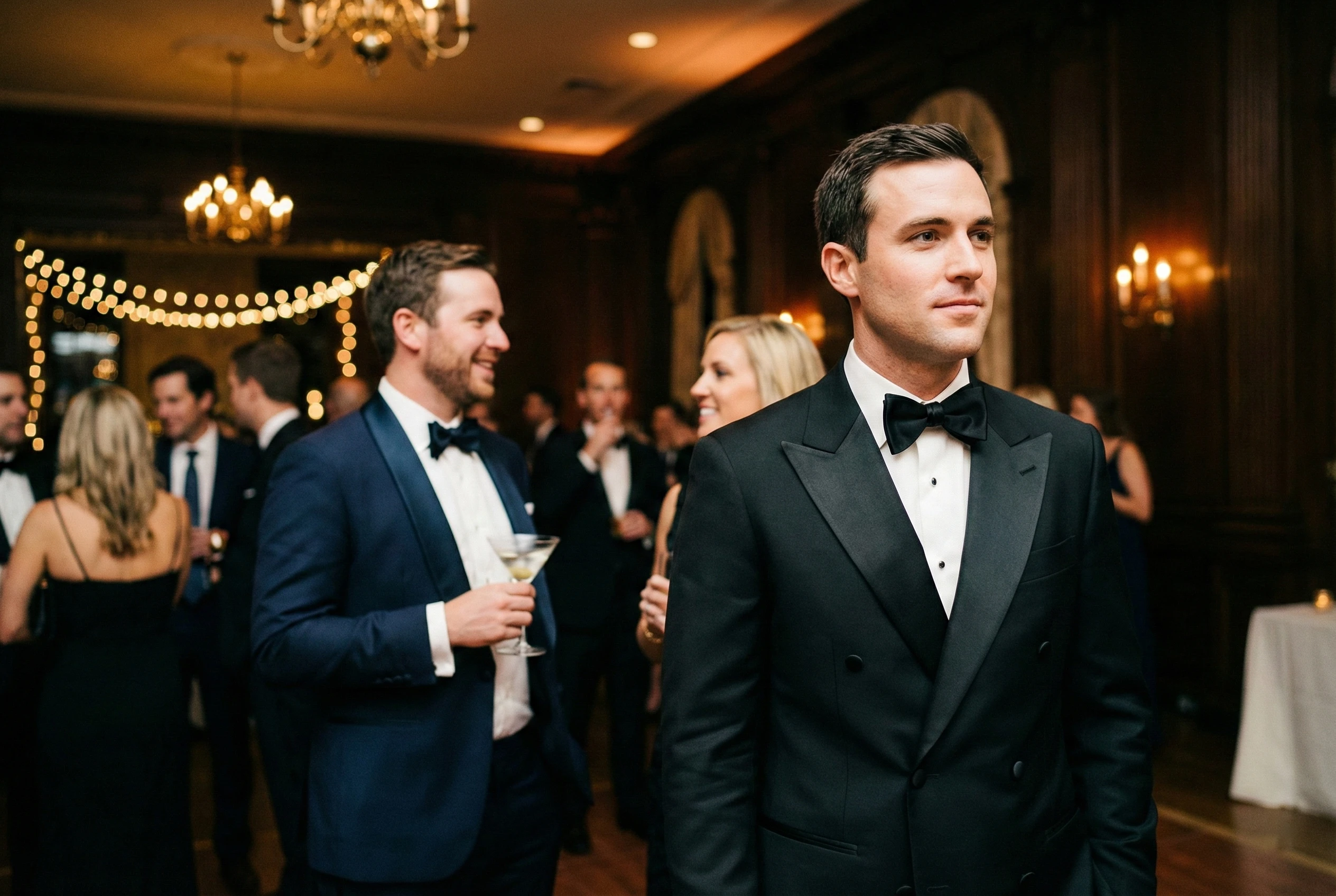
Red Carpet, Galas & Dinner Parties: The Flair of the Shawl
When the occasion shifts from ceremonial to celebratory, the rules relax, allowing for more stylistic expression within the black tie code.
- The Vibe: Sophisticated, suave, and celebratory.
- The Context: For charity galas, opera premieres, or exclusive dinner parties, the Shawl Lapel shines. It moves away from the “uniform” look of a wedding and towards the “evening wear” aesthetic of a gentleman at leisure.
- The Verdict: A bespoke tuxedo with a Shawl collar suggests you are a connoisseur of style. It is less about following rules and more about embodying the relaxed confidence of the 007 archetype, perfect for holding a martini glass and navigating a social cocktail hour.
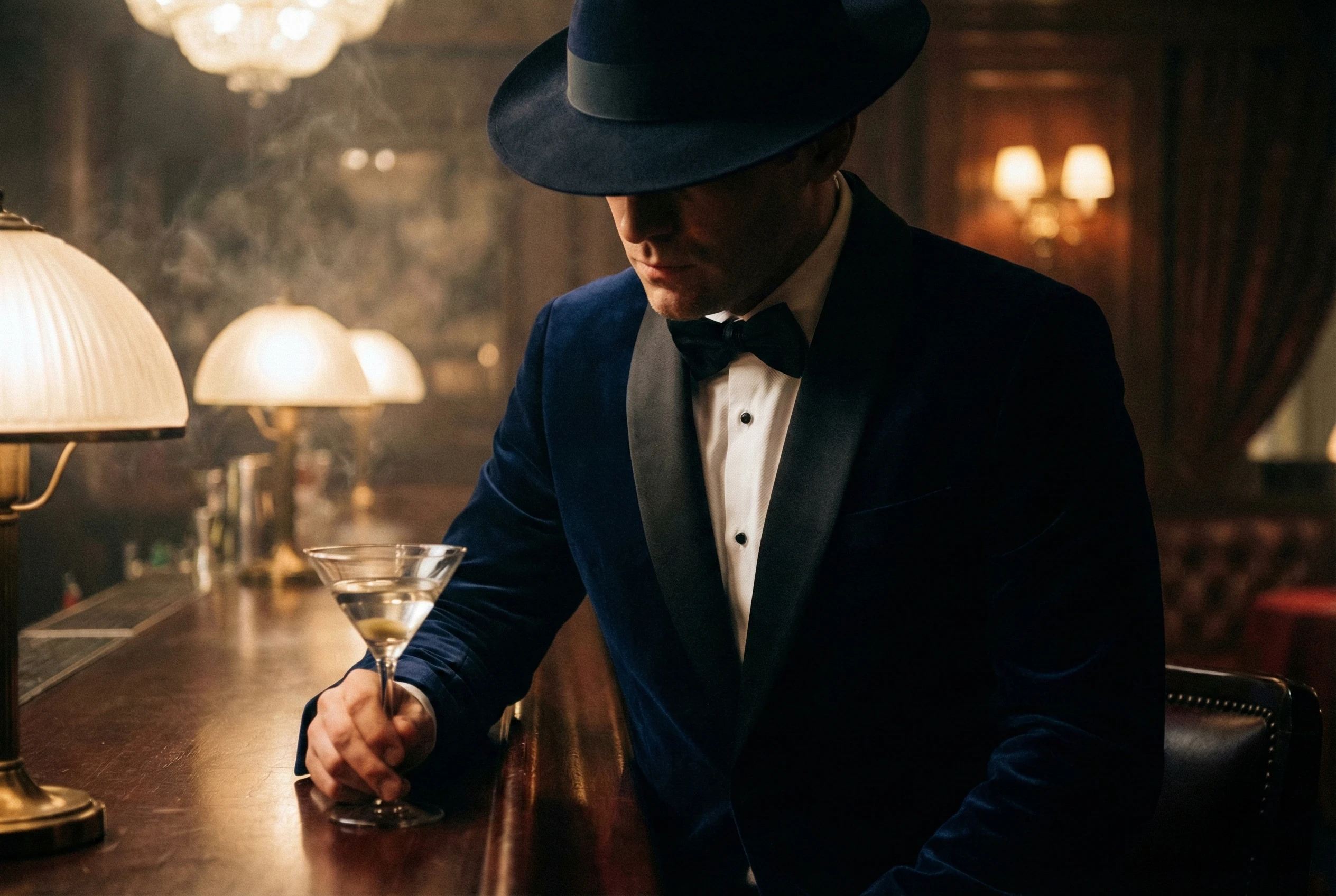
Conclusion: Making Your Decision
Ultimately, the choice between a Peak vs. Shawl lapel defines the architectural “voice” of your tuxedo. The Peak Lapel offers structure and power, utilizing sharp vertical lines to grant stature to the shorter gentleman and definition to a softer face. In contrast, the Shawl Lapel provides finesse and flow, employing continuous curves to harmonize a taller frame and soften angular features.
However, while geometry offers the rules, your confidence provides the finish. Whether you are designing bespoke wedding suits or a dinner jacket for the gala season, the “right” choice is the one that makes you stand taller. When commissioning your tuxedo, let these technical principles guide your selection, but allow your personal intuition to have the final vote.
DISCOVER PHYIGITAL BESPOKE TAILORING