Courtroom Psychology: Navy vs Charcoal suit – Which One Wins the Verdict?
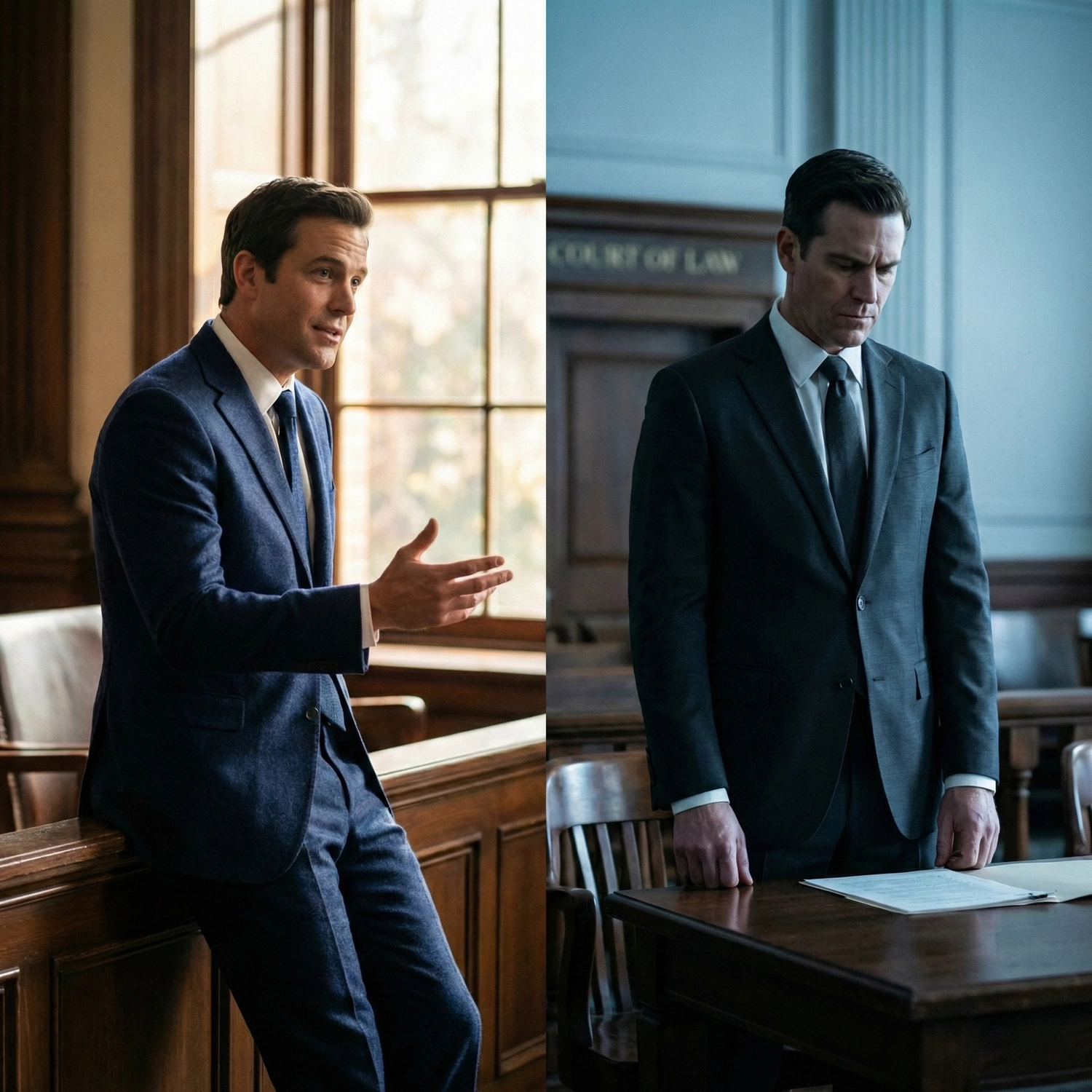
In litigation, your opening statement starts before you speak. Through a process called “Thin-Slicing“, the jury weighs your credibility the moment you enter the room. Your bespoke suit is your Visual Testimony. The choice between a Navy vs Charcoal suit is not a matter of style; it is a matter of tactical advocacy in your courtroom attire. One hue anchors the jury in trust, while the other projects the unwavering logic of the law.
To win the verdict, you must first master the psychology of the courtroom wardrobe.
Navy Blue: The Anchor of Trust and Human Connection
If Charcoal Grey represents the law, Navy Blue represents the lawyer as a human being. In the psychology of suit colors, Navy is the most universally trusted hue. It evokes stability, integrity, and a sense of calm: qualities essential for winning the jury’s sincerity.
The Psychological Profile: Stability and Openness
Unlike black, which can feel cold and closed-off, Navy Blue is an “open” color. Subconsciously, it signals that the wearer is constructive and reliable rather than purely adversarial. This creates a psychological “Safe Harbor,” making the jury more receptive to your narrative.
The “Midnight” Trap: True Navy vs. Midnight Blue
A common mistake for attorneys is opting for Midnight Blue, a shade so dark it is frequently mistaken for black.
- The Risk: Under the artificial, often yellow-tinted lighting of a courtroom, Midnight Blue can appear too severe or “snobbish.” It leans heavily toward formal evening wear, which may alienate a jury in a standard daytime civil trial.
- The Recommendation: Stick to True Navy or Dark Navy. These shades are unmistakably blue regardless of the lighting. They maintain the necessary level of formality while keeping you grounded and approachable.
The Defense Attorney’s Advantage: “Humanizing” the Case
For the Defense Counsel, Navy Blue is a strategic necessity. Your primary goal is to bridge the gap between your client and the jury.
- The Rapport Factor: Navy helps you appear more relatable. It signals that you are a protector of rights and a seeker of truth, rather than just a “hired gun.”
- The “One of Us” Effect: In many jurisdictions, Navy is the color of community service. Wearing it suggests your arguments are rooted in common sense and shared integrity.
Recommended Context: When to Deploy Navy
- Trial Phase: Ideal for opening statements where building an initial connection is paramount.
- Case Types: Family law, personal injury, or any trial where the jury’s empathy and trust in your personal credibility are the deciding factors.
- Expert Pairing: To maximize the “Trust Factor,” pair your bespoke Navy suit with a crisp white Royal Oxford shirt and a matte silk Grenadine tie. Avoid high-gloss fabrics; the goal is a sophisticated, non-reflective finish that commands respect without shouting for attention.

Charcoal Grey: The Silhouette of Logic and Unwavering Authority
In the debate of Navy vs Charcoal suit, if Navy Blue is the color of the ‘advocate,’ Charcoal Grey is the color of the ‘Law’ itself. In the psychological landscape of the courtroom, charcoal serves as a neutral, stoic backdrop that forces the observer to focus on the cold, hard evidence.
The Psychological Profile: Stoicism and Intellectual Rigor
Charcoal is the ultimate neutral. Psychologically, it signals that the wearer is objective, analytical, and intellectually disciplined. Because grey lacks the emotional warmth of blue, it creates a sense of “professional distance.” This is a powerful tool when you need to be perceived as an expert or a guardian of the truth who is unmoved by emotional appeals.
The Prosecution’s Weapon: The Face of Justice
For a Prosecutor or a Plaintiff’s Attorney, Charcoal Grey is often the superior tactical choice.
- The “Unmovable Object” Effect: Charcoal makes you appear more seasoned and grounded. It suggests that your case is built on a foundation of facts that cannot be shaken.
- Eliminating Distraction: By wearing a dark, matte grey, you minimize your physical “noise.” You become the conduit for the truth, rather than the center of attention.
The “Matte” Mandate: Texture & Maintenance
A critical bespoke detail for Charcoal is the finish of the wool and its upkeep.
- Texture Over Sheen: Opt for a Matte Worsted Wool or a subtle Sharkskin weave. This gives the suit depth without the unprofessional shimmer of high-sheen fabrics under fluorescent lights.
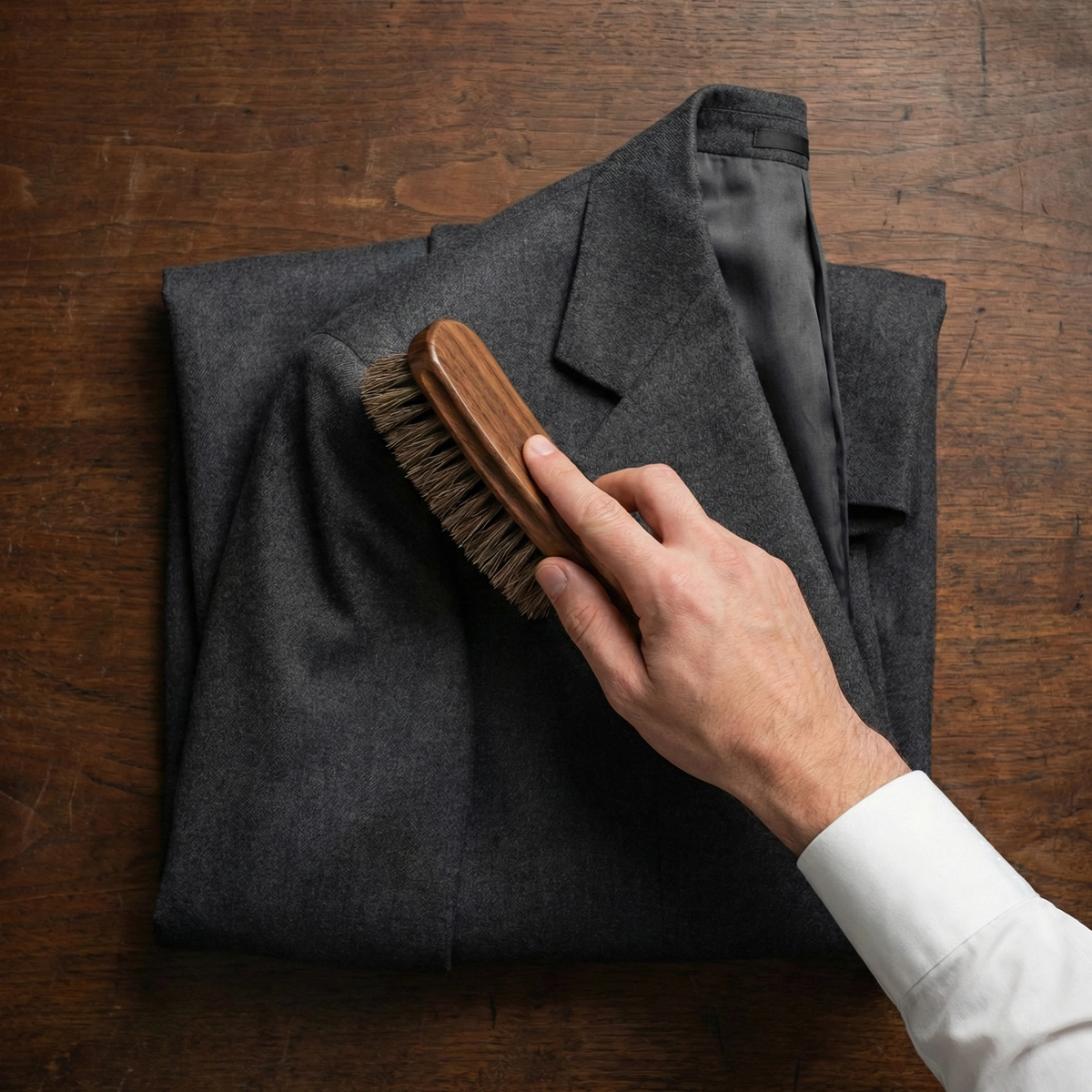
- The “Cleanliness” Warning: Charcoal Grey is notoriously unforgiving. Because the fabric is dark and matte, it acts as a high-definition background for dust, lint, or dandruff.
- The Risk: Your “immaculate silhouette” collapses the moment a juror spots debris on your shoulders. It signals a lack of personal discipline that can subconsciously reflect on your case management.
- The Solution: A meticulous lawyer always keeps a lint brush in their chambers. Before you stand to address the bench, a quick check of the shoulders is mandatory to maintain that “beyond reproach” image.
Recommended Context: When to Deploy Charcoal
- The “Expert” Cross-Examination: Perfect for technical, medical, or complex financial data.
- Federal & Appellate Courts: Where the atmosphere demands the highest level of “Gravitas.”
Expert Pairing: Pair your Charcoal grey suit with a crisp white shirt and a deep burgundy or forest green tie. The burgundy-on-charcoal look is the classic “Power Combination”, signaling passion and energy, but anchored by the sobriety of the grey.
The Case Against Black: Why Darkness Can Be Deceptive
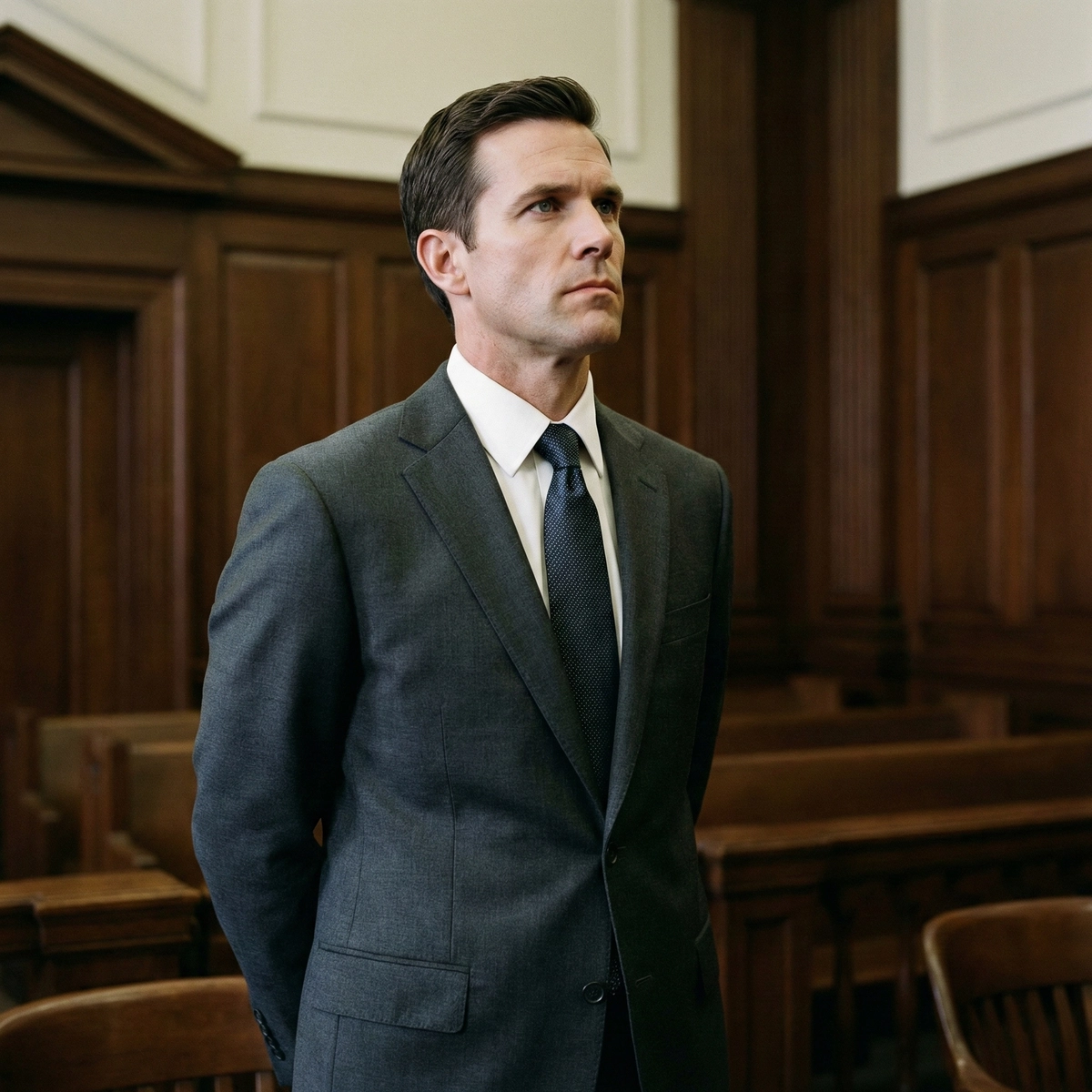
To the uninitiated, a black suit seems like the pinnacle of formality. However, in the high-stakes environment of a trial, wearing a pure black suit can be a “sartorial error” that sends the wrong message to the bench and the jury.
The “Funereal” Risk: The Weight of Negativity
In Western legal tradition, black is the color of mourning.
- The Psychological Burden: Wearing black from head to toe creates a heavy, somber energy. It evokes “loss” and “tragedy” rather than “justice” or “resolution.”
- The Jury Impact: If a Defense Attorney wears black, they may subconsciously reinforce the tragedy of the case. You want to project hope and a path forward (Navy) or logical clarity (Charcoal), not a permanent state of mourning.
The “Gala” Misstep: Daytime vs. Evening Rules
Traditional sartorial codes, to which many older, conservative judges still adhere, dictate that black is strictly for evening wear or formal “Black Tie” events.
- The “Out of Place” Factor: Wearing a black suit in a sunlit courtroom at 10:00 AM can make you look like you are heading to a gala or, worse, that you are still wearing your outfit from the night before.
- The Tuxedo Effect: Under bright lights, a black suit often looks like a tuxedo missing its silk lapels. It shows a lack of “sartorial intelligence”: a subtle signal that you might also overlook nuances in a legal brief.
The Social Distance Problem: The “Security Guard” Paradox
Black is a color of absolute power, but it is also the color of “exclusion.”
- The Authority Gap: A black suit creates a massive psychological barrier. It can make you look unapproachable, severe, or even elitist.
- The Identity Confusion: Unless it is a world-class bespoke piece, a standard black suit is the “uniform” of security personnel or service staff. In a courtroom, you never want your status to be ambiguous. You are the advocate; you need to stand apart through the richness of Navy or the sophistication of Charcoal, not the starkness of Black.
The Lighting Trap
Courtrooms are notorious for harsh, fluorescent, or yellow-tinted lighting.
- The Aesthetic Fail: Black absorbs all light, which can make your complexion look sallow, tired, or sickly; hardly the image of a vibrant, energetic litigator.
- The Flatness: Pure black hides the beautiful details of your bespoke tailoring (the pick stitching, the lapel roll, the drape). You pay for these details; don’t let them disappear into a dark void.
The Verdict on Black: Save the black suit for funerals, gala dinners, or very specific “Black Tie” professional awards. For the courtroom, it is far better to be the man in the Midnight Navy (which appears black but retains a hint of life) than the man in pure black.
Tactical Selection: Matching Your Armor to the Jury & Venue
A successful trial is an exercise in persuasion. To win, you must align your visual presence with the expectations of your audience while respecting the sanctity of the venue.
The Jury Box: Reading the Room
The “Halo Effect” only works if the jury feels a subconscious alliance with you. Your suit color should bridge the gap between your expertise and their perspective.
- The Blue-Collar Jury: In local or rural jurisdictions where the jury consists of working-class citizens, Navy Blue is your strongest asset. It projects an image of the “Community Protector.” It is relatable, patriotic, and avoids looking like a “city lawyer” who is there to talk down to them.
- The White-Collar/Professional Jury: In trials involving corporate hubs or specialized professionals (engineers, doctors, executives), Charcoal Grey signals intellectual peerage. It tells the jury that you are a serious, analytical peer who speaks the language of logic and data.
The Venue Factor: Local Courts vs. Federal Bench
Every courtroom has its own “gravity.” Your attire must reflect the weight of the institution you are entering.
- Local & State Courts: These venues are often more informal and community-driven. A True Navy suit is the “safe harbor” here. It is respectful without being intimidating, allowing you to build rapport with local court staff and judges who value approachability.
- Federal & Appellate Courts: The stakes here are at their peak. These courts demand a higher level of “Sartorial Gravitas.” This is the domain of Charcoal Grey or a very deep Dark Navy. In these hallowed halls, your silhouette should be sharp and uncompromising: typically featuring a Roped Shoulder to project maximum authority during high-level legal arguments.
The Technical Foundation: Beyond Color
It is important to remember that color is merely the “paint” on the house; the construction is the foundation. Even the perfect navy suit or charcoal grey suit will fail if the tailoring lacks structure.
- The Silhouette: To truly command a Federal Court, your suit must be a Full-Canvas construction. This ensures the jacket retains its “armored” shape even as you move between the lectern and the bench.
- The Power Line: No matter the color, ensure your shoulders are immaculate. A Roped Shoulder creates a visual anchor, making you appear broader and more stable, a metaphor for your legal position.
To master the architecture behind the aesthetic and ensure your suit is built to win, refer to our comprehensive [The Attorney’s Armor: The Ultimate Guide to Bespoke Suits for Modern Lawyers].
Conclusion: Winning Before the First Word
In the courtroom, color is not a decoration; it is a tactical decision.
Navy Blue remains your primary tool for building trust and human connection, while Charcoal Grey is your weapon for asserting intellectual authority and the cold logic of the law. A master litigator does not choose based on preference, but on the objective of the trial.
By mastering this visual advocacy, you ensure the jury begins to believe in your credibility before you even utter your first “May it please the Court.” You aren’t just dressing for a trial; you are engineering a victory.
DISCOVER PHYIGITAL BESPOKE TAILORING