The Art of Arrival: Mastering the Bespoke Travel Suit
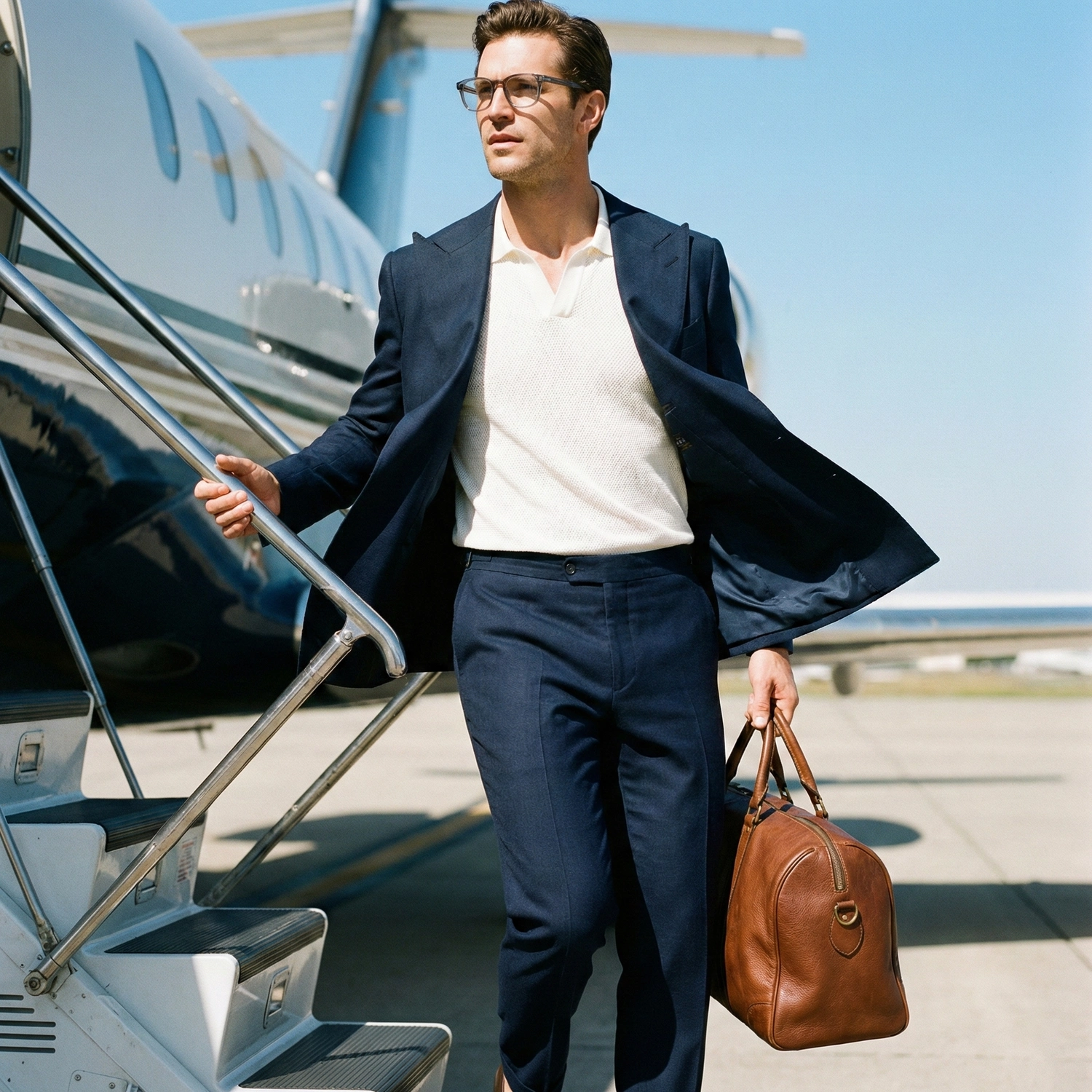
A bespoke travel suit is more than just attire; it is a statement of intent. In an era where travel often equates to a compromise between comfort and style, the modern gentleman understands that he does not need to choose. While the prevalence of leisurewear in departure lounges is understandable, it overlooks a crucial element of the journey: The Arrival.
Stepping off a long-haul flight is your first opportunity to exert “soft power.” Whether you are greeted by a business partner or checking into a resort, a composed silhouette signals respect for the occasion and, more importantly, respect for yourself. This guide is not about enduring a flight in a stiff uniform; it is about discovering a higher level of ease. By combining the finest natural materials with the liberated construction of bespoke tailoring, you can navigate the globe in absolute comfort, proving that true luxury is the ability to feel at home anywhere in the world.
Chapter 1: The Business Trip – The High-Twist Wool Suit
The Scenario: You land after a ten-hour flight and head straight to a boardroom negotiation or a city hotel. There is no time for steaming or pressing. You need a garment that breathes, moves, and recovers instantly.
The Selection: High-Twist Wool (Fresco)
For the frequent flyer, the secret to resilience lies in the architecture of the yarn. The ideal choice for this journey is High-Twist Wool (often known as Fresco or Traveler wool).
The Science of Resilience
Why does this specific fabric work where others fail? The answer lies in bespoke tailoring engineering, not chemical coatings.
- The “Spring” Effect: Unlike standard soft wools that break and crease under pressure, high-twist wool is spun with high torsion, creating a microscopic coil-like structure. This gives the fabric a natural memory. You can sit comfortably for hours, and the moment you stand, the fabric snaps back to its original shape, shedding wrinkles without the need for artificial chemicals.
- Comfort Note: While traditional Fresco is prized for its crispness, it can feel slightly dry to the touch. A master of bespoke tailoring will recommend a “Half-Lined” or “Quarter-Lined” construction using high-quality Cupro. This ensures the suit glides smoothly over your shirt while maintaining the superior airflow of the wool’s open weave.
The Palette: Navy or Charcoal
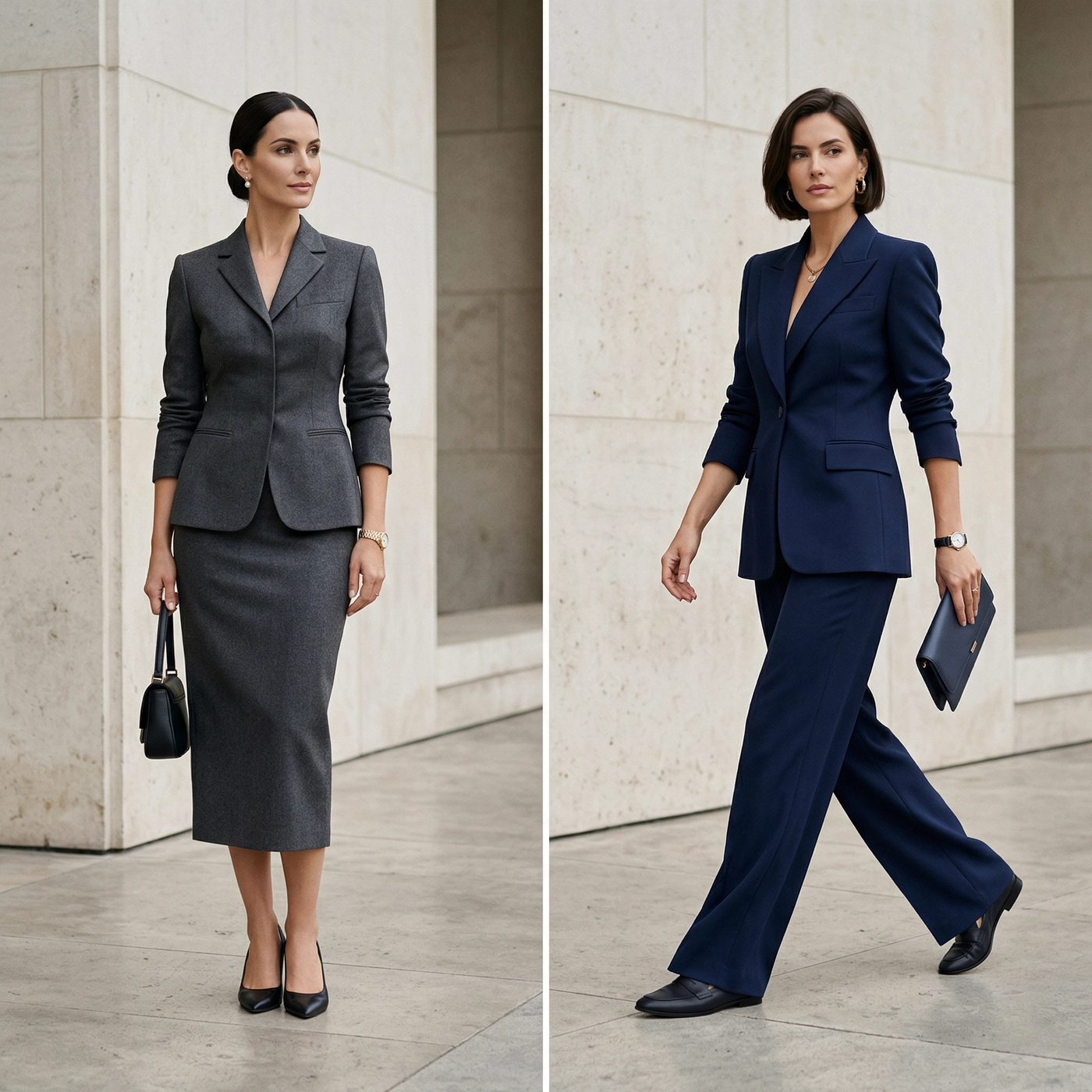
Function must serve formality. A classic wool suit in Deep Navy or Charcoal Grey remains the gold standard. These shades not only command immediate authority in international business hubs but also offer practical forgiveness, concealing minor travel mishaps better than lighter tones.
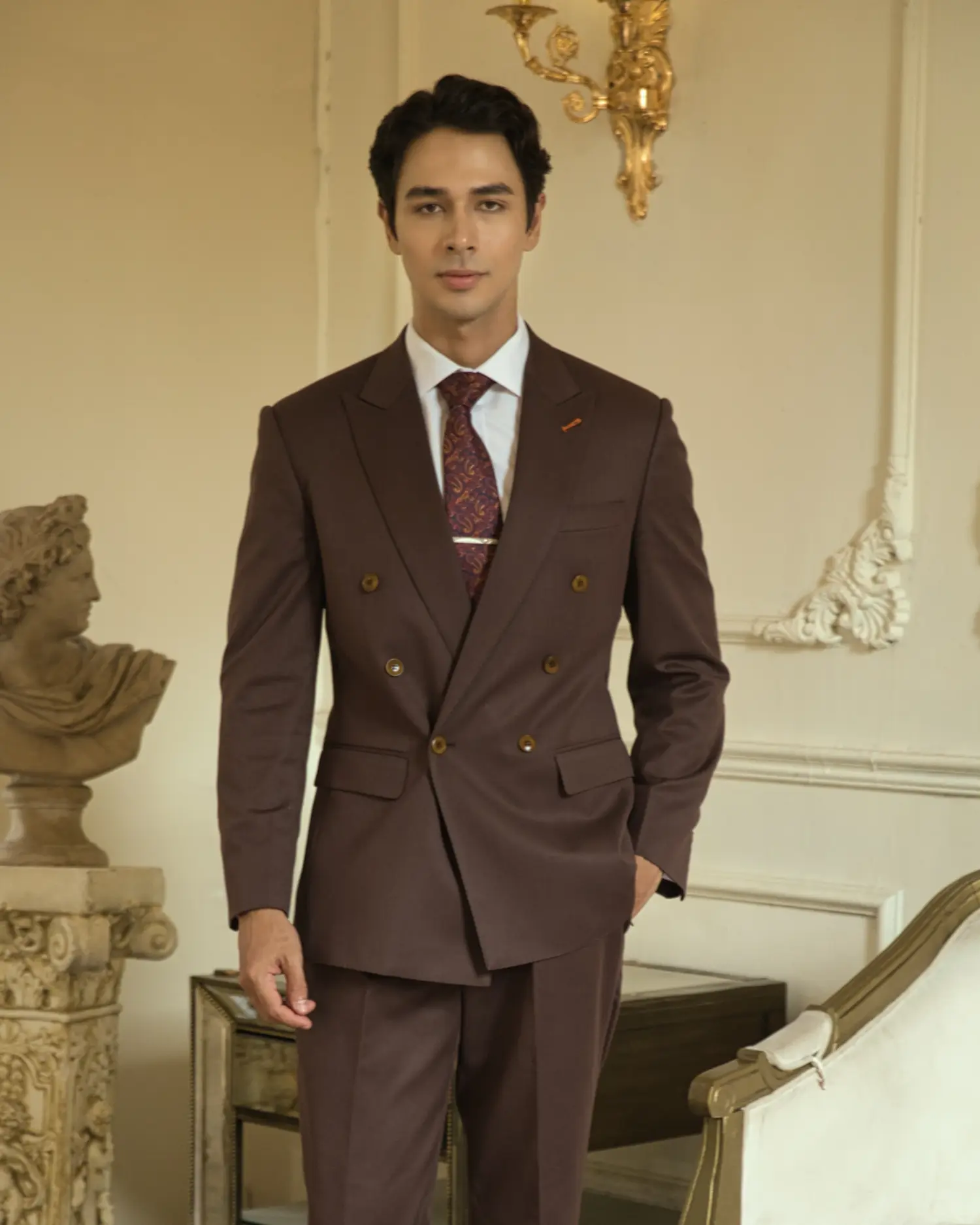
Styling Tip: Forget the rigid padding of the past. For travel, request an “Unstructured” or “Soft Tailoring” construction (think Neapolitan style). By removing the heavy shoulder pads and stiff canvas, the jacket fits like a second skin, lightweight and pliable as a cardigan, yet it retains the sharp, professional silhouette required to command the room.

Chapter 2: The Resort Trip – The Bespoke Linen & Cotton Suit
The Scenario: You leave the city behind for a seaside villa or a tropical retreat. The goal here shifts from authority to leisure. You want to look polished enough for a sunset dinner but relaxed enough to signal that you are “off the clock.”
The Selection: The Bespoke Linen Suit
If High-Twist Wool is for the boardroom, Linen is for the soul. However, many men avoid linen due to a fear of wrinkles.
- The Mindset Change: In the world of high-end travel style, the wrinkle is not a defect; it is a signature of sophisticated leisure. Italians call this Sprezzatura, a studied nonchalance. A pristine, synthetic suit in a tropical climate looks artificial. Conversely, the gentle creases of a bespoke linen suit (especially one crafted from heavy Irish linen) signal that you are comfortable in your environment and confident enough to prioritize natural breathability over rigid perfection.
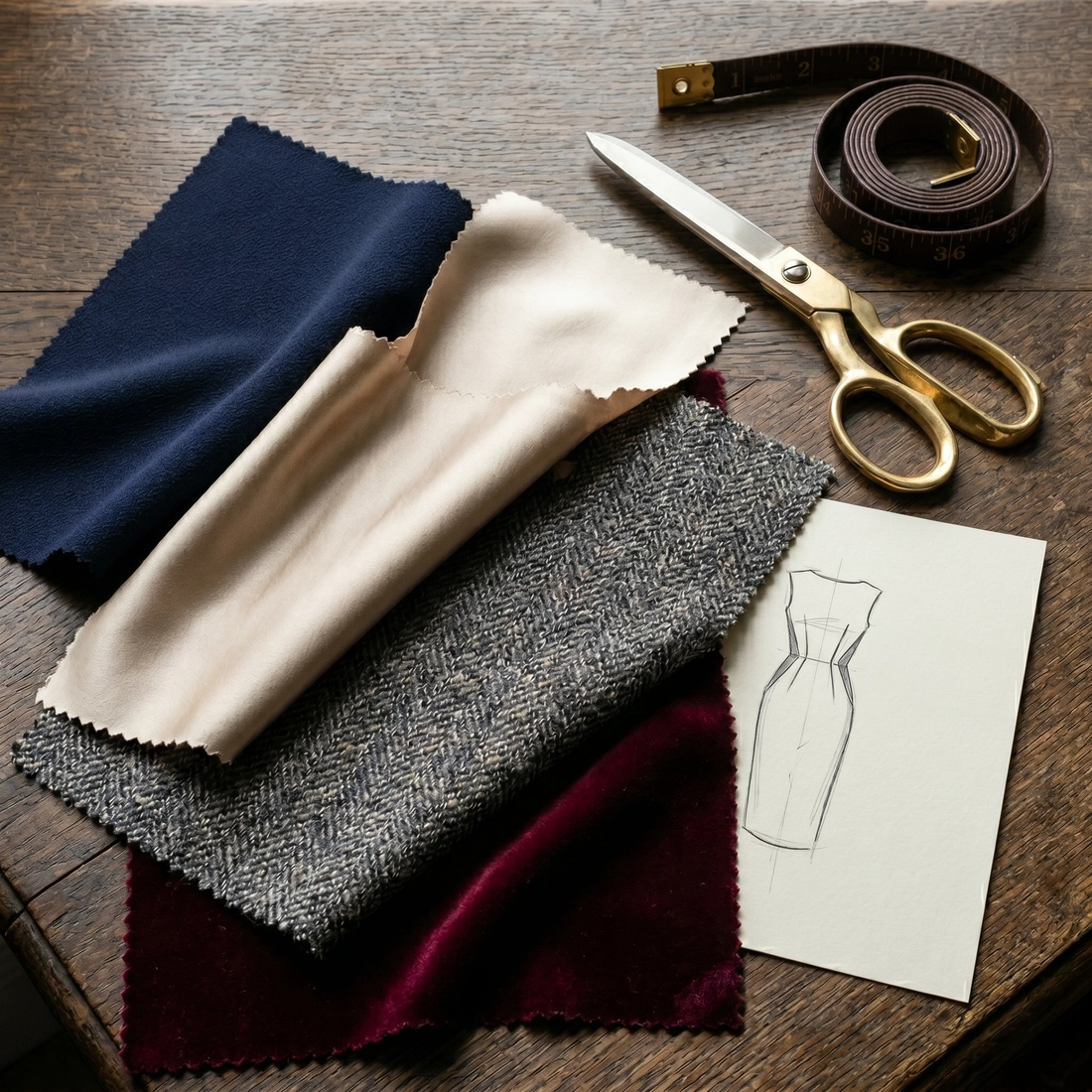
- Crucial Quality Note (The Travel Upgrade): While Heavy Irish Linen is the choice of the purist, the modern traveler faces a specific challenge: Elasticity. Pure linen has almost no natural stretch, which can lead to “bagging” (loss of shape) at the knees and elbows after a long flight. A smarter investment for the global nomad is a Wool-Silk-Linen Blend (often called the “Holy Trinity” of summer fabrics). In this engineering masterpiece, the wool provides the mechanical “memory” to prevent bagging, the silk adds tensile strength, while the linen retains that essential summer texture. (To explore these exclusive fabrics, visit the Rosie Hong fabric collection).
- Alternative Option (Solaro & Drill): If pure linen feels too unstructured, look to a robust Cotton-Linen Drill or the iridescent charm of Solaro, a classic staple of Italian bespoke tailoring. These fabrics offer a more masculine drape and hold their shape better than pure linen, yet they retain the vital heat-reflecting properties needed for the sun.
The Palette: Earth Tones (Step away from the corporate Navy. For resort wear, look to the colors of the landscape).
Earth & Nature: Shades of Tobacco Brown, Olive Green, Warm Beige, or Cream reflect the sunlight rather than absorbing it. These tones harmonize beautifully with the relaxed architecture of resort destinations, creating a visual softness that navy cannot achieve.
Styling Tip: The Art of Versatility The true value of this suit lies in its ability to be broken apart (The Spezzato technique). A bespoke tailoring investment should work overtime. Wear the full suit for the arrival or a formal dinner. The next day, pair the jacket with tailored chinos for a relaxed lunch, or, if the setting allows, wear it over tailored swim shorts for a chic beachside aperitivo. It is one suit that unlocks an entire weekend wardrobe.

Chapter 3: The Golden Rule – Swap the Shirt (Polo & Knitwear)
The Core Instruction: The weakest link in a traditional bespoke travel suit is the dress shirt. While rigid collars and stiff cuffs are essential for the boardroom, they are the enemies of travel comfort. Trying to sleep in a seat while a starched collar digs into your neck is a recipe for misery. The modern solution is to swap the rigidity of poplin for the pliability of knitwear.
The Replacement:
- Long-Sleeve Polo (The Business Standard): This is a bespoke tailoring secret for the frequent flyer, but precision is key. Avoid standard ribbed collars that curl and look sloppy after a few hours. Instead, you must commission a Merino wool polo with a “Shirt-Style Collar” (featuring a proper collar stand). This critical engineering ensures the collar stands up proudly under your jacket lapels, just like a dress shirt, allowing you to walk straight from the plane into a business meeting with absolute confidence.
- Lightweight Knitwear (The Creative Alternative): For a sleeker, more aerodynamic silhouette, opt for a fine-gauge Crewneck or Turtleneck. This look is ideal for the flight itself or business dinners in “Creative Class” sectors (Tech, Design, Media). However, for conservative industries like Finance or Law, stick to the Polo mentioned above to maintain the requisite formality.
Why This Formula Works:
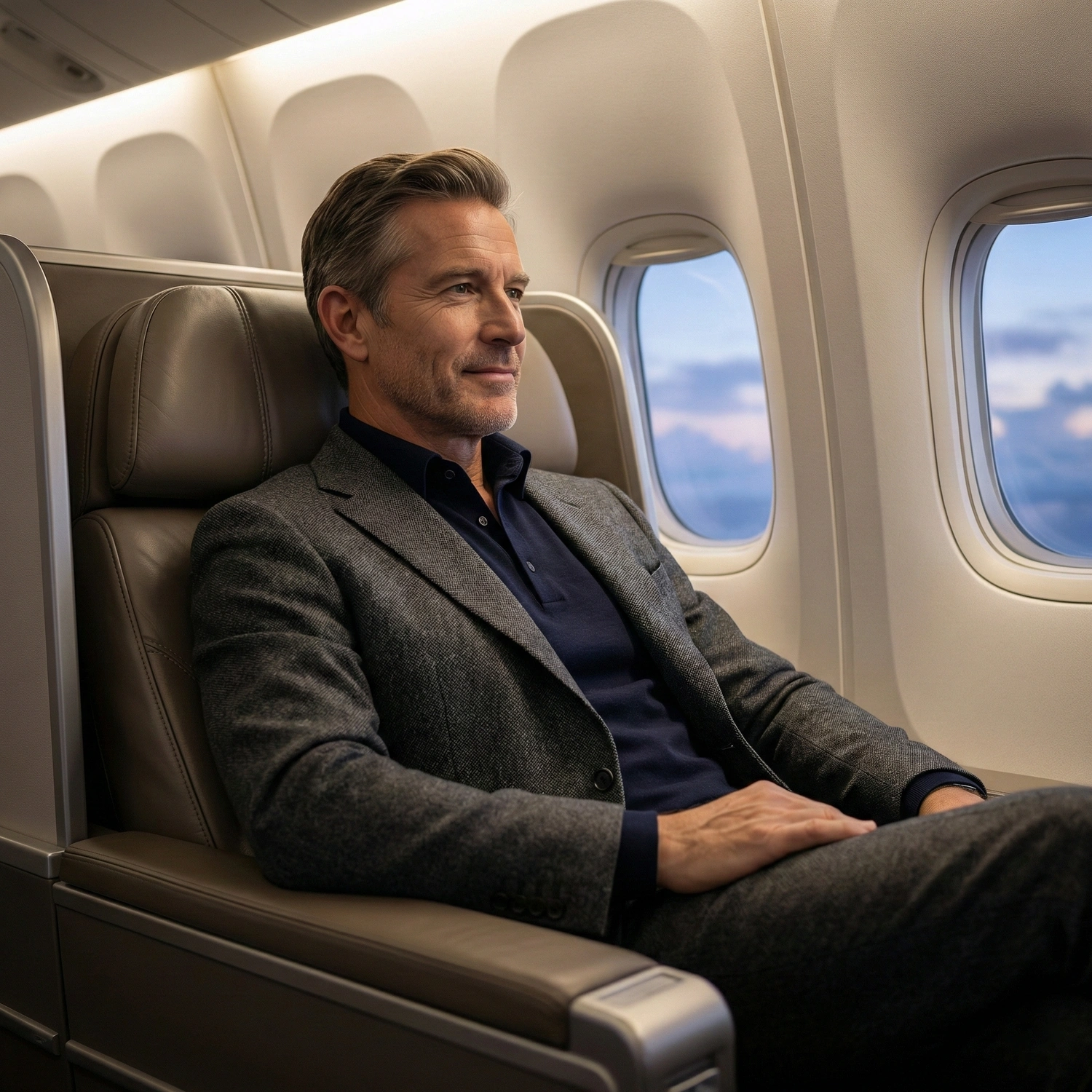
- Comfort: The primary benefit is physical freedom. Without a stiff collar or tight cuffs, there is no friction against your skin. You can lean back and sleep comfortably on the plane without feeling “strangled” by your attire.
- Thermoregulation: Air travel involves extreme temperature shifts, from freezing cabins to humid airports. Merino wool polo and knitwear are superior to cotton dress shirts because they naturally regulate body temperature, trapping warmth when you are cold and releasing heat when you are active.
- Visual (Soft Tailoring): Beyond comfort, this swap elevates your style. It creates a “Soft Tailoring” look: luxurious, modern, and distinctly European. It signals that you are confident enough to relax the rules without breaking them, projecting an image of sophisticated ease that a standard business suit cannot achieve.
Chapter 4: The Details – Engineering Comfort
A suit is only as comfortable as its engineering. While the fabric sets the tone, the construction details determine how you feel at hour seven of a transatlantic flight. To truly master travel style, you must look beyond the jacket and focus on the mechanics of the trousers and footwear.
Trousers: The Waistband Strategy
The greatest error in travel dressing is wearing a belt. A rigid buckle digging into your stomach while seated is a source of unnecessary discomfort.
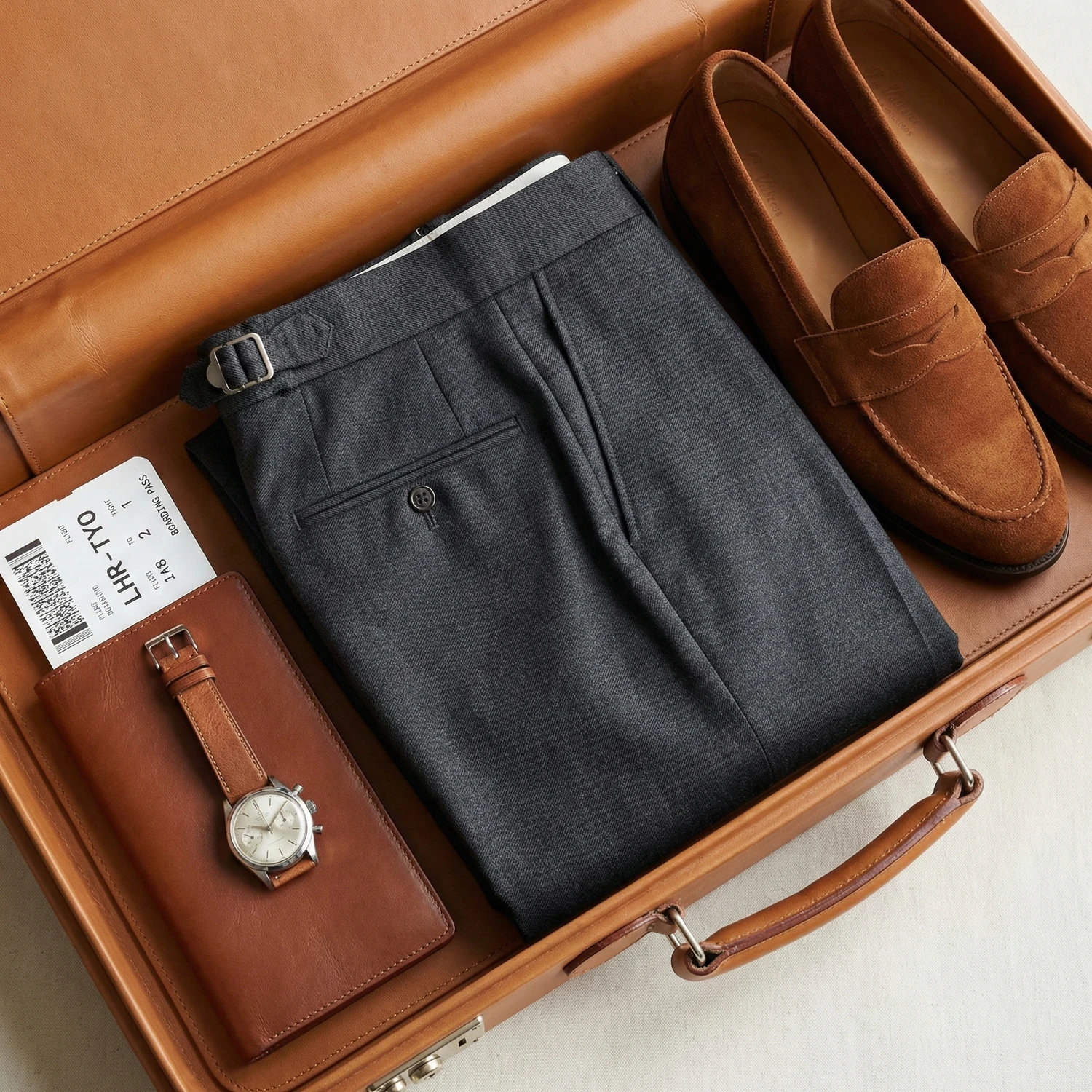
- The Classic Instruction (Side Adjusters): When commissioning your bespoke travel suit, insist on Side Adjusters. These discreet tabs allow you to adjust the fit instantly, loosening them slightly after an in-flight meal, without breaking the clean visual line of your waist.
- The Modern Twist (Hidden Drawstring): For the ultimate blend of comfort and formality, request a “Hidden Drawstring” waistband. This is a detail currently favored by top Italian luxury houses. From the outside, the trousers appear to be a standard formal garment; inside, an elasticated drawstring allows the waist to expand and contract with the ease of sweatpants.
- The Fit: Regardless of the waistband, ask for a slightly higher rise combined with a “Single Pleat.” This provides extra volume in the thighs for unrestricted movement when seated, while ensuring your shirt stays tucked in perfectly.
Footwear: The Slip-On Strategy
If the Oxford is for standing your ground, the Slip-on is for the fluid movement of travel. Leave the laces in your checked luggage.
- For Warmer Climates (Loafers): Wear Penny or Belgian Loafers. They are easy to remove at security checks and allow your feet to breathe on the plane.
- For Colder Climates (Chelsea Boots): If you are landing in London or New York during winter, Loafers leave you exposed. The Chelsea Boot is the perfect alternative. It offers the same slip-on convenience but provides full coverage and protection against the elements, maintaining a sleek, rock-star elegance.
Crucial Etiquette Note: The Sock Rule
If you plan to slip your shoes off on the plane, there is one non-negotiable rule: Wear Over-the-Calf Socks. There is nothing more detrimental to a gentleman’s image than exposing a bare, hairy shin between the trouser hem and the sock. Over-the-calf socks (ideally in Merino wool) stay up all day, ensuring that whether you are crossing your legs in a lounge or stretching out in a cabin, your skin remains discreetly covered. This is the difference between being merely dressed and being well-dressed.
Conclusion: Destination Ready
Travel style is rarely about vanity; it is about strategic preparedness. The discerning traveler understands that looking disheveled is a choice, not an inevitable consequence of the journey.
By adopting this specific uniform, a resilient bespoke travel suit, breathable knitwear, and engineered trousers, you no longer have to compromise between comfort and elegance. Your clothing ceases to be a constraint and becomes an enabler. This technical mastery grants you the freedom to focus entirely on the journey ahead. When the flight lands, you won’t just be present; you will be ready. Now that you have mastered the art of travel, ensure your wardrobe is ready for what comes next by revisiting [The Modern Gentleman’s Playbook: A Suit Styling Guide for Every Occasion].
DISCOVER PHYIGITAL BESPOKE TAILORING