Tropical Black Tie: Hosting an Elegant Evening in Humid Climates

The invitation calls for black tie, yet the tropical humidity suggests otherwise. There is nothing less stylish than a gentleman sweltering in a heavy winter suit during a seaside reception. This is where Tropical Black Tie becomes essential. It is not a compromise on formality, but an intelligent adaptation of it. By mastering the right fabrics and the iconic ivory palette, you can maintain an impeccable silhouette without sacrificing comfort. True elegance, after all, should look and feel effortless, regardless of the temperature.
The Centerpiece: The Ivory Dinner Jacket
Aesthetic & History
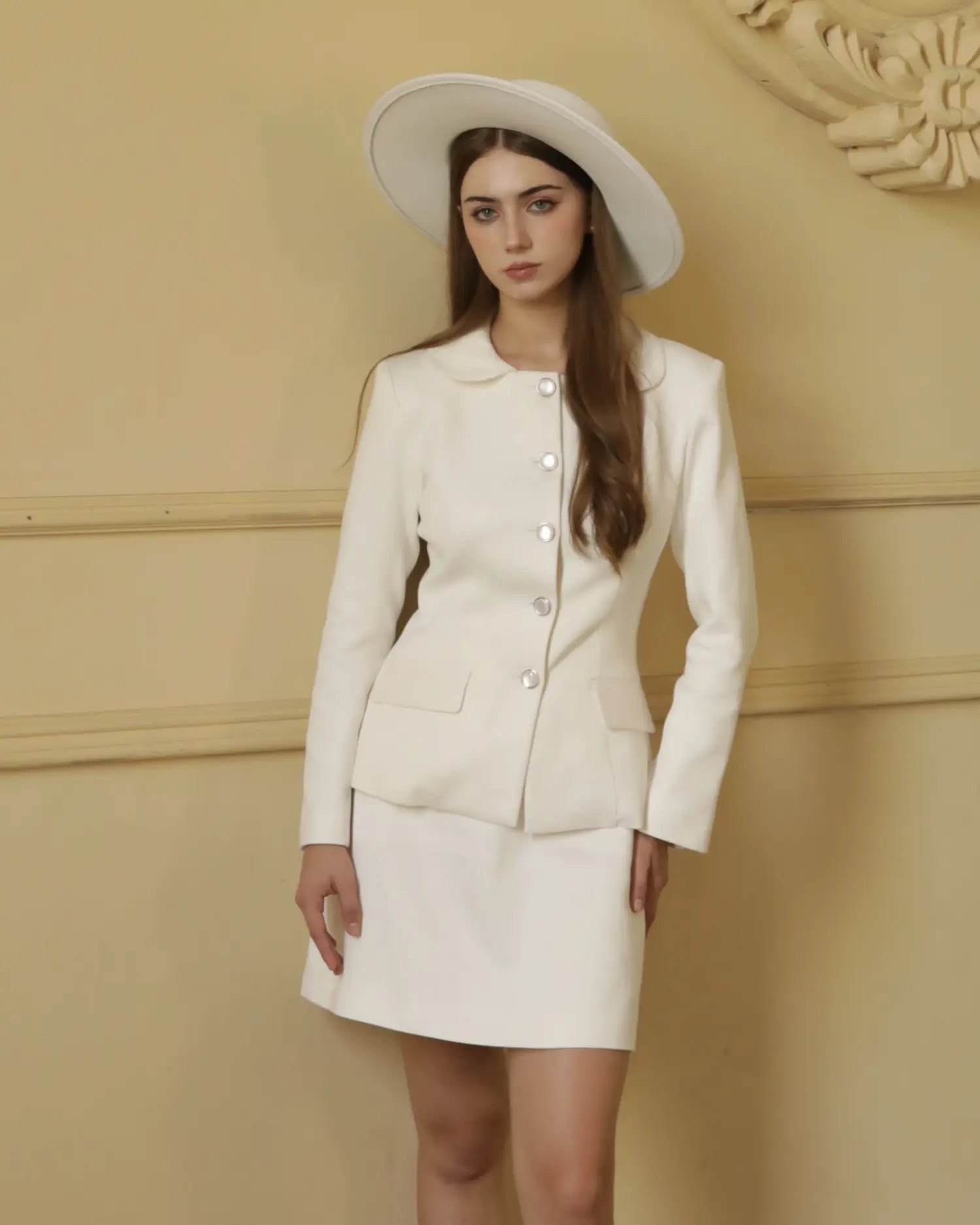
The Ivory dinner jacket is the definitive icon of Tropical Black Tie, evoking the sophisticated ease of the 1930s French Riviera and the timeless elegance of Humphrey Bogart in Casablanca. Unlike the severity of a traditional black tuxedo which absorbs heat, the light-colored jacket was adopted by the global elite specifically for warm-weather retreats to reflect the tropical sun.
However, a crucial distinction must be made regarding the specific shade: we refer to this as “Ivory” or “Cream,” never pure white. In the world of bespoke tailoring, optical white is often associated with rental suits or service staff. Under the warm glow of evening chandeliers, optical white appears harsh and synthetic. In contrast, an ivory hue contains rich yellow undertones that soften the complexion and photograph beautifully without “blowing out,” exuding a warmth that perfectly complements the humid atmosphere.
The Fabric (Wool Only)
When clients envision a summer jacket, their minds often drift toward linen or cotton. While these materials are acceptable for casual day suits, they are mistakes for formal wear. To maintain the sharp, architectural elegance required of a tuxedo, Wool is the unequivocal choice. Specifically, we utilize lightweight, high-twist (or open-weave) wool.
We reject linen and cotton for Tropical Black Tie because they lack the necessary structure. Linen is synonymous with wrinkling, creating a “shabby” look that is antithetical to the crisp precision of Black Tie. Cotton, meanwhile, tends to be stiff, creases sharply, and traps body heat. High-twist wool, conversely, is a miracle of textile engineering that solves these problems through its unique properties:
- Superior Breathability: The open weave is porous, allowing air to circulate freely and preventing the “sauna effect” common in denser fabrics.
- Impeccable Drape: The fabric hangs cleanly from the shoulder without clinging to the body, maintaining a sharp silhouette throughout the event.
- Wrinkle Resistance: The high-twist yarns create a natural spring-like tension, meaning creases fall out rapidly and ensuring you remain polished from the first toast to the final dance.

The “Classic Resort Tuxedo”: Distinguishing Details
While the ivory color sets the tone, the true distinction of a Classic Resort Tuxedo lies in the finer technical details. These adjustments transform a standard dinner jacket into a garment purpose-built for the tropics, balancing the strict codes of formal wear with the relaxed atmosphere of a coastal setting.
The “Self-Faced” Lapel
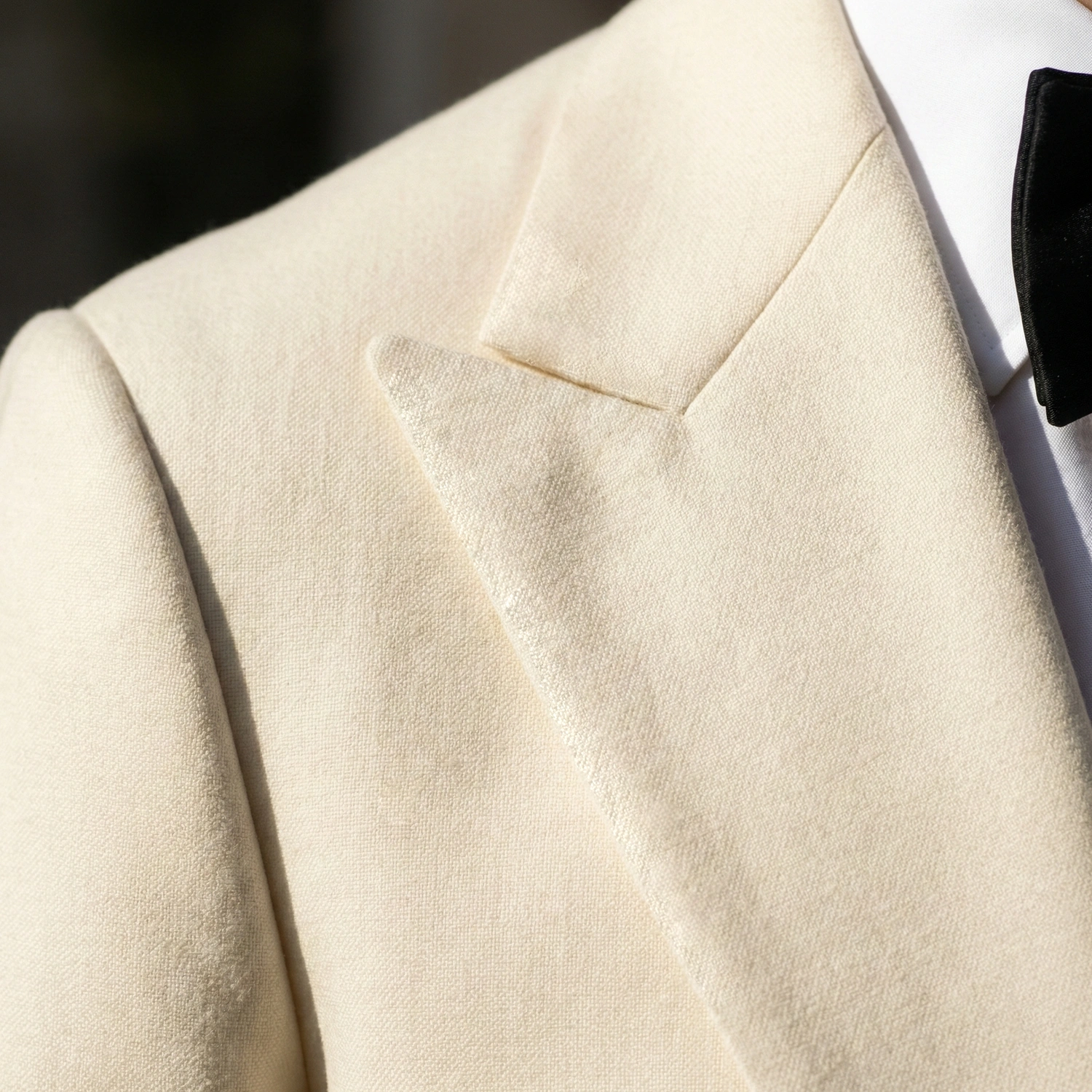
The most significant visual departure from a traditional winter tuxedo is found on the lapels. We replace the high-shine silk of the boardroom with the understated texture of the resort.
- The Material Difference: Unlike standard black tie which uses satin or grosgrain facings, our design utilizes “self-faced” lapels. This means the lapels are crafted from the same high-twist wool fabric as the body of the jacket.
- The Visual Effect: Under the harsh glare of the tropical sun or a beach sunset, satin can appear overly aggressive. A self-faced lapel absorbs light rather than reflecting it, creating a softer, matte finish.
- The Philosophy: This subtle adjustment signals “understated elegance.” It reduces the visual heaviness of the garment, ensuring you look like a gentleman at ease in his environment, rather than a guest wearing a costume.
Construction
If the lapel defines the look, the internal construction defines the feel. To prevent the “sauna effect” of mass-produced suits, we re-engineer the jacket from the inside out using true bespoke tuxedo techniques.
- Unlined or Half-lined: We remove the heavy lining from the back and side panels to maximize airflow. Paradoxically, stripping away these layers makes the tailoring process significantly more difficult. A full lining can mask structural imperfections and hold the jacket’s shape artificially. Without it, the garment relies entirely on the precision of the cutter’s hand to maintain balance and drape. It requires a master artisan to shape the fabric so that it sits perfectly on the body without distorting, a level of skill that few tailors possess.
- Impeccable Internals: In a bespoke unlined jacket, there is nowhere to hide. Every internal seam is exposed, requiring meticulous finishing and piping. While a standard jacket hides raw edges behind a lining, our resort tuxedo turns the interior into a display of craftsmanship, ensuring the inside looks as polished as the outside.
- Lightweight Structure: Despite being light, the jacket does not collapse. We utilize a specialized, ultra-light floating canvas. This provides the necessary masculine chest definition and architectural shape without the suffocating weight of traditional padding.
The Rules of Coordination: Anchoring the Look
While the Ivory Dinner Jacket offers a relaxed departure from tradition, the accompanying pieces must serve as an anchor, grounding the outfit in the realm of formal attire. Without these strict rules of coordination, the look risks drifting into casual territory.
The Trousers: A Study in Contrast
There is one immutable rule for this aesthetic: The trousers must always be black.
- The Aesthetic Anchor: Wearing matching ivory trousers creates a “white suit” look, which reads as daytime attire or costume rather than evening formal wear. Black trousers are aesthetically superior because they provide a grounding foundation. This sharp, high-contrast block visually elongates the legs and draws the viewer’s eye upward to the lighter jacket and your face, creating the most flattering proportion for the male physique.
- The Formal Link (The Galon): Even though your jacket features self-faced lapels, your trousers must retain the traditional silk braid (galon) running down the side seam. Crucially, this silk stripe must be black – perfectly matching the trouser fabric. A contrasting braid color here would be disastrous. This tone-on-tone black silk stripe is the silent thread that connects your resort attire back to the strict codes of traditional evening wear, ensuring the look remains grounded in elegance.
The Shirt & Accessories
In a humid climate, accessories should be chosen for their lightness and comfort, moving away from the rigidity of city dressing.
- The Shirt: It must remain a proper Tuxedo Shirt (featuring French cuffs and holes for studs), but the fabric weight is critical. Standard formal shirts often feature a thick, stiff “bib” front which traps heat.
Fabric: We recommend Marcella (Piqué) cotton, which has a waffle-like texture that breathes better than stiff broadcloth, or Cotton Voile for the ultimate lightweight feel.
Style: Consider a plain front or a soft Marcella front instead of traditional pleats. Pleats require double the fabric on the chest, creating unnecessary insulation in the heat.
- The Footwear: Patent leather Oxfords, while classic, can feel stiff and unyielding in the heat. For a tropical setting, we recommend Belgian Loafers or Velvet Slippers. These options possess a relaxed, aristocratic flair that suits the resort atmosphere perfectly, while offering significantly more comfort and breathability for an evening spent navigating terraces or boardwalks.
When to Wear What: Mastering the Dress Code
Mastering the art of black tie requires knowing not just how to wear it, but where to wear it. The Ivory Dinner Jacket is the definitive choice for tropical destination weddings, summer garden parties, cruises, and events held at latitudes where the heat is a factor. In these open-air or semi-outdoor settings, the lighter palette feels harmonious with the environment, signaling a relaxed sophistication.
However, context is paramount. If your invitation takes you to a prestigious urban ballroom, a cathedral wedding, or a strictly indoor evening gala in a temperate climate (like London or New York in winter), the traditional Black Tuxedo remains the undisputed gold standard.
If your upcoming event takes place in a metropolitan setting or during the colder months, the rules of engagement change entirely. To ensure you are perfectly attired for traditional formal wear, we invite you to explore our comprehensive guide: [The Ultimate Guide to Black Tie: Mastering the Bespoke Tuxedo].

Conclusion
Tropical Black Tie is not a rejection of tradition, but an artful adaptation of it. It proves that respect for the occasion and personal comfort are not mutually exclusive. By selecting the right open-weave wools and mastering the nuances of the ivory jacket, you elevate your presence from merely “attending” to truly “hosting” the evening.
Whether you are bound for a coastal wedding or a summer gala, we invite you to discover our Classic Resort Tuxedo commissions. Experience the quiet confidence that comes from wearing a bespoke garment designed not just for your body, but for the world you inhabit.
DISCOVER PHYIGITAL BESPOKE TAILORING