Bespoke Tailored Suits: What You Need to Know Before Visiting a Tailor
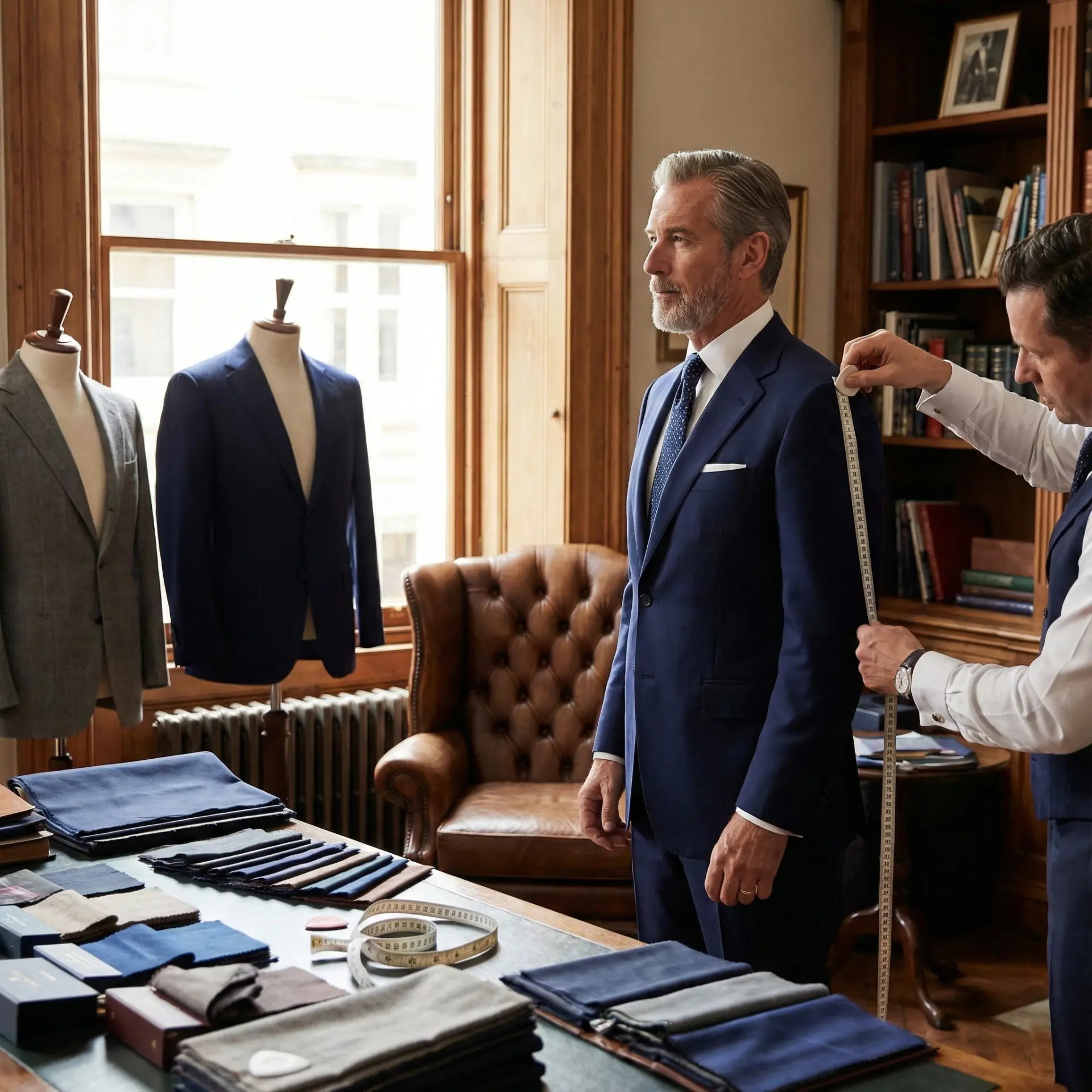
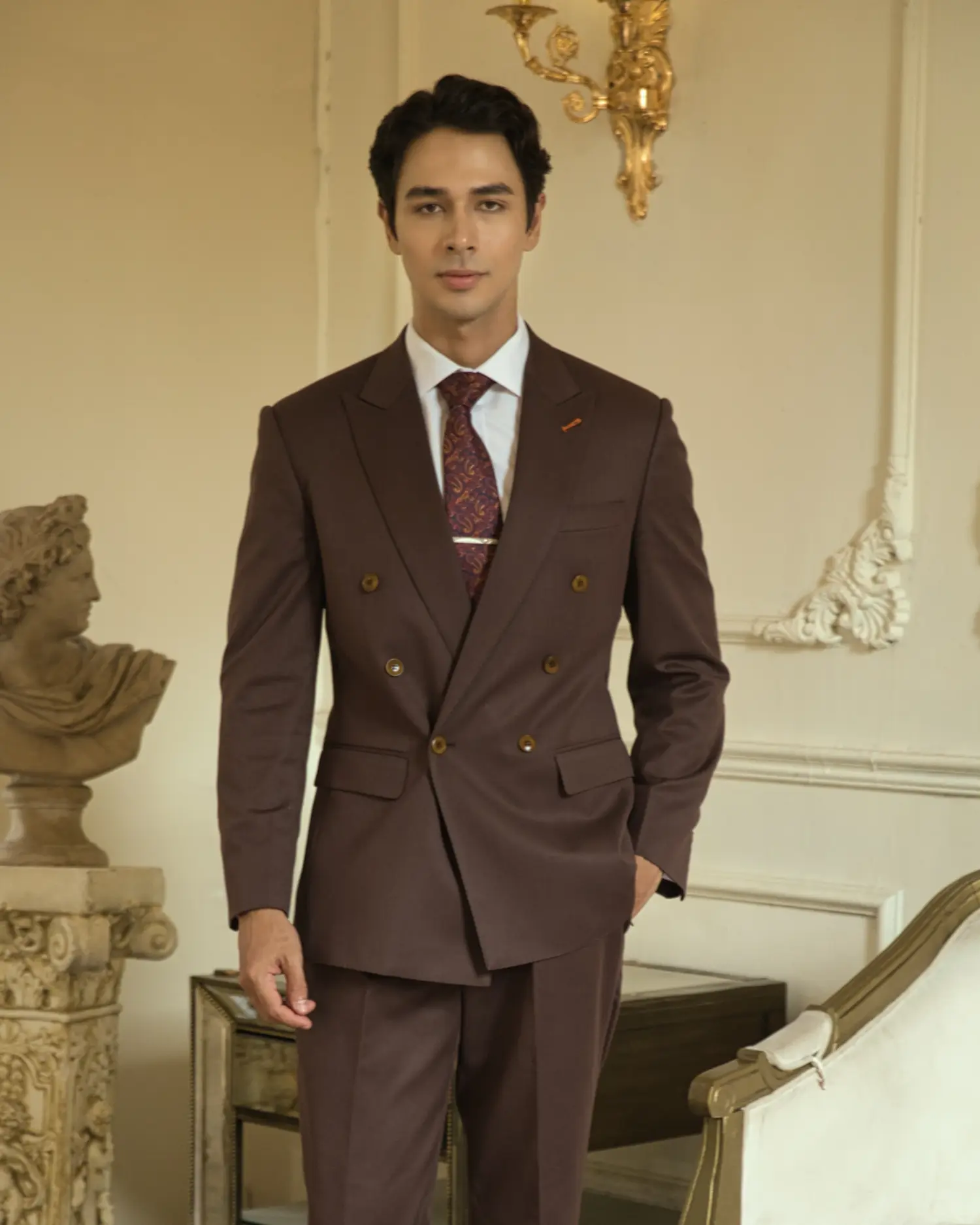
Bespoke tailored suits define not only fit and craftsmanship but also the style and statement a man makes. Understanding the different types of suits is essential because, while construction determines how a suit is built, the type shapes the overall silhouette, purpose, and impression you convey.
In today’s business, social, and lifestyle contexts, a suit is more than clothing – it is a visual language that communicates confidence, taste, and professionalism. Choosing the right suit type ensures you present yourself with both elegance and intention.
Whether investing in business suits, formal suits, or casual and seasonal options, knowing the distinctions between suit types helps you select pieces that flatter your body, suit the occasion, and reflect your personal style.
Suit Types by Occasion
Choosing the right suit for the occasion is just as important as selecting the correct fit or fabric. Each suit category communicates a different level of formality, style, and sophistication. Here are the three essential suit types every modern man should understand – from business environments to black-tie events and lifestyle dressing.
1. Business / Formal Suit
Business suits for men (or Formal suits for men) are essential for office environments, important meetings, presentations, and professional settings. These suits lean toward classic colours such as navy, charcoal, and mid-grey, delivering a message of competence and refinement.
Key features:
- Structured tailoring for a sharp, polished silhouette
- High-twist or fine wool fabrics that drape cleanly and resist wrinkles
- Minimal styling to maintain professionalism
For upgrading your professional wardrobe, bespoke tailored suits in this category offer a superior fit and a more authoritative presence – perfect for executives, corporate leaders, and anyone aiming to elevate their image.

2. Black-Tie Suit / Tuxedo
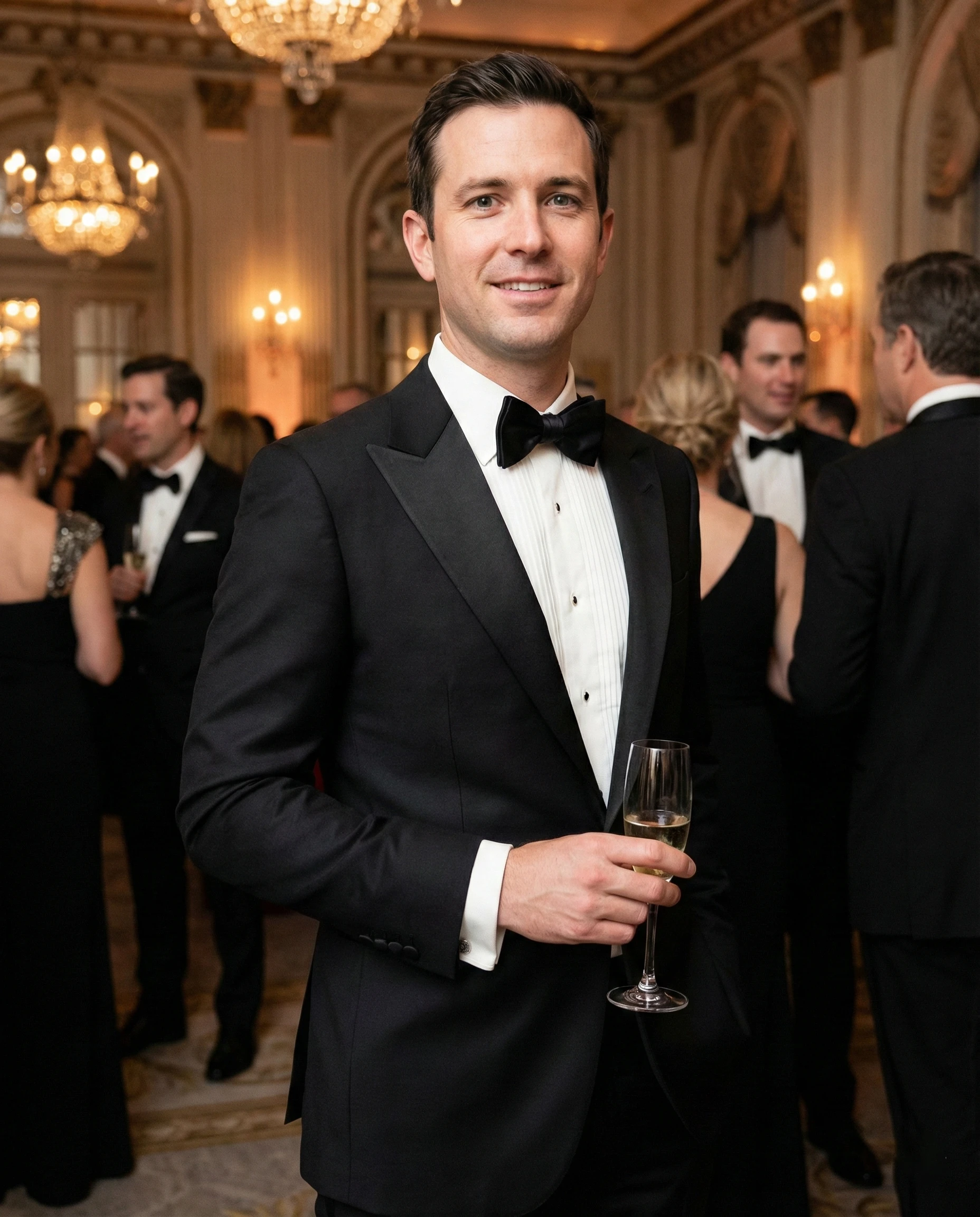
The tuxedo – also known as the black-tie suit or dinner suit – represents the highest level of evening elegance. Unlike regular formalwear, a tuxedo is strictly reserved for once-in-a-lifetime moments: weddings, galas, award ceremonies, and sophisticated night events where refinement is an unspoken requirement. For grooms and guests alike, men tuxedo suits for wedding deliver a level of polish and timeless prestige that no standard suit can match. From satin lapels to crisp pleated shirts and patent leather shoes, every detail of the tuxedo is designed to elevate a man into his most distinguished, ceremonial form.
Key features:
- Smooth wool or wool-silk blend fabric
- Satin lapels, satin-covered buttons, and refined trim
- Designed exclusively for evening wear and formal dress codes
When attending a black-tie event – or planning a wedding – men should always choose a tuxedo rather than a regular formal suit to match the event’s sophistication.
Explore key differences between business suit and tuxedo in details here.
3. Casual Suit
Casual suits for men are perfect for daytime events, creative environments, smart-casual gatherings, and modern lifestyles. They maintain a tailored silhouette while offering relaxed comfort.
Key features:
- Lightweight fabrics: linen, cotton, seersucker, fresco, or wool blends
- Softer structure with natural shoulders
- More freedom with colours and textures
Casual suits allow men to express personality while remaining polished – a balance of comfort and style ideal for travel, weekend events, and creative professional settings.

To understand differences between a suit and a blazer, explore our article here.
Suit Types by Seasonal Fabric
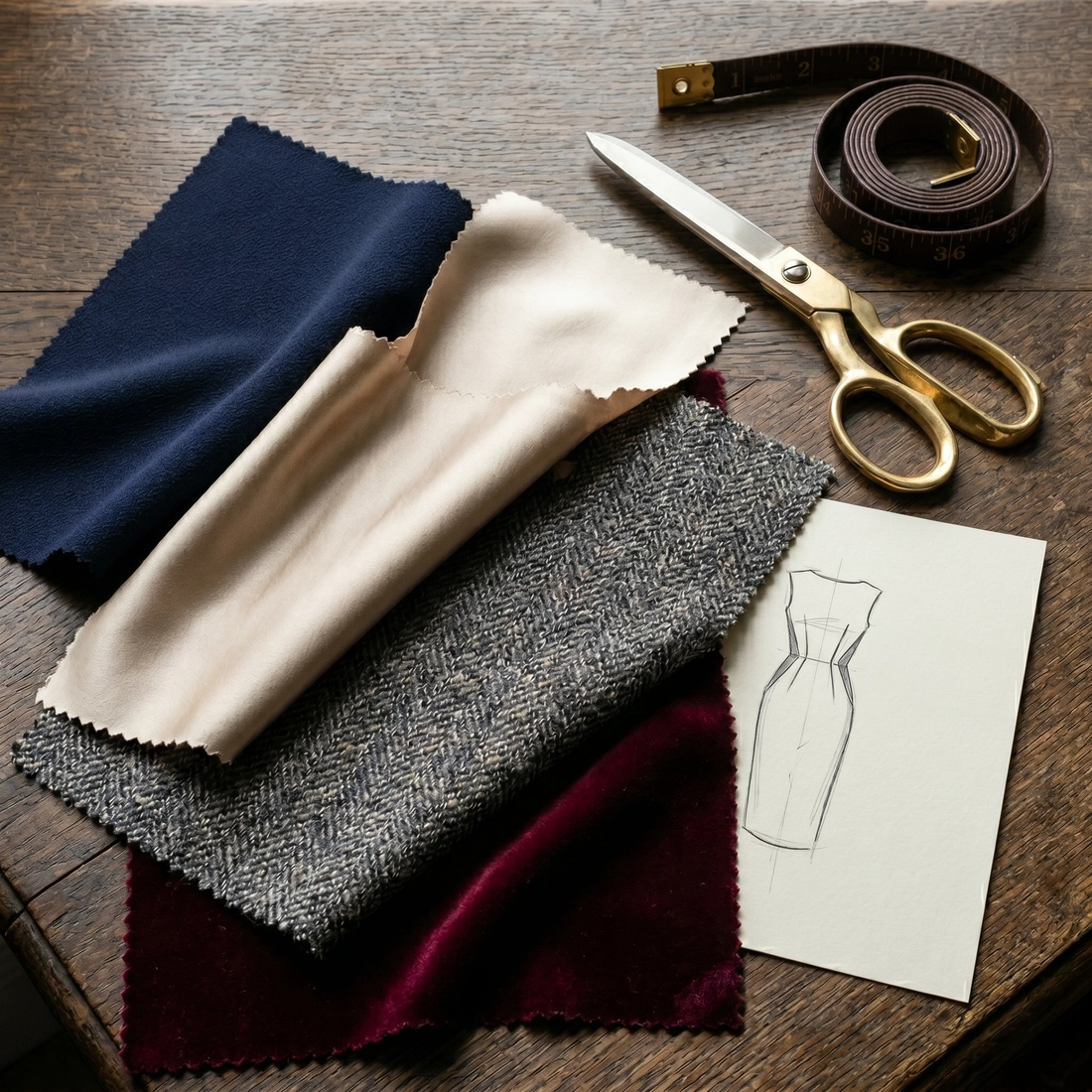
Understanding seasonal fabrics is essential for choosing a suit that not only looks sharp but also performs well in different climates. The fabric you wear in summer versus winter affects comfort, drape, breathability, and the overall impression your outfit creates. Whether opting for bespoke tailored suits or modern made-to-measure options, selecting the right fabric ensures your suit aligns with both the weather and the occasion.
Below are the three primary seasonal suit categories every man should consider when building a functional, elegant wardrobe.
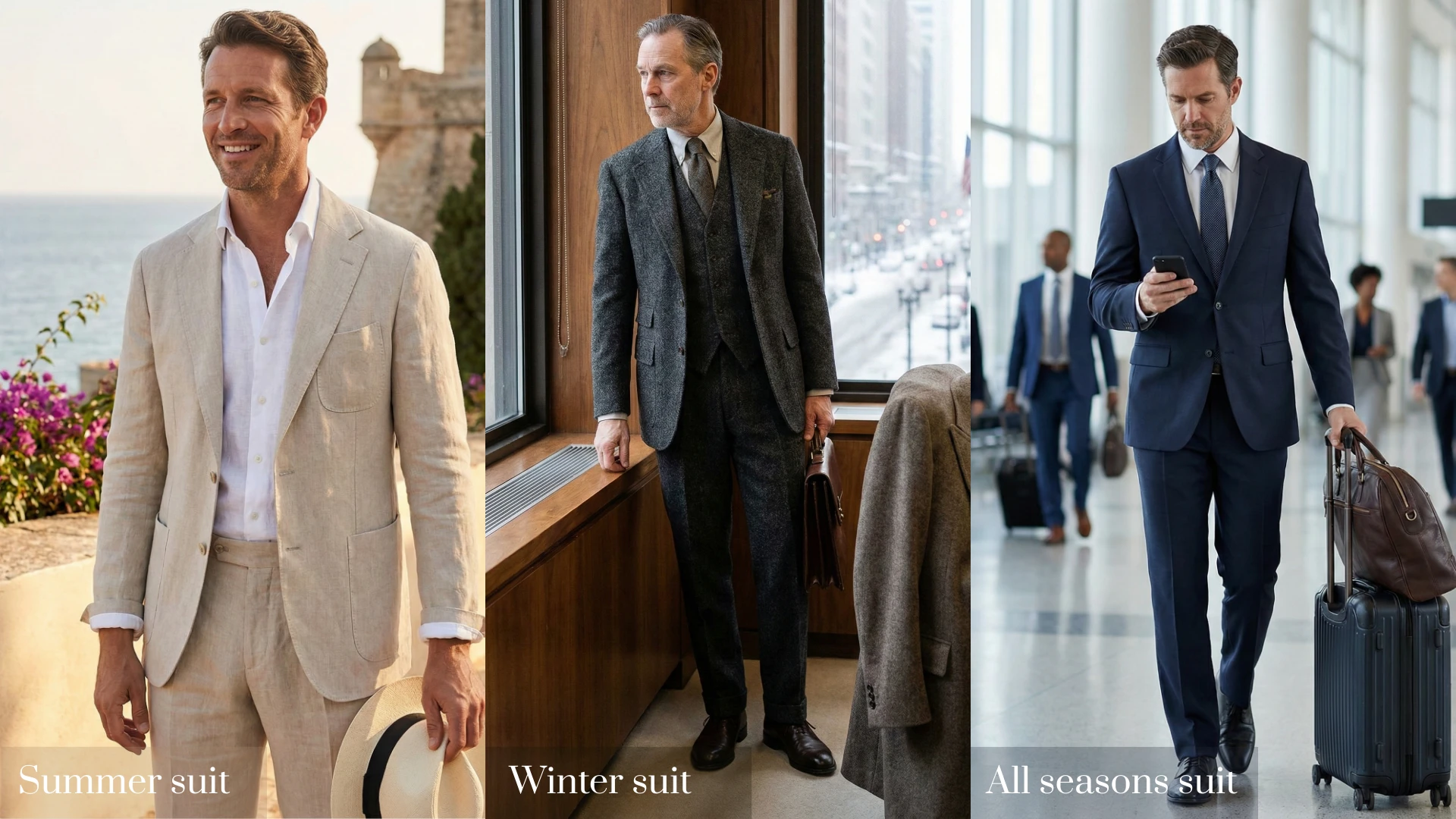
1. Summer Suit
Summer suits for men are crafted to prioritise breathability, lightness, and effortless elegance. These suits are designed to keep the wearer cool without sacrificing sophistication.
Best fabrics for summer:
- Linen – ultra-breathable, relaxed texture, ideal for resort, travel, and daytime events
- Cotton – crisp, lightweight, great for business-casual or creative workplaces
- Tropical wool / fresco wool – open weave, drapes beautifully, maintains structure in heat
Aesthetic & function:
- Light colours and airy textures evoke a refined yet relaxed European-inspired charm
- Works well for warm-weather business meetings, destination weddings, outdoor events, and travel
- Gives off a clean, understated confidence while keeping comfort at the forefront
A well-selected summer suit balances cooling performance with style, making it an essential piece for climates with high humidity or intense heat.
2. Winter Suit
Winter suits are designed to offer warmth, structure, and depth. They rely on heavier yarns and textured fabrics that naturally insulate while maintaining a polished, tailored appearance.
Best fabrics for winter:
- Flannel wool – soft, warm, luxurious, perfect for business or formal occasions
- Tweed – textured, traditional, offers excellent insulation
- Heavy wool / worsted wool – structured, durable, suitable for cold offices or winter travel
Aesthetic & function:
- Rich tones like charcoal, deep navy, espresso, and forest green enhance the winter mood
- Adds visual depth and gravitas, ideal for executive presence or formal settings
- Provides warmth while maintaining a strong, classic silhouette
Winter suits give off an impression of refinement, maturity, and timeless charm – a perfect complement to cold-weather dressing.
3. All-Season Suit
An all-season suit is the most versatile option for men who prefer a streamlined wardrobe or travel frequently across different climates. It strikes the balance between breathability and structure, making it wearable throughout most of the year.
Best fabrics for all-season wear:
- Medium-weight worsted wool (250–320gsm)
- Blended performance wools designed for durability and flexibility
- High-twist wool that resists wrinkles during travel
Aesthetic & function:
- Suitable for business professionals with regular meetings or corporate travel
- Works seamlessly from day to night and across various temperatures
- Allows a man to invest in a few foundational pieces without compromising elegance
All-season suits deliver practicality, long-term value, and dependable style – making them a must-have in any curated modern wardrobe.
Suit Types by Style Aesthetic
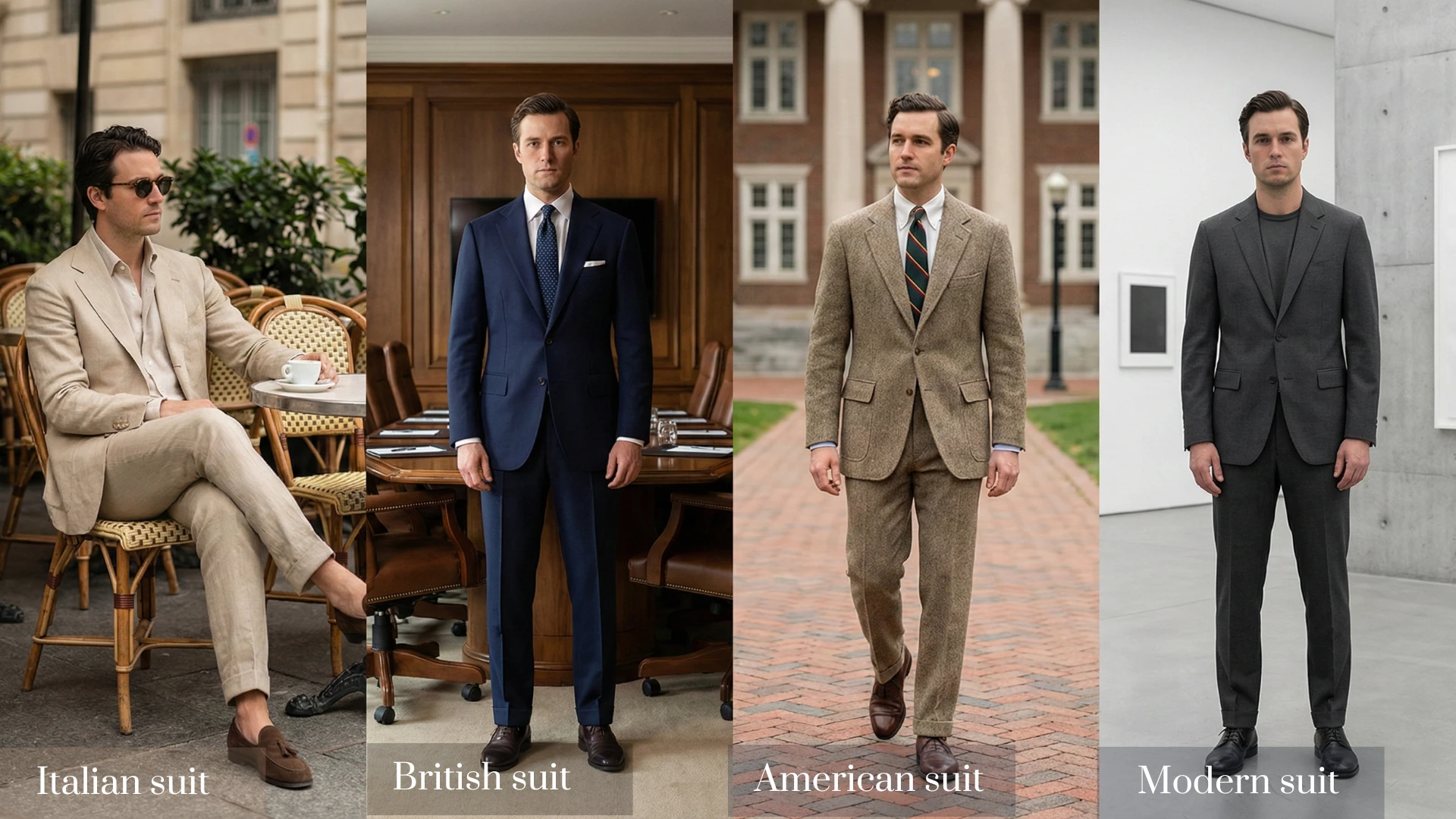
Beyond construction and fabric, a suit’s aesthetic style defines the personality it conveys. Different tailoring traditions shape how the suit drapes, how structured it feels, and the kind of impression it leaves. Whether a man leans toward classic elegance or modern minimalism, understanding these stylistic archetypes helps refine his wardrobe with intention and clarity.
Below are the four major style aesthetics that influence contemporary menswear.
1. Italian Style Suits
Italian suits are recognized for their soft structure, fluid movement, and natural charm. They prioritise comfort and drape, using lightweight fabrics that contour gently to the body without appearing rigid.
Key characteristics:
- Soft shoulders with minimal padding
- Light canvassing for an easy, romantic silhouette
- Higher armholes and shaping through the waist
- Fabrics often lightweight, breathable, and luxurious
Ideal for:
Men who appreciate relaxed sophistication, understated flair, and a refined, fashion-forward presence. The Italian aesthetic projects charisma and ease – perfect for social settings, modern workplaces, or warm climates.
2. British Style Suits
British tailoring is the epitome of classic formality. Structured, precise, and disciplined, British suits emphasise clean lines and a composed silhouette that communicates authority without excess.
Key characteristics:
- Strong shoulder line with moderate padding
- Structured chest and defined waist
- Heavier fabrics such as flannel or wool
- Often features side vents and subtle traditional details
Ideal for:
Executives, leaders, and professionals who want to project confidence, tradition, and gravitas. British suits thrive in boardrooms, formal business environments, and occasions where a commanding presence is essential.
3. American / Ivy League Style Suits
The American or Ivy League suit offers an approachable, balanced aesthetic. Less structured and more relaxed than British tailoring, it prioritises comfort and practicality while maintaining a polished appearance.
Key characteristics:
- Natural shoulders with minimal padding
- Straight, comfortable lines
- Often features a single vent and a looser fit
- Fabrics range from year-round wool to soft blends
Ideal for:
Men who value versatility, ease, and understated professionalism. This style works well in corporate offices, educational institutions, and creative industries where polished restraint is preferred.
4. Modern Minimal Suits
Modern Minimal suits reflect contemporary design – clean, intentional, and refined. They remove unnecessary detailing, allowing the silhouette and fabric quality to speak for themselves. This style embodies the quiet luxury movement.
Key characteristics:
- Streamlined shapes with clean lines
- Tone-on-tone or solid fabrics
- Soft tailoring with a precise fit
- No excessive patterns or heavy embellishments
Ideal for:
Men seeking an elegant, contemporary, and timeless wardrobe. Perfect for modern professionals, minimalists, and those who appreciate elevated simplicity with maximum versatility.
Why Bespoke Helps You Master Every Suit Type
Bespoke tailored suits offer more than exceptional fit – they provide a level of personalization that ensures each suit reflects your lifestyle, personality, and presence. Unlike ready-to-wear garments, bespoke allows you to make deliberate choices that communicate who you are with confidence and sophistication.
Selecting the Right Silhouette: Whether your preference leans toward a classic, tailored, or relaxed silhouette, bespoke tailoring empowers you to choose a cut that enhances your proportions and complements your frame. Every line and contour is thoughtfully designed to project poise and refinement.
Choosing Colors That Complement Your Skin Tone: With bespoke, you can select fabrics and tones that flatter your complexion. From deep navy and charcoal for a commanding presence to softer greys or warm hues for understated elegance, your suit becomes an extension of your natural coloring and personal style.
Defining the Right Vibe for Your Personal Brand: A suit is more than clothing; it is a visual expression of your identity. Bespoke tailoring allows you to fine-tune the style, cut, and overall aesthetic so that each garment resonates with your professional or personal brand. Whether your goal is understated elegance, quiet luxury, or a confident statement, bespoke ensures your wardrobe communicates it flawlessly.
Creating Suits Aligned With Your Individuality: Ultimately, bespoke tailored suits offer harmony between style and self. Every decision – from fit to color to overall aesthetic – is intentional, resulting in a wardrobe that not only looks impeccable but also feels authentically yours. This precision makes it possible to master every suit type while remaining true to your unique style language.
Conclusion: Every Gentleman Needs More Than One Suit Type
A well-rounded wardrobe goes beyond a single suit – understanding different suit types empowers every gentleman to dress appropriately for business, formal events, casual occasions, and seasonal needs. Each suit category carries its own purpose, aesthetic, and impression, making versatility and knowledge essential for modern menswear.
Bespoke tailored suits elevate this approach by allowing every piece to be perfectly aligned with your body, personality, and professional or social image. Choosing the right silhouette, tone, and style ensures that your wardrobe not only looks refined but also reflects who you are.
Choosing the best place to get a tailored suit becomes even more crucial once you understand how each suit type serves a different purpose. A truly bespoke tailored suit doesn’t just fit your body – it reflects your ambition, your taste, and the narrative you want to carry into every room.
DISCOVER PHYIGITAL BESPOKE TAILORING