Sculpting the Silhouette: Androgynous Tailoring & Masculine Codes for the Female Form
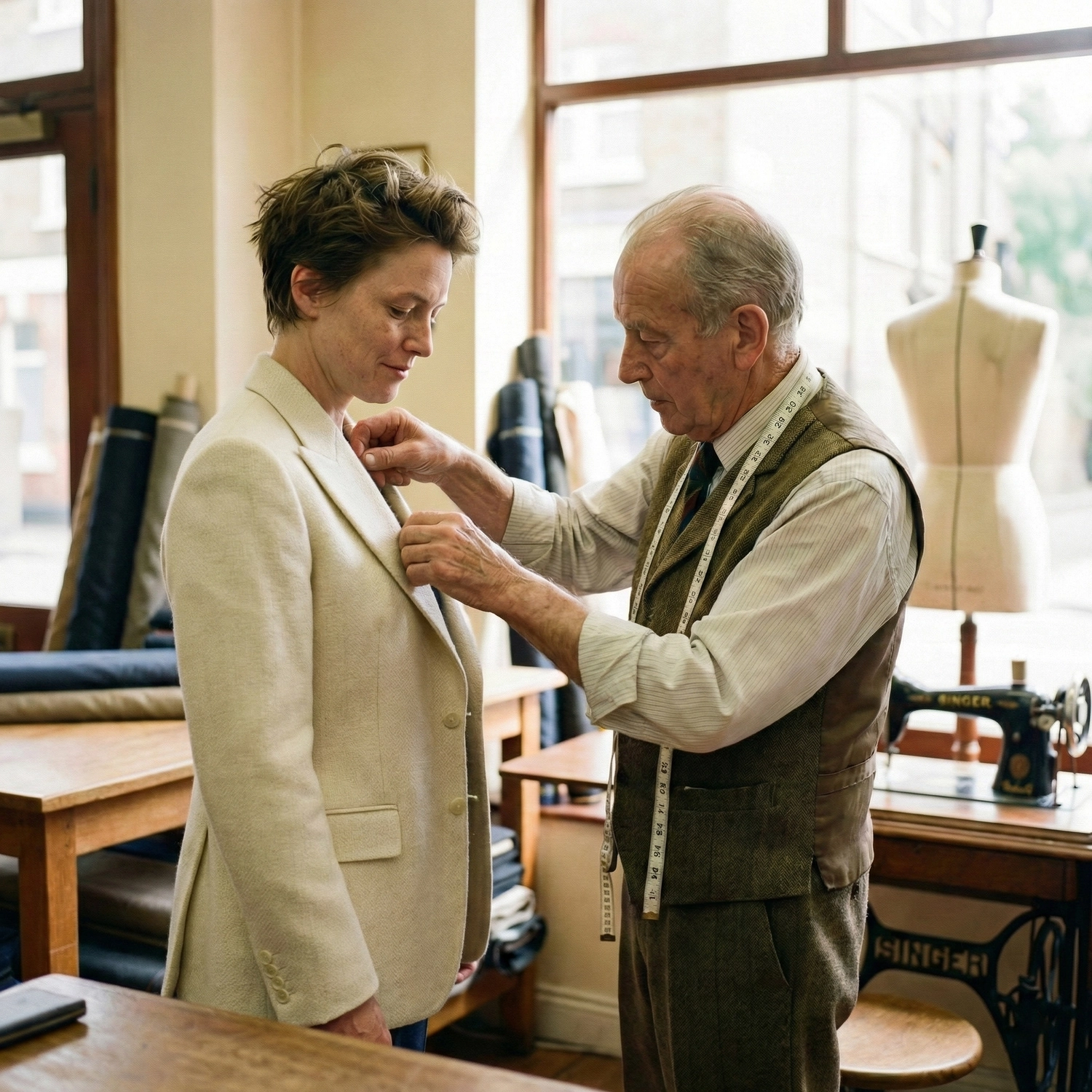
Androgynous Tailoring is the essential bridge for women and LGBTQ+ individuals seeking an authentic masculine suit fit. Whether you prefer the sharp lines of menswear or need a tuxedo for your wedding, off-the-rack options rarely suffice; women’s cuts enforce curves you want to hide, while men’s sizes lack the structure to accommodate your hips or bust. Achieving a truly sharp silhouette requires bespoke engineering, not just shopping in a different department.
The Foundation: “Drape” vs. “Contour” in Masculine Suit Fit
Before diving into specific cuts, it is crucial to understand the fundamental difference in construction philosophy.
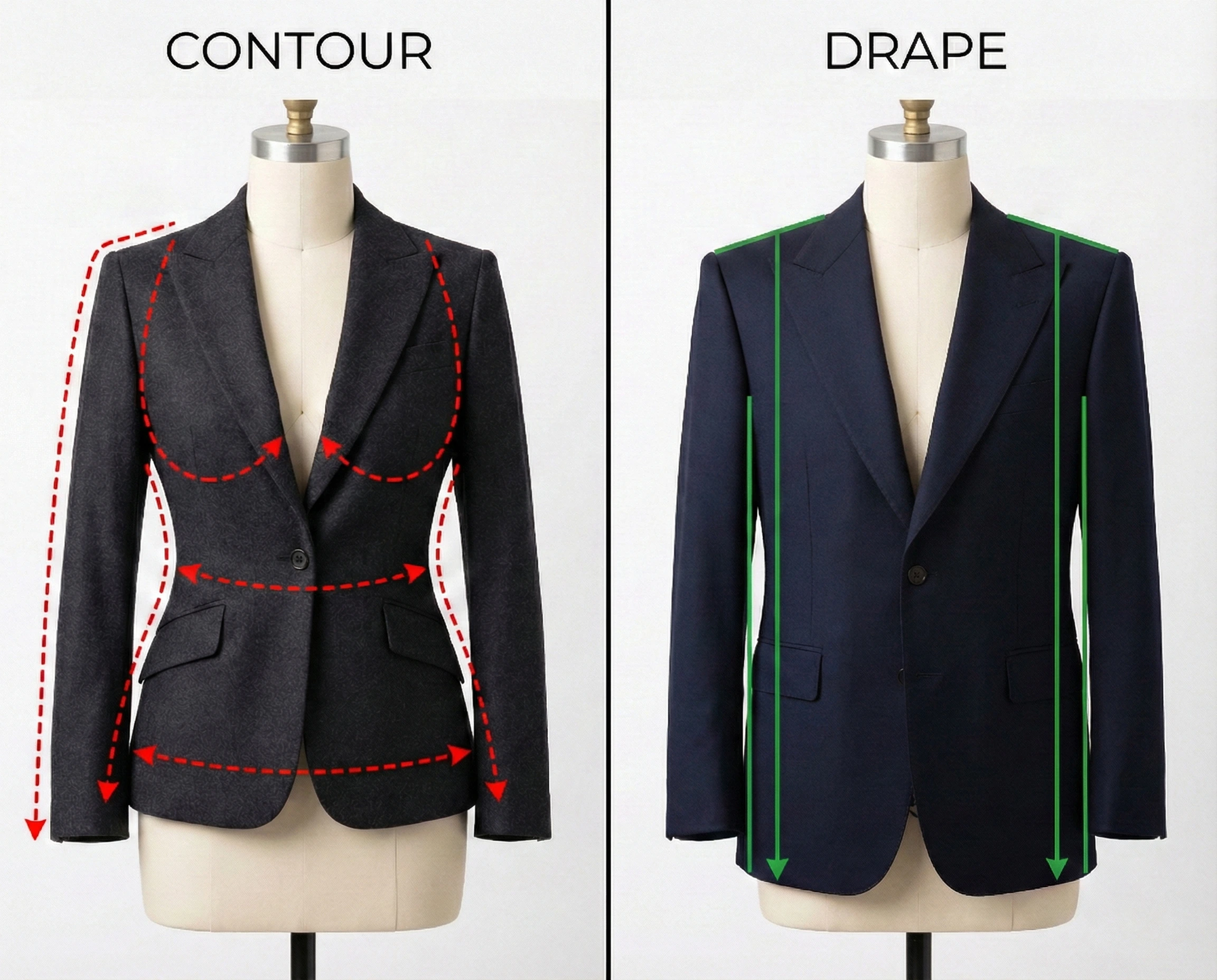
- Traditional women’s wear relies on Contour. The objective is to adhere to the body’s natural lines, using soft fabrics and deep darts to tuck inward under the bust and cinch tightly at the waist. It is designed to reveal and emphasize the hourglass shape.
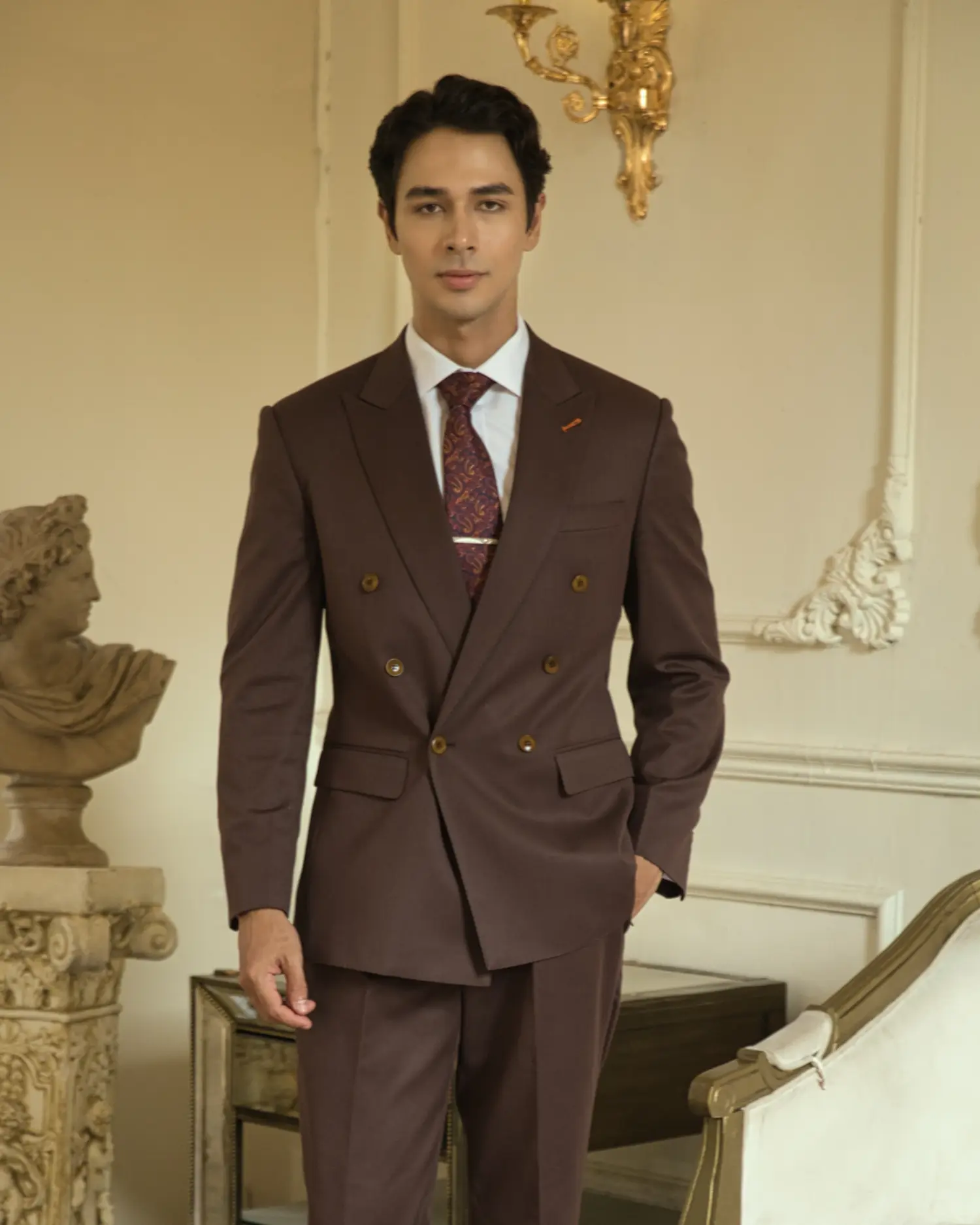
- In contrast, a true Masculine Suit Fit relies on Drape. In this architectural approach, the jacket hangs from the shoulders, the body’s anchor point and falls vertically, responding to gravity rather than the curves beneath. Instead of clinging to the hollow of the lower back or tucking under the bust, the fabric bridges over these areas. The goal is to build a clean, straight facade that “skims” over the natural landscape, creating the optical illusion of a linear, rectangular torso.
The Jacket: Chest Binding Alternatives via Structure
For clients with a fuller bust, the instinct is often to bind tightly or choose a jacket that compresses the chest. However, in tailoring, physical compression often leads to visual distortion creating a “unibrow” effect or unsightly lumps.
Instead of fighting the body, Androgynous Tailoring uses structure to conceal it. The jacket is treated not as a second skin, but as a form of lightweight armor. Here are three key techniques skilled tailors use to flatten the chest profile without compromising comfort.
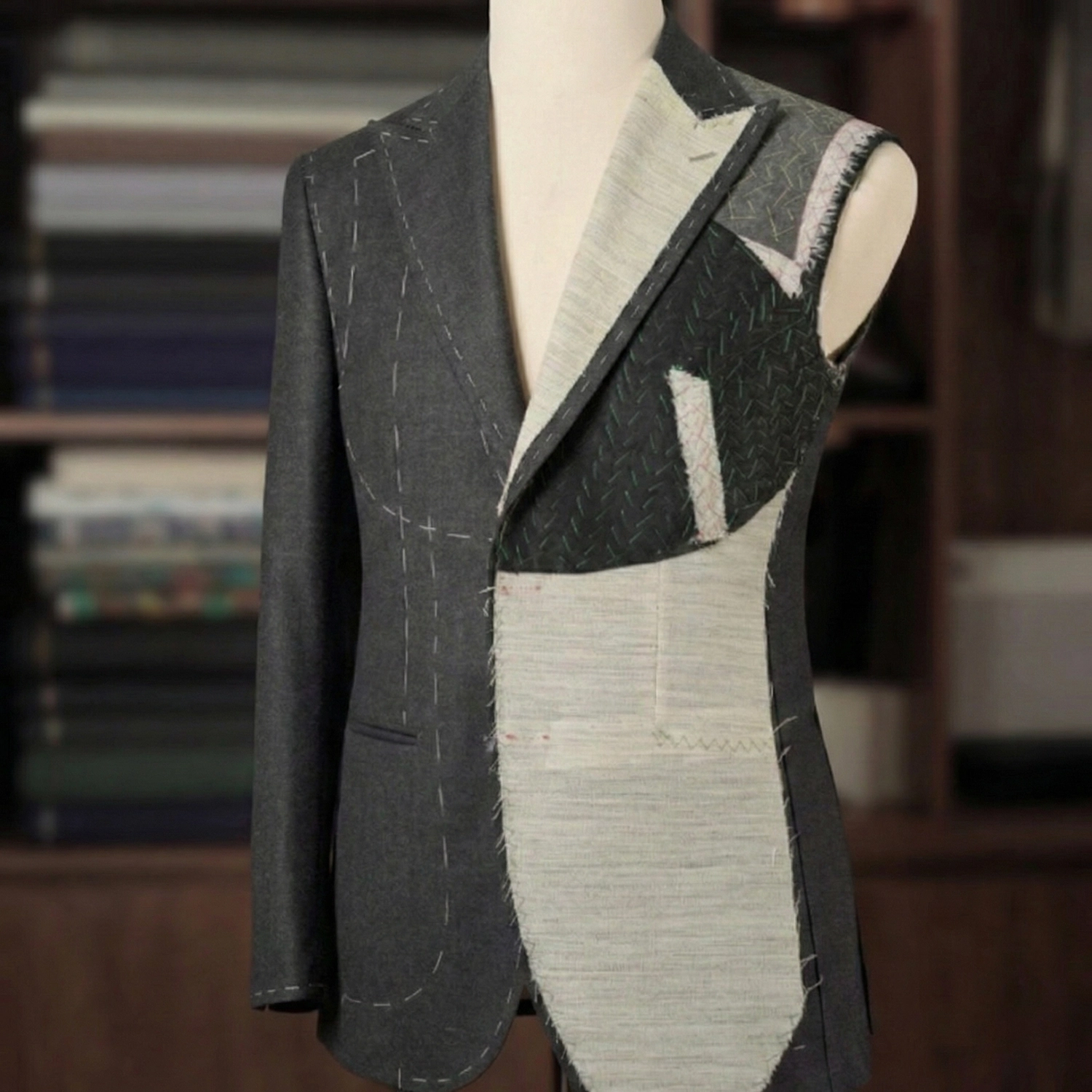
The Floating Canvas (The Structural Shield)
This is the most critical differentiator between a bespoke suit and a mass-produced garment.
- The Mechanism: Instead of gluing the fabric (fusing), a “floating canvas” – a layer of horsehair and wool, is inserted between the outer fabric and the lining.
- The Result: This canvas is stiff enough to hold its own vertical shape. It creates a “false chest wall” that sits slightly in front of the body. The outside of the jacket appears flat and structured, while the inside retains enough hollow space to accommodate the bust comfortably. It acts as a visual shield, providing one of the most effective chest binding alternatives without the physical restriction.
Dart Manipulation (Hidden Volume)
In traditional women’s wear, darts (tucks in the fabric) are placed visibly to contour the bust. In masculine tailoring, the goal is to hide these architecturally necessary elements to reduce visual “roundness.”
- Under-Lapel Darts: Bust darts can be rotated so that they are hidden underneath the lapel. This removes the tell-tale seam from the front of the jacket, maintaining a clean, masculine facade.
- Extended Seaming: Alternatively, darts can be extended all the way to the hem, transforming them into vertical structural seams (like a panel) rather than curved bust darts. This tricks the eye into seeing vertical length rather than horizontal volume.
The Lapel Roll (Preventing Gaping)
The most common failure in suiting for curves is “lapel gaping”, where the lapels buckle and lift off the chest.
- The Fix: Tailors often utilize a “3-roll-2” button stance or adjust the gorge height (the notch on the lapel).
- How it Works: By lowering the point where the lapel begins to roll, a longer, softer curve is created that glides over the upper chest. This ensures the lapel lies flat against the shirt, maintaining that sharp, V-shaped “Tuxedo” silhouette without pulling open.
The Trousers: Trousers for Hips & Converting Curves into Columns
The pelvic structure of the female form is naturally wider than that of the male, presenting a significant challenge when adapting masculine codes. When a standard men’s trouser is worn on a curvier frame, two issues typically arise: the pockets flare open (often called “rabbit ears”), or the legs taper too aggressively, creating a “carrot” shape that emphasizes the hips.
To achieve a straight, columnar silhouette, Androgynous Tailoring employs three specific structural adjustments.
The High-Rise Cut (The Anchor Point)
The positioning of the waistband is the most critical factor in fitting trousers for hips.
- The Issue with Low-Rise: Modern men’s pants often sit on the hips. On a female body, this cuts across the widest part of the frame, forcing the fabric to curve outward immediately, which highlights the hip-to-waist ratio.
- The High-Rise Solution: Tailors recommend a high-rise cut that sits at the natural waist (near the navel). By anchoring the trousers at the body’s narrowest point, the fabric can drape vertically over the hips. This effectively masks the curve, creating a long, unbroken line from the waist to the shoe.
The Power of Pleats (Functional Volume)
While often considered a stylistic choice, pleats are a functional necessity for curvier lower bodies.
- The Mechanism: Pleats act as an accordion, providing extra fabric volume that remains folded when standing but expands when sitting.
- The Benefit: This additional room allows the trousers to accommodate the hips and thighs without pulling tight across the front. It prevents the side pockets from gaping open, a common sign of poor fit.
- The Tuxedo Essential: For a bespoke tuxedo, pleats are even more crucial. Formal trousers feature a satin side stripe (galon). If the fit is too tight, this stripe will warp and wave, destroying the sharp look. Pleats ensure the fabric relaxes enough for the satin stripe to hang perfectly straight.
The Leg Opening (Balancing Proportions)
To hide the width of the hips, one must balance the width of the ankle.
- Avoid the Taper: A “skinny” or aggressive taper at the ankle creates an inverted triangle shape, which visually makes the hips look wider by comparison.
- The Straight Column: A wider leg opening (straight fit or relaxed fit) adds volume to the lower leg. This aligns the ankle width more closely with the hip width, transforming the leg silhouette into a rectangular “column” rather than a curve.
The Showdown: Traditional “Women’s Suit” vs. “Bespoke Androgynous Suit”
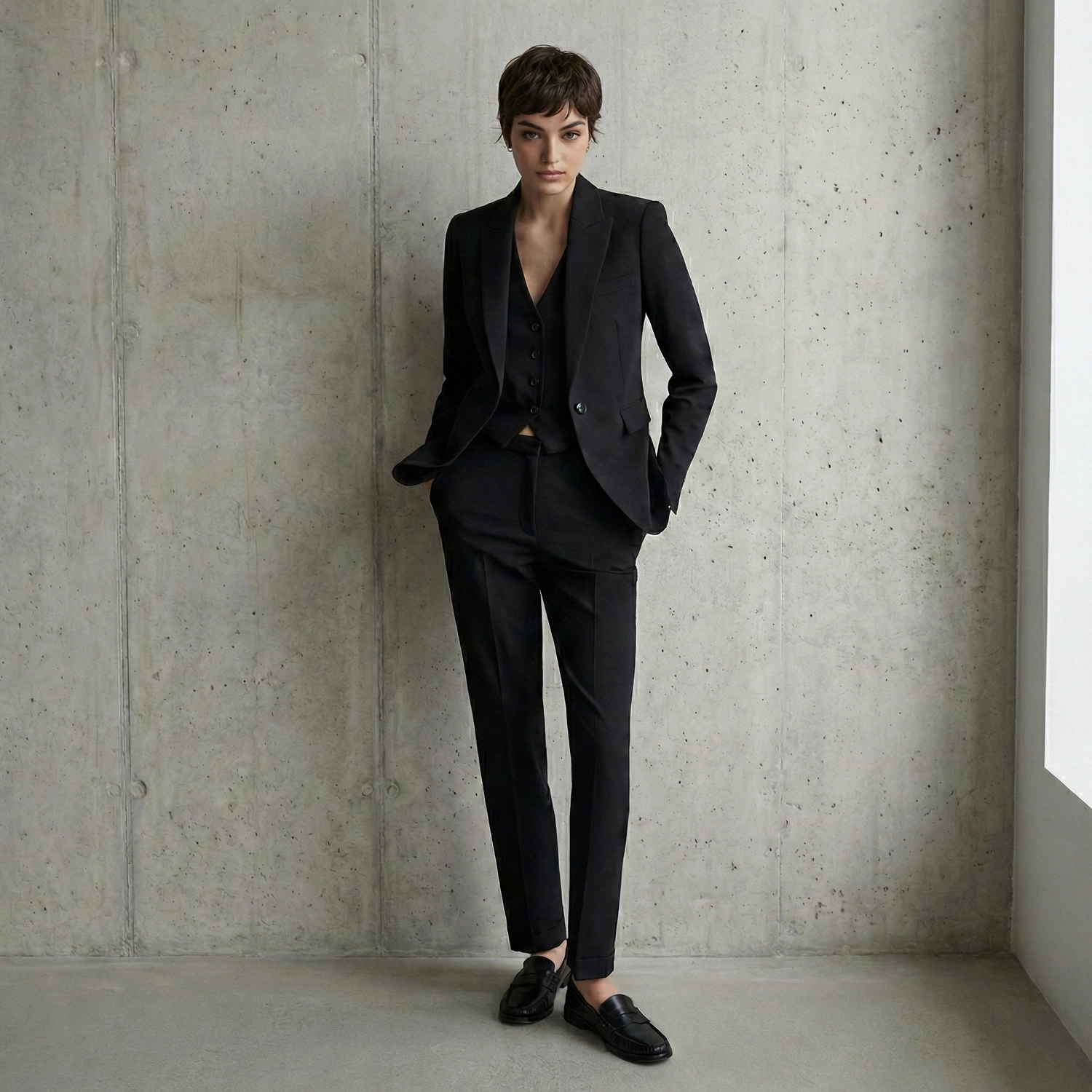
A common misconception is that a “suit” is gender-neutral. In reality, the construction DNA of a traditional women’s blazer is vastly different from that of an androgynous bespoke jacket. Understanding this distinction is vital when deciding between a Women’s suit vs Bespoke Androgynous suit.
Here is a technical breakdown of how these two garments diverge in silhouette, structure, and utility.
The Silhouette: Hourglass vs. V-Taper
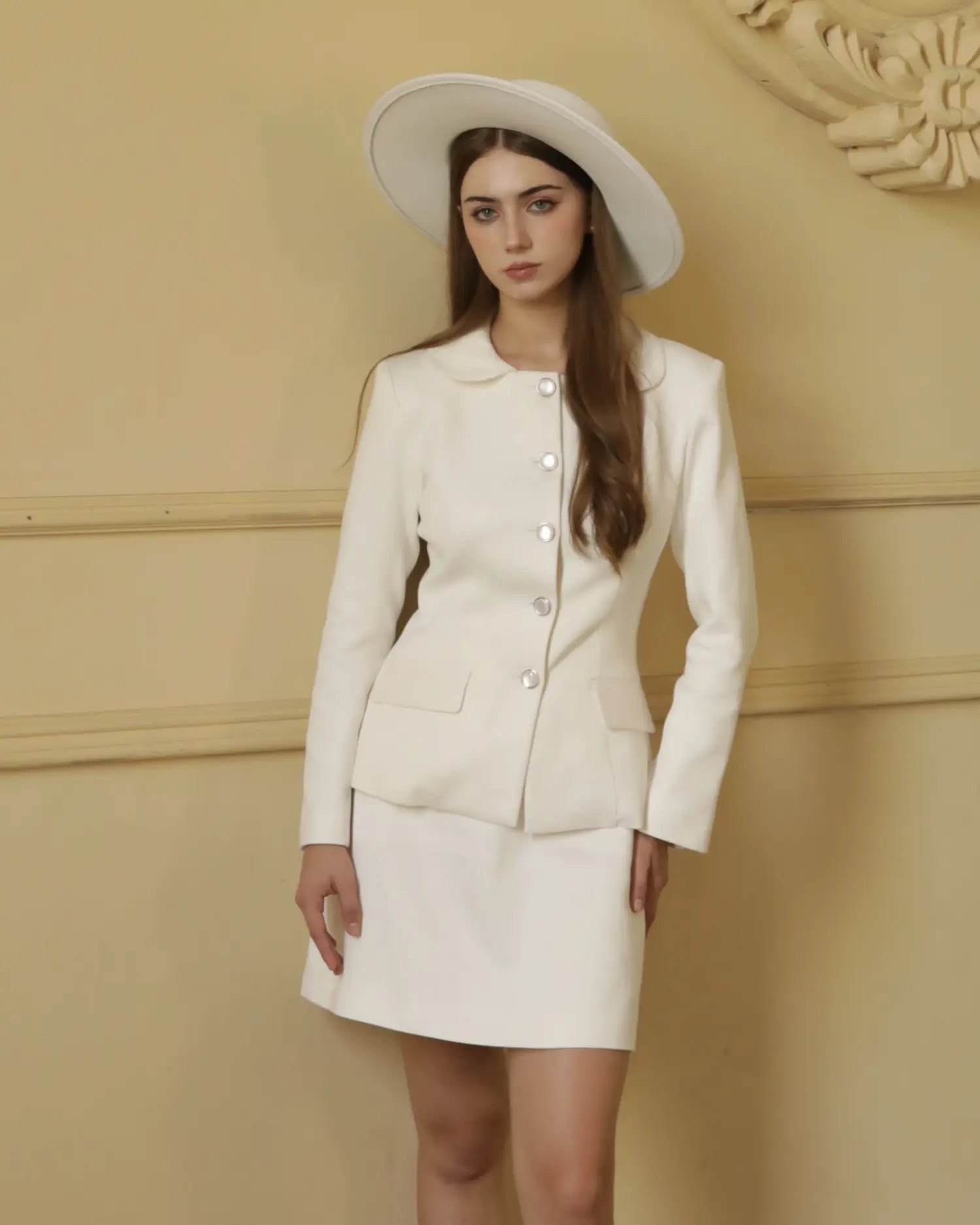
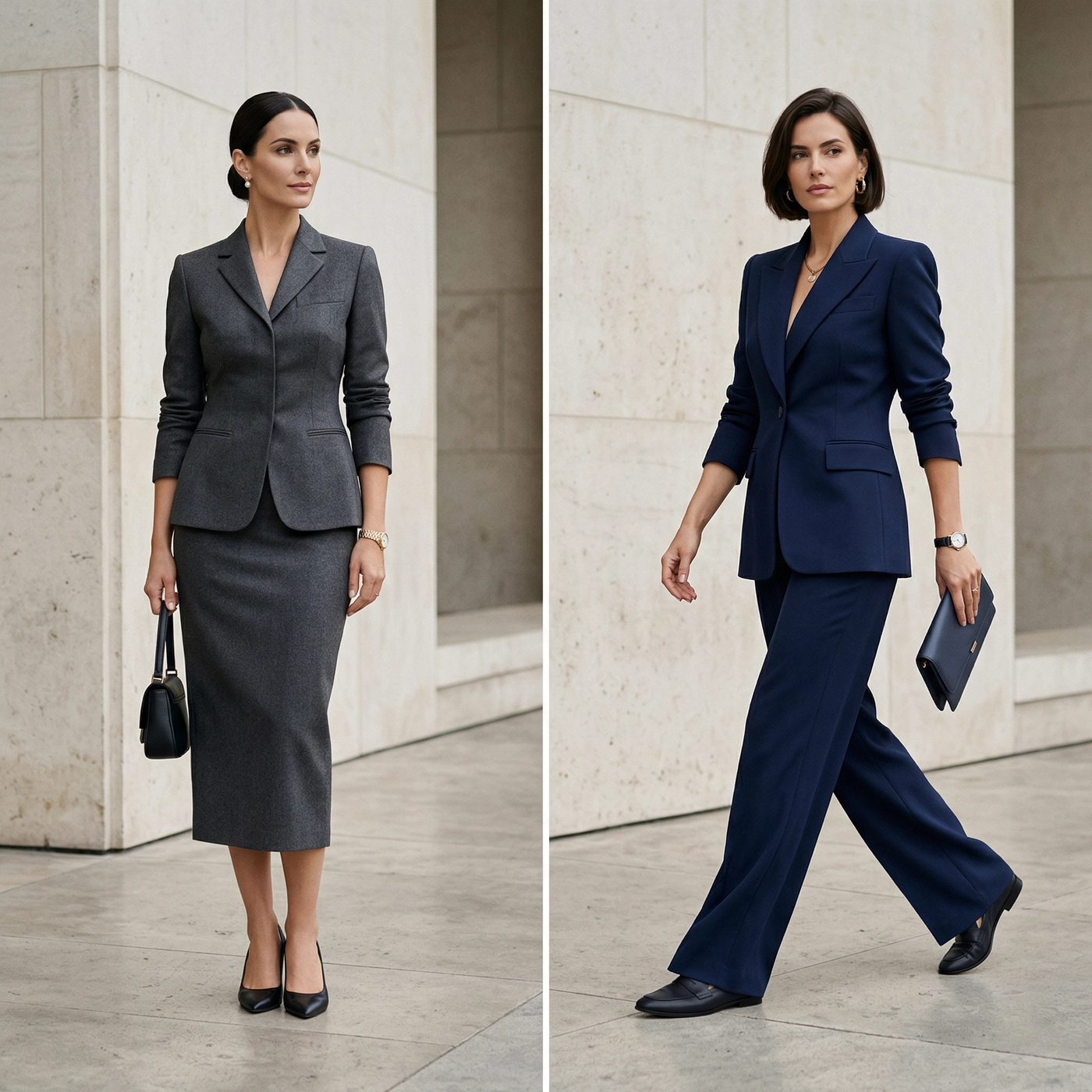
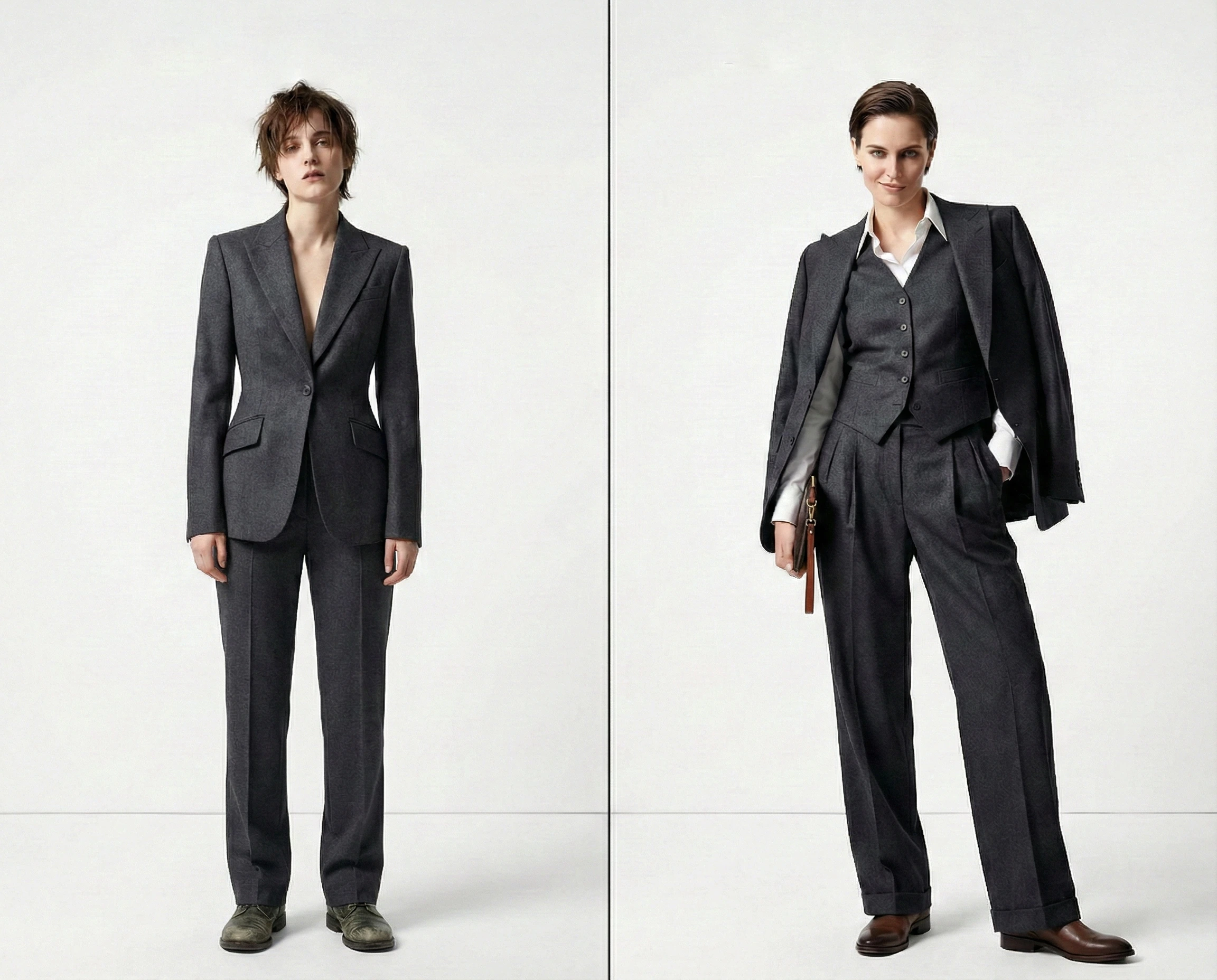
- Traditional Women’s Suit: The primary goal is Accentuation. Patterns are cut to follow the body’s curves closely. The waist is aggressively “nipped” or cinched to create an hourglass figure, and the jacket length often ends at the high hip to lengthen the leg line, which inadvertently highlights the width of the hips.
- Androgynous Bespoke Suit: The primary goal is Reconstruction. Tailors aim for a “V-taper” or a boxier profile. The waist suppression is gentle, just enough to give shape without hugging the body. The jacket length is typically longer (covering the seat), which is essential for creating the rectangular, masculine block.
The Shoulder Line: Natural vs. Extended
- Traditional Women’s Suit: Shoulders are usually cut narrow to match the wearer’s natural shoulder width, often with minimal or soft padding. This keeps the frame looking petite and feminine.
- Androgynous Bespoke Suit: The shoulder is the anchor of masculinity. Tailors often use “extended shoulders” (cutting the shoulder width slightly past the natural bone) combined with structured padding (roped or strong shoulders). This architectural trick broadens the upper body, making the waist and hips appear narrower by comparison.
Construction: Soft vs. Structured
- Traditional Women’s Suit: Frequently utilizes “fusing” (glued interlining) or very soft construction to maintain fluidity and lightness. The garment moves with the body.
- Androgynous Bespoke Suit: Relies on the internal architecture discussed earlier (floating canvas, chest piece). It is heavier and stiffer, designed to move independently of the body, maintaining its sharp lines regardless of the wearer’s posture.
Utility: Fashion vs. Function
- Traditional Women’s Suit: Notoriously lacks utility. Pockets are often shallow, sewn shut, or entirely decorative (faux pockets). Internal storage is rare.
- Androgynous Bespoke Suit: Deeply rooted in utility. Trousers feature deep pockets reinforced for daily use. Jackets include functional exterior pockets (including a ticket pocket) and multiple internal compartments for phones, wallets, or pens. It is a garment designed to be lived in, not just looked at.
Summary Comparison
| Feature | Traditional Women’s Suit | Androgynous Bespoke Suit |
| Primary Goal | Highlight curves (Hourglass) | Create straight lines (V-Shape) |
| Shoulder Width | Natural / Narrow | Extended / Broadened |
| Waist Fit | Tight / Cinching | Gentle / Skimming |
| Pockets | Often Decorative | Fully Functional |
| Vibe | Feminine Elegance | Dapper / Masculine Power |
From Boardroom to Ballroom: Applying These Codes
Once the architecture of the fit is mastered – using canvas, extended shoulders, and high-rise cuts – the distinction between a business suit and a wedding ensemble comes down to fabric selection and detailing. The structural “bones” remain identical; only the “skin” changes.
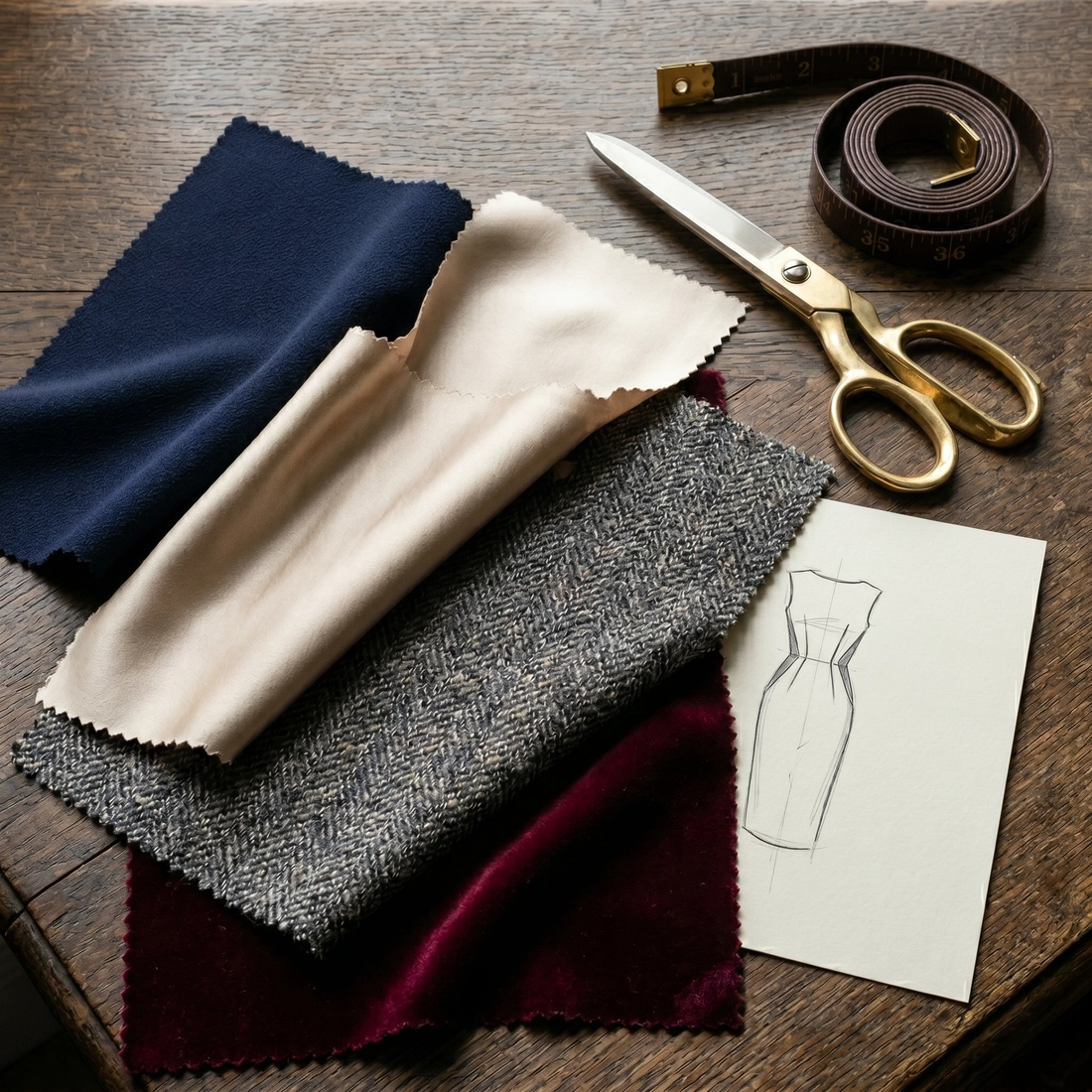
- For Business (The Daily Armor): When these masculine codes are applied to matte worsted wools in Navy or Charcoal, the result is a formidable bespoke suit for the professional world. The structured silhouette projects authority and competence, creating a “power suit” that functions as daily armor. The focus here is on durability and breathability for long working hours.
- For Weddings (The Tuxedo): For the altar, the same engineering underpins the bespoke tuxedo. However, the choice of fabric shifts to rich Black Barathea or plush Velvet. Because formal fabrics (especially satin facings) reflect light and highlight every contour, the underlying structure becomes even more critical. A perfectly constructed canvas ensures that the satin lapels sit smooth and crisp, allowing the wearer to inhabit the masculine bridal aesthetic with absolute confidence.
Conclusion
Ultimately, achieving the perfect masculine aesthetic is not a matter of alchemy, but of geometry. It requires abandoning the notion that the body must change to fit the garment, and instead demanding that the garment be engineered to honor the individual. Whether for the boardroom or the aisle, a truly well-tailored suit does more than just cover the body; it aligns the exterior silhouette with the interior identity, proving that the most essential component of any bespoke commission is not the fabric, but the authenticity of the person wearing it.
Ready to visualize your look? Now that you understand the engineering, discover your perfect style in our guide: [Beyond the Gown: The Definitive Guide to LGBT & Androgynous Bridal Suits].
DISCOVER PHYIGITAL BESPOKE TAILORING