A Complete Guide to Men Suit Construction: Styles, Structure, Fabrics, and Tailoring Levels

Understanding men suit construction is essential for anyone looking to invest in quality attire. A well-chosen suit does more than just elevate your style – it improves your confidence, ensures a proper fit, and communicates professionalism in every setting.
When shopping for a men two-piece suit or a men three-piece suit, knowing the differences between styles and components can make all the difference. This guide will walk you through suit types, jacket variations, construction, materials, and tailoring levels, helping you make an informed choice that suits both your lifestyle and aesthetic preferences.
Suit Types: Two-Piece vs. Three-Piece
Two-Piece Suit
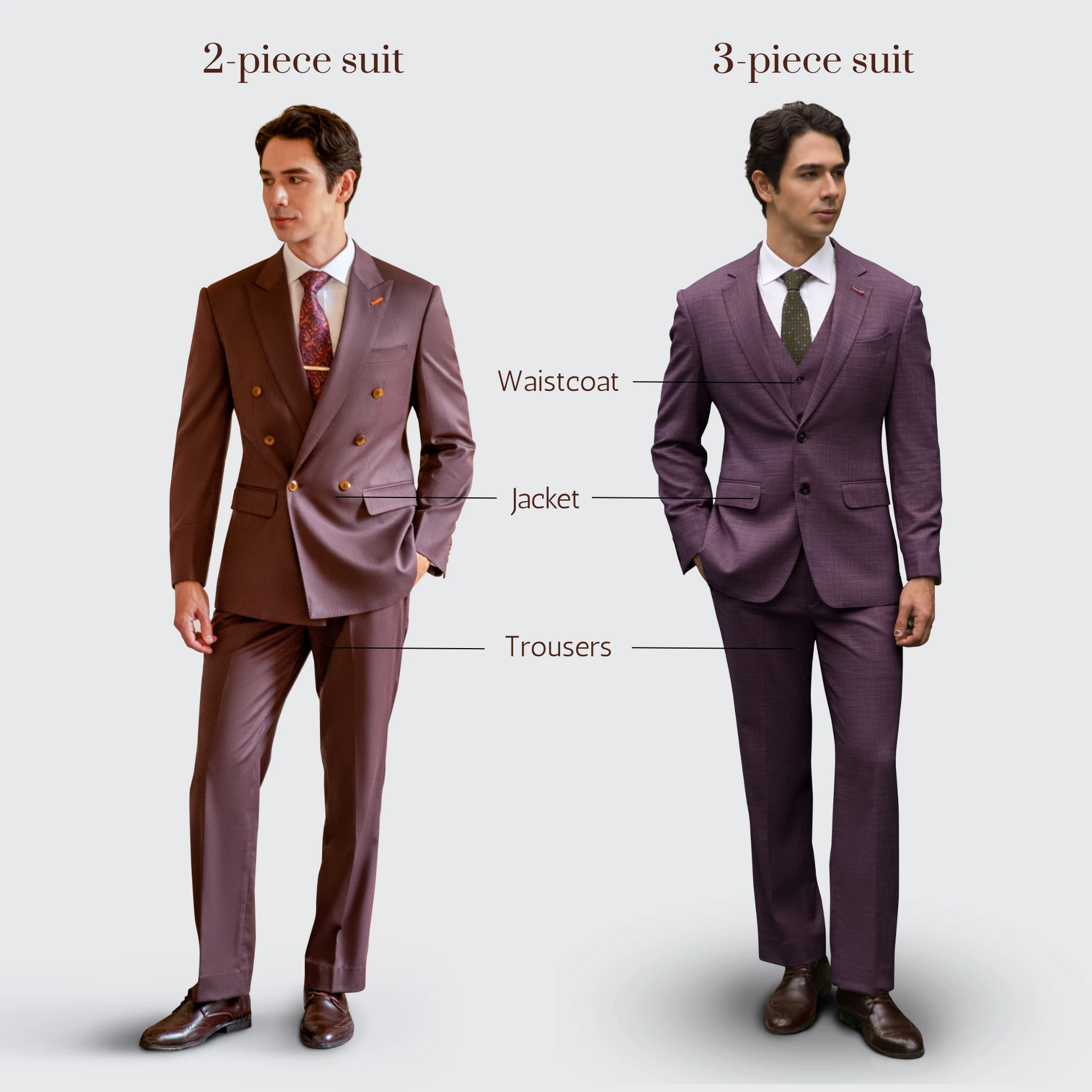
A two-piece suit is the most common and versatile option for men. It consists of a jacket and matching trousers, forming the foundation of a sharp, professional look. Two-piece suits are ideal for business meetings, office wear, and semi-formal events. Many buyers prefer this style because it is easier to mix and match with other wardrobe pieces and typically offers a comfortable fit for everyday wear. It is also generally more accessible in terms of pricing compared to a three-piece suit.
Three-Piece Suit
On the other hand, a three-piece suit adds a waistcoat to the jacket and trousers, creating a more formal and polished ensemble. The waistcoat not only adds structure to the outfit but also enhances the silhouette, making it a popular choice for weddings, formal parties, and high-profile business events. Buyers often choose three-piece suits when they want to make a stronger style statement, benefit from additional layering in cooler weather, or showcase attention to detail and sophistication.
Understanding the differences between these two main types of suits helps you decide which style best fits your needs, whether you’re aiming for versatility and comfort or elevated elegance and formality.
Read The differences between Two-Piece suit and Three-Piece suit
Jacket Variations
Choosing the right jacket is one of the most important decisions when buying a suit. The style you select affects your overall silhouette, the impression you make, and how versatile the suit is for different occasions.
Closure variations: Single-Breasted vs. Double-Breasted Jacket
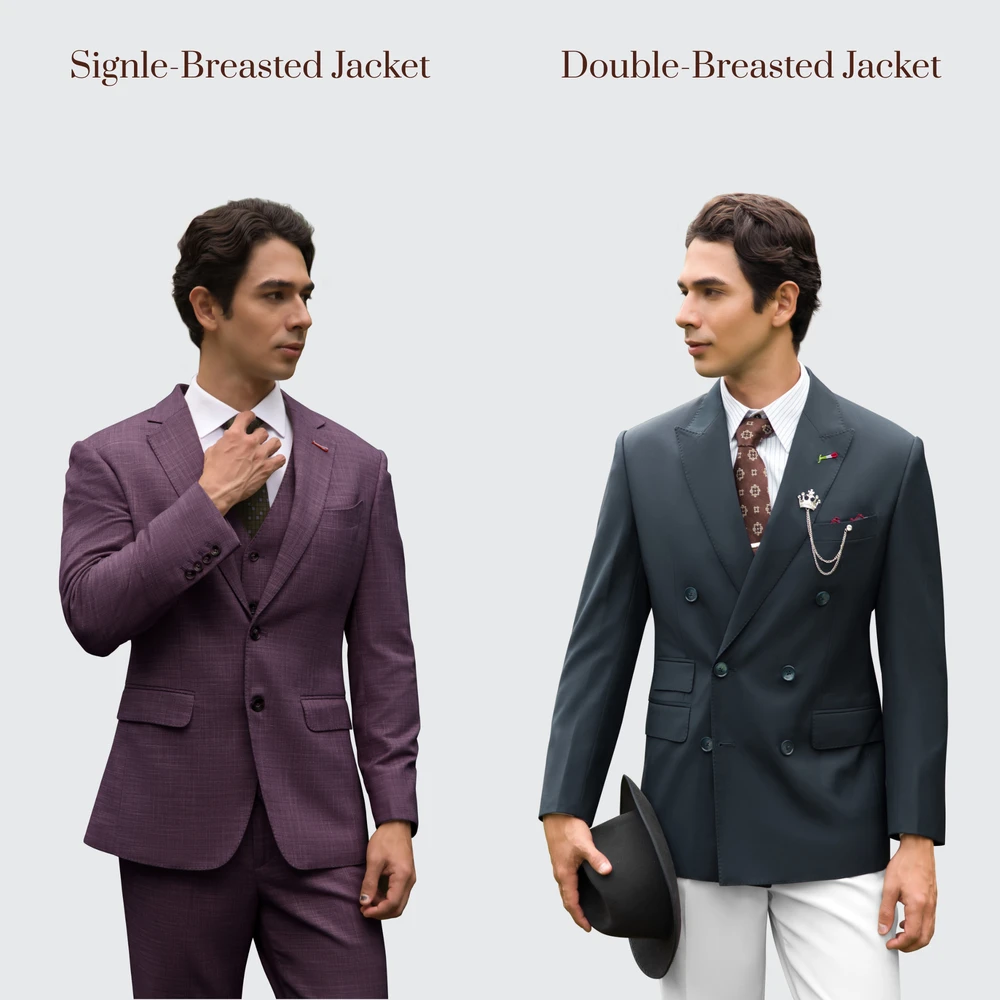
- Single-Breasted Jacket: The single-breasted suit is the most versatile and widely worn style for men. Typically featuring one to three buttons, it creates a clean, modern silhouette that works for both business and semi-formal occasions. This style is flattering on most body types, easy to pair with different trousers and shirts, and remains a timeless choice for everyday business or formal wear.
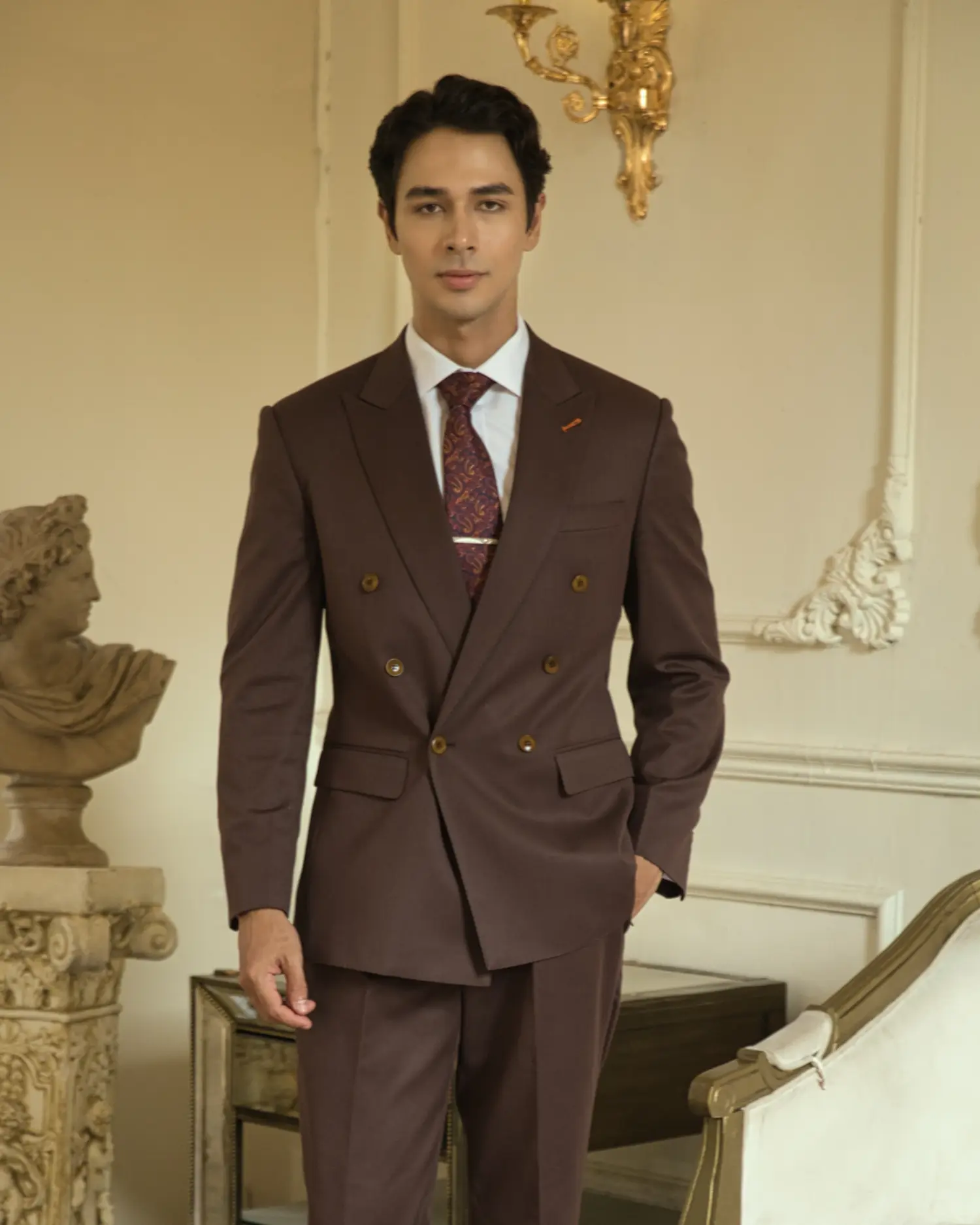
- Double-Breasted Jacket: A double-breasted suit exudes a classic and powerful presence. Typically featuring four to six buttons, this style conveys formality and confidence, making it ideal for weddings, formal parties, or high-profile business events. The overlapping front panels create a structured chest and refined silhouette, resulting in a commanding look that is both elegant and authoritative.
Read Best suit style for men: Single-Breasted Suit vs Double Breasted-Suit
Lapel Variations
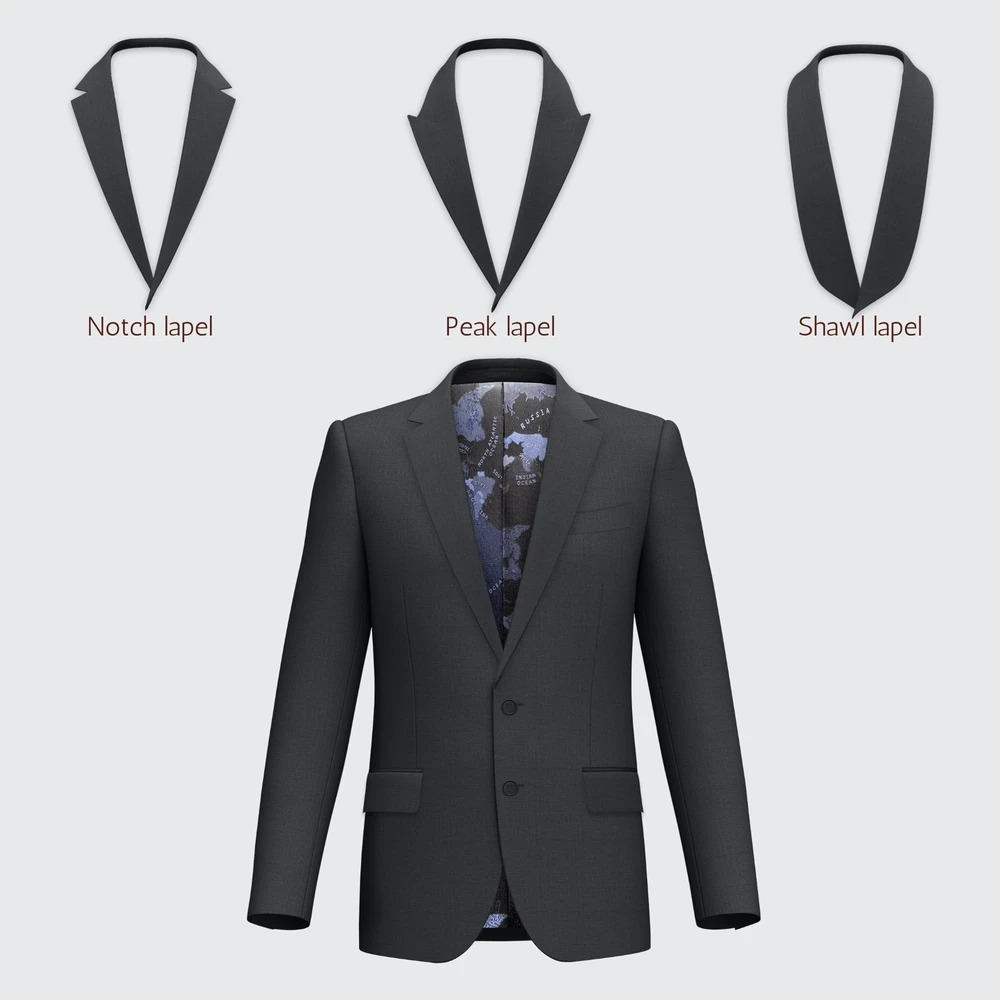
The lapel style further defines the character of a jacket. Choosing the right lapel helps balance your body shape and match the occasion.
- Notch Lapel: Most common and versatile, works for business and casual settings.
- Peak Lapel: Adds confidence and formality, often used on double-breasted jackets.
- Shawl Lapel: Smooth, rounded edges, typically for evening wear or tuxedos.
Notes for Three-Piece Suits
When wearing a three-piece suit, the jacket should harmonize with the waistcoat underneath. A well-fitted jacket accommodates the vest comfortably without pulling or adding bulk, ensuring a sleek, streamlined silhouette. Striking the right balance between jacket and waistcoat is key to achieving a sharp, cohesive, and polished overall look.
Men Suit Construction
When buying a suit, understanding how each component is constructed can help you evaluate quality, fit, and durability. Knowing what’s inside a jacket, trousers, or waistcoat allows you to make smarter choices and ensures your investment lasts longer.
1. Jacket (Blazer) Structure
The jacket is the most visible part of a suit, and its construction directly affects how it drapes on your body. Key elements to consider include:
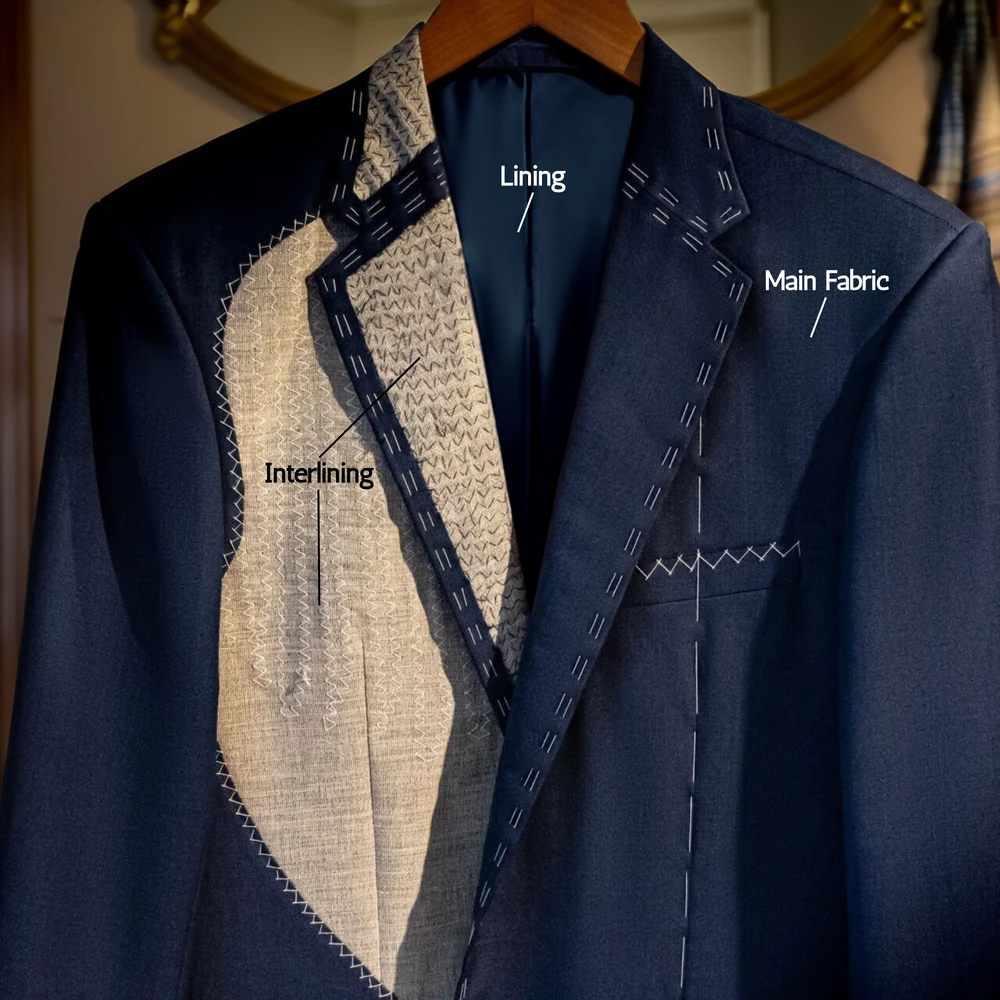
- Canvas: The canvas is the internal layer that gives the jacket its shape and structure. It can be constructed as full canvas, half canvas, or fused, and it plays a key role in determining how the jacket holds its form and drapes over the body over time. A high-quality canvas ensures the jacket maintains a smooth, natural silhouette while providing durability and long-lasting shape.
- Chest Piece & Shoulder Structure: The chest piece and shoulder structure provide essential shape and support for the jacket, defining the chest and shoulder lines. Shoulder pads can range from soft and natural to more structured, directly influencing both the silhouette and overall comfort. A well-designed chest and shoulder structure ensures the jacket drapes smoothly while allowing natural movement.
- Sleeve Head: The sleeve head is a small padding located at the top of the sleeve, designed to help the sleeve fall smoothly from the shoulder while supporting natural arm movement. It ensures the jacket maintains a clean line and provides comfort when lifting or bending the arms.
- Lining: The lining of a jacket, which can be full-lined, quater-lined, or unlined, plays an important role in comfort and function. It allows the jacket to glide smoothly over your shirt, protects the internal construction, and contributes to the overall durability. A well-constructed jacket with proper lining feels comfortable, moves naturally with your body, and maintains its shape even after repeated wear.
A well-constructed jacket feels comfortable, moves naturally, and keeps its shape after repeated wear.
2. Trousers Structure
Trousers complete the suit silhouette and should balance style with comfort. Look for:
- Waistband & Closure: The waistband and closure of trousers can feature hooks, bars, or buttons, providing a secure fit while maintaining a clean appearance. Some trousers also include a waistband curtain for added comfort and support, ensuring the waistband sits smoothly and comfortably around the waist.
- Pockets: The pockets of a suit trouser, whether slanted or straight and welted or reinforced, are designed to maintain both shape and functionality. Well-constructed pockets prevent sagging and ensure that the trousers retain a clean, sharp appearance while remaining practical for everyday use.
- Pleats vs. Flat Front: When choosing between pleated and flat-front trousers, pleated styles offer slightly more room and a classic, traditional feel, while flat-front trousers create a modern, streamlined appearance that emphasizes a clean and tailored silhouette.
- Hem: The hem of a suit trouser, whether cuffed or plain, influences both the formality of the outfit and how the fabric drapes over your shoes. Choosing the right hem style helps maintain a polished, balanced look and complements the overall silhouette of the suit.
3. Waistcoat (Vest) Structure
For a three-piece suit, the waistcoat adds elegance and structure. Consider:
- Front & Back Panels: The front and back panels of a waistcoat are designed to shape the torso without adding bulk, supporting a streamlined silhouette under the jacket and ensuring a polished, well-fitted appearance.
- Adjuster Strap: Allows minor waist adjustments for a snug fit.
- Lining: Adds comfort and ensures the vest retains its shape.
- Button Style & Lapel Options: The button style and lapel options of a waistcoat, whether single-breasted or double-breasted, should complement the jacket to create a cohesive overall look. A well-constructed waistcoat ensures that the jacket lays flat, avoids pulling or wrinkling, and completes a polished, streamlined appearance.
By understanding these construction details, you can assess a suit beyond fabric or price, focusing on fit, comfort, and longevity. Investing in well-built pieces ensures your suit maintains its sharp look for years.
Suit Materials
Choosing the right materials is just as important as selecting the style and construction of a suit. The fabrics and internal components not only affect the look and feel but also determine comfort, durability, and overall value.
Fabric
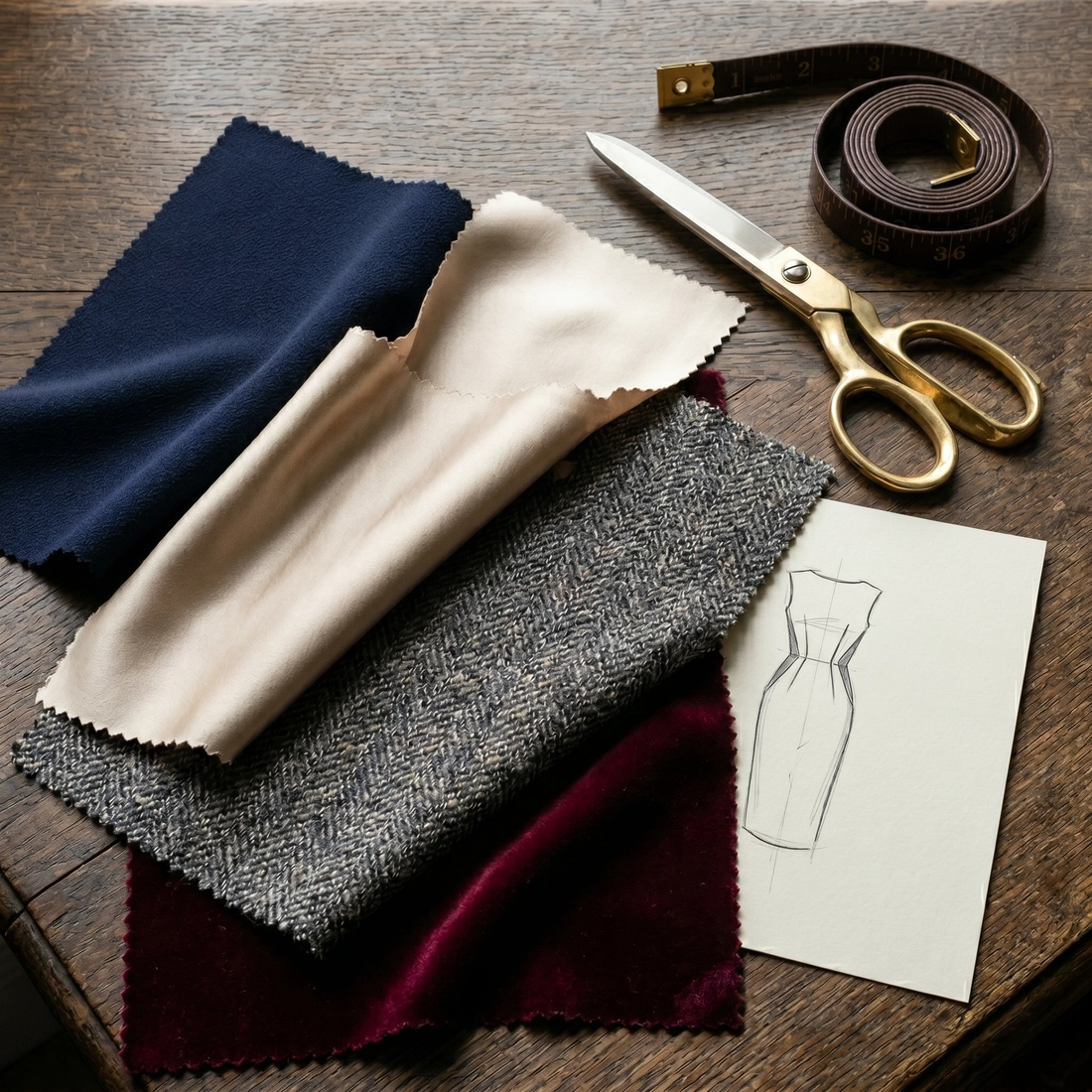
The fabric of a suit forms its outer layer and greatly influences both appearance and performance. Common options include wool, linen, and cotton, as well as blended fabrics that combine natural fibers with synthetics for added durability or stretch. Wool is the most traditional and versatile choice, offering breathability, drape, and longevity, while linen and cotton are lighter and better suited for warm climates or casual styles. Seasonal variations in fabric weight and weave allow suits to perform optimally throughout the year.
Linings
Equally important are the linings, which affect how the suit moves and feels. High-quality linings such as Bemberg, silk, or polyester ensure that the jacket glides smoothly over your shirt, enhances comfort, and protects the internal construction from wear. Bemberg and silk are premium options, known for their softness, breathability, and durability, while polyester linings are a practical choice for affordability and easy maintenance.
Read Suit Linings Explained: The Hidden Craftsmanship That Defines a Bespoke Suit
Interlining
Internal structural materials also play a critical role in the suit’s form and longevity. Horsehair canvas provides shape to the jacket, while fusible interlining offers a lighter, more cost-effective alternative. Shoulder pads help define the silhouette, and the choice of buttons-ranging from natural horn to high-quality corozo-can subtly influence the suit’s overall aesthetics.
Suit Tailoring Levels
When shopping for a suit, buyers usually encounter three tailoring levels: Ready-to-Wear (RTW), Made-to-Measure (MTM), and Bespoke. Each option offers a different degree of fit, customization, and craftsmanship – and understanding these differences helps you choose the right investment.
Level 1: Ready-to-Wear
Ready-to-Wear (RTW) suits are produced in standard sizes and are the quickest option to purchase. Because the patterns are fixed, RTW provides an average fit with minimal adjustments, suitable for buyers who need a suit immediately or prefer a budget-friendly option.
Level 2: Made-to-Measure
Made-to-Measure (MTM) suits start with an existing base pattern that’s adjusted to your measurements. This delivers a noticeably better fit than RTW and allows for limited customization, such as fabric choice, sleeve length, trouser length, and some stylistic details. However, MTM still cannot accommodate highly unique body shapes or advanced personalization.
Level 3: Bespoke tailoring
Bespoke tailoring represents the highest level of craftsmanship. The pattern is created entirely from scratch based on your unique body structure. Every element – from shoulder shape to lapel width, waist suppression, canvas structure, and button stance – is fully customizable. Multiple fittings ensure the suit evolves precisely to your posture and movement, resulting in a piece that fits flawlessly and expresses your personal style.
Read Types of fitted suits for men: Classic Fit vs Tailor Fit vs Relaxed Fit
Conclusion: Why Bespoke Is the Optimal Choice
In the end, nothing compares to a bespoke suit when it comes to achieving the perfect balance of fit, craftsmanship, and longevity. A bespoke garment is created around your unique body, allowing every line, seam, and proportion to work in harmony. The result is a suit that not only fits flawlessly but also maintains its structure, comfort, and elegance for years to come.
While traditional bespoke tailoring requires in-person fittings, online bespoke has made this level of precision more accessible than ever. With advanced measurement methods, detailed consultations, and skilled craftsmanship, buyers can now enjoy the advantages of bespoke tailoring with modern convenience – without compromising quality.
For anyone looking to invest in a suit that truly reflects their identity and lasts a lifetime, bespoke remains the most rewarding choice.
DISCOVER PHYIGITAL BESPOKE TAILORING