What Are the Most Timeless Colors for Bespoke Suits?
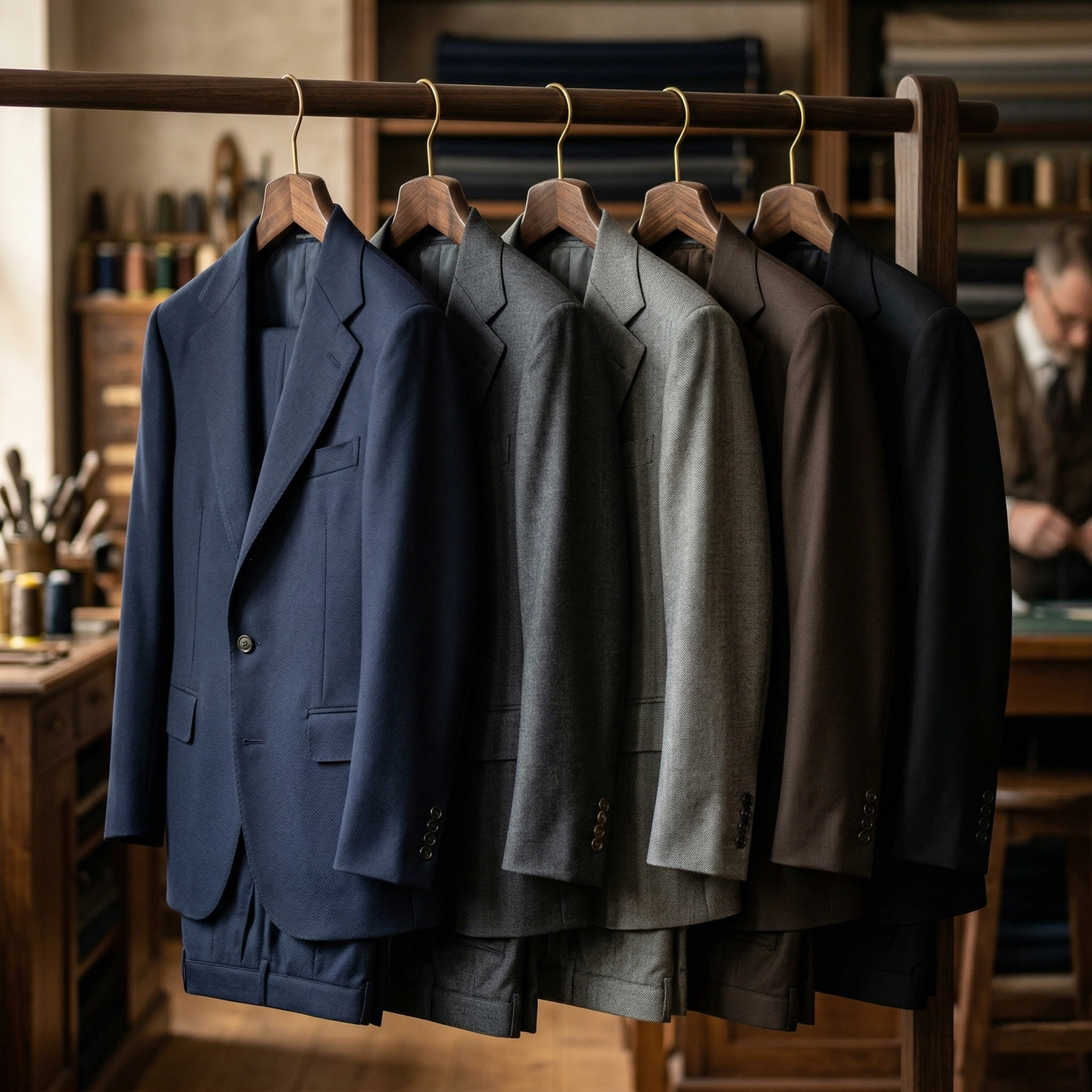
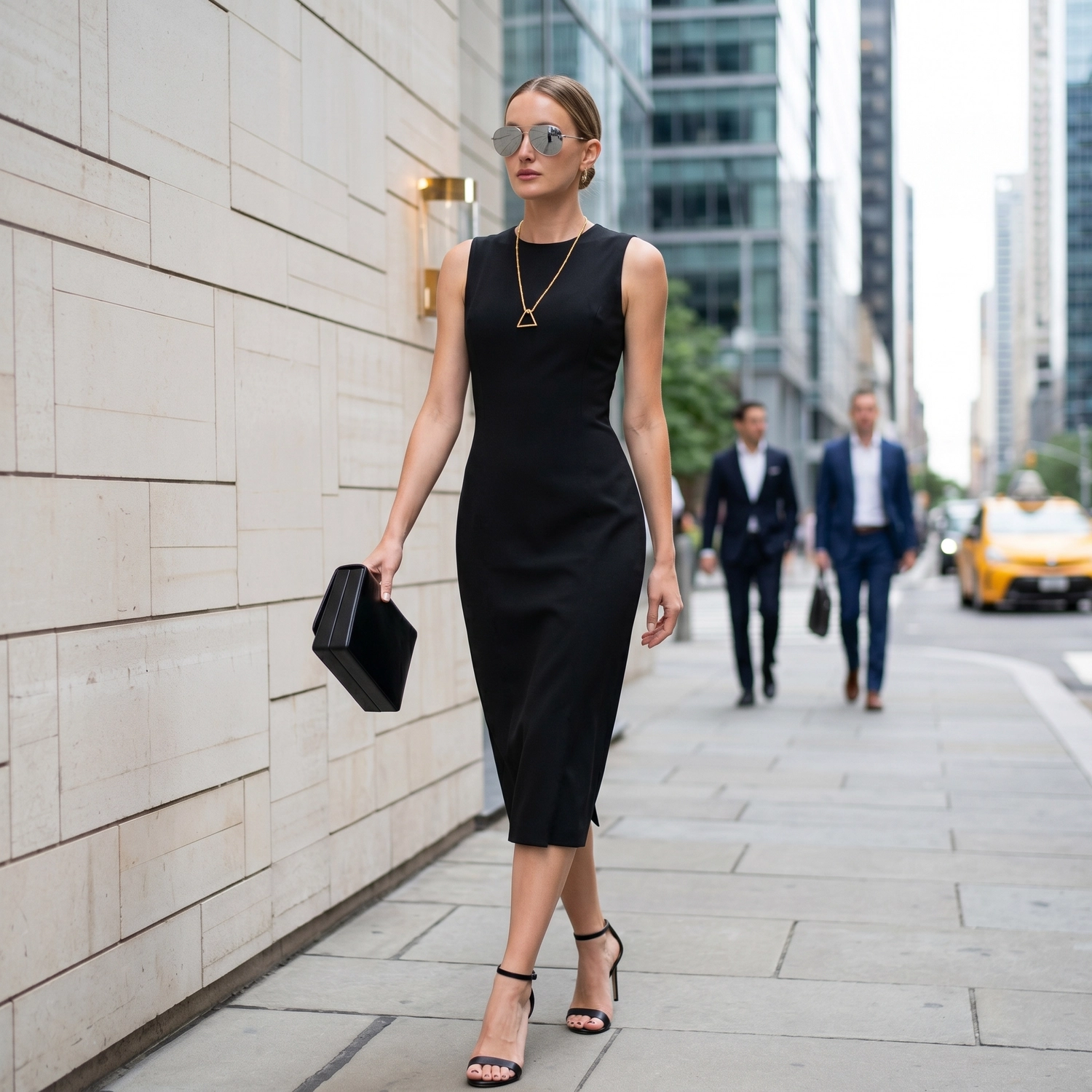
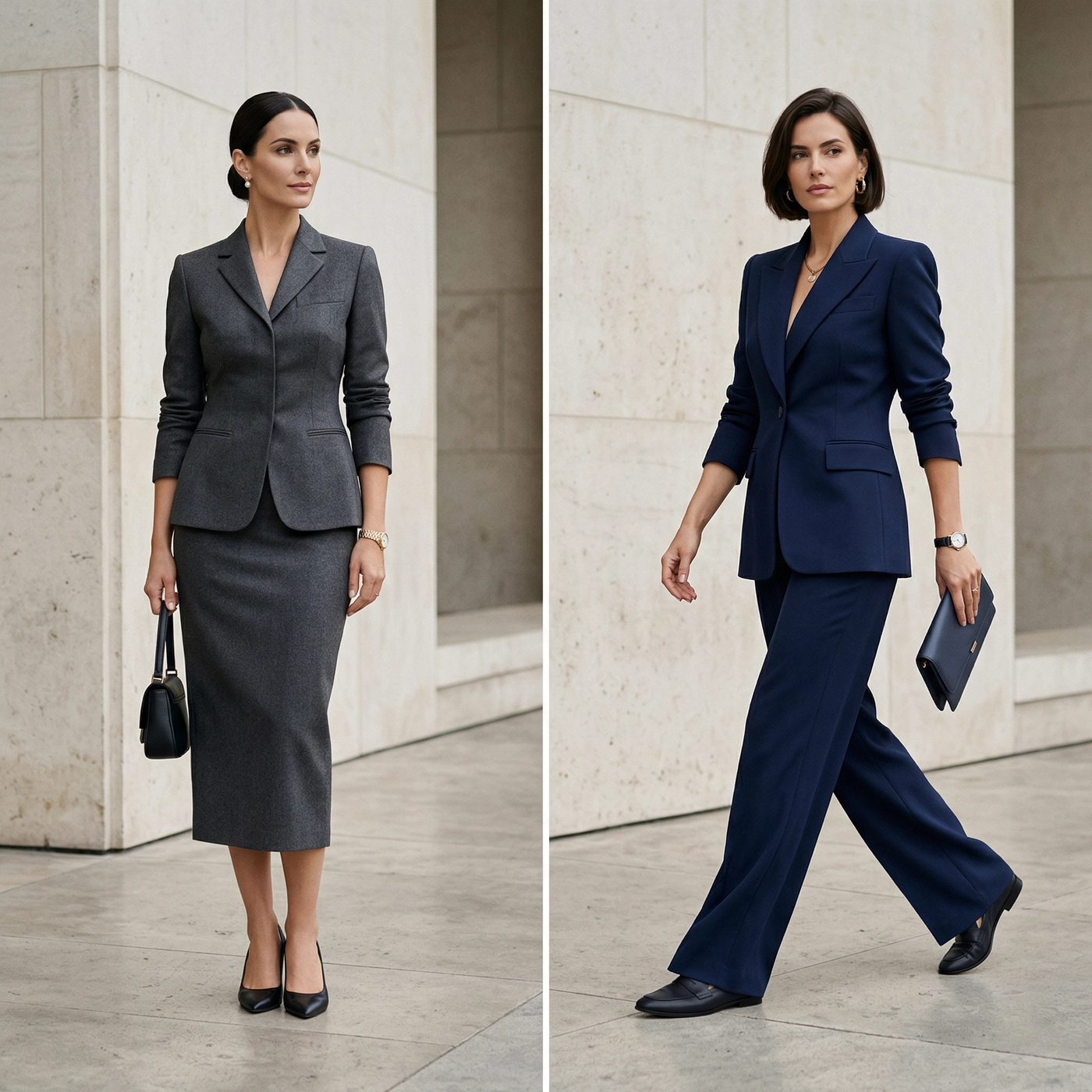
In the refined world of bespoke tailoring, color is the first silent communicator. Before the precision of the fit is even noticed, the hue of your garment sets the tone for the entire encounter. Choosing timeless colors for bespoke suits is more than just an aesthetic preference; it is a strategic investment in your professional legacy. By focusing on shades that command respect across decades, you ensure your wardrobe remains effortlessly relevant, regardless of how fleeting fashion trends may shift.
The Essential Foundation: The “Must-Have” Colors
For any professional building a wardrobe from the ground up, two colors stand as the non-negotiable foundation. These shades are the anchors of bespoke tailoring, offering a level of adaptability that makes them appropriate for nearly any formal or business environment.
Navy Blue: The King of Versatility
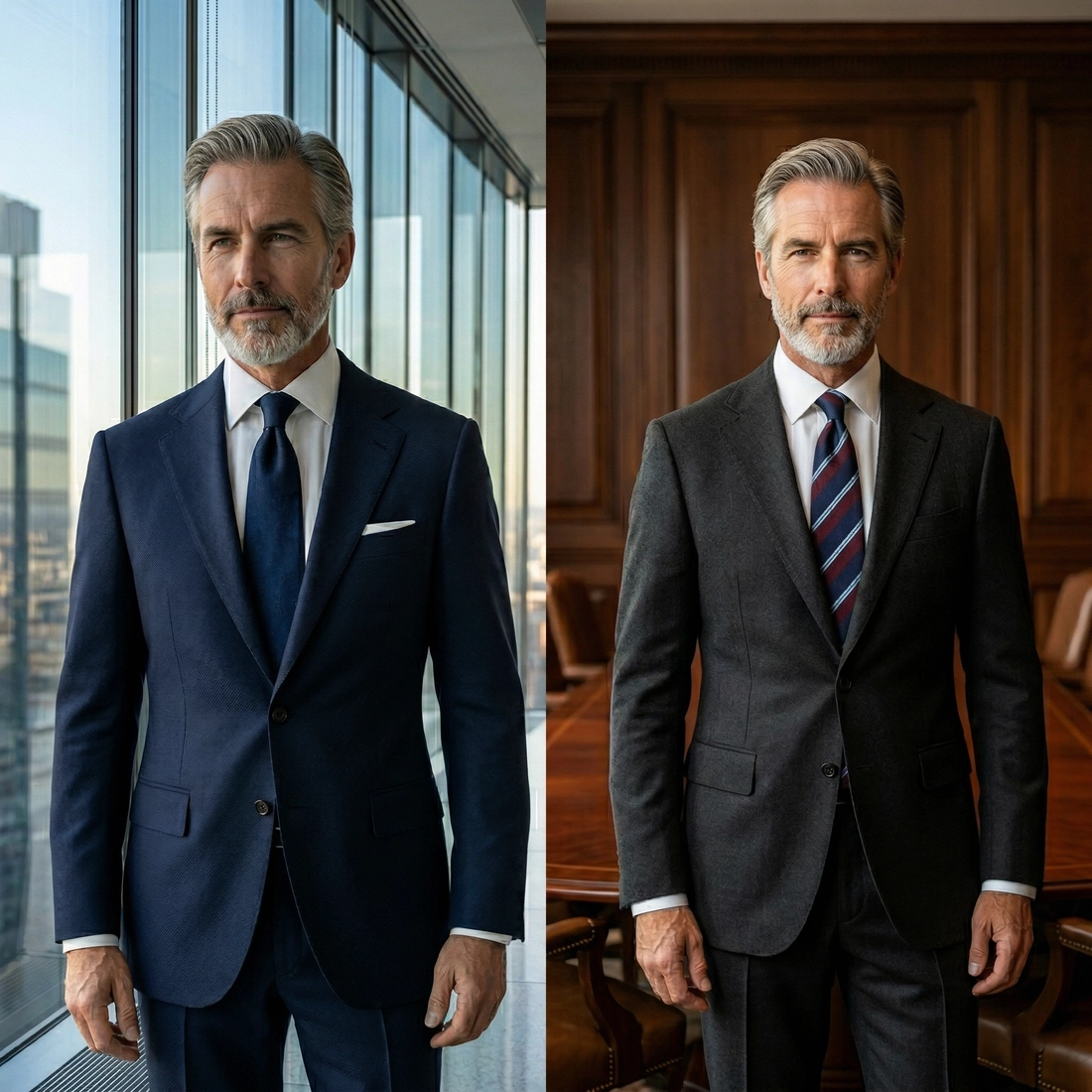
The navy suit is the undisputed cornerstone of a modern wardrobe. Its timelessness lies in its unique ability to appear both authoritative and approachable. When opting for bespoke tailoring, choosing a Deep Midnight Navy or Ink Blue provides a visual depth: a rich saturation of pigment.
- Why it’s Timeless: It is the most versatile color in existence. A deep navy is formal enough for a high-stakes boardroom presentation, yet sophisticated enough for an evening gala or a wedding.
- Psychological Impact: In color psychology, navy conveys trust, reliability, and calm confidence. It commands respect without the stark severity that black sometimes imposes.
- Styling Potential: Beyond the full suit, a navy jacket can often double as a standalone blazer, pairing effortlessly with grey trousers or denim for a refined “business casual” look.
Charcoal Grey Suit: The Formal Workhorse
If navy is about versatility, the charcoal grey suit is about understated maturity. As the darkest shade of grey before reaching black, it is the quintessential choice for serious professional settings.
- The Character: Charcoal projects an image of stability and expertise. It is often the preferred choice for high-stakes negotiations and solemn occasions where a respectful, disciplined appearance is paramount.
- The Neutral Canvas: The true brilliance of charcoal is that it is chromatically neutral. Because it lacks strong blue or brown undertones, it acts as a perfect canvas for almost any shirt and tie combination, from crisp white and sky blue to bold regimental stripes.
- Adaptability: It transitions seamlessly from the office to a formal dinner, maintaining a polished silhouette that remains sharp under both natural and artificial lighting.
The Secondary Classics: Expanding the Wardrobe
Once the foundations of navy and charcoal are established, the next stage of bespoke tailoring involves introducing shades that offer more character without sacrificing professional decorum. These secondary shades allow a professional to express stylistic sophistication with a deeper sense of personality.
Mid-Grey (Cambridge Grey): The Daytime Icon
While charcoal is reserved for the most formal boardrooms, Mid-Grey (often referred to as Cambridge or Oxford Grey) is the optimal choice for daytime professional style.
- The Aesthetic: This shade offers a more modern, approachable, and light-hearted feel. It serves as the perfect “bridge” for those who find charcoal too heavy for daily office wear but still wish to maintain a disciplined, sharp silhouette.
- Tonal Versatility: This color possesses incredible “tonal versatility,” pairing beautifully with a wide spectrum of accessories, ranging from the classic white shirt to bolder, more saturated tie colors.
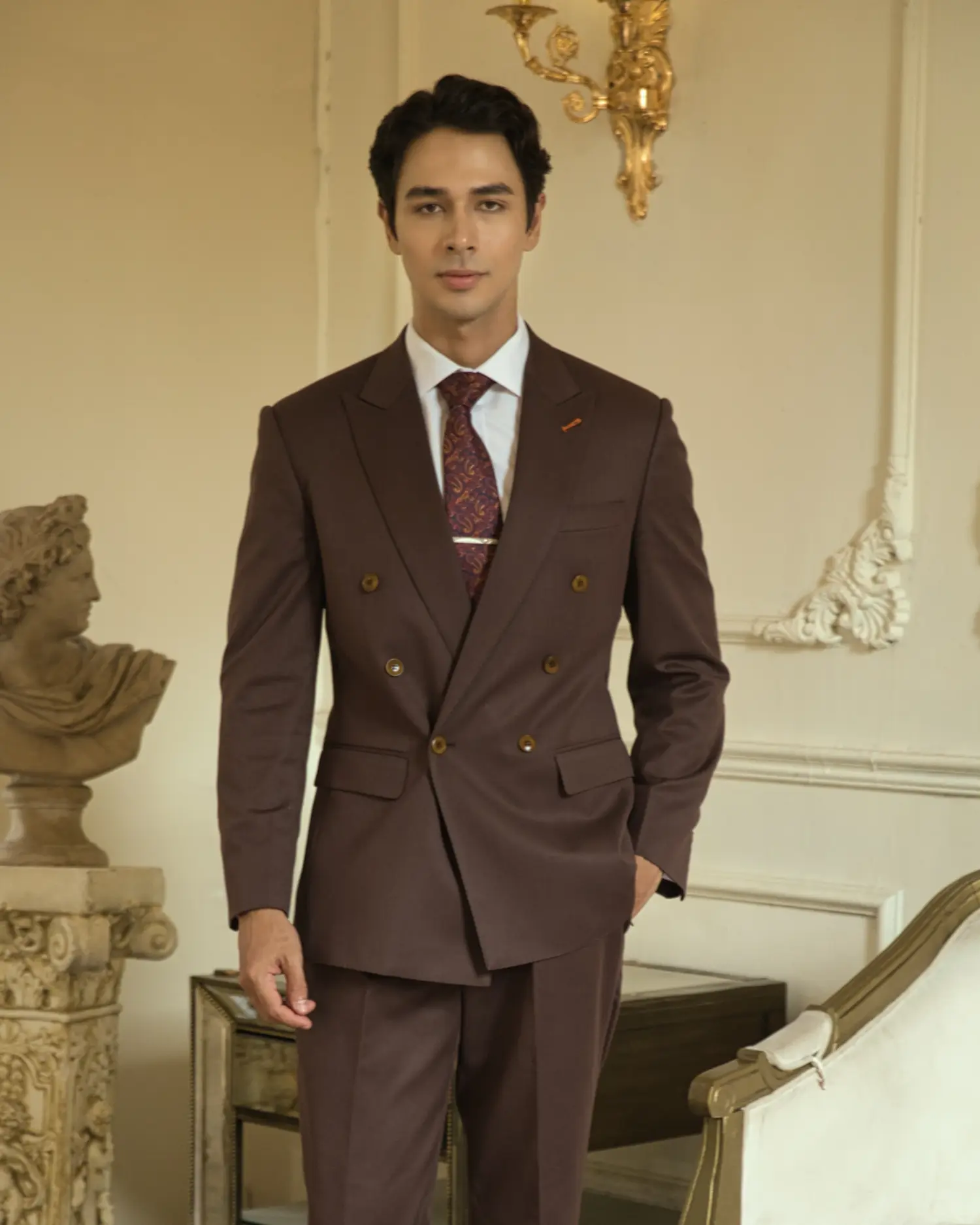
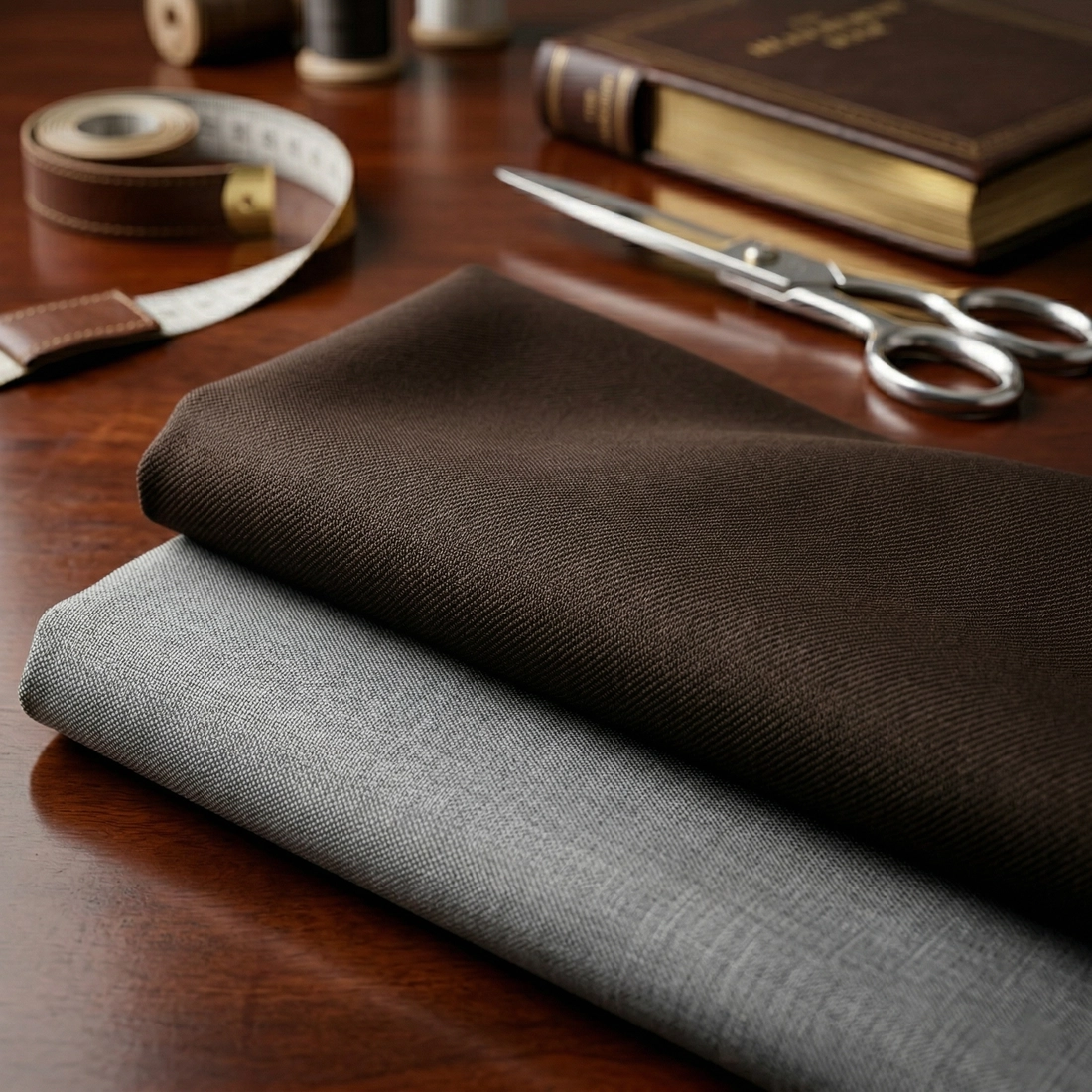
Dark Brown (Chocolate/Espresso): The Sophisticated Alternative
Once restricted by the outdated “No brown in town” rule, deep brown tones have made a powerful comeback as a symbol of sartorial expertise and quiet luxury.
- The Depth of Shade: When commissioning a bespoke tailored suit in brown, aim for “Espresso” or “Deep Mahogany” hues. These colors possess a luxurious depth that provides an artistic alternative to the traditional blue-grey spectrum.
- Visual Warmth: Dark brown offers an intuitive “visual warmth” that cooler tones lack. It is particularly striking when rendered in textured fabrics like flannel or hopsack, making the suit a definitive style statement for the Autumn-Winter months, a choice that subtly sets the wearer apart from the masses.
The Formal Standard: Black Bespoke Suits
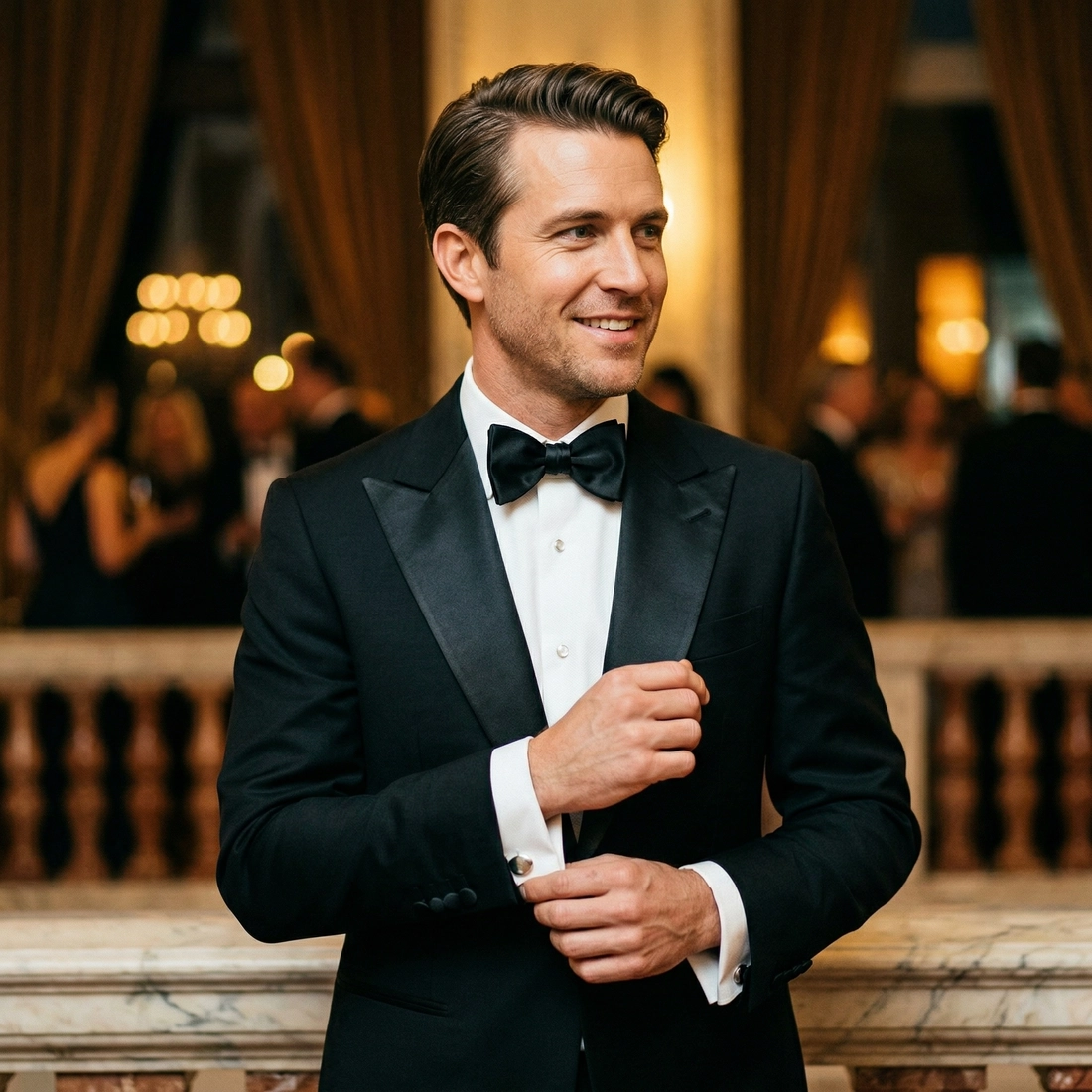
While navy and charcoal are the heroes of the boardroom, black remains the undisputed champion of formal nighttime protocol. It is the color of peak elegance, reserved for life’s most significant and ceremonial moments.
- The “Six O’Clock” Protocol: Traditionally, black is reserved for events after sundown. It is the mandatory choice for black-tie galas, formal weddings, and prestigious evening ceremonies. While a black suit can appear overly somber in a daytime business setting, it commands unparalleled respect once the evening lights dim.
- The Texture of Evening Wear: A black bespoke tailored suit achieves its prestige through the contrast of materials. In formal commissions like a tuxedo, the deep matte finish of premium wool is often paired with lustrous Silk or Satin lapels. This interplay of textures creates a visual hierarchy that mass-produced suits cannot replicate, highlighting the artisanal construction of the garment.
- Pro-Tip: The “Midnight” Alternative: For a truly sharp evening look, consider Midnight Blue. Under artificial light, this pigment-rich hue often appears “blacker than black”, offering a more vibrant depth than a standard black fabric.
Seasonal Timelessness: Summer & Resort Colors
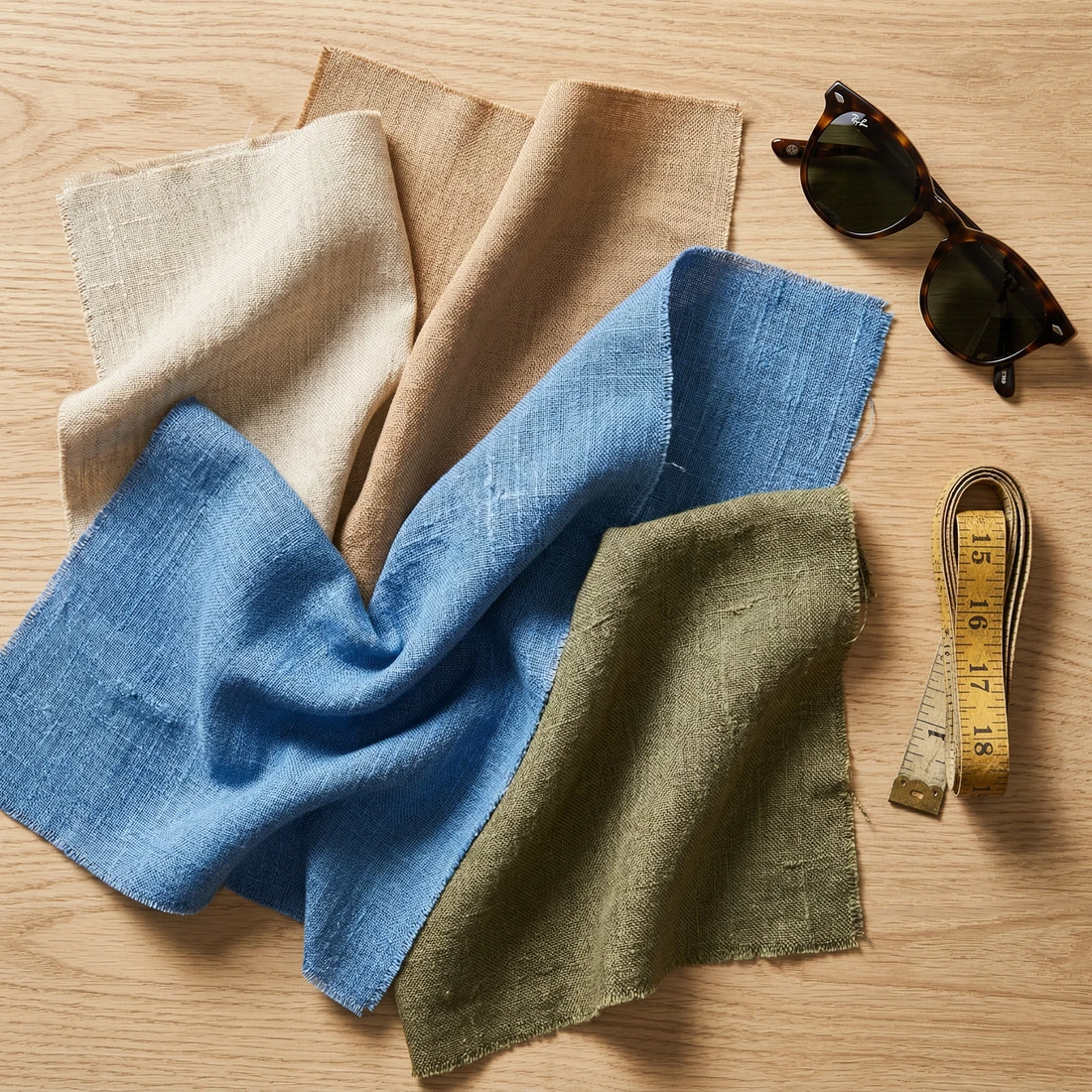
While dark tones define formal authority, true sartorial expertise is shown through the mastery of lighter palettes. In warmer climates, timeless colors for bespoke suits shift toward shades that reflect heat and evoke a sense of relaxed elegance. At this level, the success of the garment depends 50% on the hue and 50% on the breathability of the fabric, such as premium Linen Blends.
- The Neutral Spectrum (Beige and Tan): These “earth tones” are the pillars of summer tailoring. A beige bespoke tailored suit rendered in a crisp linen-wool blend offers an approachable softness that feels right at home in a garden party or an outdoor wedding. Meanwhile, deeper Tan hues provide a rugged refinement that masks the dust of travel while maintaining a sharp, structured silhouette.
- Azure and Powder Blue: The Daylight Alternative: Often referred to as Azure or Powder Blue, these shades serve as a rejuvenating alternative to Navy. They capture the essence of the Mediterranean coastline and high-end seaside business meetings, providing a crisp, clean aesthetic that feels energetic and breathable under the midday sun.
- Olive Green: The New Neutral: Recently elevated to a “timeless” status, Olive Green has become a favorite for those seeking a sophisticated, earthy alternative. It is remarkably versatile, pairing as easily with a white shirt and brown loafers as it does with more casual knits. Its muted, organic tone makes it a standout choice for an unstructured bespoke tailoring commission.
To truly appreciate how different fibers affect the vibrancy and performance of these summer shades, explore our deep dive into “What Fabrics and Materials Are Used in Bespoke Tailoring?“.
Personalizing Your Palette: Matching Colors to Your Skin Tone
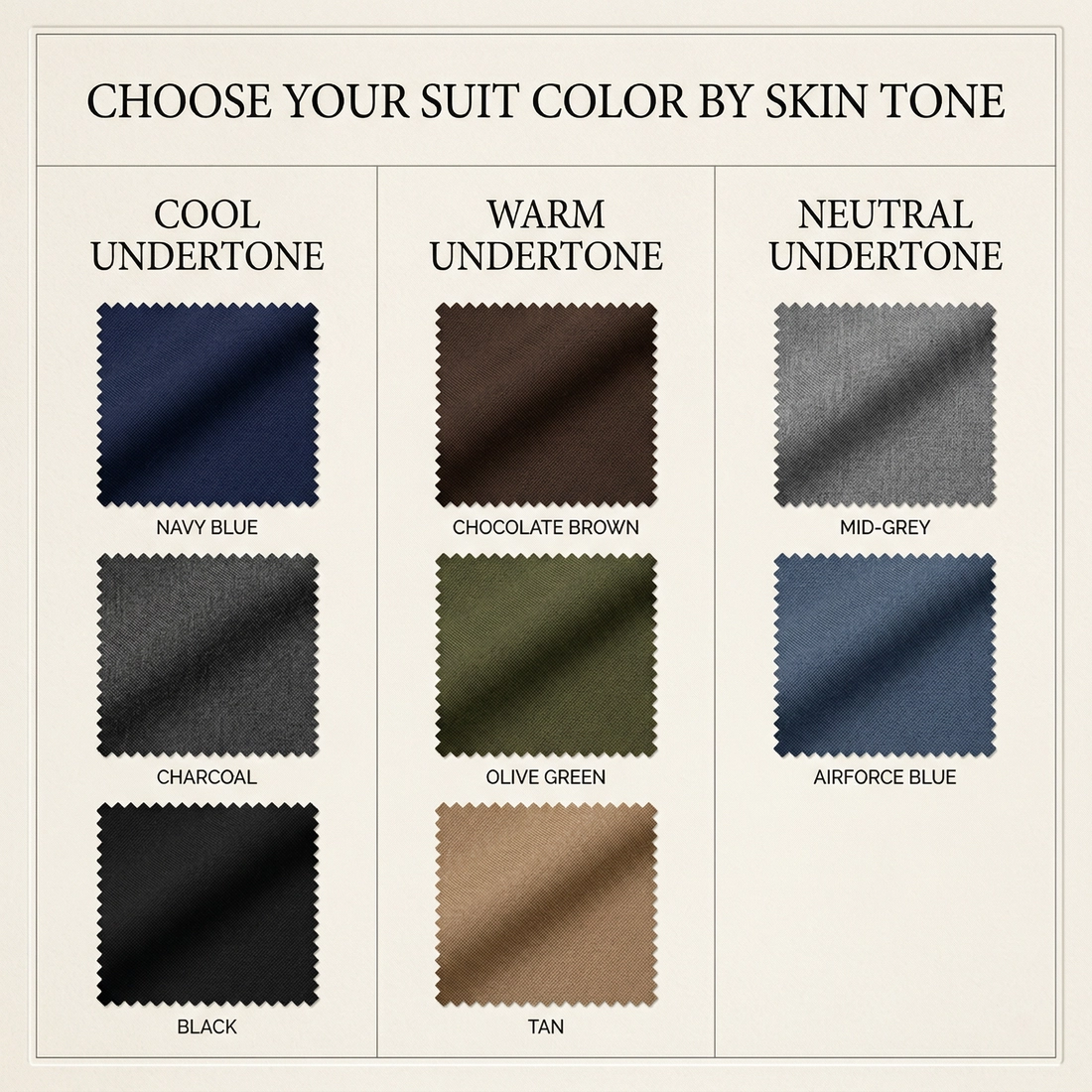
The true luxury of bespoke tailoring is selecting a hue that illuminates your complexion. Identifying your skin’s “temperature” (Cool, Warm, or Neutral) is the secret to a suit that reinforces your presence rather than overwhelming it.
- Cool Undertones (Blue/Violet veins): These complexions thrive in the sharper, crisper end of the spectrum. Navy, Charcoal, and Pure Black provide a high-contrast backdrop that makes your features “pop”, while “Powder Blue” offers a refreshing daytime alternative.
- Warm Undertones (Greenish veins): Harmonize best with the richness of earth tones. Chocolate Brown, Olive Green, and Tan offer an organic depth that synchronizes with your natural warmth, providing a more sophisticated result than cold greys.
- Neutral Undertones (A balance of both): Offer the greatest flexibility across the sartorial wheel. While most colors work, a bespoke tailored suit in Mid-Grey or “Airforce Blue” often provides the most balanced and effortless aesthetic.
Conclusion: Building a Legacy
Building a legacy wardrobe begins with the logic of longevity. While the allure of seasonal trends is ever-present, the true mastery of bespoke tailoring lies in the power of the permanent. By anchoring your collection with classic foundations, you create a versatile canvas of silent authority that remains relevant across any decade or boardroom.
Choosing timeless colors for bespoke suits is a commitment to a personal and professional identity that transcends the calendar, ensuring a superior cost-per-use that transforms a single garment into a lifetime asset. A perfectly executed piece in a harmonious hue does more than follow sartorial rules; it ensures you are remembered for your presence, your character, and an unwavering standard of excellence.
DISCOVER PHYIGITAL BESPOKE TAILORING