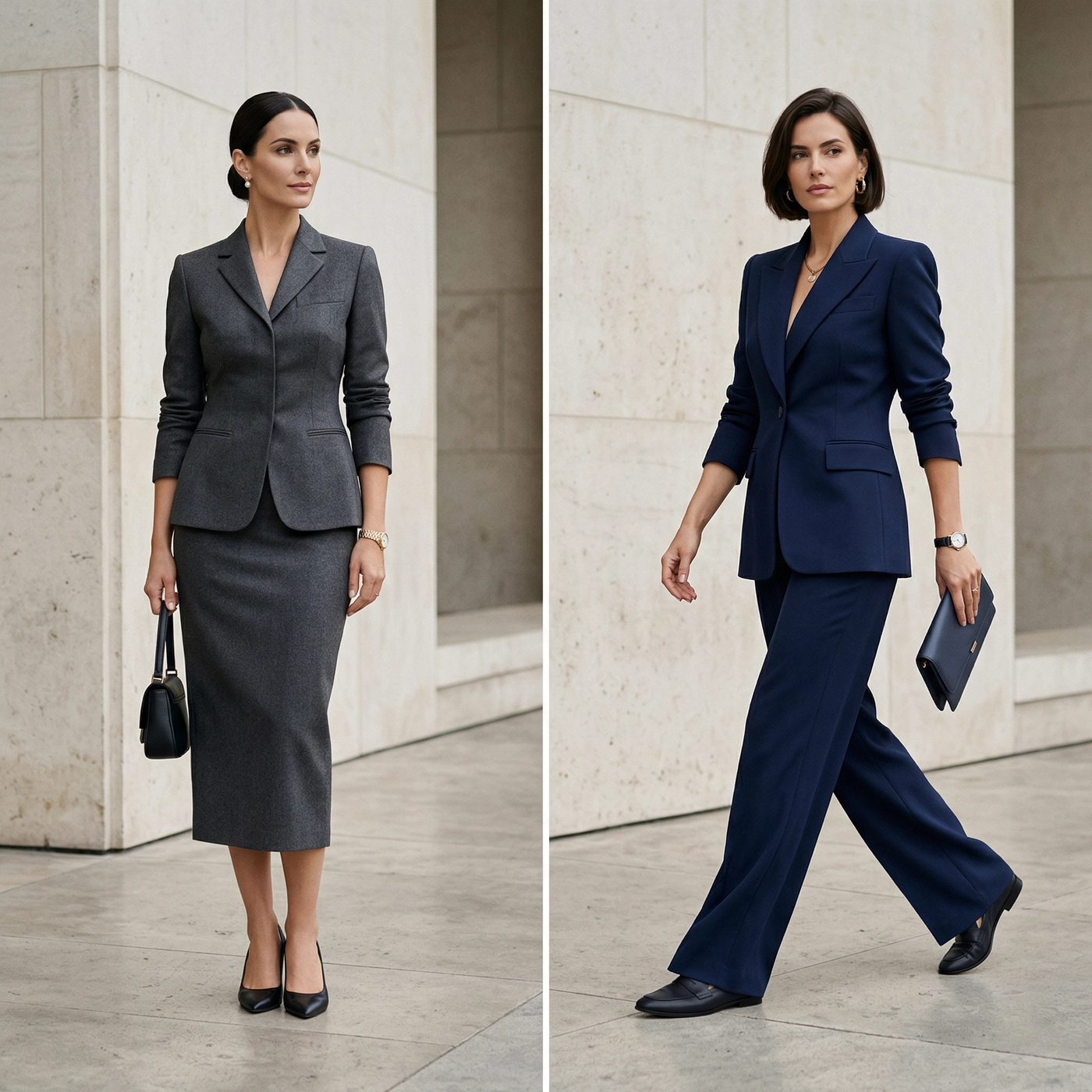
In-Store vs. Online Bespoke Tailoring: Can You Really Get a Perfect Fit?
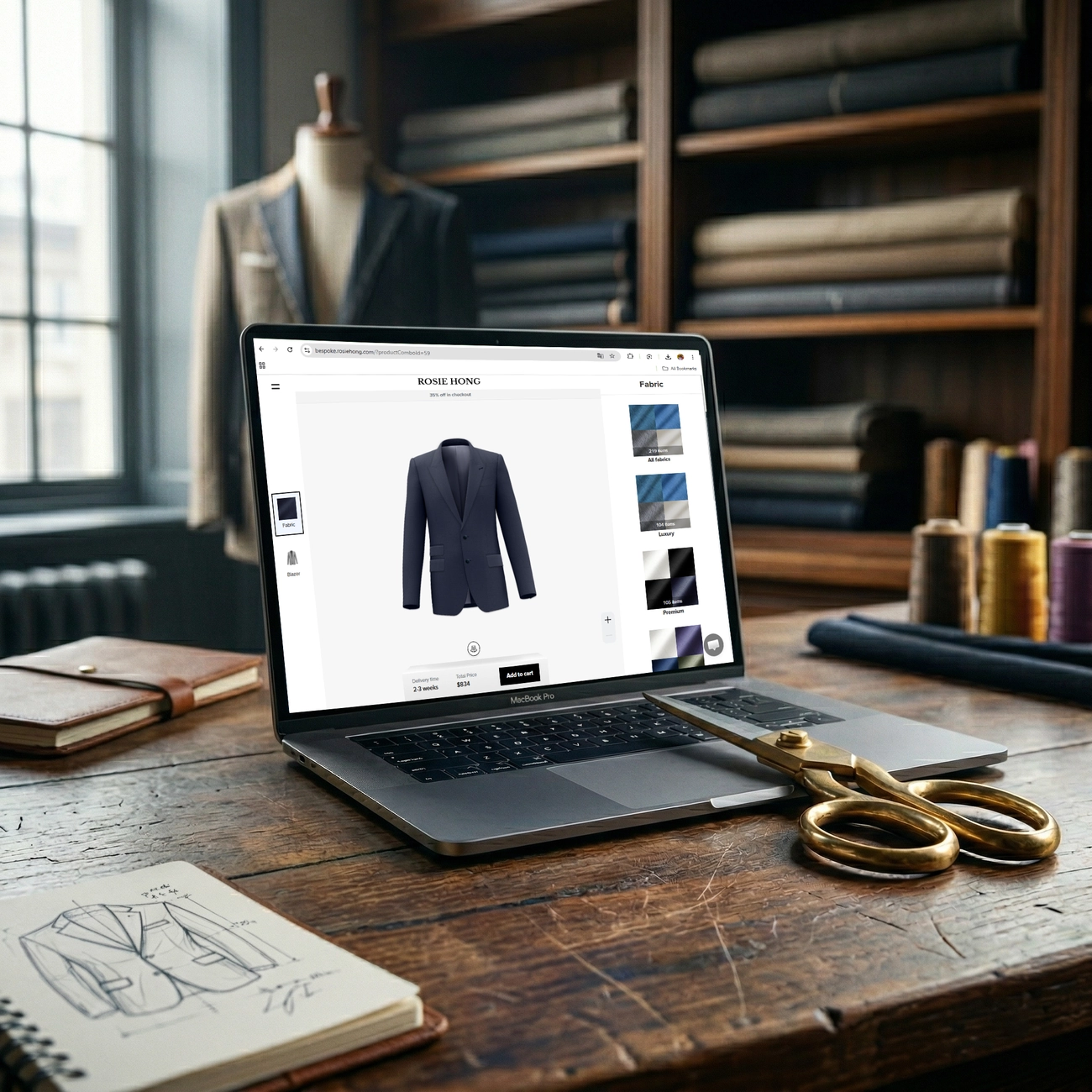
In the world of high-end bespoke clothing, a “perfect fit” is far more than a set of anatomical numbers; it is a silent language of confidence and authority. For generations, this level of precision was believed to be anchored solely to the physical atelier, where the presence of a master tailor was the only gateway to a garment that felt like a second skin.
However, as our lifestyles become increasingly global and time-efficient, the boundaries of tradition are being redrawn. The rise of online bespoke tailoring offers a new path where the modern gentleman no longer sees a conflict between heritage quality and digital convenience.
The Hidden Drawbacks of Traditional In-Store Tailoring
While the heritage of a bespoke tailor shop is undeniable, the traditional model often presents significant frictions that clash with the pace and privacy of modern life.
- The Logistical Burden (The Time Drain): For a high-performing professional, the “cost” of a suit is measured in more than just currency; it is measured in hours. Achieving a perfect fit in-store is rarely a one-time visit. Beyond the initial measuring, the process typically demands two to three subsequent fitting sessions over several weeks. When you factor in the commute, the search for parking, and the need to align your calendar with the shop’s operating hours, a single garment can represent a massive loss of productivity.
- The Privacy Barrier (The “Awkward” Factor): Sartorial precision requires a tailor to measure specific, sensitive areas of the body (such as the inseam, seat, and chest) to ensure the drape is correct. Even with the utmost professionalism from a master tailor, this level of physical intimacy can be inherently uncomfortable or intrusive for many. In an era where personal space is highly valued, the manual measurement process remains an old-world necessity that many would prefer to bypass.
- The Accessibility Gap (The Privilege of the Ultra-Rich): Historically, there was only one way to avoid the inconveniences of a physical shop: hiring a personal tailor or style consultant to come to your home or office. However, this level of personalized service has always carried a significant premium, remaining an exclusive luxury reserved for the ultra-wealthy. For the majority of discerning clients, the traditional route means choosing between high-quality bespoke clothing and the preservation of their private time.

Beyond the Label: Online Custom-Made vs. True Online Bespoke
To navigate the modern tailoring landscape, it is essential to peel back the marketing jargon. While many brands use the terms “online bespoke” or “custom-made” interchangeably, they often represent fundamentally different levels of craftsmanship:
- The “Custom-Made” and MTM Reality: Most large-scale online platforms operate on a Made-to-Measure (MTM) model. This system utilizes a pre-existing “base pattern” in standard sizes, which is then slightly adjusted, such as lengthening a sleeve or narrowing a waist. Because the foundational geometry is not created specifically for your anatomy, it often fails to account for unique nuances like shoulder slope or spinal curvature.
- The “Online Booking” Illusion: Many traditional bespoke tailor shops now claim to offer an “online” experience. In most cases, this simply refers to the ability to book an appointment or select fabrics through a website. The core of the process, the physical measurement and multiple fittings, still requires your presence at a physical atelier, leaving the logistical burden unchanged.
- The Digital Frontier (True Online Bespoke): A genuine bespoke tailor online experience requires a complete digital transformation of the craft. Pioneering brands like Rosie Hong have redefined this space by moving the entire measurement process into the client’s private environment. By utilizing 3D body scanning instead of traditional booking or adjusted templates, the tailor captures a 3D body model to draft a unique, “blank canvas” pattern for every individual.
This evolution ensures that “online” is not just a convenience for scheduling, but a high-fidelity method for achieving a perfect fit without geographical or logistical constraints.
The Anatomy of a Perfect Fit: Bridging Technology and Craftsmanship
A common concern arises: How can a digital scan truly replace the seasoned eyes of a master tailor? Many believe that without a physical presence, a “perfect fit” remains an impossible goal for bespoke clothing in the digital world.
The Reality of Raw Data
This skepticism is rooted in a technical truth: a raw 3D body model cannot be used to sew a garment directly. While a scan captures thousands of data points with surgical precision, these numbers represent your exact, skin-tight dimensions. If a tailor were to cut fabric based solely on these raw numbers, the resulting suit would be unwearable: stiff, restrictive, and lacking the “ease” required for natural movement.
The Human-Digital Bridge
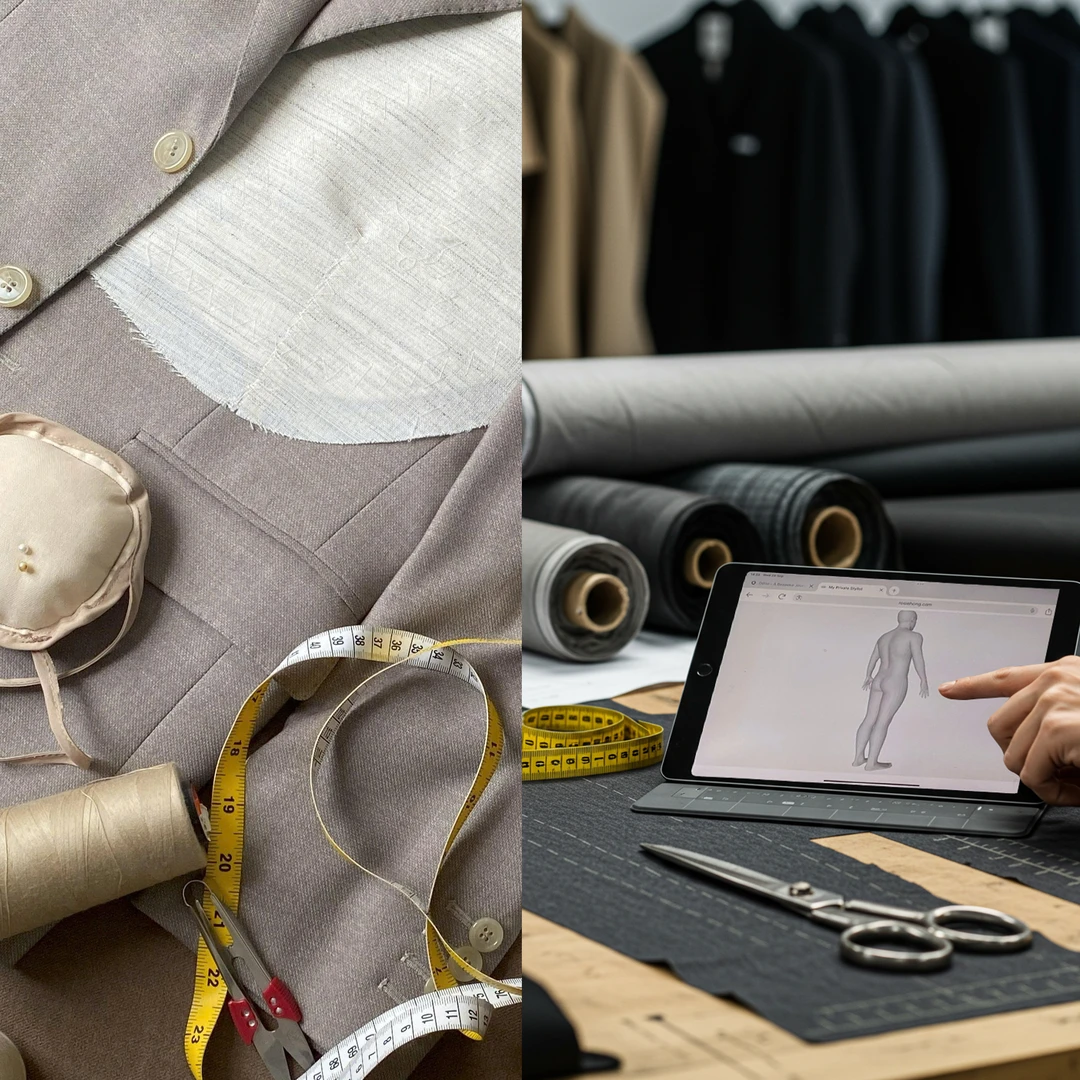
To bridge this gap, the process begins with a private 3D scan performed at home via smartphone, securing a highly accurate foundation while eliminating the logistical burden of traditional measuring. However, the real “fit” is engineered when these digital points are passed to specialists who meticulously adjust the measurements to account for your actual, real-world body. These human-verified figures form the final, complete set of measurements delivered to master tailors. Using these numbers, the artisans then draft a unique pattern from a “blank canvas,” ensuring the suit is not just technically correct, but a structural masterpiece that feels like a second skin.
Democratizing the Bespoke Experience
By utilizing this specialized “translation” process, the model does more than just ensure precision: it democratizes a legacy privilege. Historically, having a master tailor and personal stylist at your disposal was an exclusive luxury reserved for the ultra-wealthy. Today, this digital evolution brings that same elite craftsmanship and personalized attention to any busy professional.
This streamlined workflow results in a seamless, risk-free service: you receive a handcrafted suit within two to three weeks without ever leaving your home, backed by transparent alteration policies. In essence, the “perfect fit” is achieved by the specialized experts who know how to convert digital accuracy into sartorial comfort. It is no longer a distant luxury for the few, but a reachable standard for anyone who refuses to compromise on their personal style.
Conclusion: A New Era of Sartorial Elegance
The “perfect fit” has officially outgrown the four walls of the traditional bespoke tailor shop. Today, sartorial excellence is no longer a matter of physical proximity, but a result of honoring heritage while boldly embracing technology to better serve the modern individual. This evolution proves that true bespoke is not about the ritual of the shop. It is about the harmony between data, the expert eye, and the artisan’s hand.
In this new era, elegance is no longer a luxury of time, but a standard of precision that meets you exactly where you are.
Explore more about the shifting landscape of tailoring in our featured guide: “Is Bespoke Tailor Online the Future of Fashion?”
DISCOVER PHYIGITAL BESPOKE TAILORING