A History of Women in Menswear to Inspire Your Big Day
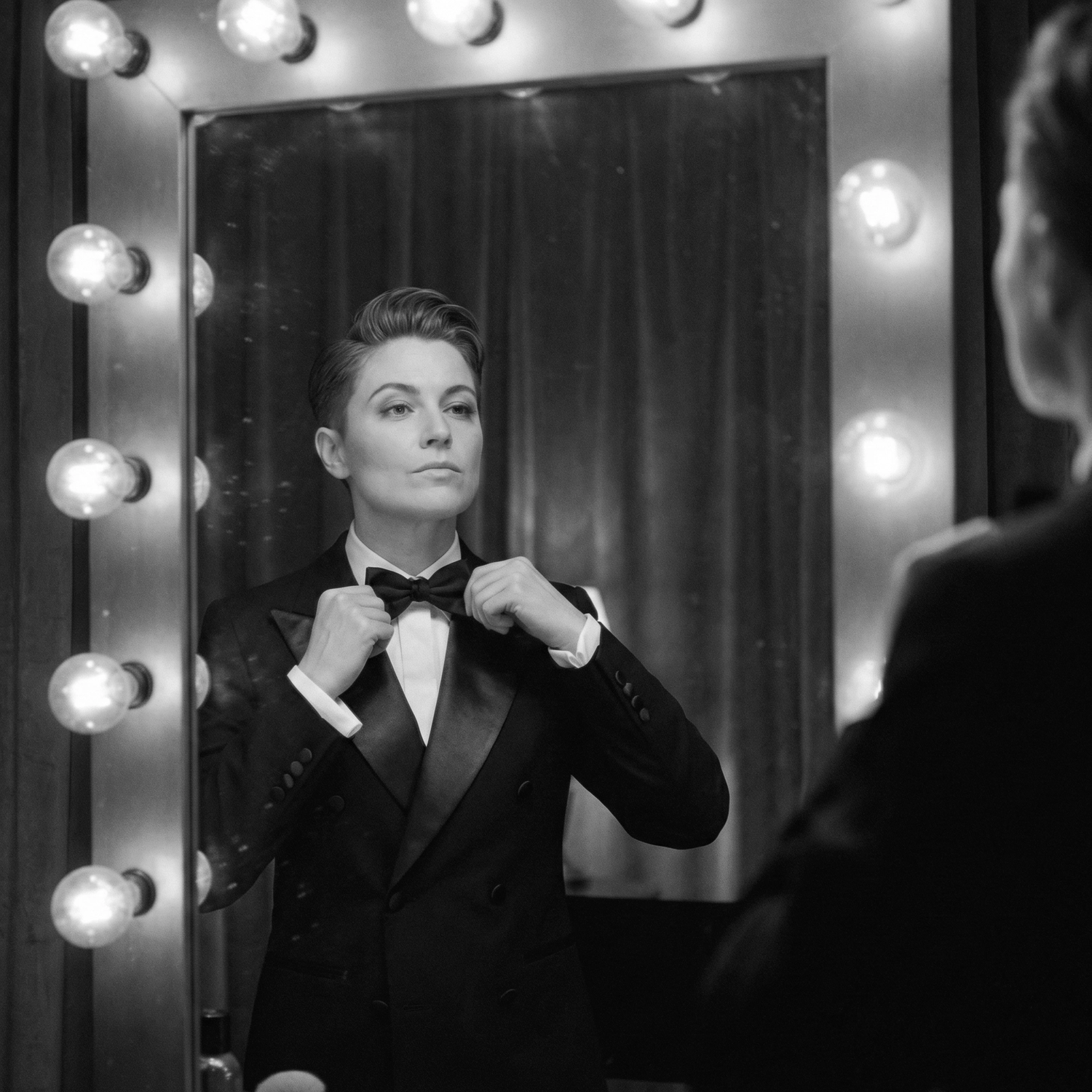
For centuries, the bridal narrative has been dominated by the gown, yet the history of women in menswear tells a far more compelling story of power, rebellion, and self-possession. Choosing to walk down the aisle in a bespoke wedding suit is not merely a stylistic preference; it is a profound act of continuing a legacy started by the most courageous icons of the last century. Before you define your own bespoke tuxedo look, let us look back at the pioneers from the silver screen to the steps of the altar who proved once and for all that elegance has no gender.
The Golden Age of Women in Menswear: Marlene Dietrich (1930s)
In the early 20th century, the divide between “male” and “female” attire was not just a social norm; in many places, it was the law. For a woman to wear trousers was considered an act of defiance. Into this rigid landscape walked Marlene Dietrich. While she was not the first representative of women in menswear, she was arguably the first to make it a symbol of undeniable glamour and power on a global stage.
The “Morocco” Moment
The defining moment occurred in the 1930 film Morocco. Dietrich appeared on screen not in a gown, but in a full white-tie ensemble: a tailcoat, a white waistcoat, a wing-collar shirt, and a top hat. This was not played for comedy, as cross-dressing often was in that era. Instead, she performed with a cool, detached confidence, culminating in a scene where she kisses another woman – a revolutionary act of queer visibility that challenged the strict censorship of the time.
More Than a Costume
What separated Dietrich from her contemporaries was her understanding of tailoring. She did not simply wear men’s clothes; she wore a bespoke tuxedo engineered for her form. She understood that for the look to be taken seriously, the fit had to be impeccable.
- The Silhouette: Dietrich collaborated with tailors to maintain the broad, sharp shoulders of the masculine silhouette while nipping the waist to create a commanding presence.
- The Attitude: She proved that the aesthetic of bespoke tailored menswear could be appropriated and redefined. It was no longer the exclusive property of men; it was a tool for anyone brave enough to wield it.
The Legacy for Your Wedding Day
Dietrich’s legacy teaches us that gender-nonconforming attire is, at its core, about authenticity. She wore the suit because it felt right to her spirit. For the modern bride or non-binary individual, choosing bespoke wedding suits is a similar declaration. It is a way to channel that same timeless “Hollywood” confidence, proving that you do not need to compromise your identity to look elegant.
The Era of Power & Liberation: YSL & Bianca Jagger (1960s-70s)
If Marlene Dietrich planted the seed of rebellion, the 1960s and 70s saw it bloom into a full-scale revolution. This was the era of the sexual revolution and second-wave feminism, and fashion became the armor for this new fight. The suit was no longer just a costume for the screen; it was becoming a valid, powerful option for life’s most significant moments, cementing the place of women in menswear in fashion history.
1966: The Birth of “Le Smoking“
In 1966, Yves Saint Laurent shattered sartorial boundaries with the debut of “Le Smoking,” the first tuxedo explicitly engineered for the female form, transforming the suit from a mere garment into a weapon of revolution:
- Redefining the Silhouette: Prior to this collection, trousers were viewed as strictly functional or informal; Saint Laurent challenged this by cutting the bespoke tuxedo style with high-fashion precision, creating a look that was sharp, sleek, and unapologetically sexy.
- A Symbol of Emancipation: The style was initially so controversial that women wearing it were refused entry to high-end establishments, yet it endured as a statement of freedom, granting the wearer the posture and authority historically reserved for men.
1971: Bianca Jagger’s Wedding Rebellion
While YSL laid the groundwork, it was Bianca Jagger who cemented the suit’s place in bridal history. For her wedding to Mick Jagger in St. Tropez, she famously bypassed the traditional gown entirely.
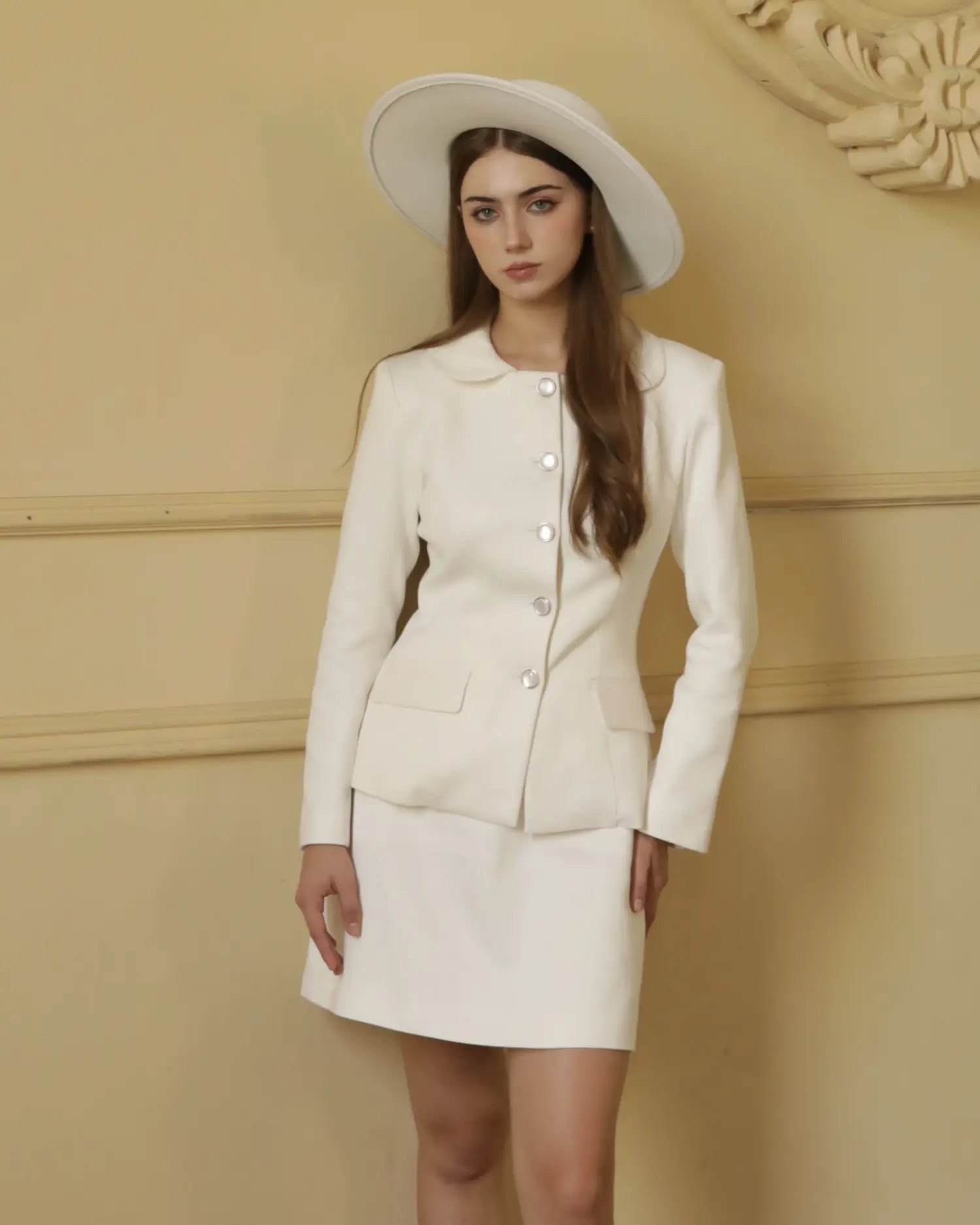
- The Look: Bianca wore a white skirt suit featuring a long, bias-cut skirt and a structured jacket with wide lapels, worn with nothing underneath. She topped it with a wide-brimmed hat, creating a silhouette that was equal parts rock-n-roll and regal.
- The Craftsmanship: Crucially, while Bianca was a muse for YSL, her wedding suit was actually crafted by Tommy Nutter, the legendary “Rebel on the Row” who revolutionized Savile Row tailoring. This is a vital distinction: she chose a cutter known for traditional bespoke tailored menswear to create her bridal look. Even though she wore a skirt, the attitude was pure menswear. By choosing a Savile Row cutter instead of a dressmaker, she proved that the power of a suit comes from the structure of the jacket, not just the trousers.
- The Impact: By employing the sharp shoulders and heavy fabrics typically found in men’s tailoring, she demonstrated that a bride could be the most powerful person in the room.
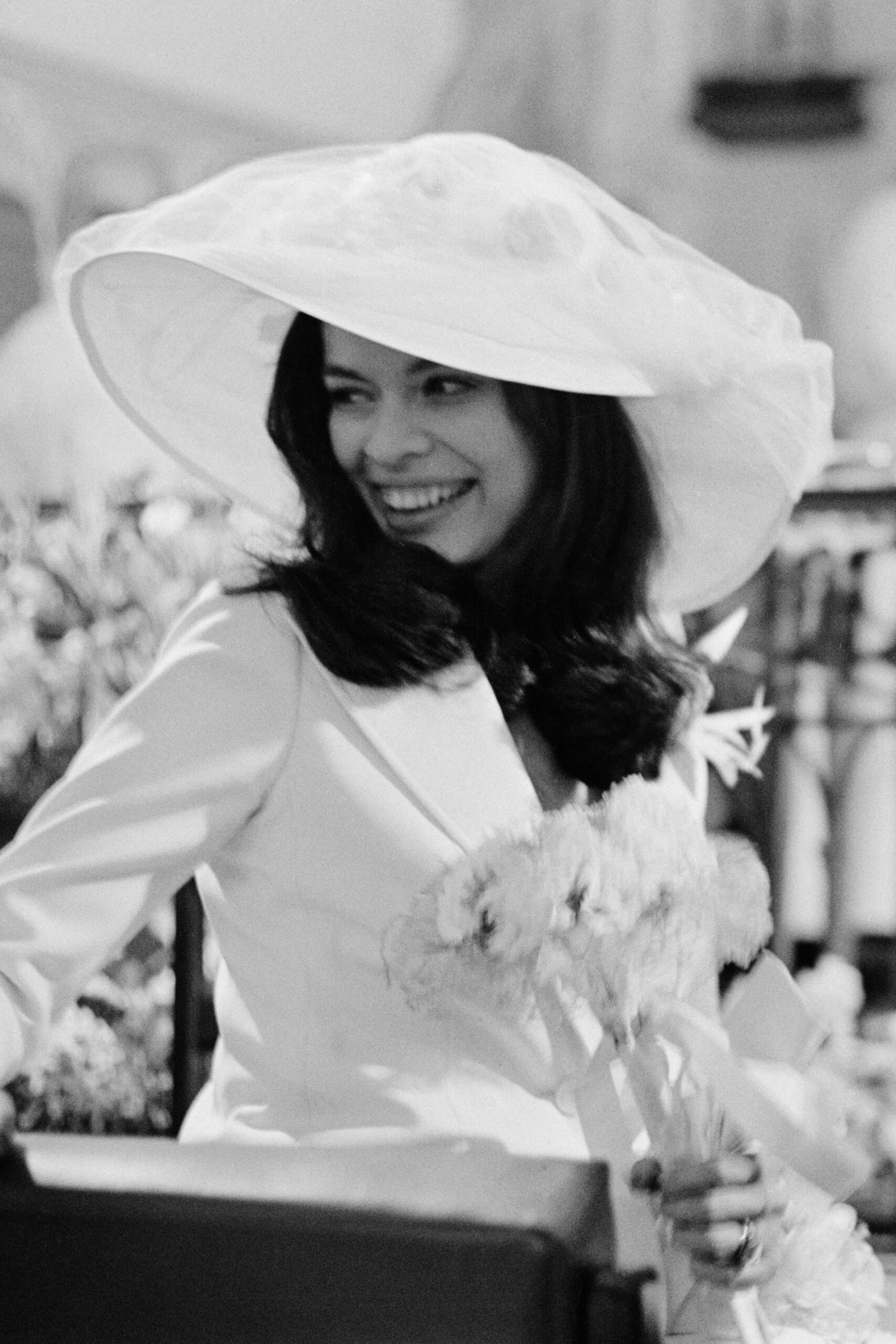
“Bianca Jagger’s iconic wedding suit, 1971.” (Source: Vogue.co.uk)
A Blueprint for Modern Bridal Suits
Bianca Jagger’s choice teaches us that bespoke wedding suits do not have to be rigid copies of men’s tuxedos. They can be fluid, daring, and deeply personal. Whether you identify as a bride or a groom, the lesson from the 70s is clear: you define the ceremony, the ceremony does not define you.
The Modern Dialogue: Queer Fashion Icons on the Red Carpet
In the 21st century, the red carpet has replaced the silver screen as the primary stage for identity politics. For today’s queer fashion icons, the suit is no longer just a garment of rebellion; it is a canvas for joy, visibility, and fluidity. They have moved beyond simply “passing” as masculine to actively redefining what formalwear can look like.
Janelle Monáe: The Dandy Aesthetic
Janelle Monáe is arguably the most significant figure in modern tailoring. Early in her career, she adopted a strict black-and-white uniform as a homage to her working-class parents, but she elevated it into an art form.
- The Style: Monáe’s look is “Dandyism” at its finest. She treats the tuxedo with reverence, often favoring high-contrast fabrics, geometric patterns, and wide-brimmed hats. She plays with the “masculine” codes of the bespoke tuxedo from cufflinks, bib-front shirts, bow ties but exaggerates them to create a look that is theatrical and distinct.
- Wedding Inspiration: For the partner who wants a high-impact look, look to Monáe’s use of texture. A bespoke tailored menswear look in Velvet or Jacquard, paired with statement jewelry, turns a standard wedding outfit into a regal ensemble.
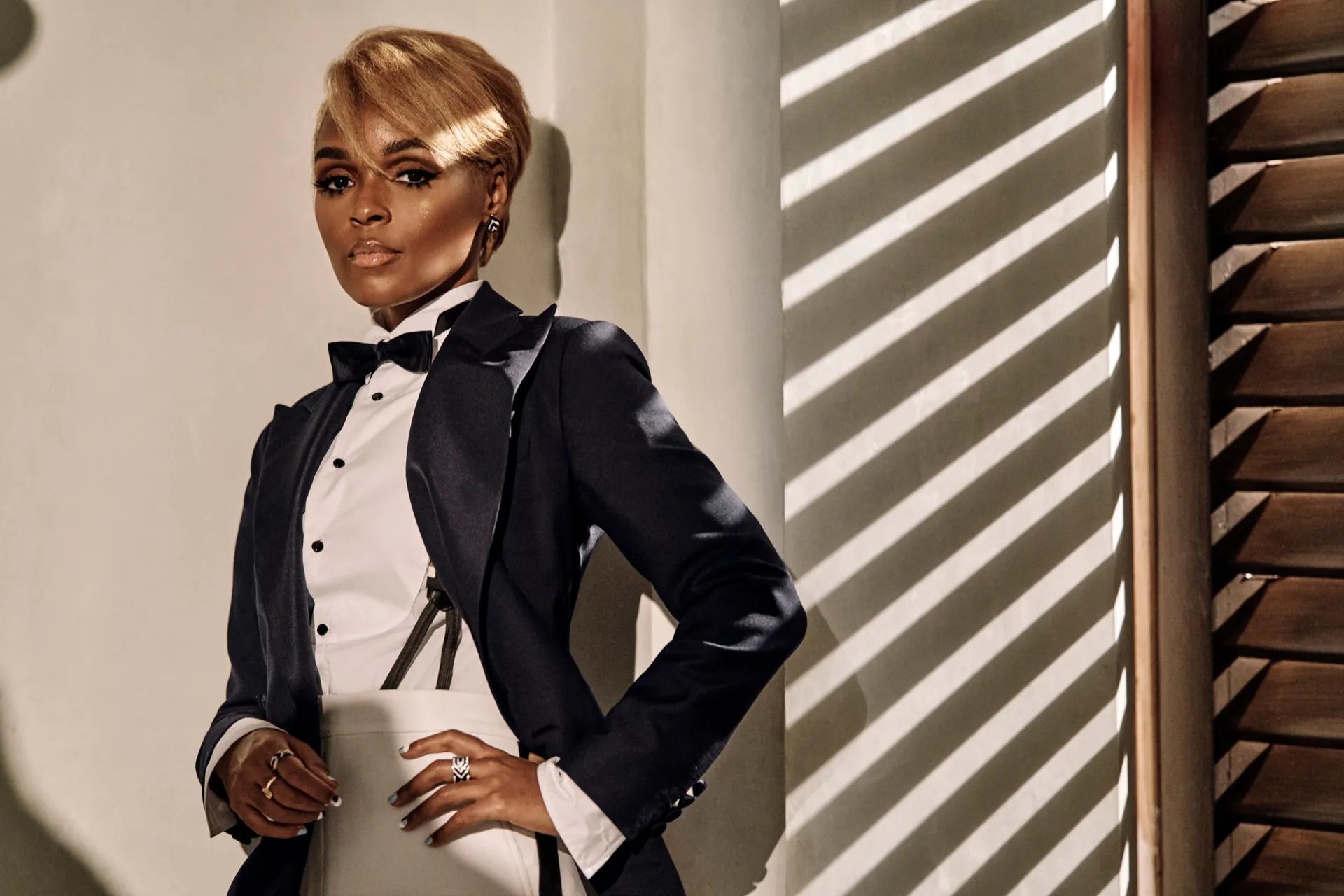
“Janelle Monáe’s signature Dandy aesthetic in Ralph Lauren.” (Source: Vogue.com)
Kristen Stewart: The Punk Aristocrat
If Monáe represents structure, Kristen Stewart represents the “undoing” of it. Stewart has become one of the most influential queer fashion icons of modern androgyny by rejecting the stiffness of traditional Black Tie.
- The Style: Stewart often pairs high-end tailoring (famously Chanel) with a punk attitude. Her signature move is subverting the shirt: wearing a jacket over a bare chest, unbuttoning the shirt significantly, or bypassing heels entirely in favor of loafers or brogues. It is a look that screams “messy elegance”- sophisticated, but effortless.
- Wedding Inspiration: Stewart teaches us that comfort is the ultimate confidence. For a beach wedding or a modern reception, you do not need the full three-piece armor. A well-cut jacket worn with a relaxed attitude can be just as solemn and far more authentic to who you are.
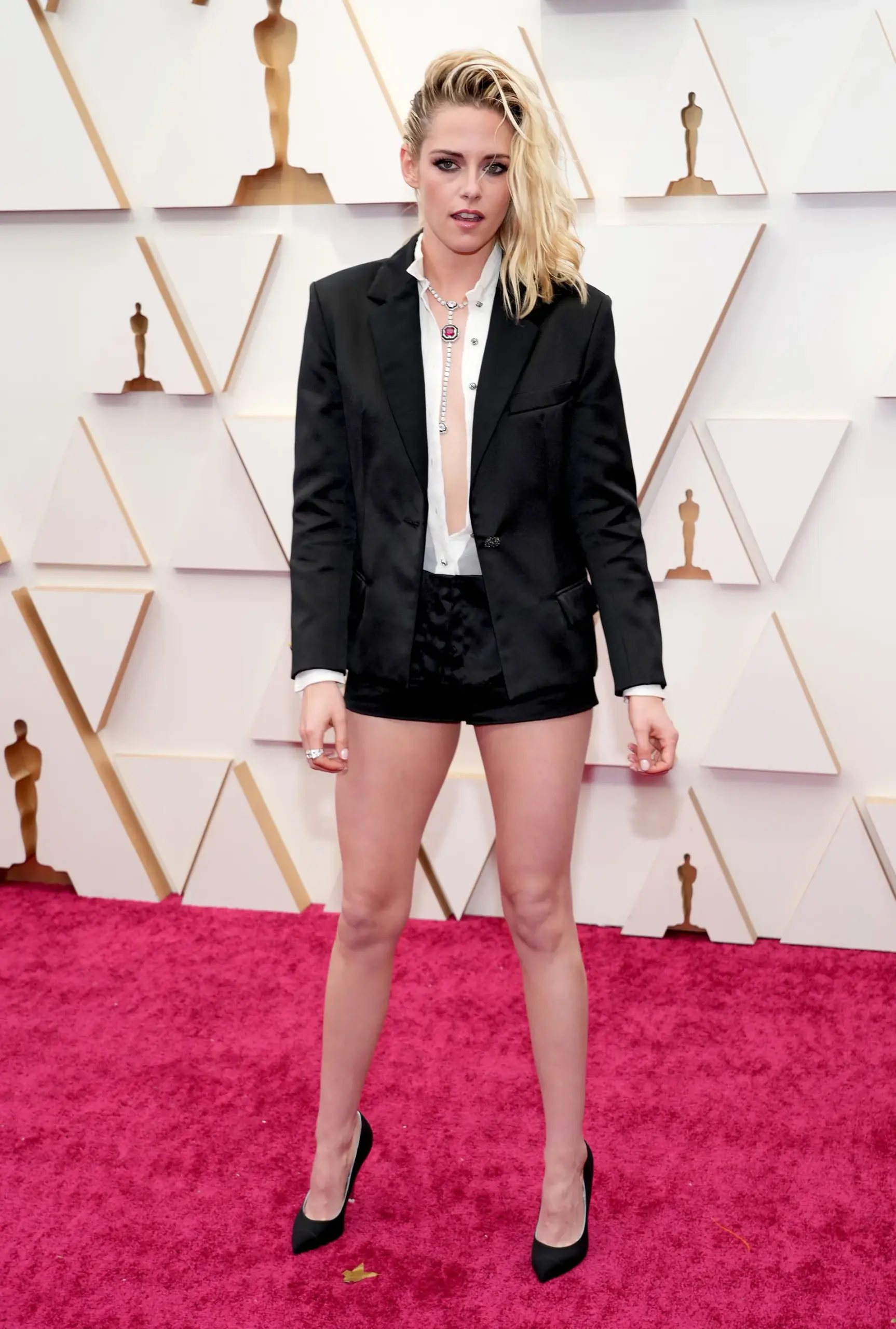
“Kristen Stewart’s custom Chanel shorts suit, Oscars 2022.” (Source: Vogue.com)
Conclusion: Writing Your Own History
From the cinematic rebellion of Marlene Dietrich to the modern fluidity of today’s queer fashion icons, the history of women in menswear is a testament to the power of self-expression. Choosing to walk down the aisle in a suit is not merely a stylistic preference; it is a profound affirmation of identity. It declares that you are standing at the altar not as a character in a costume, but as your most authentic self, embraced by a lineage of strength and elegance.
Now, it is your turn to define what a bride looks like. Whether you envision the sharp, architectural lines of a classic bespoke tuxedo or the relaxed sophistication of a modern cut, your wedding attire should be as unique as the love you are celebrating. To begin crafting a legacy look that honors both this history and your personal proportions, discover the technical artistry behind the perfect fit in our comprehensive guide: [Beyond the Gown: The Definitive Guide to LGBT & Androgynous Bridal Suits].
DISCOVER PHYIGITAL BESPOKE TAILORING