A Suit and a Blazer: How to Distinguish Them Like a Pro
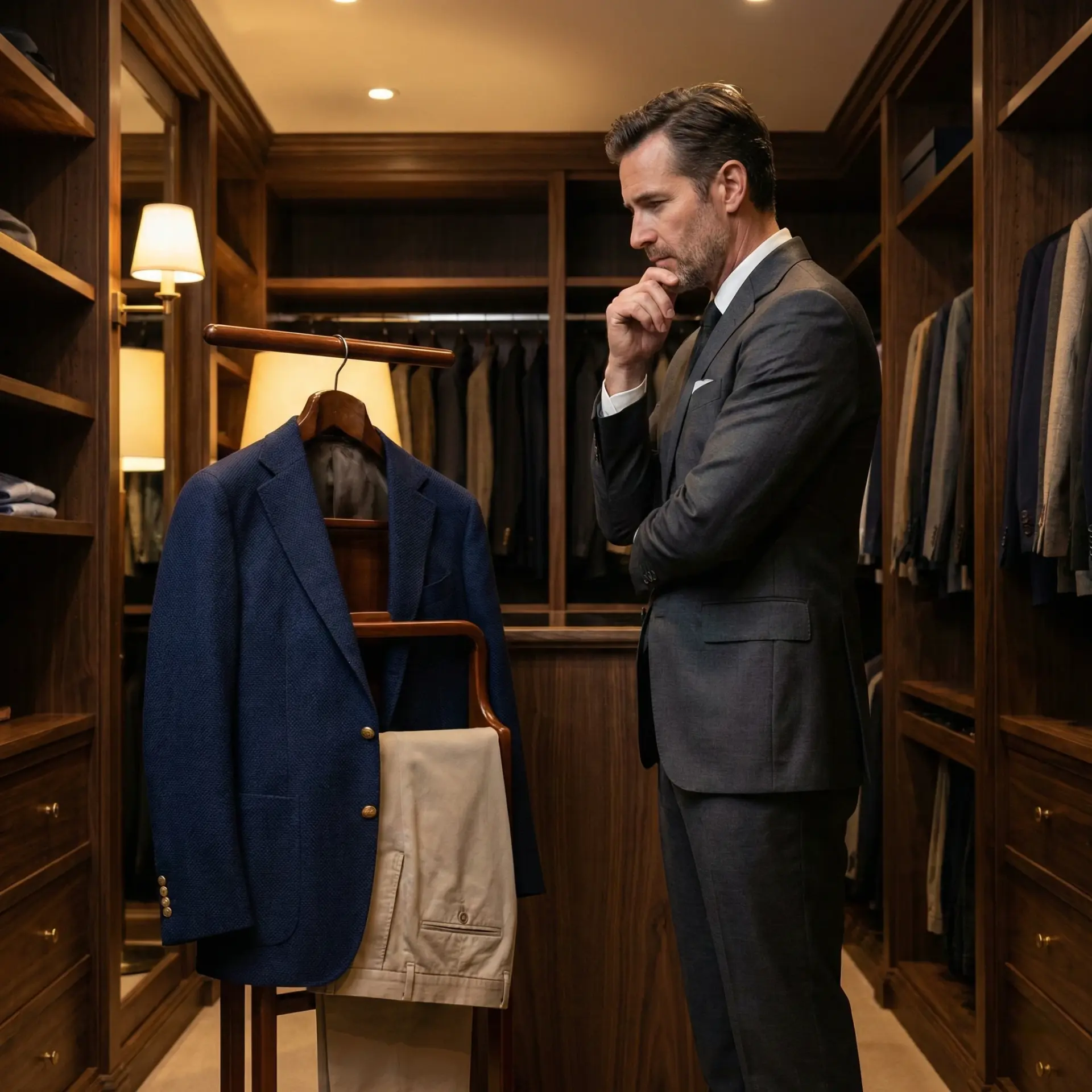
In the world of menswear, nuances make the man. One of the most common yet critical distinctions lies between two wardrobe staples: the suit jacket and the blazer. To the untrained eye, they may appear interchangeable – both are open-fronted coats with lapels and buttons. However, treating them as the same garment is a fundamental sartorial error that can undermine your entire look.
We have all seen it: a gentleman attempting to wear a smooth, structured suit jacket with a pair of worn denim jeans. It looks “almost” right, yet something feels off. The fabric shines too much against the matte texture of the denim, the silhouette feels too rigid, and the overall aesthetic lands in the “uncanny valley” of style. This happens because the garment is being forced into a role it was not designed to play.
Understanding the difference between a suit and a blazer matters for more than just terminology. It is about wardrobe planning and protecting your investment. Misusing a suit jacket as a separator can ruin the longevity of your trousers, leaving you with a broken suit. Conversely, knowing when to deploy a bespoke blazer versus a full suit allows you to navigate social and professional settings with confidence and ease.
As we explored in our comprehensive guide to bespoke tailored suits, mastering the types of suits is the first step. Now, we dive deeper into the mechanics of the jacket itself to help you distinguish – and wear – them like a pro.
1. Defining a Suit: The Power of Uniformity
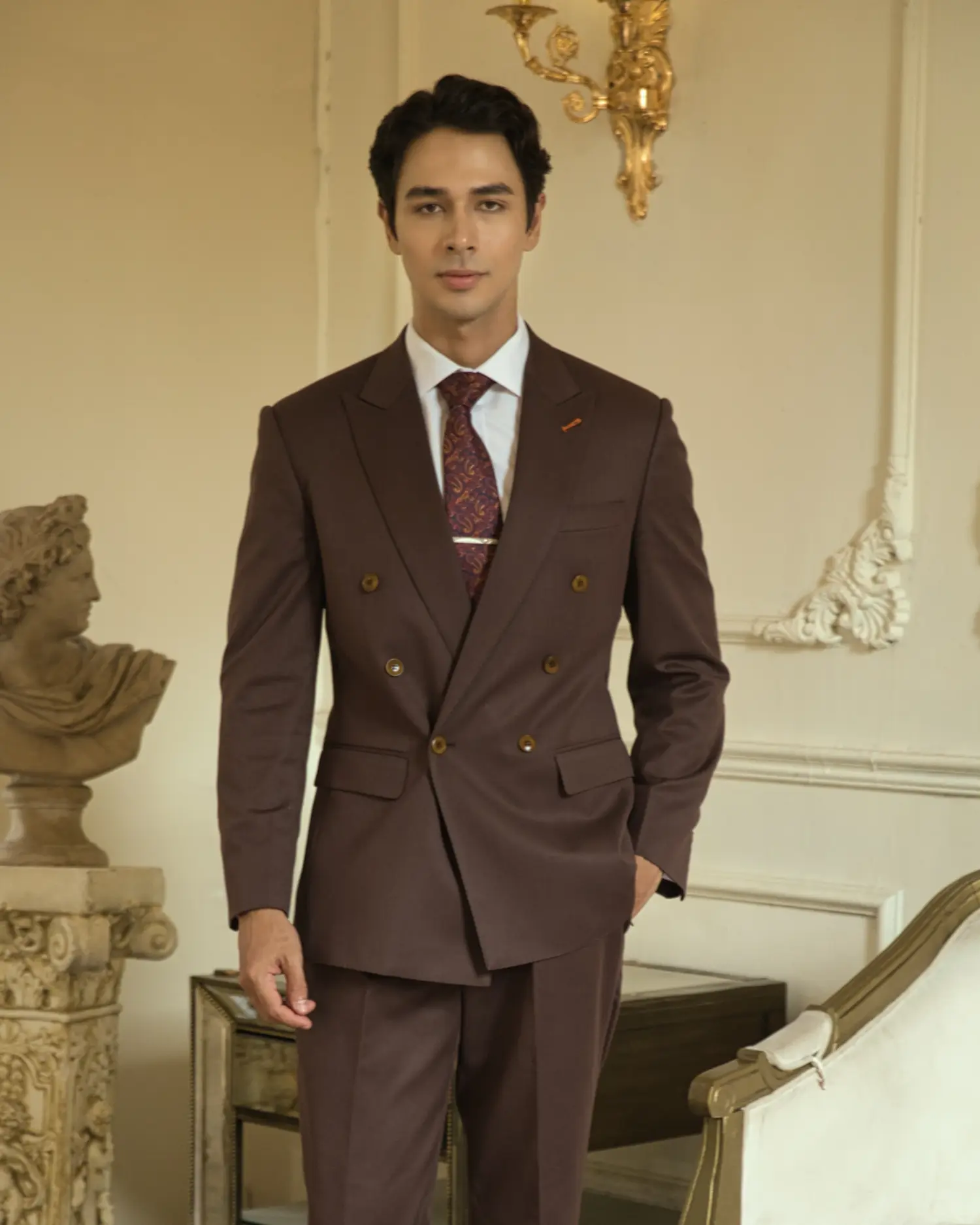
The defining characteristic of a suit is uniformity. By definition, a suit consists of a jacket and trousers (and occasionally a waistcoat) cut from the exact same bolt of cloth. It is a matching set designed to be worn together to create a seamless, vertical line from shoulder to shoe.
Components and Purpose
A suit is the armor of the modern professional. Its primary purpose is to project authority, competence, and formality. Whether you are wearing business suits for men in a corporate boardroom or formal suits for men at a black-tie gala, the goal is a streamlined silhouette that minimizes distraction. Because the jacket is not meant to stand alone, its details are often understated to maintain the integrity of the “whole” look.
Typical Fabrics and Tailoring
The construction of tailor made business suits is specific and intentional.
-
Fabric: Suits are typically crafted from worsted wool, high-twist yarns, or fine blends (silk, cashmere). These fabrics have a smooth finish, a slight natural sheen, and a fluid drape. The lack of heavy texture is intentional; it creates a clean, sharp look appropriate for serious environments.
-
Tailoring: The cut is generally more structured. You will often find canvas construction in the chest and defined padding in the shoulders to build a “V” shape, enhancing the wearer’s posture and presence.
2. Defining a Blazer: The Art of Versatility
If the suit is the uniform of business, the blazer is the uniform of social versatility. A blazer is a standalone jacket, specifically designed to be worn with trousers of a different color, fabric, or pattern. It is the “odd jacket” that bridges the gap between formal wear and casual attire.
Purpose and History
The blazer has nautical and sporting roots – famously tracing back to the HMS Blazer and rowing clubs. Today, it serves a distinct purpose: to offer elegance without the rigidity of a suit. A casual blazer for men is the perfect choice for “business casual” offices, weekend dinners, or creative industries where a full suit might feel too stiff or overpowering.
Fabric and Stylistic Cues
Because a bespoke blazer is meant to be paired with unmatched trousers (like grey flannel, beige chinos, or even dark denim), it requires different visual characteristics to ensure harmony.
-
Texture is King: Unlike the smooth worsted wool of a suit, blazers often utilize fabrics with visible weaves and textures. Think Hopsack (a breathable, basket-weave wool), Flannel, Tweed, or heavy Linen. This texture helps the jacket stand up to the roughness of denim or the matte finish of cotton trousers.
-
Lighter vs. Heavier: While your outline suggests “lighter fabrics,” it is more accurate to say blazers use adaptable weights. A summer blazer might be an unlined, airy fresco wool (lighter), while a winter blazer might be a thick, hearty tweed (heavier). The key is that the fabric has character.
-
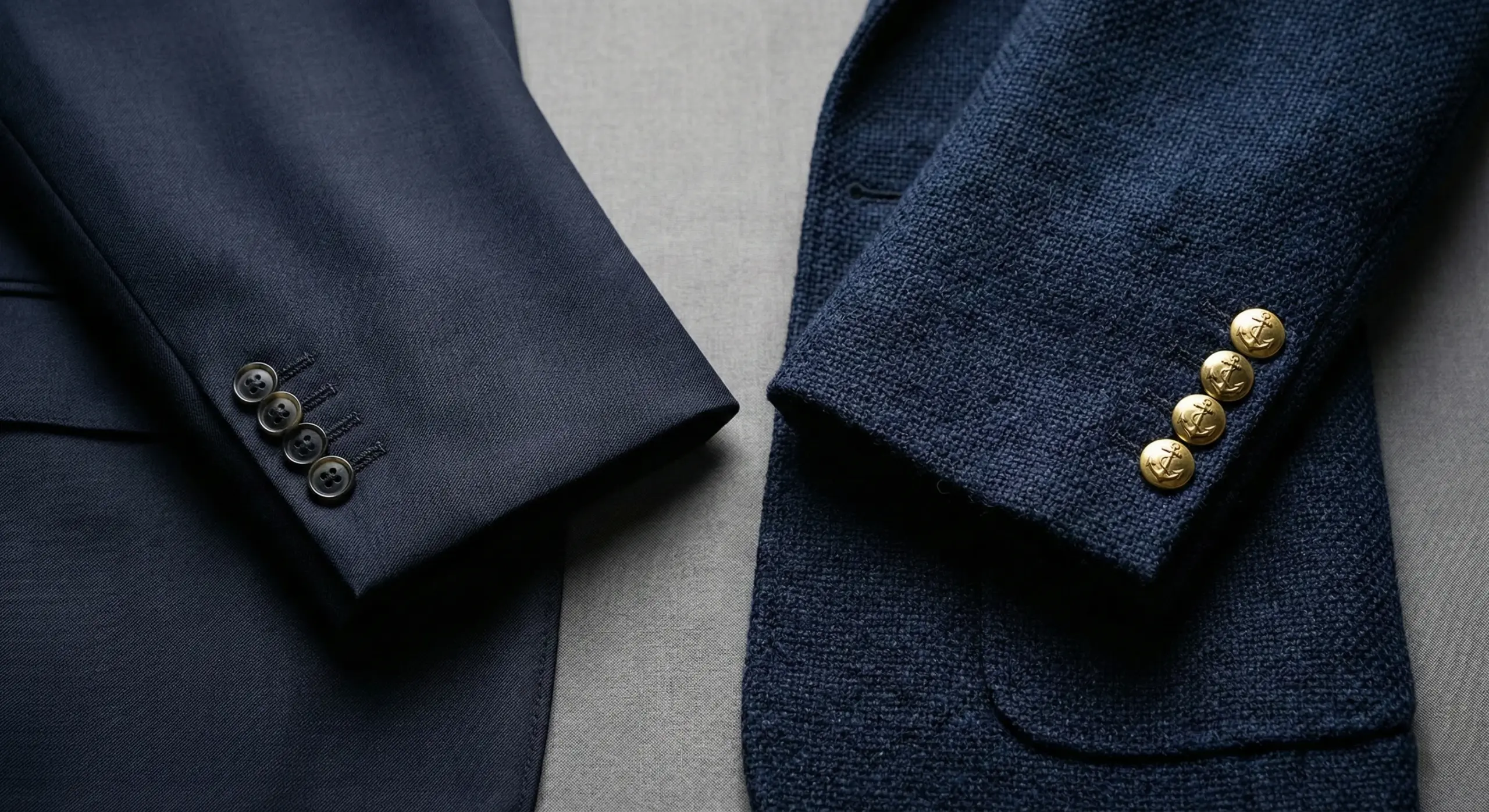
Hardware: This is the easiest giveaway. Traditional blazers often feature contrasting buttons – gold, silver, brass, or Mother of Pearl. This decorative element signals that the jacket is a distinct piece, not an orphaned suit jacket.
3. Key Visual Differences Between a Suit and a Blazer
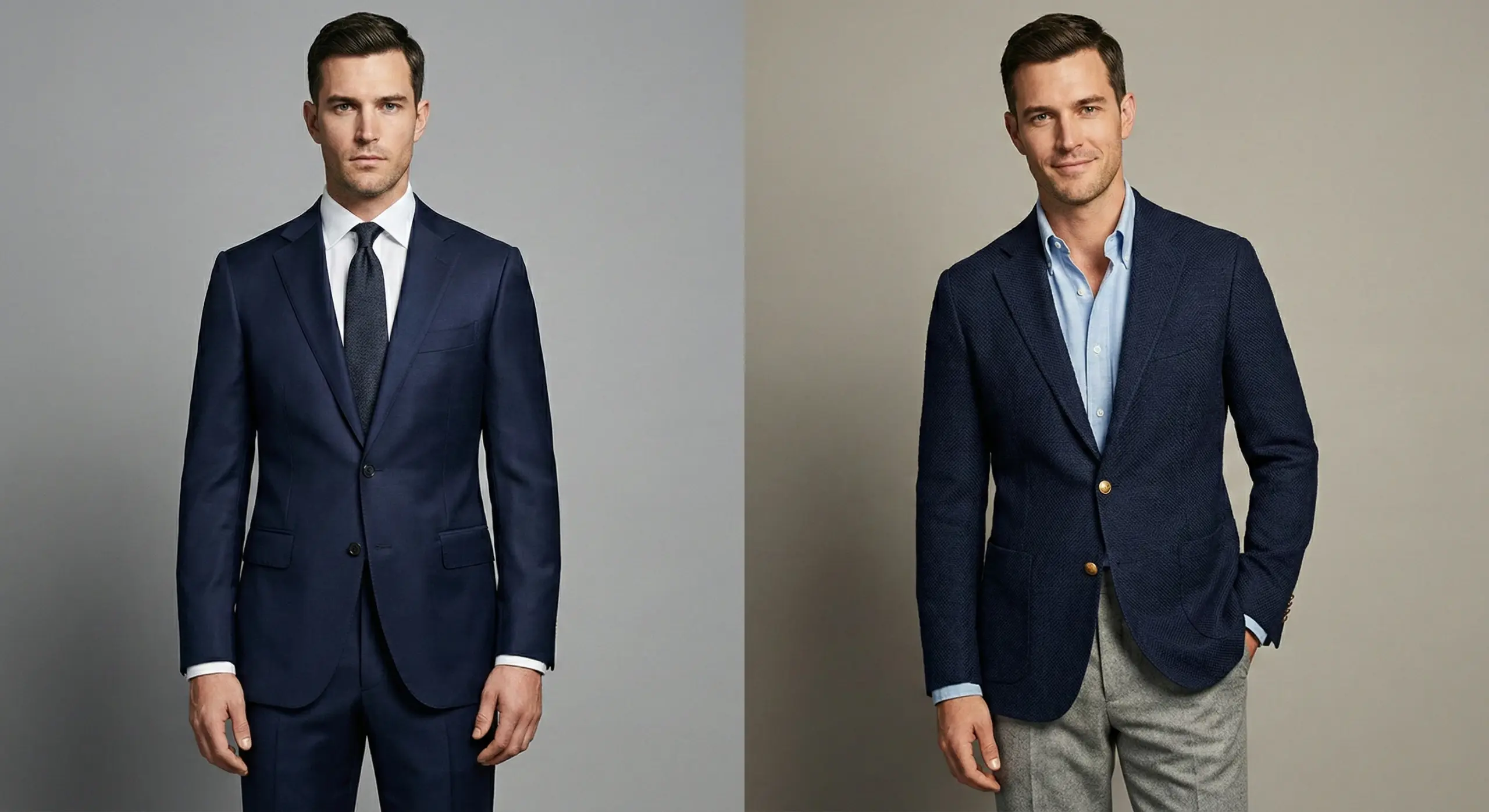
To distinguish them like a pro, you need to look at the architectural details. Here is how tailor made business suits differ from a bespoke blazer upon close inspection.
Structure: The Shoulder and Canvas
-
Suits: Generally feature more structured, roped shoulders (padding that extends slightly beyond the shoulder bone) to command respect. The internal canvas is often firmer to maintain a crisp look throughout a long workday.
-
Blazers: Often embrace “soft tailoring.” You will frequently see a “natural shoulder” (minimal or no padding) or the Italian Spalla Camicia (shirt shoulder). This softer structure allows for greater range of motion, making the blazer more comfortable for socializing or travel.
Fit: Tailored vs. Semi-Relaxed
-
Suits: The fit of a suit jacket is precise. It is cut to hug the body closely because it is worn over a dress shirt (a thin layer).
-
Blazers: While still tailored, a blazer may have a slightly more relaxed fit. Why? Because you might need to layer it over a merino wool sweater or a cardigan in the cooler months. A bespoke blazer accounts for this layering potential without looking baggy.
Buttons and Vents
-
Buttons: As mentioned, suit buttons are designed to blend in (usually horn or resin matching the fabric). Blazer buttons are designed to stand out (metal or contrasting horn).
-
Vents: Business suits for men typically have double vents (for British/European styles) or a single vent (American style). Blazers follow similar rules, but sportier versions might feature patch pockets (sewn on the outside of the jacket) rather than the sleek jetted or flap pockets found on formal suits.
4. When to Wear a Suit vs. a Blazer
Context is everything when it comes to style. Wearing the wrong item can leave you looking either stiffly overdressed or unprofessionally sloppy. To navigate this, one must understand that a suit commands authority, while a blazer invites connection.
The Suit: Authority and Ritual
When the setting demands respect, uniformity, or high-level professionalism, the matching suit is your only option. It acts as a visual shorthand for seriousness.
-
The Boardroom & High-Stakes Meetings: When money, law, or reputation is on the line, you need the psychological armor of tailor made business suits. A dark navy or charcoal suit communicates stability, trust, and executive presence that a separator simply cannot match.
-
Weddings, Galas, and Funerals: These are rituals that demand respect for the host and the occasion. Formal suits for men are the standard here. A matching set demonstrates that you honor the gravity of the event (Note: Black-tie weddings require a Tuxedo, which is a specific category of suit).
The Blazer: Versatility and Ease
In environments where a full suit might create an unnecessary barrier or feel too rigid, the blazer becomes your greatest asset. It allows you to appear polished without looking like you are “in uniform.”
-
Creative Offices & “Casual Fridays”: In relaxed professional settings or networking events, you want to look approachable. A casual blazer for men or a bespoke blazer strikes the perfect balance – professional enough to show you care, but relaxed enough to invite open conversation.
-
Date Nights & Social Dinners: For social occasions, a suit can often feel like you are still “on the clock.” A textured blazer paired with a crisp open-collar shirt exudes a sophisticated “off-duty” charm, showing that you put in effort without trying too hard.
Seasonal Considerations
Finally, let the weather dictate your fabric choice to ensure comfort matches your style:
-
Summer: While a linen suit is ideal for a beach wedding, a breathable hopsack blazer is the superior choice for a summer rooftop party or casual outdoor dining.
-
Winter: A flannel suit offers authoritative warmth for business hours, whereas a rustic tweed blazer provides a cozy, academic aesthetic perfect for winter travel and weekends.
5. Styling Tips: Mastering the Mix
Owning high-quality garments is only half the battle; knowing how to assemble them is what separates a well-dressed man from the rest. Once you have invested in your bespoke tailored suits and standalone blazers, effective styling comes down to understanding the rules of contrast and context.
How to Mix & Match Blazers
The golden rule of styling a bespoke blazer is contrast. Unlike a suit, where the goal is seamless harmony, a blazer outfit thrives on the visible difference between the jacket and the trousers. Never attempt to match a blazer to trousers of a similar but not identical shade (e.g., a navy blazer with navy trousers from a different brand). This results in a “mismatched suit” look that appears accidental rather than intentional. Instead, aim for clear, deliberate combinations:
-
The Classic: Navy Blazer and Grey Flannel Trousers. This is the cornerstone of menswear – safe, elegant, and appropriate for almost any room.
-
The Modern: Textured Earth-Tone Blazer and Dark Denim and Suede Loafers. This pairing creates a refined yet relaxed silhouette perfect for creative industries or weekends.
-
The Summer: Blue Hopsack Blazer and Beige/Cream Chinos. A crisp, airy combination that channels Riviera sophistication.
Can a Blazer Substitute a Suit Jacket?
A common question is whether these garments are interchangeable. In almost all cases, the answer is no. If an invitation or setting calls for formal suits for men, wearing a blazer and chinos will leave you significantly underdressed. Conversely, wearing a structured, glossy suit jacket to a casual pub will look stiff and out of place.
-
The “Broken Suit” Exception: There is a rare category known as the “Broken Suit” – typically crafted from textured fabrics like cotton, heavy linen, or tweed. These suits are designed with the specific intention of being worn together or apart. However, creating a successful broken suit requires expert fabric selection during the bespoke process.
Lining and Accessories: The Bespoke Advantage
The final touches are where you can truly express your individuality. This is where the customization of bespoke tailoring shines.
-
Linings: For business suits for men, it is best to keep linings subtle or tonal to maintain an air of executive seriousness. With a blazer, however, you have the license to have fun. Since the blazer is a social garment, you can opt for bold, patterned linings or vibrant colors that reveal a flash of personality when you take the jacket off or reach for a drink.
-
Pocket Squares: A crisp white linen square is the safest, most elegant choice for formal suits. With a blazer, feel free to loosen up. Experiment with silk puffs, paisley patterns, and colors that complement your shirt or tie to add a dash of flair.

Conclusion
Distinguishing between a suit and a blazer is not just about following rules; it is about understanding the language of clothing. A suit signifies unity, authority, and occasion. A blazer signifies versatility, flair, and ease.
Every gentleman needs both in his arsenal. Relying on one to do the job of the other dilutes your personal style and shortens the lifespan of your garments. By investing in true tailor made business suits for your professional life and a separate bespoke blazer for your social life, you ensure that you are always dressed appropriately, comfortably, and elegantly.
Don’t let fit or fabric confusion hold you back. The world of bespoke tailoring allows you to define exactly how you want to present yourself to the world.
DISCOVER PHYIGITAL BESPOKE TAILORING