Black Tie Rules Decoded: Modern Etiquette for the Global Gentleman

Black Tie rules are often misunderstood, yet they remain the gold standard for evening elegance. For the modern gentleman, adherence to this etiquette is not about stiff conformity, but about showing respect to the host and the occasion. This guide decodes the essentials, distinguishing between the non-negotiables you must follow and the creative details where bespoke tailoring allows you to shine.
The Unbreakable Black Tie Rules: Attire & Etiquette
In the world of menswear, specific Black Tie rules exist not to restrict you, but to provide a framework for perfection. While a bespoke tuxedo ensures the fit is flawless, your adherence to these non-negotiables determines whether you look like a gentleman or merely a guest in a rented costume.
The Elements of Style: What You Must Wear
These rules define the boundary between “Black Tie” and a standard business suit. They are absolute.
Timing is Key (The 6:00 PM Rule)
Historically, the dinner jacket is strictly evening wear. It should never be worn before 6:00 PM or sunset, whichever comes first. In daylight, the high contrast of black and white can look harsh. If an event begins in the afternoon, a morning coat or a dark lounge suit is appropriate until evening falls.
The Neckwear: Always Self-Tied
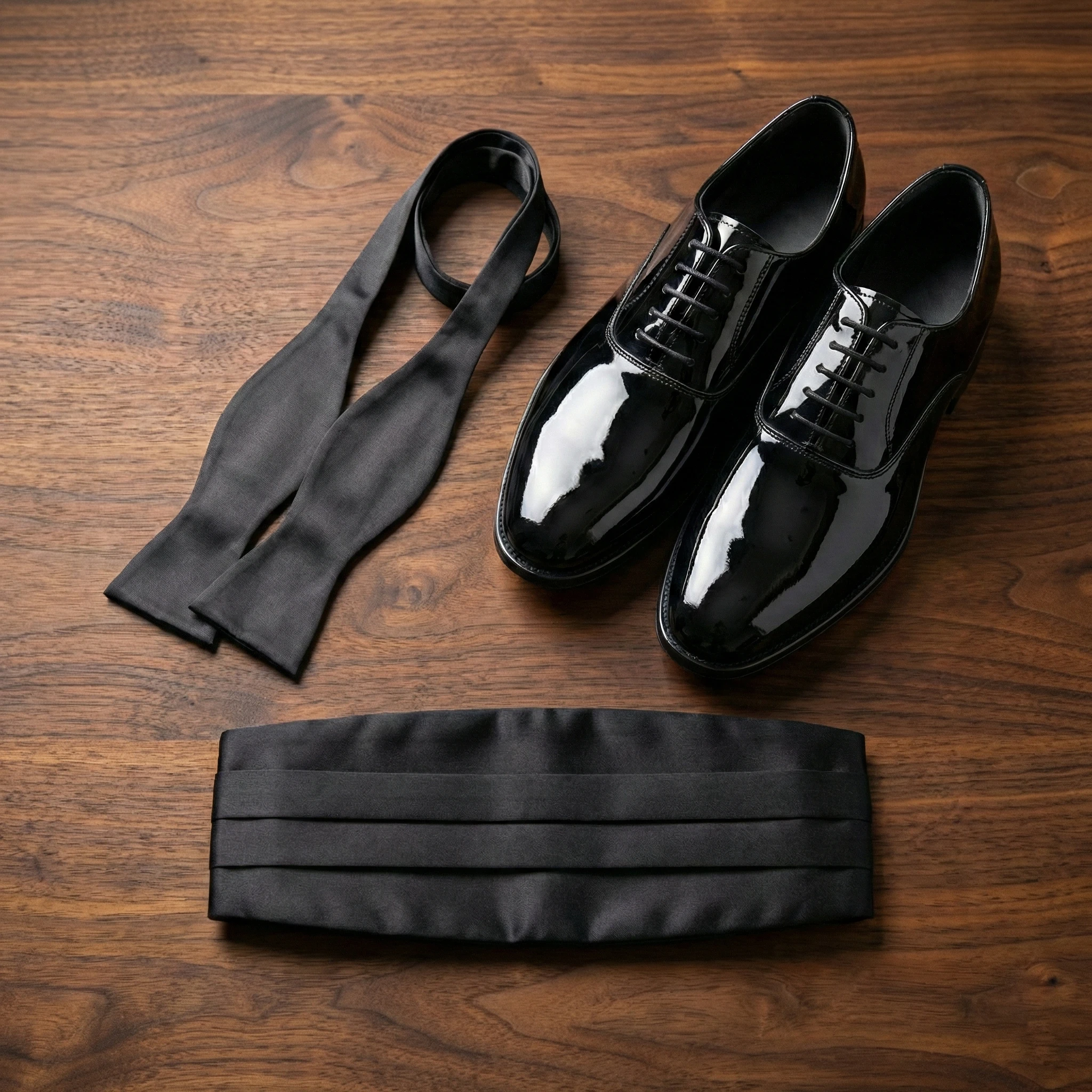
A pre-tied bow tie is the ultimate faux pas. It looks too perfect, too symmetric, and ultimately, artificial. A gentleman always ties his own bow tie. The slight asymmetry and “imperfection” of a hand-tied knot create character and sophistication that a factory-made clip can never replicate. Long ties (neckties) are strictly forbidden; they belong in the boardroom, not the ballroom.
The Waist Covering
The purpose of Black Tie is to create a seamless, vertical line. When standing, the white triangle of the shirt fabric between your jacket button and trouser waistband must never be visible. This is why a waist covering is mandatory:
- The Cummerbund: Worn with the pleats facing up (historically to catch crumbs or hold tickets).
- The Waistcoat: A low-cut evening waistcoat (vest) that allows the shirt bib to shine.
- Note: Never wear a belt. Bespoke trousers should feature side adjusters or be cut for braces (suspenders) to maintain a clean silhouette.
The Footwear
Your daily work shoes are not welcome here. Brogues (shoes with decorative perforations) are considered too casual, originating from country wear.
- The Standard: Patent leather or highly polished calfskin Oxfords (Plain toe).
- The Traditionalist: Opera pumps with a silk bow.
- The Rule: The sole must be thin and elegant. Thick rubber soles are strictly prohibited.
Modern Deportment: How You Must Behave
Owning a bespoke tuxedo is only half the battle; how you carry yourself completes the image.
- Jacket Etiquette: The silhouette of a tuxedo is designed to be viewed with the jacket buttoned. Always keep your jacket buttoned when standing to maintain the “hourglass” shape and ensure the waist covering does its job. You may unbutton it only when sitting to prevent the fabric from pulling.
- The “Shirt Sleeves” Prohibition: Under no circumstances should you remove your dinner jacket at a formal event. You are a guest, not the waitstaff. The jacket stays on for the duration of the evening.
The Only Exception: If the host or the groom removes his jacket first, signaling a relaxation of the rules (usually late into the after-party). Until then, endure the heat with grace.
- Grooming: The sharpest tuxedo cannot compensate for sloppy grooming. A fresh haircut, a trimmed beard (or clean shave), and manicured nails are essential components of the etiquette. The simplicity of Black Tie acts as a frame for your face; ensure the picture within the frame is impeccable.
Remember, these strict rules act as the canvas. Only once you have mastered the foundation of the classic black tie can you begin to experiment. For those looking to inject personality into their evening wear, specific invitations allow for flexibility—if executed correctly.
The Three Expressions of Black Tie
With the foundational “Hard Rules” established, the global gentleman allows himself the luxury of choice. However, choice in Black Tie is not infinite; it requires specific knowledge to execute correctly.
Modern etiquette recognizes three distinct expressions of the tuxedo. While they differ in color and detailing, all three styles strictly adhere to the standard construction rules of a tuxedo (structured shoulders, proper canvas, and jetted pockets).
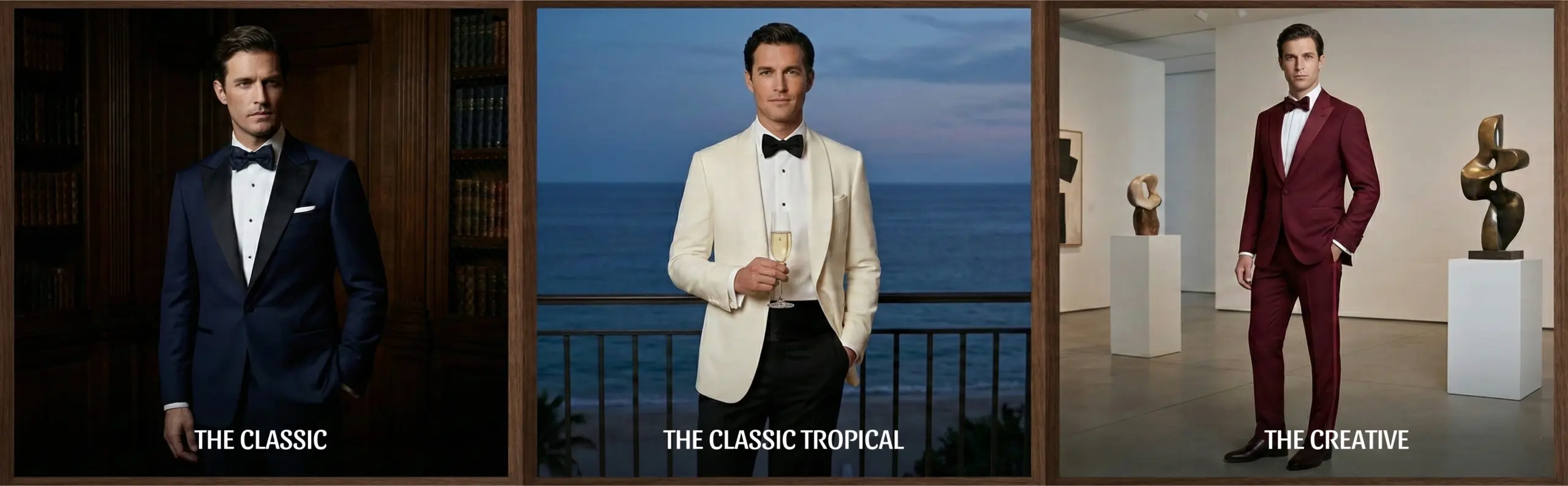
The Classic: The Purist’s Choice
This is the archetype of evening wear—the strict standard against which all other variations are judged.
- The Foundation: The jacket fabric must be strictly Black or Midnight Blue. No other colors are permitted in this category.
- The Lapel Rule: The defining characteristic of the Classic is textural contrast. The lapels must always be faced in black silk (satin or grosgrain), creating a distinct shine against the matte wool of the body.
- The Shirt Requirement: To honor the purist code, a standard dress shirt will not suffice. The shirt must be crisp white, featuring a distinct bib front (either pleated or marcella piqué). Crucially, buttons should never be visible; the front must be secured with studs or a hidden placket, and finished with French cuffs.
- The Vibe: Timeless, authoritative, and safe. It creates the highest level of contrast. When in doubt, the Classic is never wrong.
The Classic Tropical: The Ivory Expression
While defined by context and climate (tropics/high summer), this style has its own rigid set of technical rules.
- The Look: An Ivory or Cream dinner jacket only.
- The Lapel Rule (Self-Facing): Unlike the Black Classic, the lapels on an Ivory jacket are typically “self-faced.” This means they are made from the same fabric as the body of the jacket, rather than silk. This maintains a clean, soft visual line appropriate for warm weather.
- The Combination: This jacket is strictly anchored by black tuxedo trousers. You generally do not wear ivory tuxedo trousers to match. The bow tie and shoes must also remain black to ground the ensemble.
The Creative: The Monochromatic Statement
For the gentleman who wishes to step beyond the traditional palette, this expression offers personality while maintaining the tuxedo’s structural integrity.
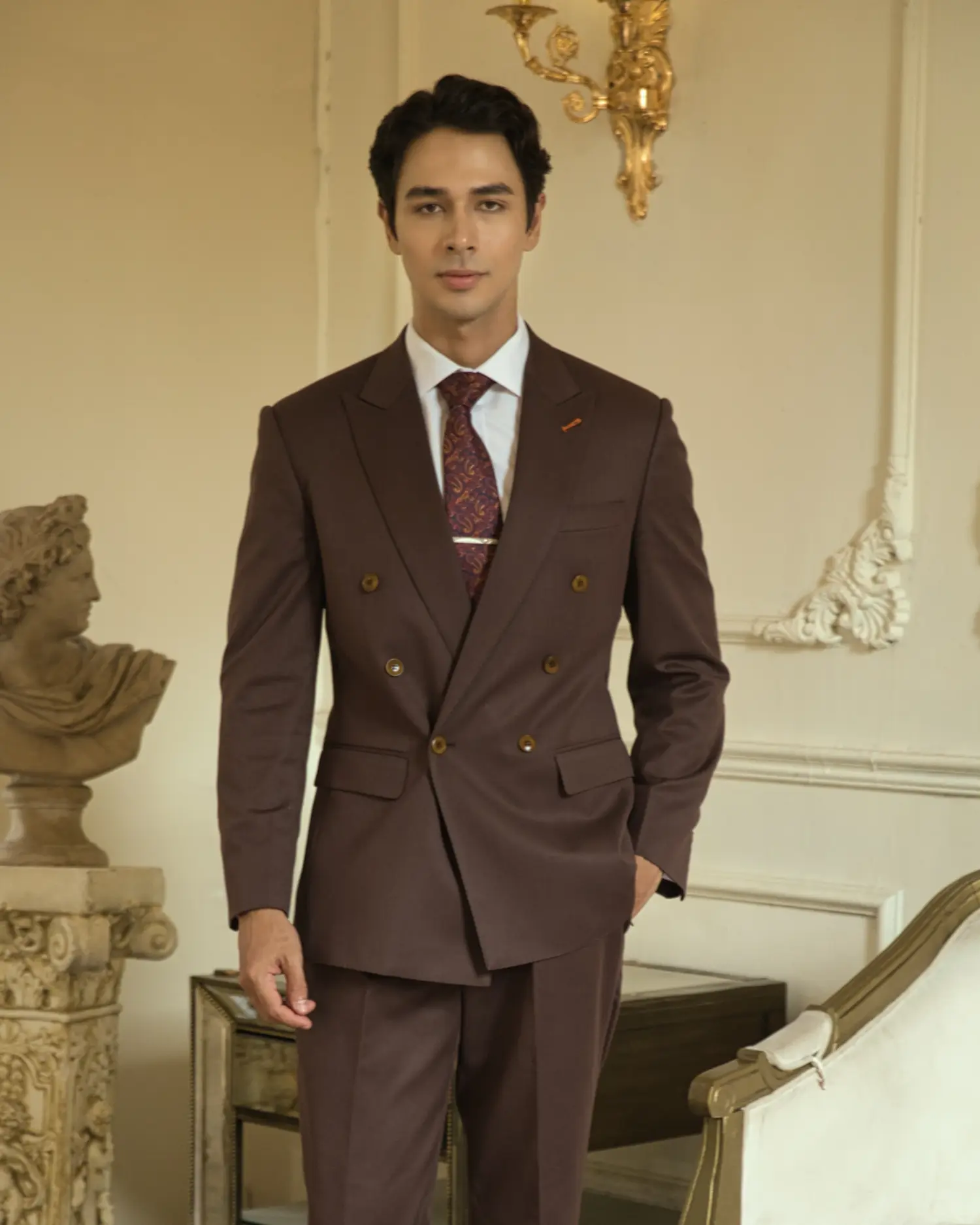
- The Fabric: The primary fabric allows for a diverse range of deep, rich colors (Burgundy, Forest Green, Brown, etc.), provided the fabric remains solid (no patterns).
- The Lapel Flexibility: You have two sophisticated options:
Option A (Traditional): Contrasting black silk lapels, linking back to the classic roots.
Option B (Bespoke Tone-on-Tone): Silk lapels dyed to perfectly match the jacket’s color. This creates a seamless, modern silhouette unique to high-end bespoke.
- The Trousers: Unlike the Tropical style, you have flexibility here. You may wear standard black tuxedo trousers, or for a full monochromatic statement, commission trousers in the exact same cloth and color as the jacket, finished with the signature silk side stripe.
Decoding the “Black Tie Optional” Invite
Now that you understand the three expressions, how do you handle the confusing “Black Tie Optional” invitation? The host is telling you: “We prefer Black Tie, but we won’t force it.” This is your moment to choose wisely.
- The Gentleman’s Choice: Stick to The Classic: Treat “Optional” as “Required.” Wearing a Classic Black Tie (Black/Midnight Blue) is the most respectful choice. It shows you honor the formality without trying to steal the spotlight. You will simply look like the best-dressed man in the room.
- The Acceptable Choice: Subtle Creative: You can wear a Creative (Tone-on-Tone) tuxedo, provided the color is dark and understated (e.g., a very deep Midnight Green). Because the fabric is solid and lacks patterns, it still reads as “formal” rather than “costume.”
- What to Avoid: The Tropical (Ivory): Unless the “Optional” event is specifically outdoors in summer or at a beach resort, avoid the Ivory Jacket. It is too high-contrast and conspicuous for an “Optional” business or city setting where many guests might be in dark suits.
Conclusion: Mastering the Rules to Break Them
True style is never about blind adherence to tradition; it is about understanding the logic behind elegance. Mastering these Black Tie rules ensures that you wear the tuxedo, rather than letting the tuxedo wear you.
Whether you choose the strict classicism of a midnight blue dinner suit or the modern flair of a tone-on-tone velvet jacket, the ultimate accessory is confidence. That confidence comes from knowing you are perfectly appropriate for the occasion, yet distinct in your execution.
Ready to build your armor? Now that you have mastered the etiquette, it is time to focus on the construction. Discover the technical details, fabric choices, and fitting secrets that create the perfect garment in our comprehensive guide: The Ultimate Guide to Black Tie: Mastering the Bespoke Tuxedo
DISCOVER PHYIGITAL BESPOKE TAILORING