Why Understanding Body Shape Type is Essential in Bespoke Tailoring
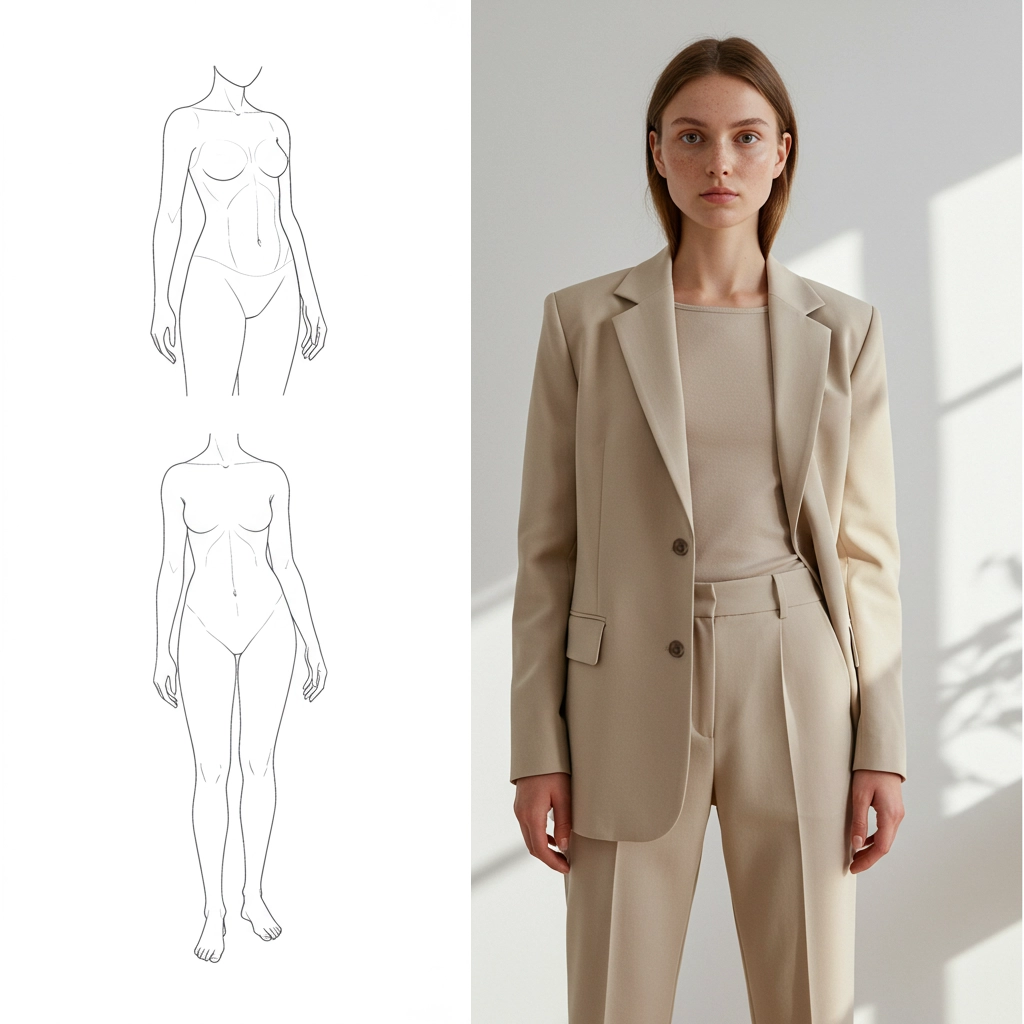
Before fabric is chosen or a single stitch is made, your body already tells a story. Understanding your body shape type isn’t about fitting into a category — it’s about learning how your natural lines and proportions interact with clothing. Especially in bespoke tailoring, that self-awareness is where great fit begins.
In this guide, we’ll show you how to recognize your body shape in three thoughtful steps — no numbers, just a clearer view of yourself. These three steps echo the foundation of bespoke tailoring: recognizing body shape is the beginning of true fit.
Step 1 – Observe Your Natural Silhouette Without Numbers
Before you pick up a measuring tape, stand in front of a mirror and just look.
Not with judgment. Not with comparison. Just observation.
This is where identifying your body shape type truly begins — not with centimeters, but with curiosity. What does your silhouette do naturally? Where does your body taper, expand, or stay straight? Is your shoulder line broader than your hips? Does your waist create a visible curve, or does your torso flow smoothly into your legs?
These questions aren’t about perfection. They’re about pattern — understanding the visual rhythm of your body when it’s standing still, in its most neutral state.
Some helpful tips as you observe:
- Stand side-on as well as front-facing. Your posture plays a role in how your shape reads.
- Wear fitted but neutral clothing, or ideally, observe in undergarments to remove visual noise.
- Don’t focus only on the waist — many clues lie in the shoulders, hips, and proportions between top and bottom halves.
You may begin to notice a general outline: triangular, rectangular, hourglass-like, or somewhere in between. These aren’t labels — they’re starting points. It’s why two people can wear the same size dress and still experience completely different fits — because numbers can’t tell you whether your shape moves forward, rises higher, or softens differently across the body. Each body shape type offers a unique balance that informs not just how a garment fits, but how it should be designed to move with you.
This step is less about analysis and more about connection. It’s about learning to see your shape without wanting to change it — and that’s where great tailoring begins.
Step 2 – Focus on Proportions: Shoulders, Waist, and Hips
Once you’ve observed your natural silhouette, the next step is to understand how your proportions relate to one another — especially across the shoulders, waist, and hips. This relationship is what truly defines your body shape type, far more than any single measurement alone.
Think of your body in thirds: the upper frame (shoulders and bust), the middle (waist), and the lower half (hips and thighs). Now consider:
- Do your shoulders appear broader than your hips?
- Is your waist clearly narrower than both, or more in line with one or the other?
- Are your hips the widest part of your frame, or do they align with your shoulders?
Each body shape type is defined by how these three points compare to one another. For example:
- If your shoulders and hips are balanced but your waist is well-defined, you might lean toward an hourglass shape.
- If your shoulders are broader and waist less defined, you could fall into an inverted triangle category.
- If your hips are the widest point, with a gentle waist curve, you may identify with the pear-shaped frame.
But remember: this is not a test. It’s not about fitting perfectly into one category. It’s about understanding your natural proportions so that future design decisions — in tailoring, dressing, or even posture — can reflect your unique structure. These proportions also guide choices in styles like women’s trousers or skirts — where waist placement, leg shape, or drape depend heavily on your natural top-to-bottom rhythm.
In bespoke tailoring, recognizing these proportions allows the garment to enhance balance. It informs not just what to highlight, but how to do so — whether that’s through shaping at the waist, adding volume to one area, or streamlining another.
At this stage, you’re not just naming a body shape type. You’re learning how your frame tells its own visual story — and beginning to tailor that story with intention. This is especially helpful for women, whose proportions — from bust to hip to waistline — often vary more than standardized sizing can accommodate.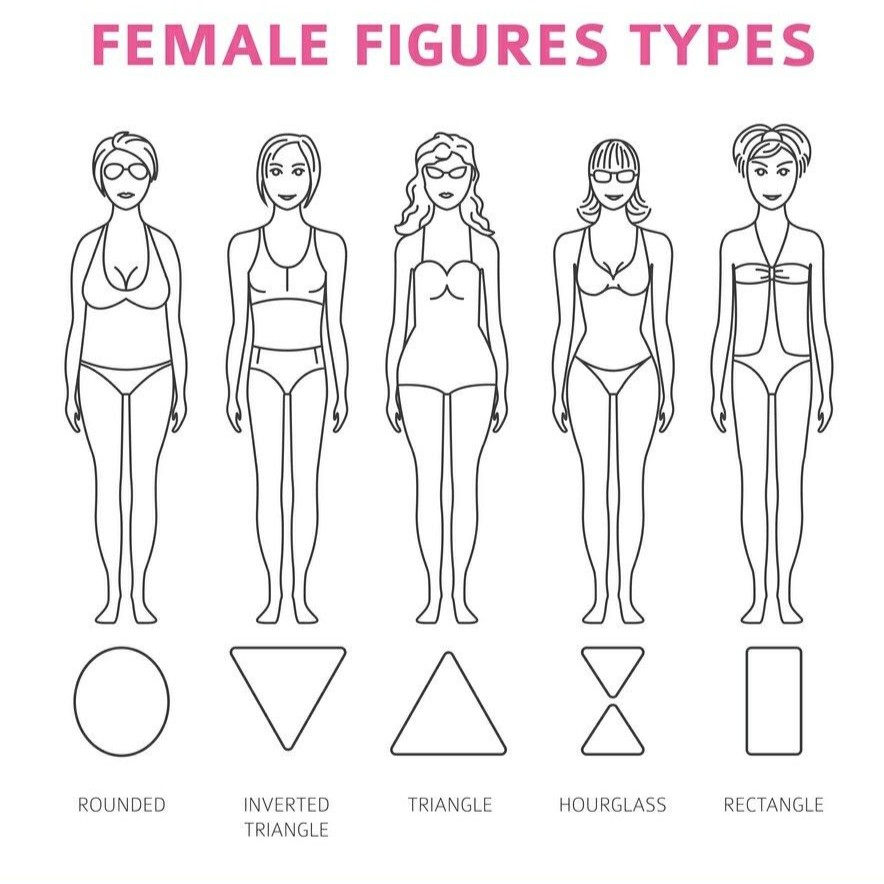
Step 3 – Consider Your Posture and Curve Distribution
Understanding your body isn’t just about width or ratios — it’s also about how you carry your shape. This third step invites you to pay attention to posture and the way your body’s curves are distributed, because these nuances influence both how you dress and how your clothes behave on you.
Posture affects your visual silhouette more than you might think. A slightly forward-leaning stance can make your bust appear more prominent. Rounded shoulders might shift how fabric falls across your upper back. A naturally arched lower back may cause your waist to look deeper than it measures. All of this contributes to how your body shape type expresses itself — and why two people with similar proportions can present completely differently.
Then there’s curve distribution — the way volume is carried throughout your body. Are your curves soft and continuous, or more angular and defined? Do you carry more fullness in your hips, in your upper thighs, or more evenly across your torso? Some people with a rectangle body shape type still have visible curves, just spread differently. Others with an hourglass frame may have posture that disguises their waist. This is why relying solely on rigid labels can be limiting.
Tailors who work with bespoke garments — especially when crafting women’s tailored suits — know this well. That’s why they don’t just measure and draft — they observe how a body moves and rests. Two clients may share a textbook pear or apple shape, but if one has a sloped shoulder and the other stands tall with an upright back, the suit will need to be balanced differently to reflect and flatter each posture.
This step is about refinement. You’ve taken the time to look at your outline (Step 1) and your proportions (Step 2). Now, consider the more subtle influences — the tilt of your spine, the angle of your pelvis, the softness or firmness of your curve lines. These are what give depth and accuracy to how you understand your body shape type.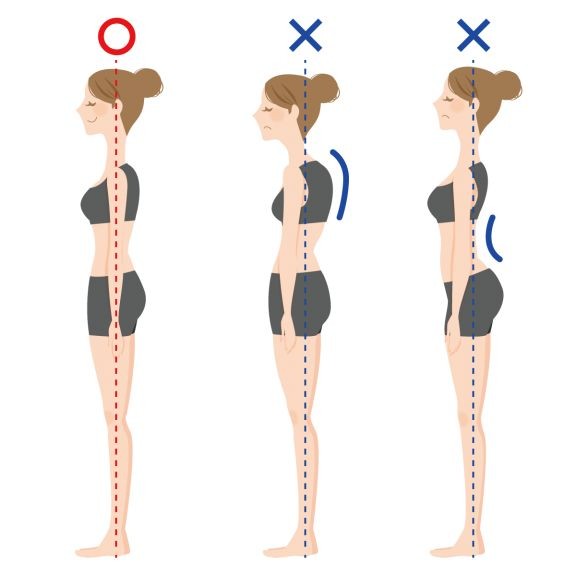
Common Body Shape Archetypes and Why They’re Just Starting Points
After observing your silhouette, studying your proportions, and understanding how your body carries itself — you might find yourself wondering: What’s my body shape type? This is where most style guides point you to five or six familiar categories: hourglass, pear, apple, rectangle, and inverted triangle.
These body shape types serve as broad reference points, not definitions. They help identify how volume is distributed across your shoulders, waist, and hips — giving you language to describe a shape that you’ve already started discovering for yourself. But by now, after following the first three steps, you’ll know that no one fits perfectly into a label.
In truth, real bodies resist being boxed in. You might carry the visual balance of an inverted triangle, yet your lower body posture or subtle hip curve shifts the whole silhouette. Or you may identify as pear-shaped, but with a naturally elevated waistline or asymmetry in the shoulders. Body shape isn’t just geometry — it’s lived experience.
And this is where the process becomes richer. The more you pay attention to how you move, sit, stand, and dress — the more archetypes fade into the background, making room for what really matters: understanding your body as uniquely yours.
That awareness affects more than fit — it shapes how you choose pieces that truly reflect you. For example, a skirt that sits just above your natural waist may complement your posture better than one that clings to your hips. The drape of women trousers can shift dramatically depending on whether your curve is fuller in the front, the side, or not pronounced at all. It’s not about dressing the shape you “should” have, but the one you do have — and honoring that with every design decision.
That’s also why more people today are seeking support beyond standard guides. Whether through a trusted tailor, a bespoke tailor online or working with a private stylist who understands shape from both an aesthetic and functional perspective, this process can become deeply affirming. At Rosie Hong, we’ve found that having a professional eye — someone trained to notice not just size, but balance, presence, and flow — can often reveal strengths you didn’t know you had.
And in recent years, technologies like 3D body scanning have made it even easier to move beyond static categories — offering a precise, three-dimensional map of your body’s actual proportions, contours, and postural details. These tools don’t replace your self-perception; they deepen it. They help connect what you feel about your body with what you see — turning self-discovery into something measurable, visual, and sometimes, surprisingly empowering.
So yes, use the archetypes if they help you speak about your shape — but don’t let them define you. You are not a diagram. You are a form in motion, worthy of being understood on your own terms.
Conclusion: Your Body Is the Blueprint, Not the Problem
Your body — especially as a woman — doesn’t need to shrink into categories or explanations. It deserves to be seen, understood, and celebrated as the original blueprint, not the afterthought. It’s a living, evolving form — and the more you learn to see it clearly, the more confidently you can dress it on its own terms. True style begins not with trends, but with recognition. When you see your body not as an obstacle but as the starting point, everything shifts. You stop asking “what’s wrong with me?” and start asking “what fits me best?”
That shift — from judgment to understanding — is where personal style becomes personal truth.
DISCOVER PHYIGITAL BESPOKE TAILORING